
Modern hidden door ideas for sleek, seamless interiors work best when you treat the wall and the door as one finish system, and a polished living room can start around $300-$1,200 if you’re only styling and painting. I learned that after staring at a door beside my fireplace that kept reading like an afterthought. Paint wasn’t the problem. The wall logic was.
Don’t overthink: Anchor the hidden door inside walnut slats.
- Start with a wall-panel door beside the fireplace
- Anchor the hidden door inside walnut slats
- Layer paint-matched trim across the full wall
- Hang oversized art on concealed pivot hinges
- Build bookcase fronts with push-latch openings
- Wrap the door in fluted oak panels
- Frame the opening with floor-to-ceiling molding
- Paint the door the exact wall color
- Hide the seam inside vertical shiplap grooves
- Run picture-frame molding across the door face
- Set a flush door behind media cabinetry
- Disguise the handle with a slim shadow gap
- Continue stone veneer across the hidden doorway
- Use reeded glass panels for a soft reveal
- Align shelves so the door reads built-in
- Tuck the door behind a sculptural wall niche
- Finish with invisible hinges and matte hardware
1Start with a wall-panel door beside the fireplace
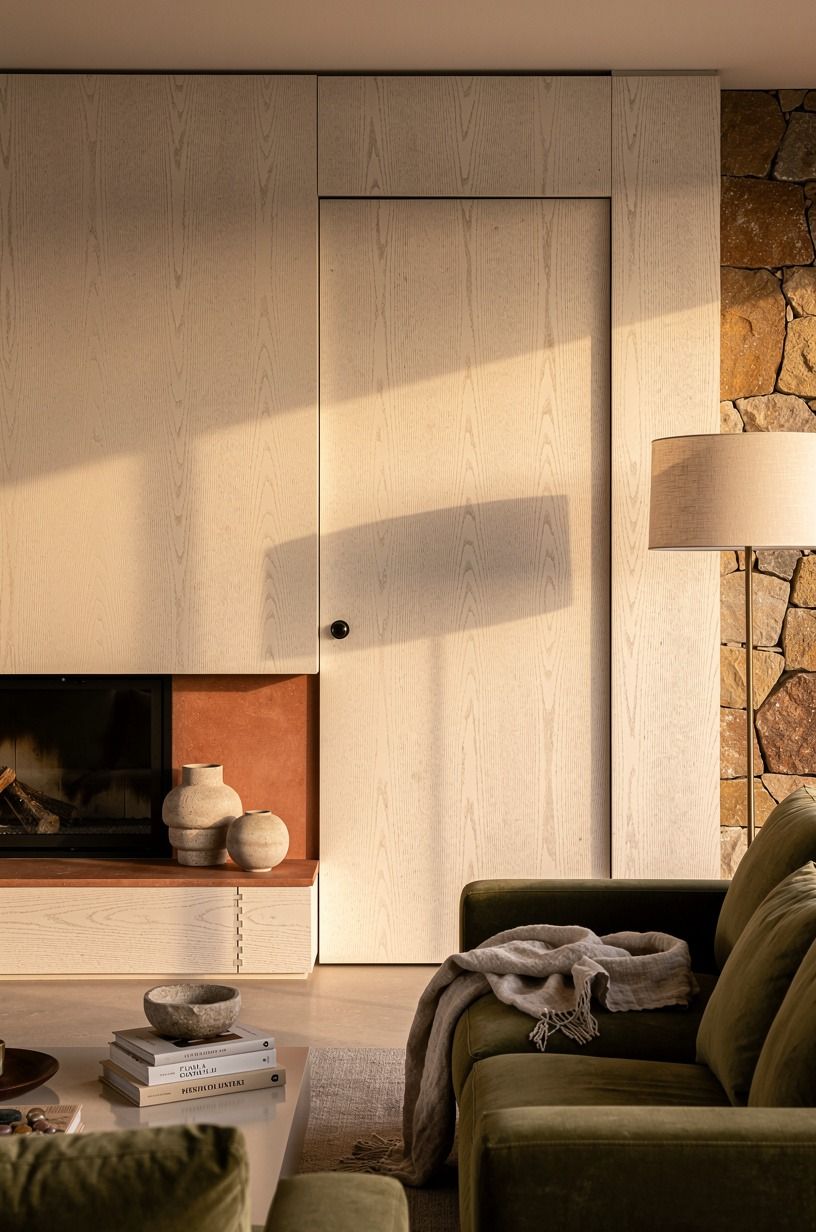
Begin with the door location, not the trim profile. If your hidden door sits beside the firebox, you want the panel rhythm to feel deliberate before you choose color, because your eye will always check that warm focal wall first. I like a cerused white oak field here because the grain softens the join without making the reveal disappear.
Keep the vertical reveal fine and readable. About 1/8 inch is usually enough for you to spot the opening once you’re close, but not from the sofa. And if you’re planning a full feature wall, this guide to tv wall layouts with a concealed opening helps you map the fireplace side first.
What matters most is centering the panel widths across both surfaces. If the fireplace surround is visually heavy, let the hidden door panel nearest it stay a little quieter. I wouldn’t add chunky applied trim here, because the fire already gives you shape.
The wall doesn’t need to shout.
2Anchor the hidden door inside walnut slats
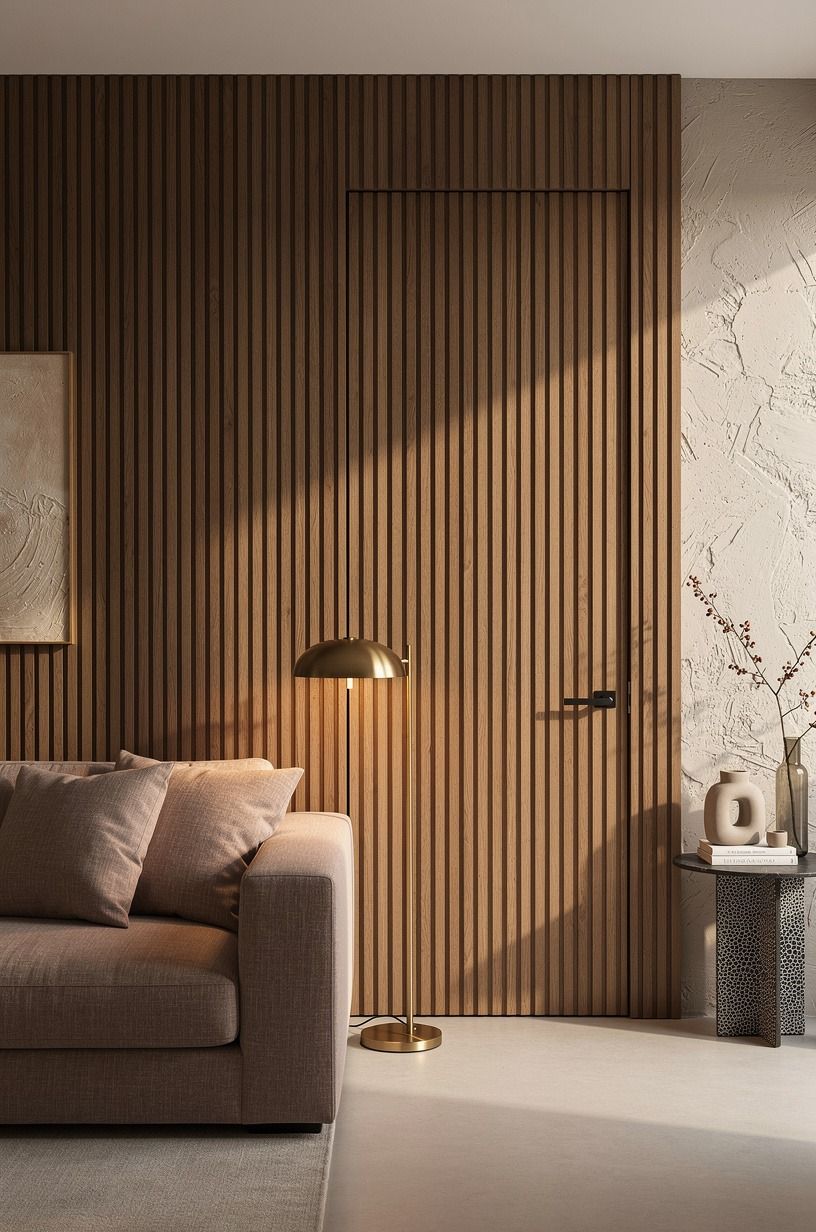
A slat wall gives you built-in camouflage, but only if the spacing stays even as you cross the slab.
3Layer paint-matched trim across the full wall
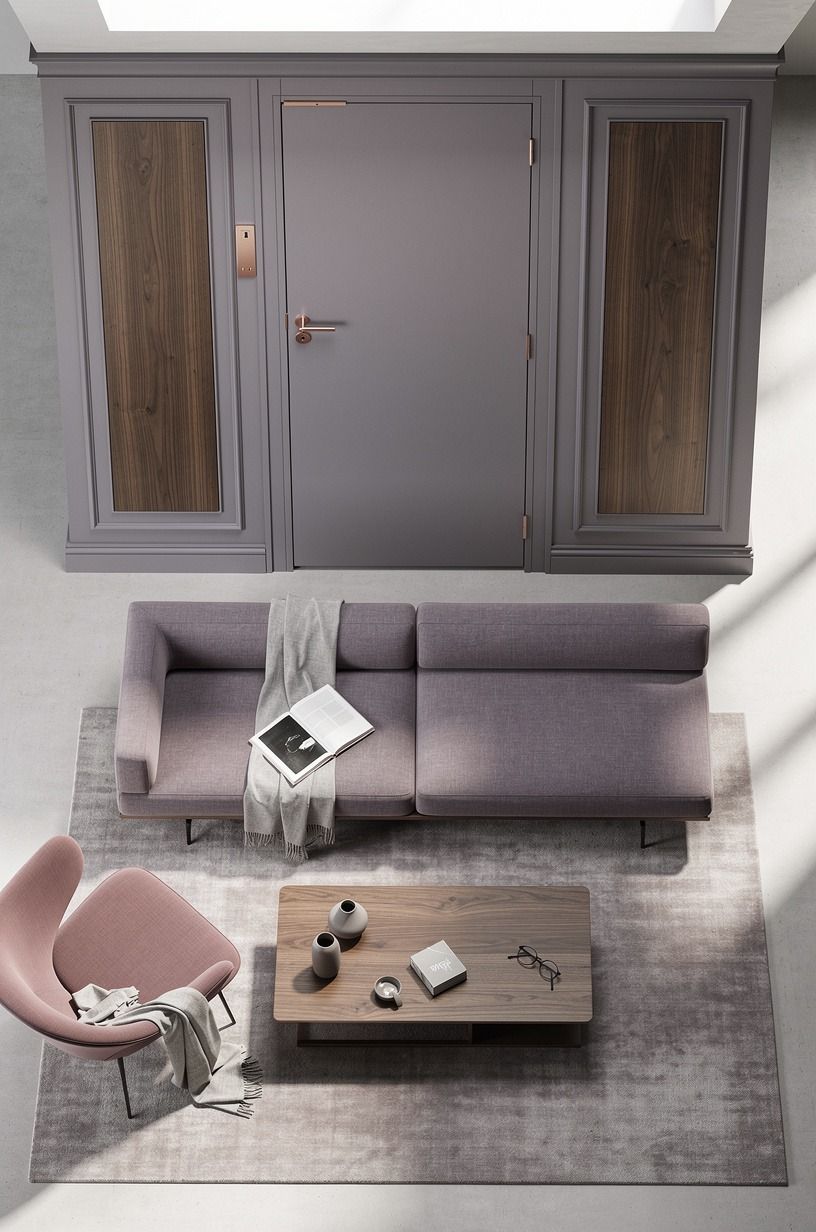
This is where you stop thinking about a door and start thinking about a whole plane. When trim and slab share one field color, the hidden opening fades because your eye reads the larger geometry first. I like a pale Benjamin Moore Revere Pewter HC-172 when the room has cream seating and softer contrast.
Sketch the wall from above before you nail anything up. That overhead planning step sounds fussy, but it’s what keeps your picture frames, chairs, and side table from fighting the panel grid. And if you’re working a narrow footprint, these hidden sliding door layouts are useful for comparing circulation.
Match the trim thickness across the entire wall, then let the door steal one of those rectangles. I made the mistake once of adding a slimmer frame on the opening, and you could spot it from across the room in five seconds. Your goal is repetition, not novelty.
4Hang oversized art on concealed pivot hinges
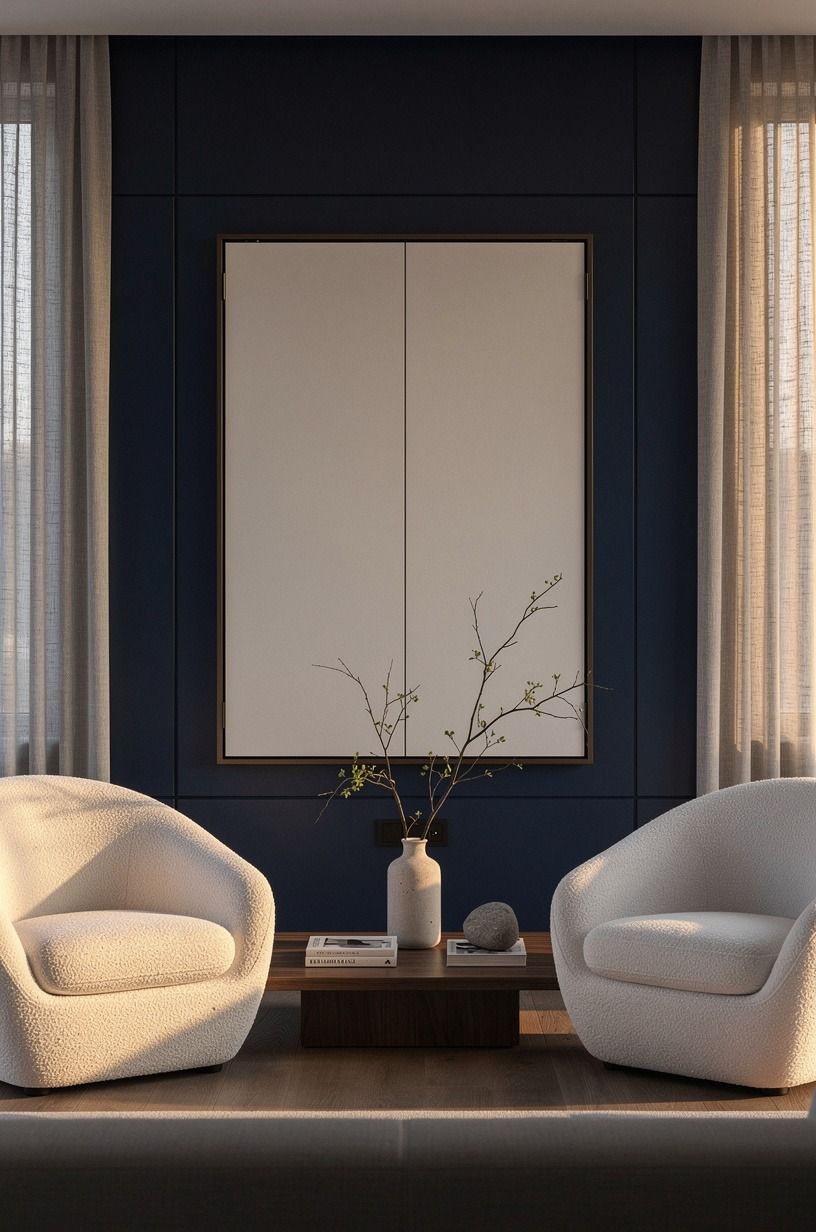
Oversized art works because it gives the wall one big idea. On a navy panel backdrop, a tall framed canvas can blur the opening line so well that guests read the room as gallery wall first, door second. You need concealed pivot hardware strong enough for the weight, though, or the piece will sag and give the game away.
Keep the art almost full height, then leave a consistent margin around it. I prefer a flush frame rather than a deep ornate one, since the shadow line should come from the wall panel joints, not the artwork edge. This roundup of hidden wet bar doors tucked into millwork shows the same principle on a smaller scale.
And choose art that can handle motion. A rigid oak stretcher frame behind the canvas is safer than something flimsy from a discount store.
If you hear even a soft shift when the door moves, adjust it now. Tiny noises make a hidden door feel homemade fast.
5Build bookcase fronts with push-latch openings
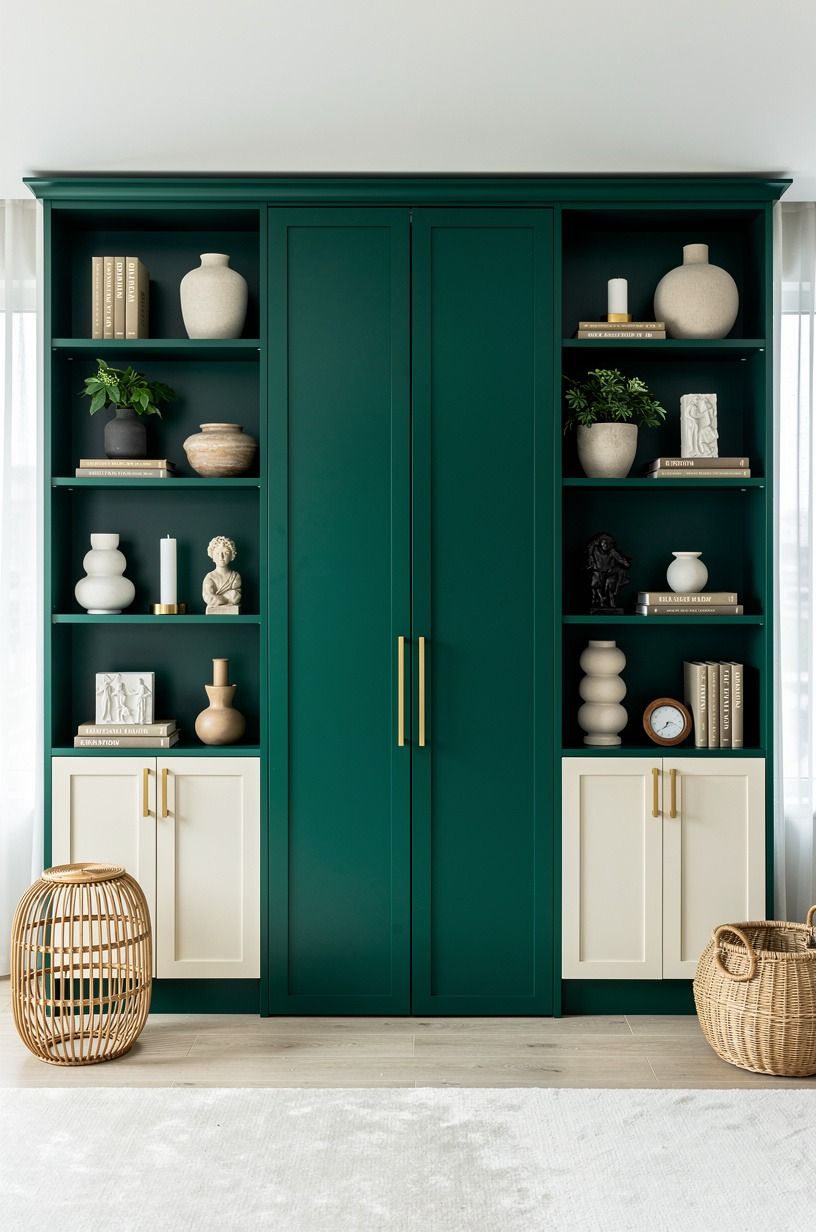
A bookcase-front door only works when the shelves feel believable. Full-height emerald built-ins are strong here because the color, the depth, and the books all create visual noise that hides the opening naturally. You want enough shelf styling to break the seam, but not so much that the wall turns cluttered.
Push latches keep the face clean, and they’re worth it if you hate seeing hardware. I still leave the door-side shelves lighter than the fixed shelves, because too much weight can throw the panel out over time. For more concealed storage thinking, I like this piece on tv walls with hidden doors as a planning companion.
Use real objects with shape. A CB2 Primitivo bouclé accent chair nearby helps the room feel intentional instead of gimmicky, and your shelf styling can stay spare because the seating already adds texture.
Books stacked flat. One ceramic box.
Maybe a smoked glass vase. Enough.
6Wrap the door in fluted oak panels
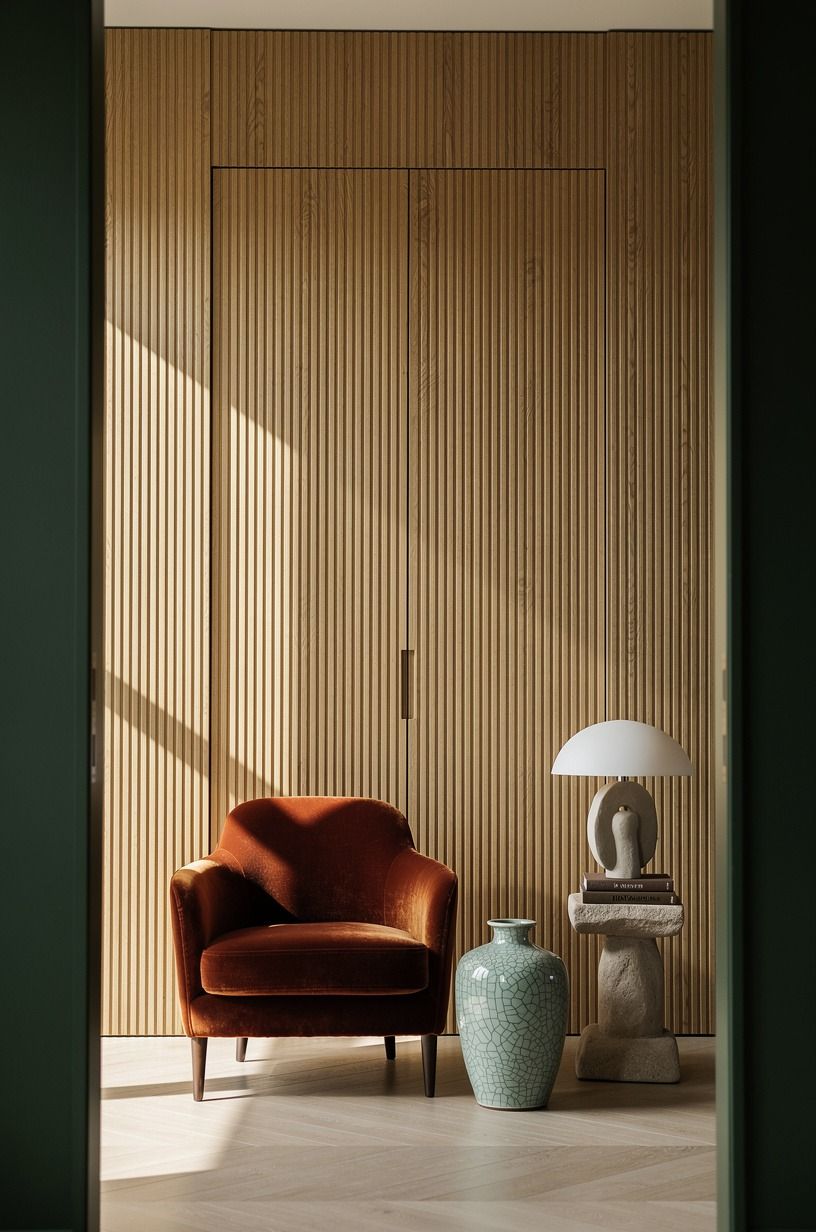
Fluting gives you a pattern that keeps moving, which is exactly why it helps a concealed slab disappear. I like fluted white oak here because the ridges feel architectural without looking too formal, especially when you’re viewing the wall through an open doorway. That layered sightline does half the hiding work for you.
Keep the seam aligned with one of the deeper grooves so your eye lands on rhythm instead of joinery. And if your living room leans warm, a rust velvet chair in front of the wall is a smart call because it makes the oak feel richer rather than yellow. This set of space-saving concealed door examples is helpful when you’re deciding between flat and grooved wood.
But watch the scale. Skinny fluting can turn fussy in a larger room, and wide fluting usually reads more custom.
I lean toward fewer, deeper channels because the wall stays calmer when you step back. That’s the whole point, right?
7Frame the opening with floor-to-ceiling molding
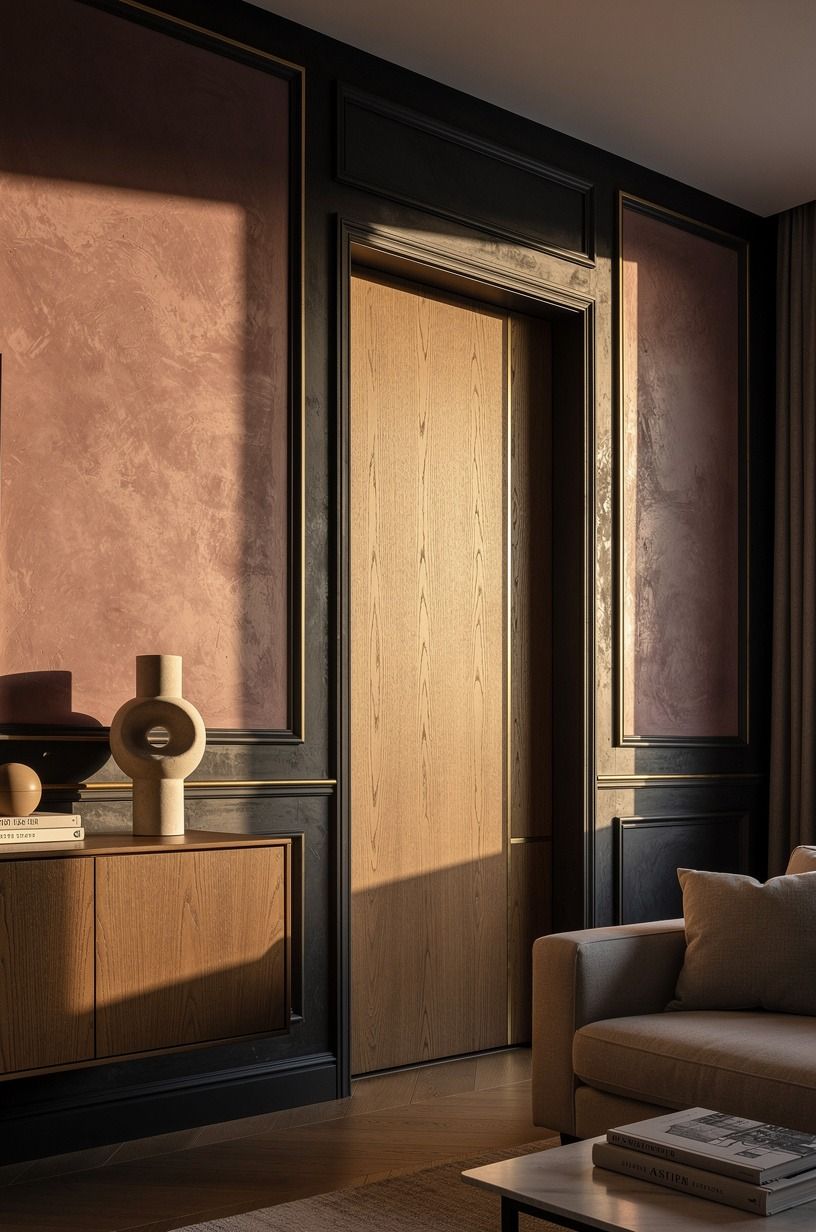
Tall molding makes the wall feel established, which is useful when the opening sits off-center. In a room with generous charcoal plaster, floor-to-ceiling trim creates enough order that the hidden door can vanish into the architecture instead of floating as a random panel. You want the full height because partial trim makes the stop point obvious.
Carry the same molding profile over the slab and across the neighboring wall spans. That’s the move that convinces the eye.
If you stop the pattern at the jamb, the door reads as an insert. I often compare this with hidden pantry door walls because kitchens teach this lesson brutally well.
The hard part is restraint. I wouldn’t pair ornate trim with rough plaster unless the house is genuinely traditional. A simple Shaker molding profile does more for a sleek room than a fancy one, and it won’t fight the furniture later.
8Paint the door the exact wall color
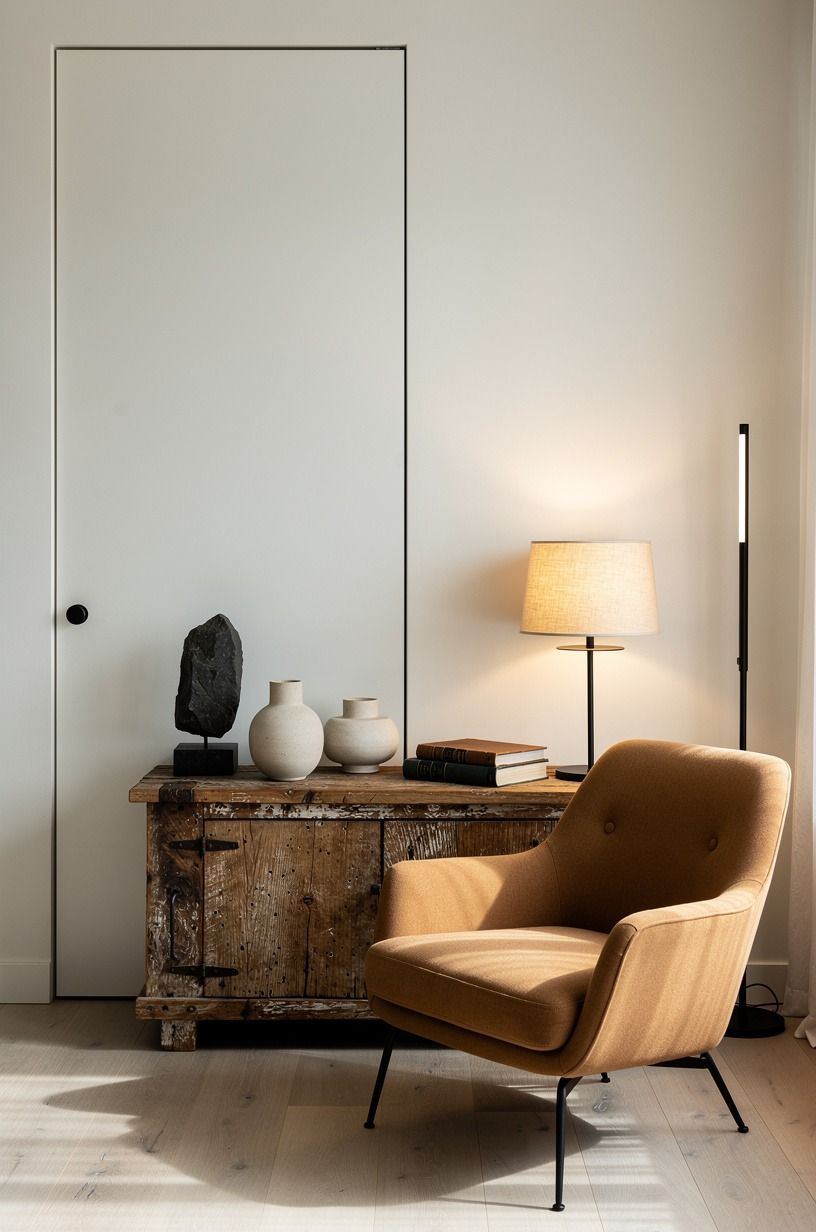
Exact means exact. Not close, not the sample card beside it, not the gallon the store mixed last winter.
In a warm white room, the hidden door disappears only when the slab, the trim, and the wall share the same low-sheen paint finish. Different sheens catch light differently, and that’s where most people lose the illusion.
I like this step most in rooms with soft camel leather and creamy upholstery because the palette already depends on subtle contrast. Sherwin-Williams Evergreen Fog SW 9130 is lovely in moodier rooms, but here I’d stick with a warmer white and let the furniture do the talking. For more tonal concealment ideas, see these hidden sliding door examples.
Use the same roller nap on everything the same day if you can. I skipped that once, and the door flashed just a touch greener at night. You may think nobody notices.
You will. Every single evening!
9Hide the seam inside vertical shiplap grooves
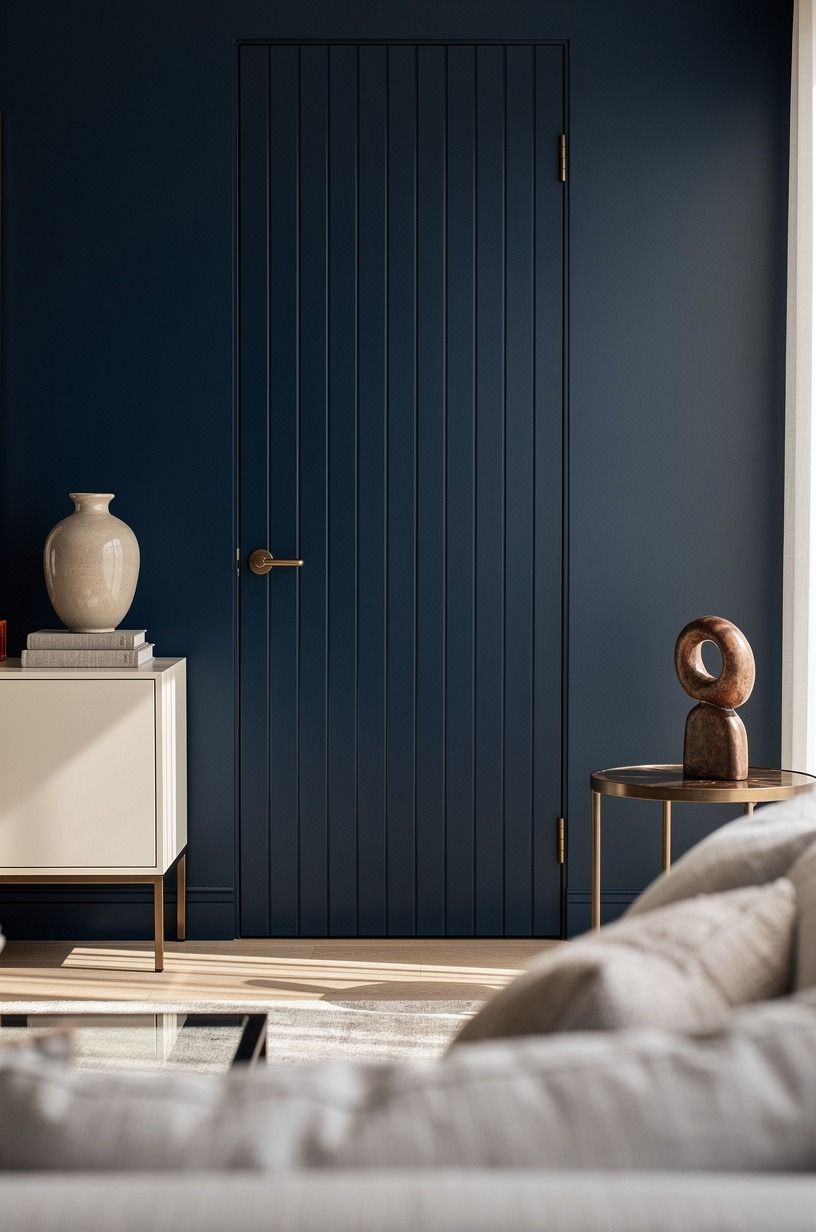
Vertical shiplap is forgiving because the grooves already create interruption. On a midnight blue wall, that means the hidden seam can live inside the pattern instead of fighting it. I like Farrow & Ball Hague Blue No. 30 for this look because it stays deep and tailored without turning flat.
Set the groove spacing first, then place the seam where one shadow line already belongs. From a low angle, the room will exaggerate any break, so measure the board widths twice and the gap locations three times. If you want more examples of that lined-up effect, these concealed TV wall ideas are worth a look.
And don’t over-bevel the planks. Too much edge detail makes each board shout. You want one clean wall plane, a soft rug, and maybe an Article Sven sofa letting the blue wall stay dramatic without getting busy.
10Run picture-frame molding across the door face
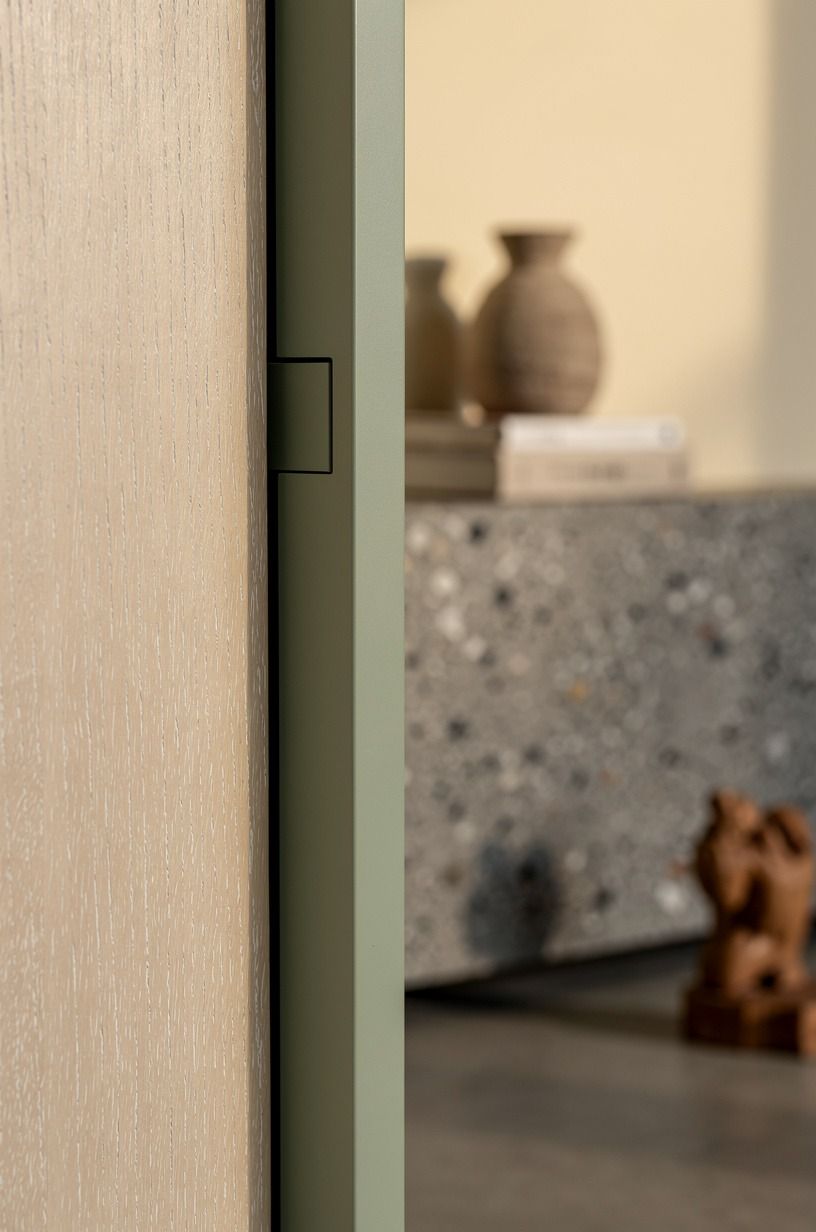
Picture-frame molding is all about accuracy. On a sage wall, those little mitered rectangles can make the whole opening disappear, but only if the spacing is identical across fixed wall and moving slab. I like sage green trim here because it shows depth while still feeling soft in daylight.
This is not the place to eyeball corners. Use a story pole, mark every reveal, and keep the tiny shadow gap consistent all the way around the panel. If your room already has millwork elsewhere, this article on concealed TV walls can help you keep the language consistent.
The best part is that the wall still feels classic. But I would skip extra crown details if the room is modern.
One trim idea is enough. Let the craftsmanship do the flex, not the ornament.
11Set a flush door behind media cabinetry
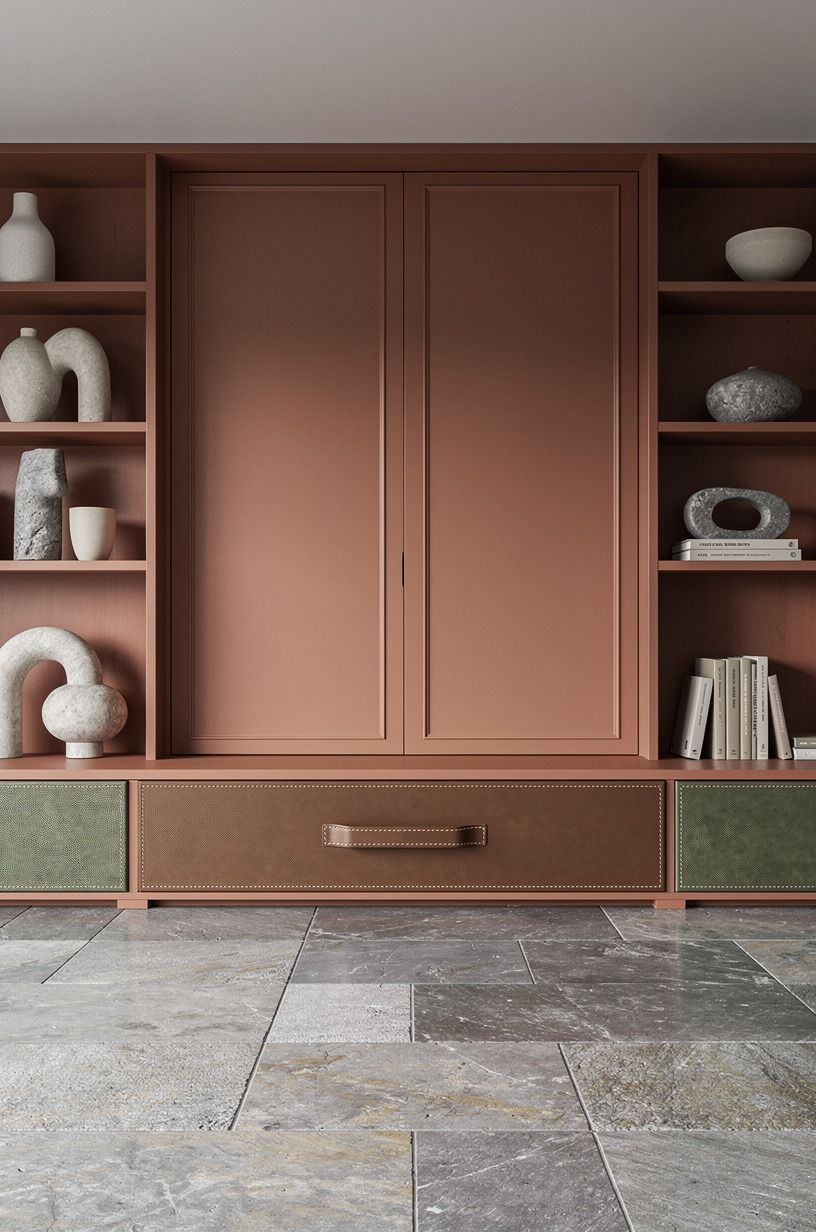
Media cabinetry gives you cover because the eye is busy reading function. In a terracotta wall of built-ins, a flush cabinet-matched panel beside the console can pass as another storage zone if the reveals line up and the base detail doesn’t jump. Low sightlines help a lot here, especially over a stone-toned floor.
Match the toe kick or shadow base exactly so the door doesn’t look lifted. I also like keeping the cabinet depths believable, because a fake deep side tower can make the whole wall feel suspicious. This guide to hidden wet bar millwork uses the same disguised-storage logic.
Choose furniture that doesn’t crowd the wall. A West Elm Harmony sofa with a 35 to 40 inch depth gives you comfort without pushing the coffee table too far into the walkway, and you still keep the door swing clear.
12Disguise the handle with a slim shadow gap
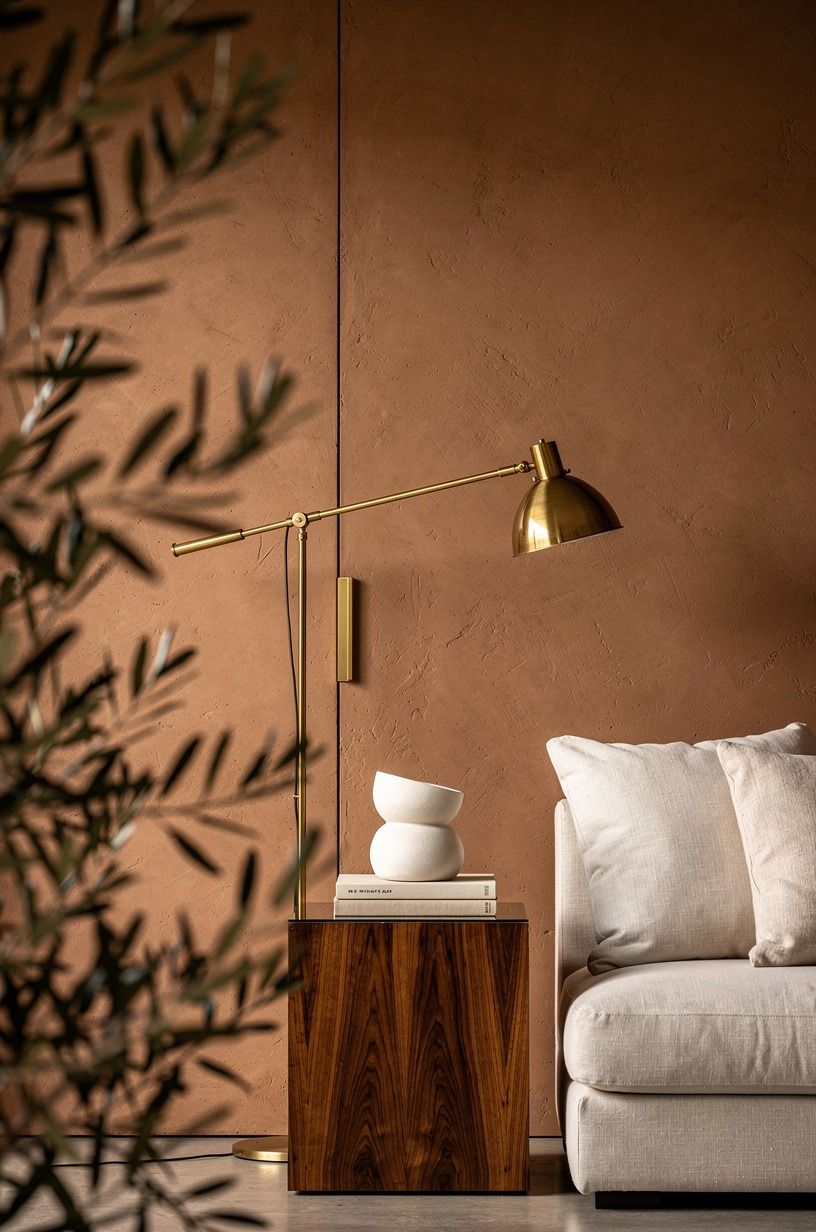
The cleanest handle is the one your eye doesn’t read as hardware at all.
13Continue stone veneer across the hidden doorway
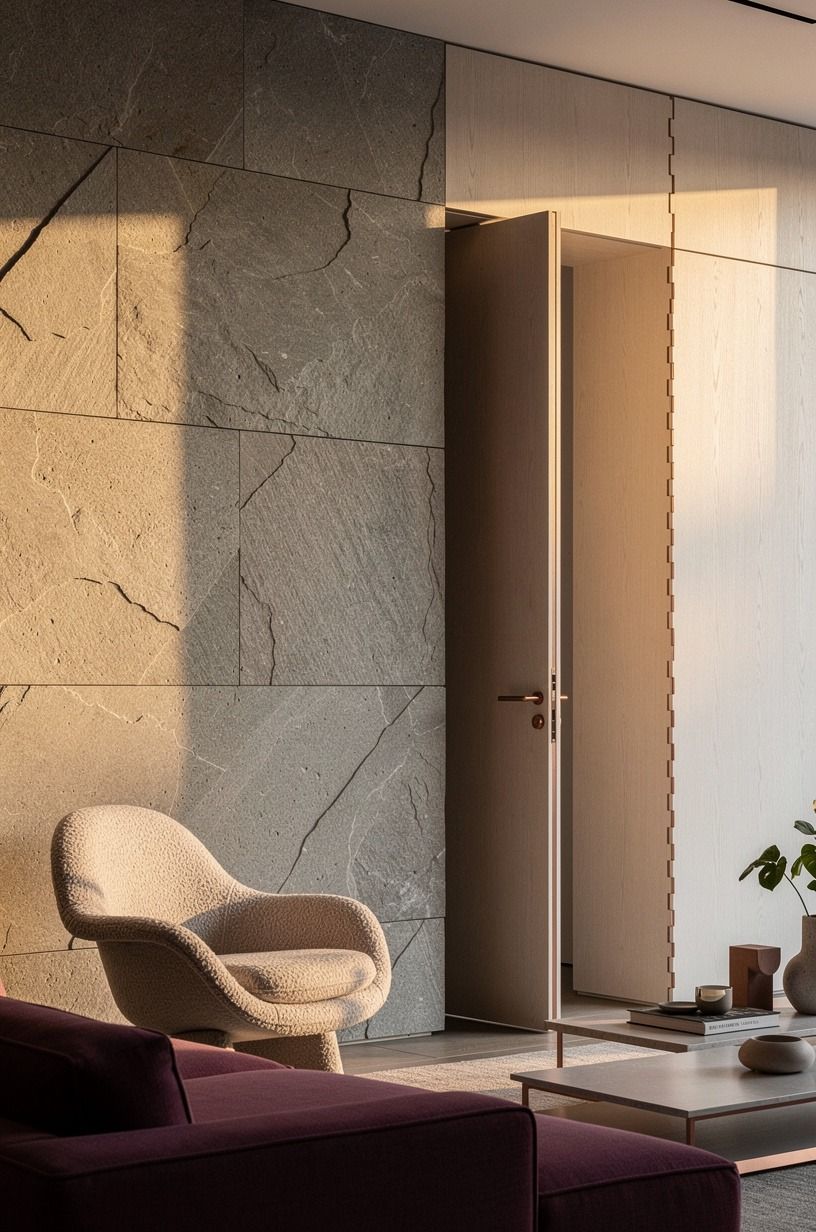
Stone is risky and gorgeous in equal measure. When you continue gray stone veneer across the slab, the wall can read almost monolithic, especially if the opening is pushed to one side and the seating runs diagonally through the room. That’s powerful.
It can also look fake fast if the joint pattern breaks.
Dry-lay the veneer so the courses continue naturally over the door face, then number the pieces before install. I wouldn’t choose chunky ledgestone for this in a sleek room.
A flatter veneer with quieter relief is easier on the eye and easier on the reveal. This same thinking shows up in hidden pantry walls that carry one finish across the opening.
Balance the mass with something plush. A plum mohair sofa against stone keeps the room from feeling cold, and your hidden door will seem like part of the architecture rather than a novelty panel stuck onto it.
14Use reeded glass panels for a soft reveal
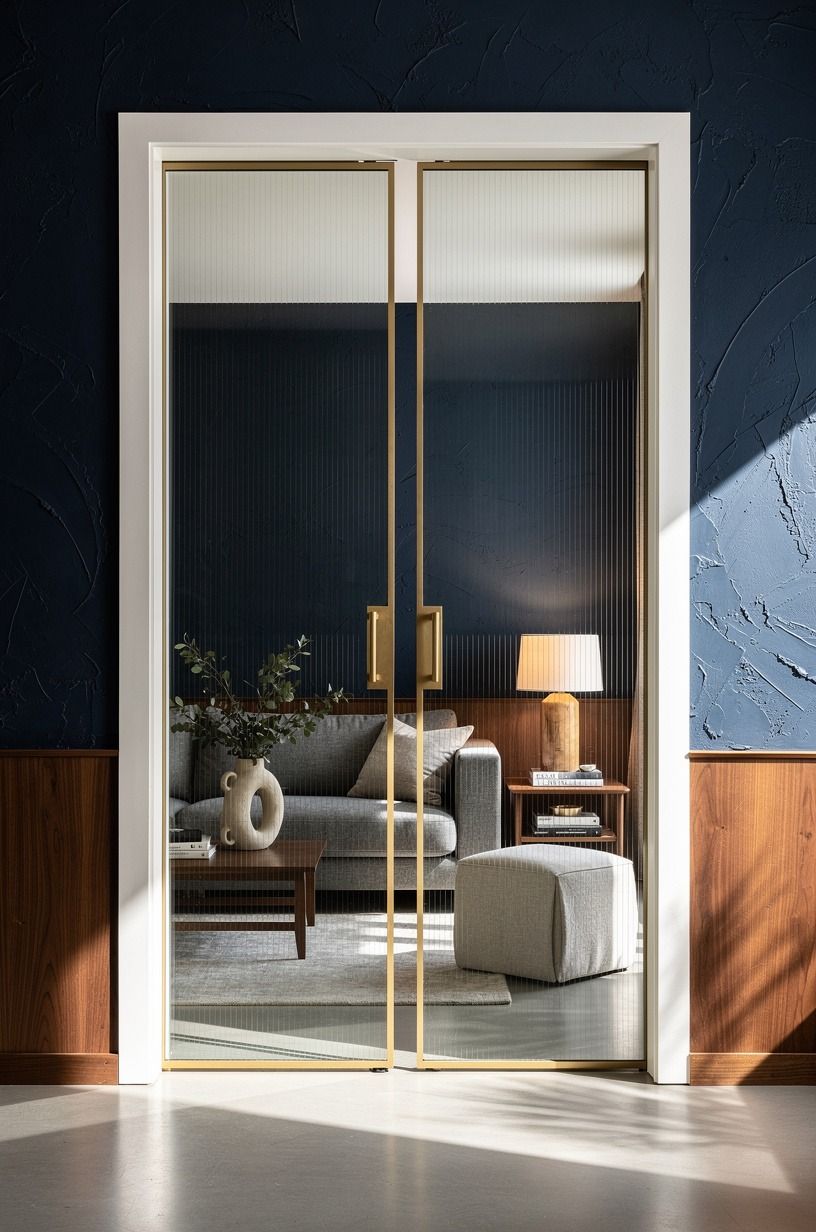
Reeded glass is the rare option that lets you admit the opening without ruining the mood.
15Align shelves so the door reads built-in
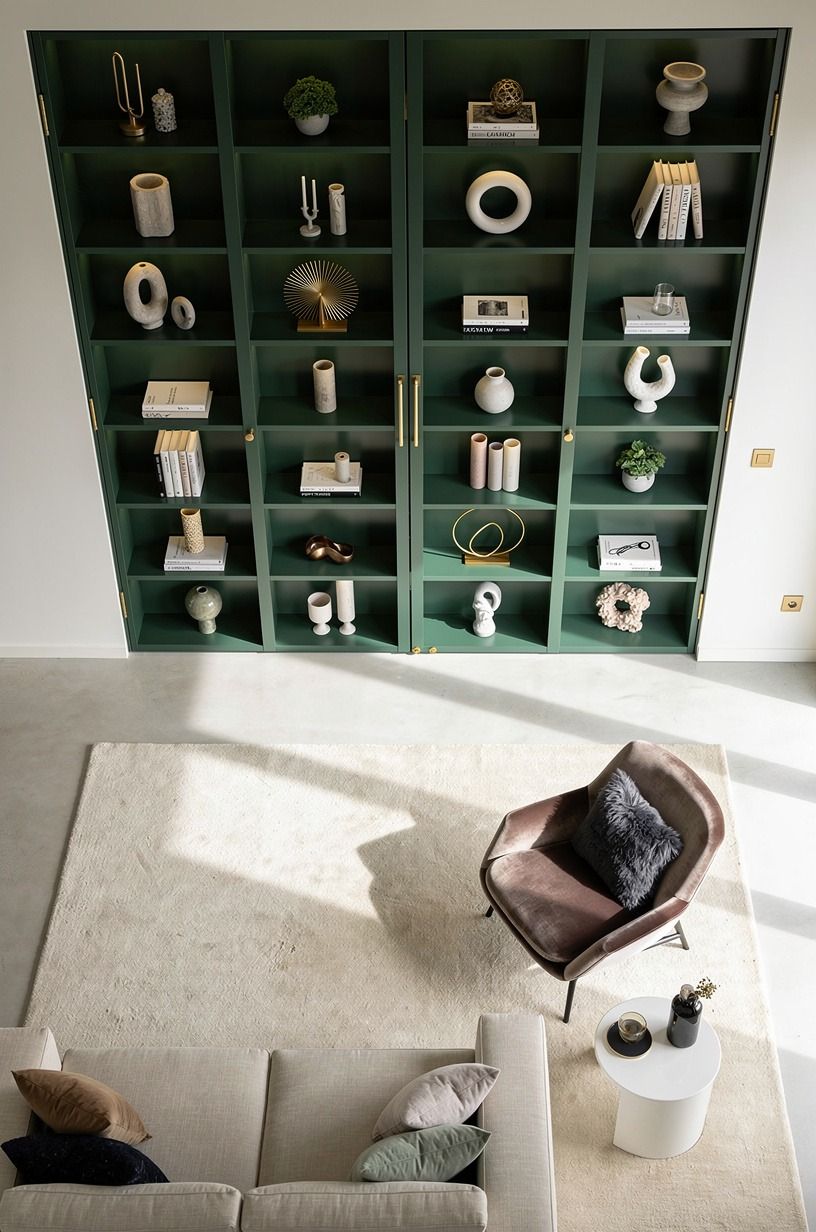
Shelf alignment is one of those boring steps that decides everything. In an emerald shelving wall viewed from above, the door disappears when every horizontal line continues without a wobble and the vertical bays stay on the same module. That’s the hidden logic your eye trusts.
Start by choosing one shelf height family and repeat it. A cream rug under the seating helps the grid feel grounded, while open shelves with random heights just make the wall look improvised. For more built-in disguise strategies, these TV wall hidden door ideas are useful to compare.
I also keep styled objects shallow on the moving panel. A row of IKEA KALLAX boxes nearby can handle the bulk storage, which means the door shelves only need books, one bowl, and a small framed photo.
Lighter. Smarter.
Better.
16Tuck the door behind a sculptural wall niche
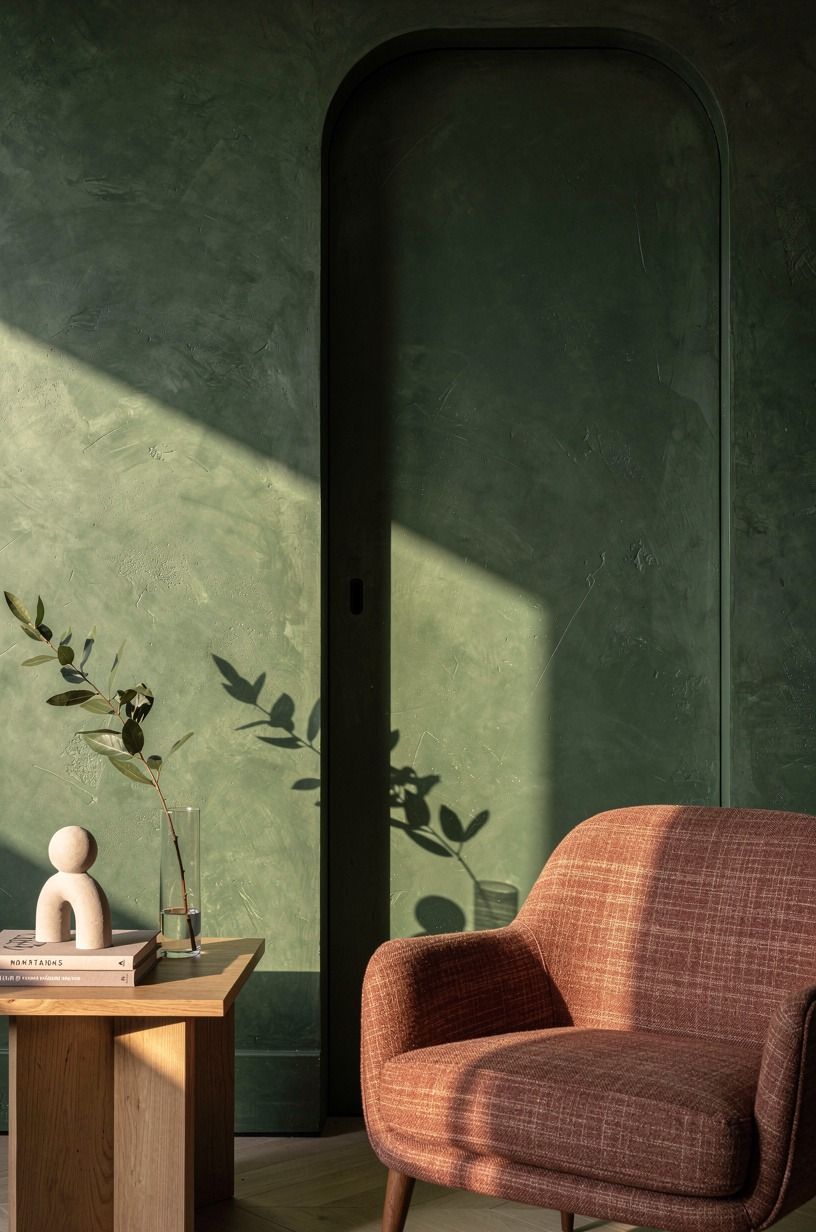
A wall niche helps because it gives the eye somewhere else to land first.
17Finish with invisible hinges and matte hardware
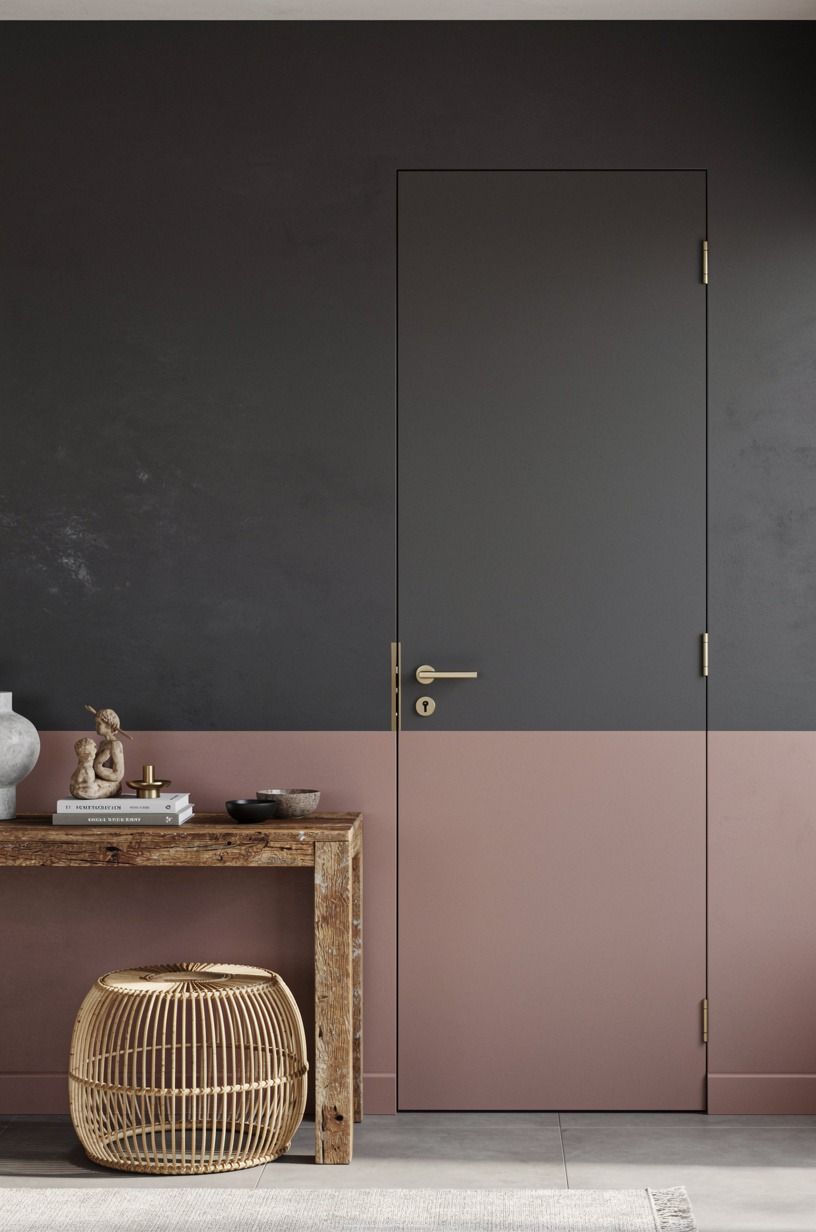
Invisible hinges are the quiet finish move that makes all the earlier work pay off. In a charcoal and dusty rose room, the hidden door looks refined when the slab swings cleanly, the edge stays tidy, and the visible metal is reduced to almost nothing. I prefer matte black hardware or a dark bronze tone because reflective finishes catch too much light.
Spend on the mechanics before you splurge on extra decor. A hidden door with bad swing will always feel cheaper than one with ordinary paint and excellent hardware. And if you’re budgeting the whole living room around the wall, use these broad cost ranges as your reality check:
I also keep the furniture dimensions honest around a concealed wall. A coffee table at 16 to 18 inches tall and about two-thirds the sofa length usually leaves better clearance, and an 8×10 or 9×12 rug helps the seating arrangement feel finished instead of floating.
Why does modern hidden door design look expensive in some rooms and fussy in others?
The difference is almost never the door by itself. It’s the sequence of decisions around it.
When a hidden door feels expensive, you can usually trace that back to one disciplined idea repeated through the room: one wood tone, one trim language, one wall finish, one lighting mood. That’s what I think of as The Two-Wood Rule, even if nobody else calls it that.
Pick two woods, then stop. If you already have walnut slats on the wall, let your coffee table or shelving echo that warmth and keep the rest quieter.
Once people start layering oak, walnut, black ash, and brass all in the same sightline, the hidden door stops reading tailored and starts reading busy.
I also think people overspend in the wrong place. They chase custom hardware first, then leave the seating underscaled or the lighting flat.
Big mistake. In a living room, the door only disappears if the room around it feels settled.
A wool rug in 8×10 or 9×12, front legs anchored on it. A sofa with enough depth to feel generous, usually 35 to 40 inches.
A television positioned at roughly 1.5 to 2.5 times the screen diagonal so the wall isn’t dominated by a black rectangle. Those moves sound ordinary, but they make the hidden door believable because the room already feels resolved.
And paint matters more than people want to admit. I like Sherwin-Williams Evergreen Fog SW 9130 when you need softness, and Farrow & Ball Hague Blue No. 30 when you want a moodier envelope, but I’d still choose finish consistency over a trendier color. Same sheen.
Same prep. Same light test in the evening. If I had a limited budget, I’d put my money into millwork alignment, hinge quality, and a real rug before I chased fancy accessories.
That’s the part that worked every time for me. The room has to feel designed first. Then the hidden door feels inevitable.
The Questions I Get Asked Most
What is the best Modern Hidden Door Ideas for Sleek, Seamless Interiors for a small living room?
A slat wall or paint-matched panel is usually the best pick because it saves visual space while still hiding the opening. I like a slim walnut slat wall with an Article Sven nearby, or a flush warm-white panel if your room is already tight and bright. You can also borrow spacing ideas from these space-saving concealed door layouts.
Where can I buy Modern Hidden Door Ideas for Sleek, Seamless Interiors pieces on a budget?
I start with IKEA, Target, and Wayfair for shelves, lighting, and simple pulls because you can build the wall language without blowing the budget. Facebook Marketplace is still gold for solid wood consoles, framed art, and old cabinets you can paint to match.
How much does a Modern Hidden Door Ideas for Sleek, Seamless Interiors makeover cost?
A cosmetic version usually lands around $300 to $1,200, and that’s enough for paint, art, a rug, and styling around the door. Once you add custom millwork, better hinges, or cabinetry, you can move into the $2,500 to $8,000 range pretty quickly.
Can I create a Modern Hidden Door Ideas for Sleek, Seamless Interiors on a budget?
Yes, and the cheapest wins are often the smartest. Paint the slab the exact wall color.
Restyle the furniture so the door isn’t isolated. Use secondhand art, a simple push latch, and peel-and-stick trim where permanent millwork isn’t realistic.
Is a Modern Hidden Door Ideas for Sleek, Seamless Interiors worth it in a small space?
Yes, because small rooms benefit from less visual interruption. When you keep the opening flush, your wall reads longer and calmer, which helps a tight living room feel more intentional. I just make sure the door swing doesn’t fight the coffee table path.
Is Modern Hidden Door Ideas for Sleek, Seamless Interiors a good idea for a rental?
Yes, if you focus on low-damage disguise moves instead of structural changes. Removable slats, peel-and-stick molding, tension-mounted drapery, oversized leaning art, and furniture placement can all soften a plain door without putting your deposit at risk. And that’s a real win!
Paint Before Hardware: Where I’d Start First
If I had to pick one step to start with, I’d start with painting the door the exact wall color. Bad sheen gives a hidden door away faster than cheap hinges do, and color mismatch keeps fighting you.
Get that right first. Then the rest lands.