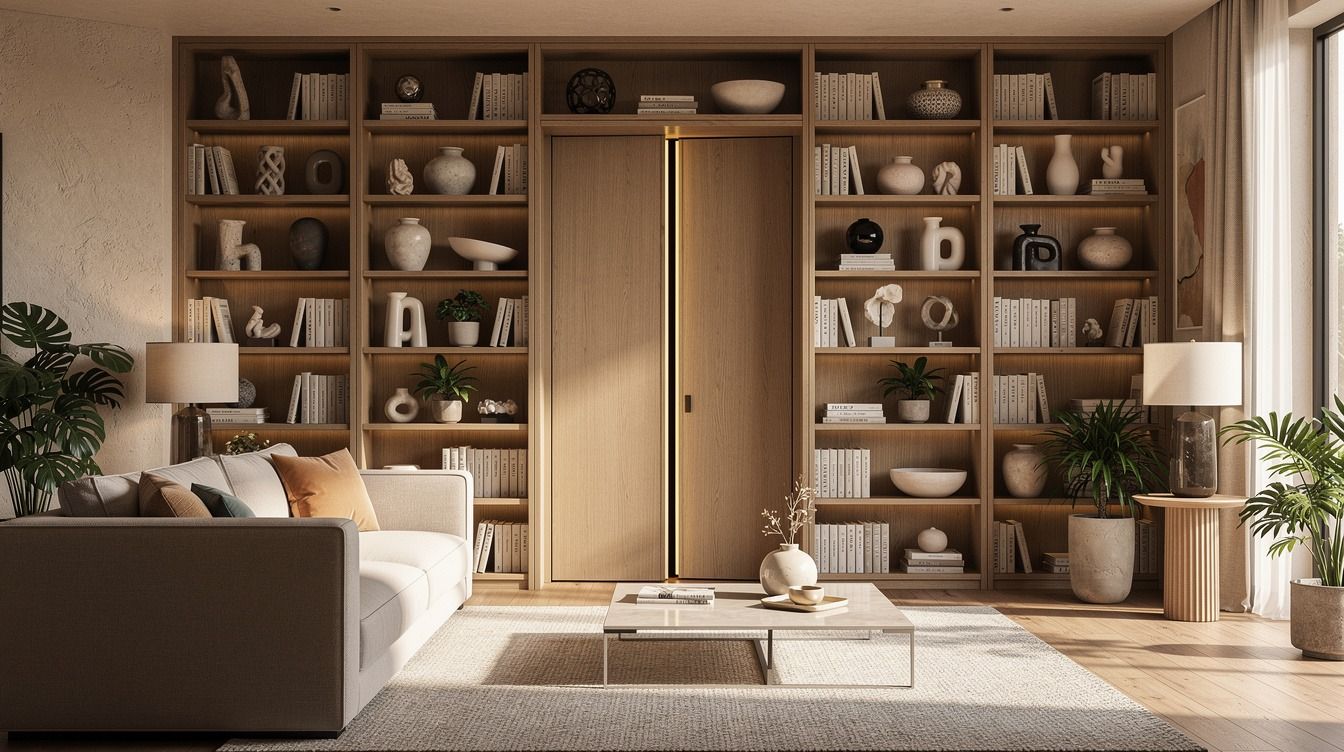
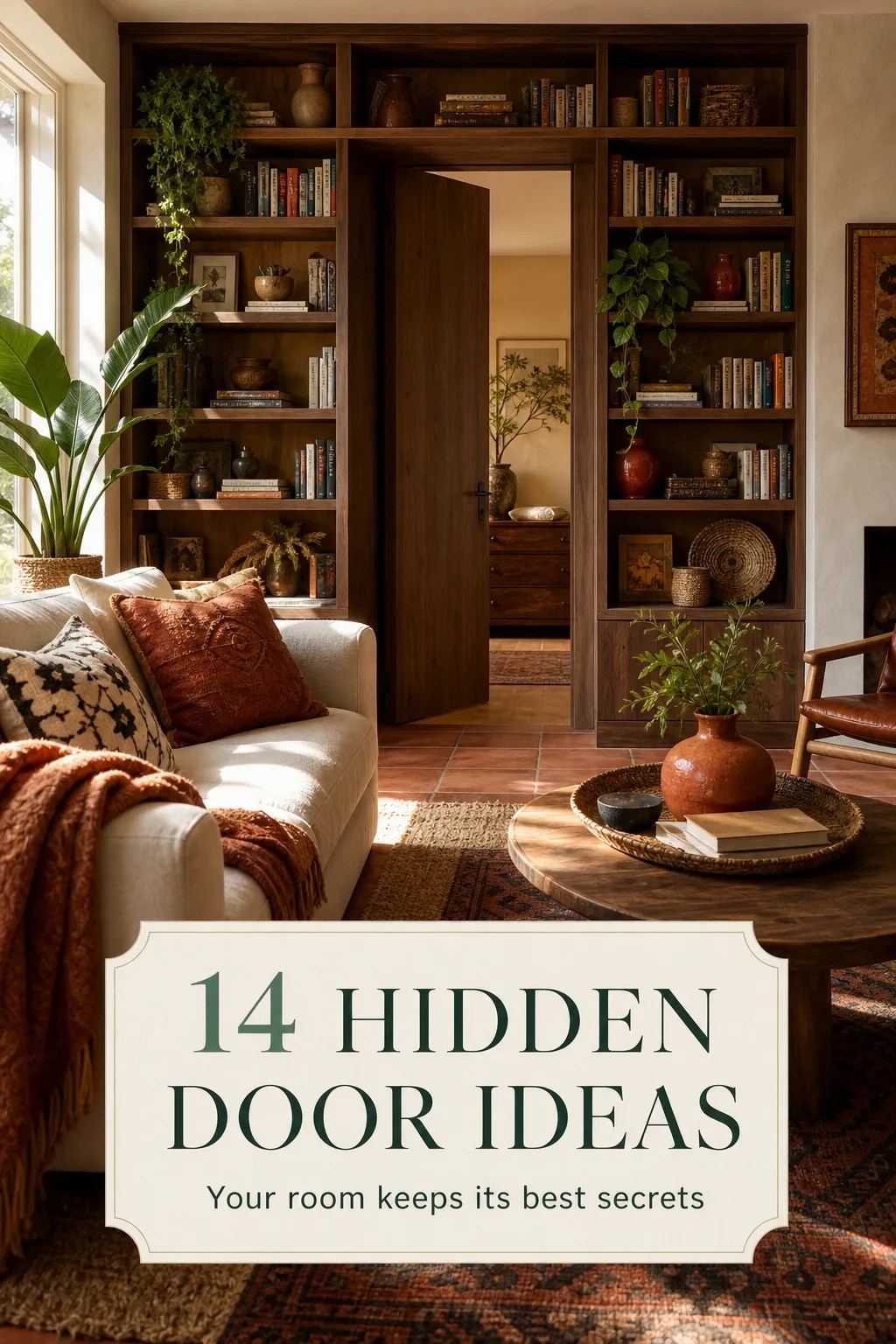
Hidden Door Ideas for the Living Room work best when the answer is simple: make the storage door behave like millwork, not furniture. I learned that after trying to hide one with a cute screen that shouted for attention the second you walked in. Once you match the wall, the material, and the traffic path, clutter vanishes fast. That’s the whole game.
If you’re planning around a real seating zone, keep your sofa at a usable 35-40 inch depth and let the concealed access sit outside the main sightline. That one move keeps the room from feeling like a hallway with a novelty door.
I’ve been thinking about this one a lot lately, and the rooms that get it right almost never rely on a gimmick. They rely on three quiet choices. The wood tone has to match.
The seam has to disappear. And the eye has to land on the sofa first, not the door.
- Wrap a bookcase around the hidden doorway
- Paint the door flush with wall paneling
- Mirror the passage behind full-height glass
- Blend the door into a media wall
- Continue picture-frame molding across the seam
- Slide a slatted wood screen over it
- Disguise the doorway as a built-in cabinet
- Wallpaper the door with the whole wall
- Can a single piece of artwork hide the door?
- Use push-latch panels beside the fireplace
- Hide storage access behind curtain walls
- Hide the doorway inside a faux reading nook
- Should you hide the door behind paneled wainscoting?
- Can you hide the door with a textured plaster finish?
1Wrap a bookcase around the hidden doorway
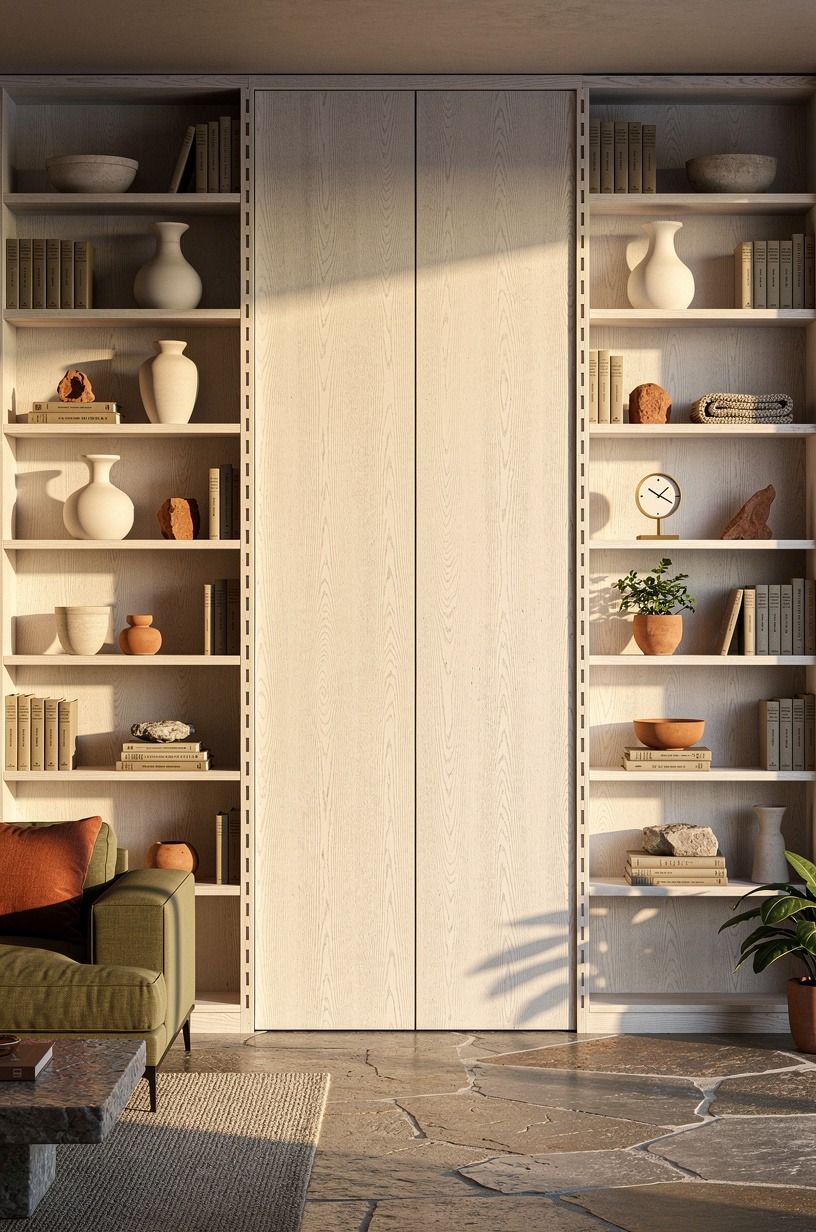
A full bookcase surround is still the smartest answer if you want storage access to read like millwork instead of a gadget. In the terracotta, stone, and olive setup from the photo, the win comes from taking cerused white oak all the way to the ceiling so your eye reads one built-in volume, not one door panel floating in space. If you’re wondering how to hide doors in living room layouts without making the wall feel flat, this is where I’d start.
Use shelves with real depth, around 10 to 12 inches, and vary what you place there so the doorway doesn’t form an obvious rectangle. Stacked books.
A stone bowl. One olive ceramic lamp in the corner shelf.
I made the mistake once of styling every shelf evenly, and it turned the center seam into the first thing you noticed. Better to keep one side slightly heavier with the largest books anchored low. If you like the hidden-room effect but want a more media-driven version, this tv wall with hidden door approach shows the same logic in a cleaner shell.
Then echo the tone with a rug under the front legs of your seating, ideally a generous 8×10 for the whole zone.
2Paint the door flush with wall paneling
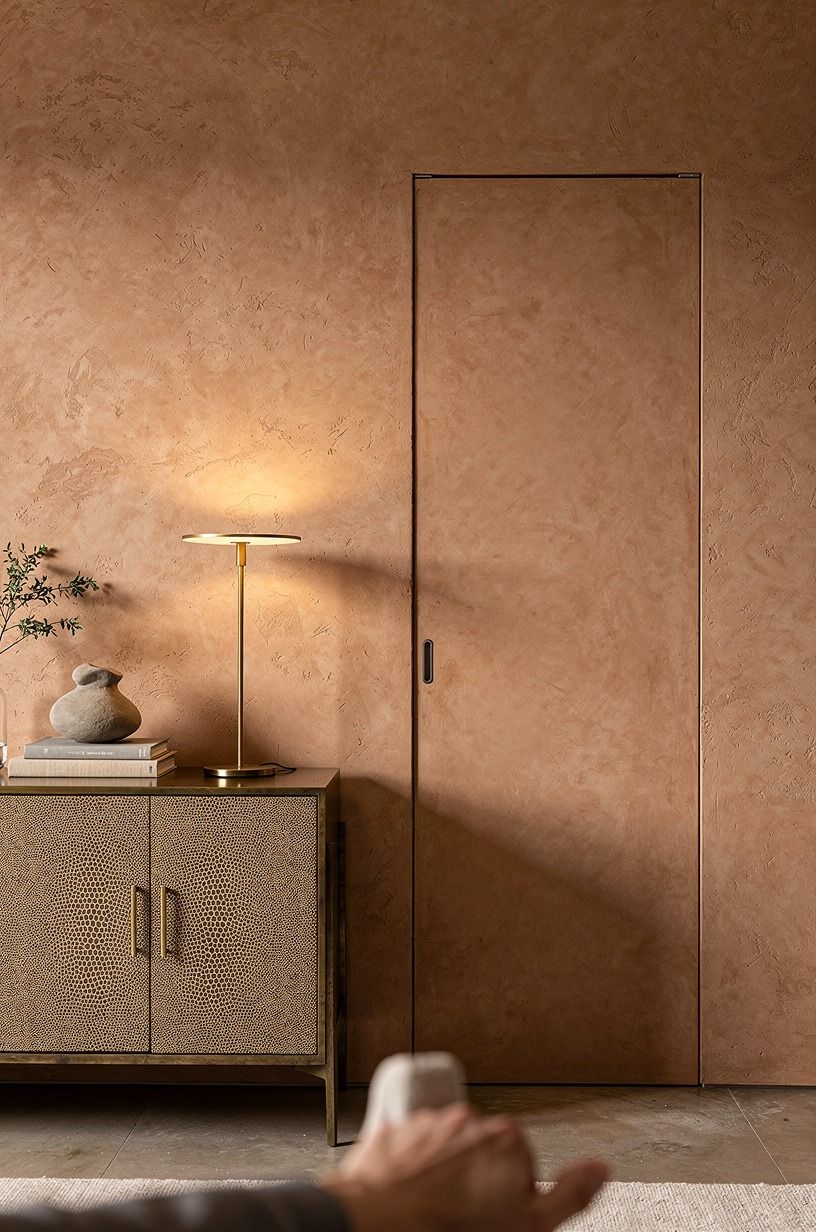
This is the move for anyone who wants the door to disappear before guests even realize there’s a passage there. In that clay-toned paneling, you don’t need contrast at all.
You need discipline. Paint the rails, stiles, and seam in the same finish as the wall and let Benjamin Moore Revere Pewter HC-172 do the soft work of blurring edges without going flat beige.
The detail that sells it is the hardware, or really the lack of visual hardware. Skip exposed knobs and use a push latch so your hand opens the panel but your eye never catches it.
And keep the nearby brass warm and quiet, like aged brass sconces or a linen-shaded floor lamp, because shiny chrome will call attention to the door line fast. If your entry spills into the living room, the same approach that fixed this front door privacy problem works here too: fewer competing finishes, more wall continuity.
3Mirror the passage behind full-height glass
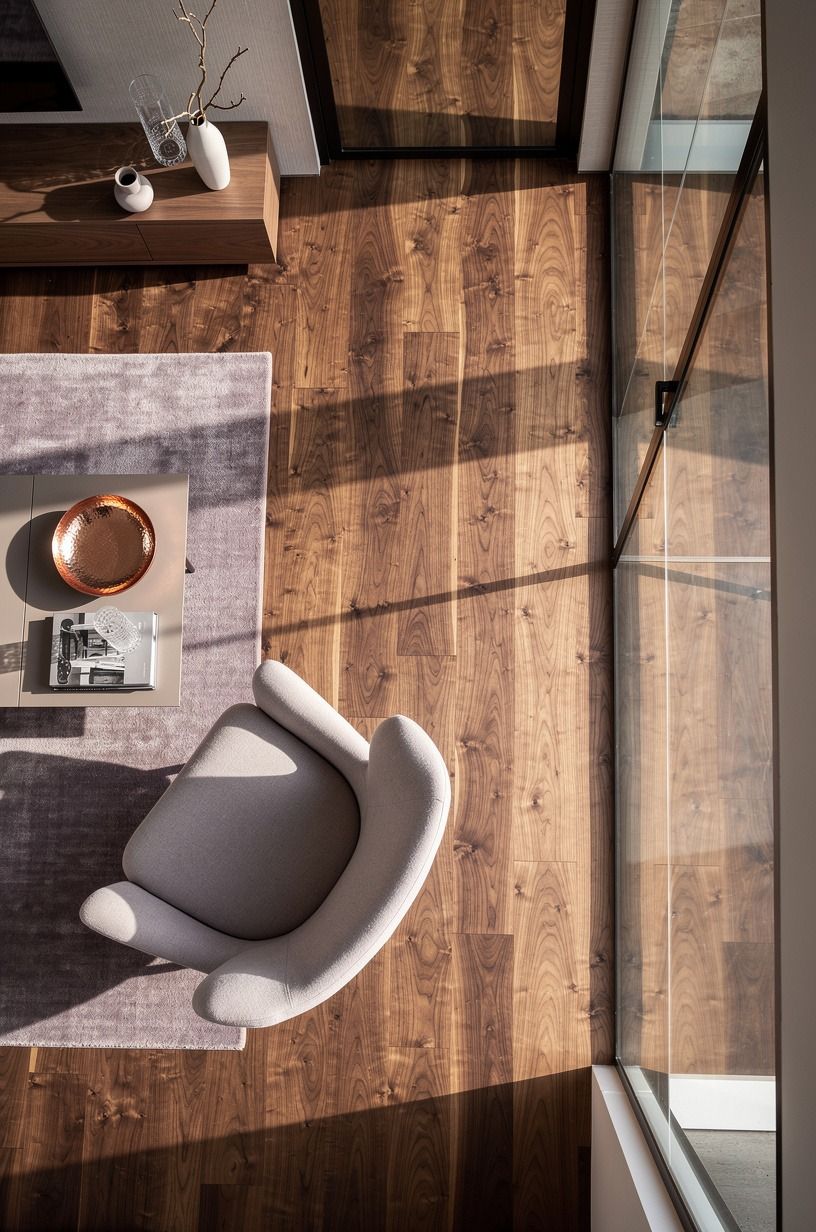
If you have a narrow family room door ideas problem, mirrored glass can buy you visual depth while the passage itself stays tucked away. In the plum, grey, and rose-gold room from the overhead view, full-height glass works because it reflects the rug, the table, and the air around the seating zone instead of just bouncing your face back at you. That’s a huge difference.
But I’d only use this when the room already has strong symmetry. Otherwise, the mirror reads fussy. Choose bronze or smoked mirror over bright silver.
And frame it with slim rose-gold trim so the hidden opening feels intentional.
Your coffee table should still land around 16-18 inches high, with enough breathing room that the reflected floor doesn’t turn chaotic. Want another way to extend sightlines without adding more furniture? This piece on making a living room feel less cold and cramped pairs well with the same idea.
That’s a big visual payoff!
4Blend the door into a media wall
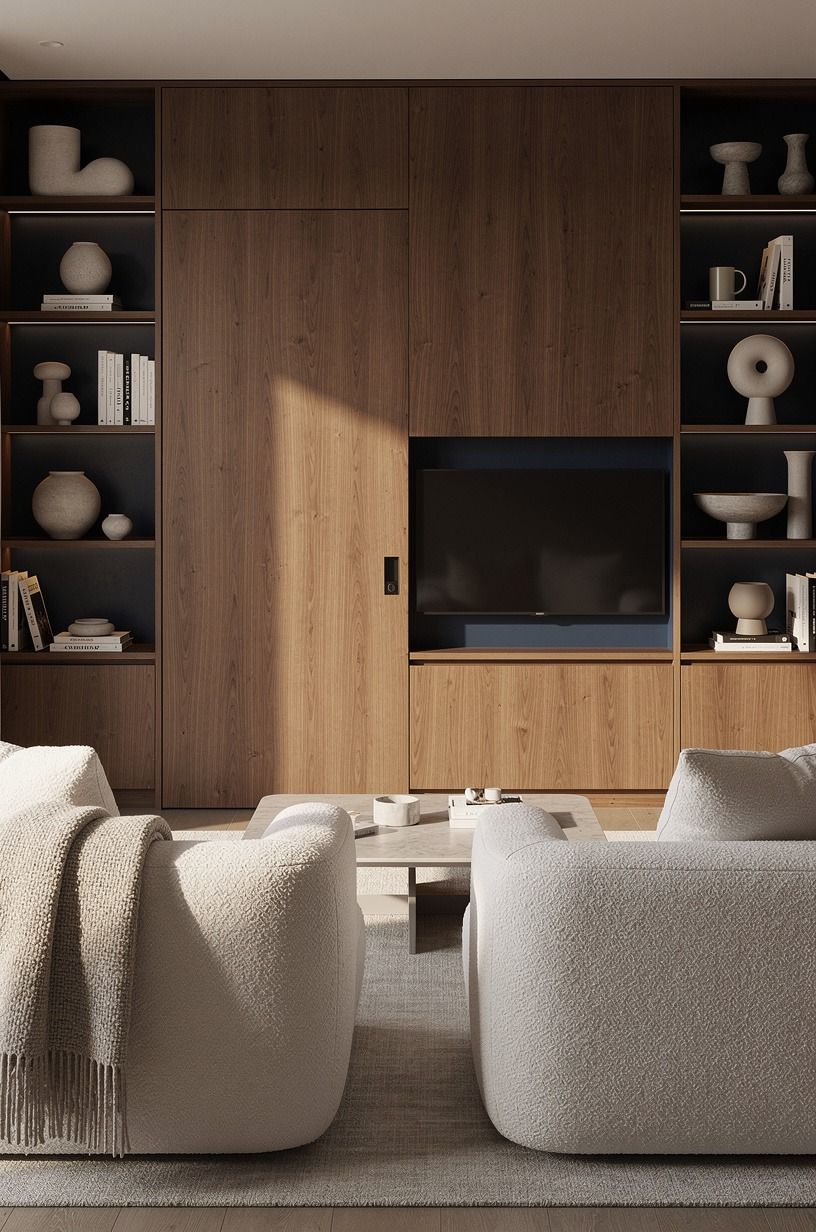
A media wall with door is one of the few living room upgrades that can hide clutter and calm visual noise at the same time. The photo’s navy, white, and walnut palette works because the door isn’t treated like an afterthought. It’s one panel inside a full composition of shelves, screen, and lower storage, all held together by walnut veneer that stays consistent from left to right.
Here’s the part most people miss: measure viewing distance first. Your seating should sit about 1.5 to 2.5 times the TV diagonal away, then the hidden panel gets placed beside or beyond that focal zone so nobody stares right at the seam.
I wouldn’t split the wall with random decor niches either. One long walnut run looks richer, and it hides more mess. If you’re building from scratch, this media wall layout guide gives you the cleanest precedent I’ve seen.
5Continue picture-frame molding across the seam
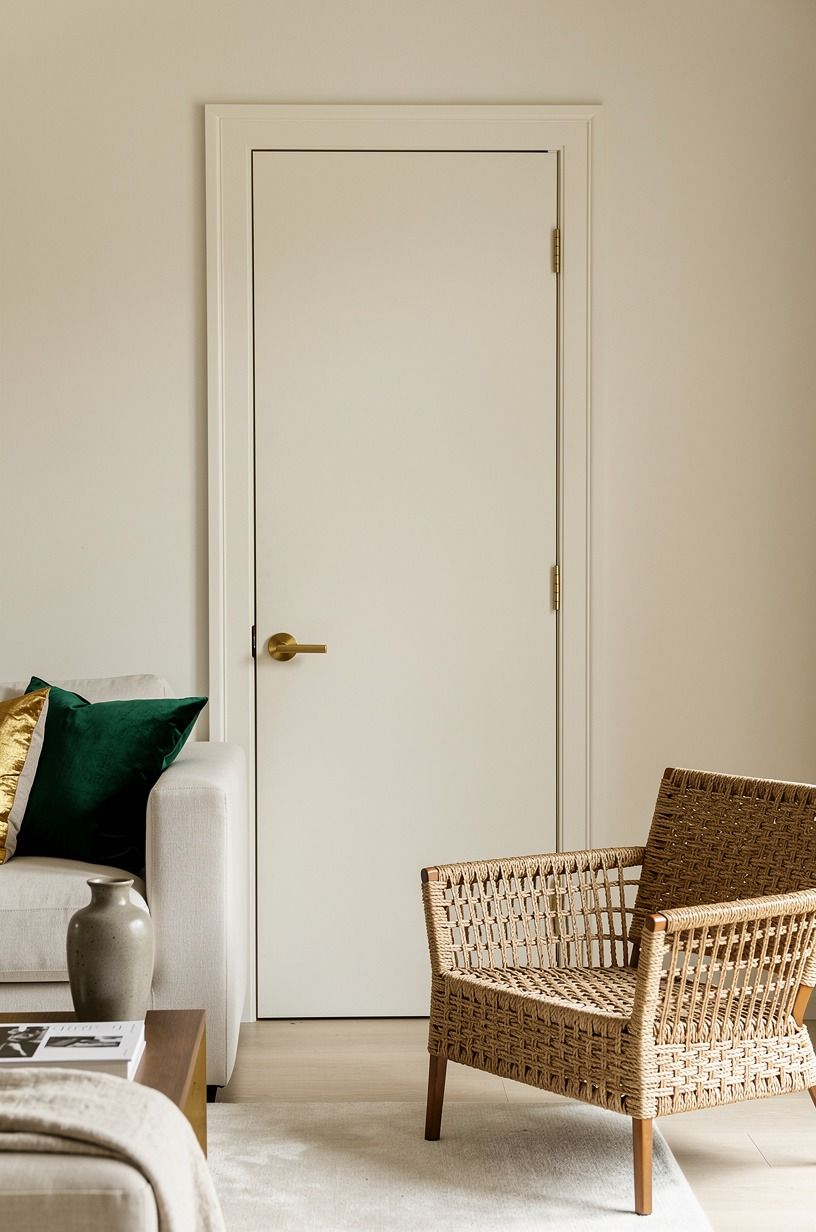
This one feels classic because the wall treatment does the hiding for you. In the cream room with emerald and gold accents, the molding crosses the seam so cleanly that your eye follows rectangles, not the door edge.
That’s the kind of move that looks expensive even when the materials aren’t. A satin finish in Sherwin-Williams Evergreen Fog SW 9130 on the trim beside a lighter cream wall gives enough softness to keep the pattern architectural, not busy.
You do need precision here. Even a slightly misaligned miter will expose the panel faster than a visible knob would. I like to keep the furniture around it simple, maybe an Article Sven chair in warm leather and one tall plant, because too many small objects near the seam make people inspect the wall.
And yes, this is worth it in a small room! You get hidden access without giving up floor area or adding another bulky cabinet.
If your layout still feels chilly, this living room warmth reset helps you calm the rest of the space around the seam.
6Slide a slatted wood screen over it
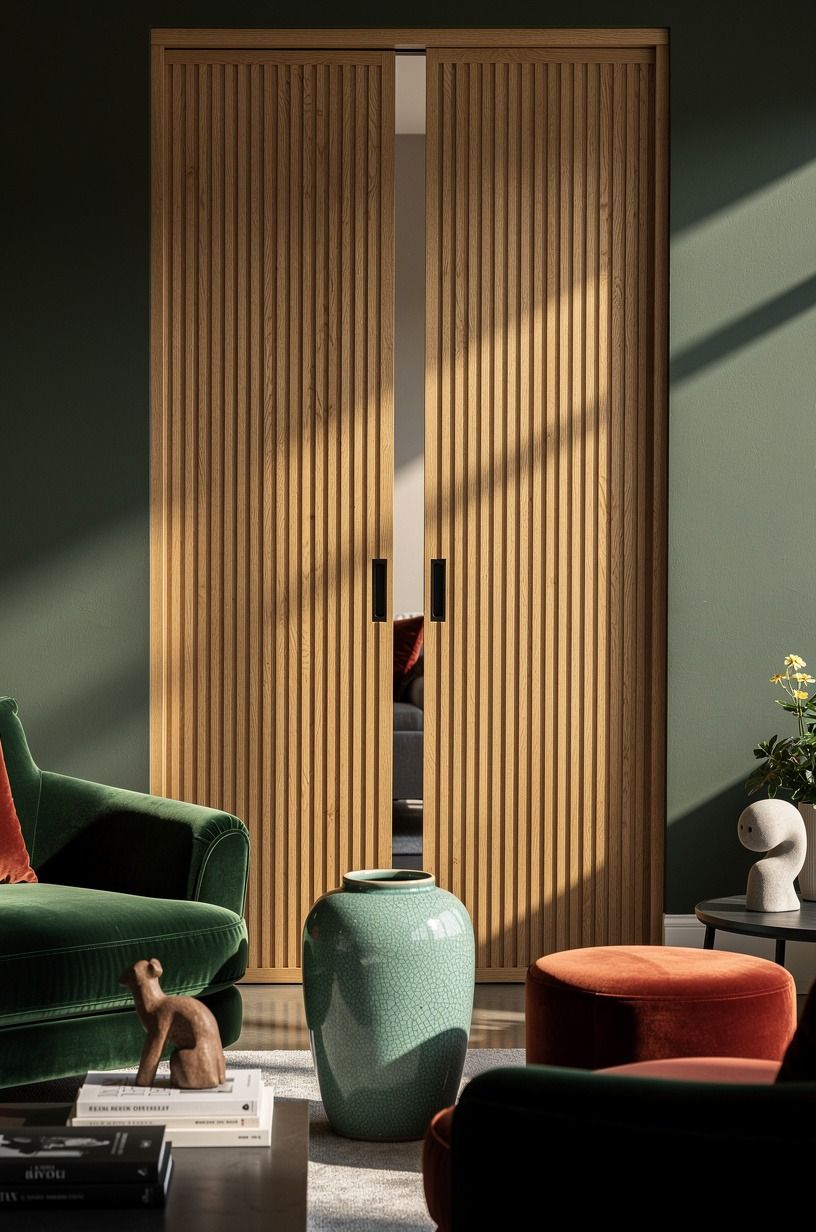
A sliding screen is the answer when you want the doorway hidden sometimes, not permanently invisible. In the forest green, rust, and oak room from the photo, the slats soften the wall and let a little shadow through, which keeps the panel from feeling like a giant blank patch. Use natural oak with a matte finish so the grain reads warm instead of orange.
The key is spacing. Tight slats look heavy, but slats spaced around three quarters of an inch apart keep the screen light enough to move and visually porous enough for a living room.
I also like this option for renters because the whole system can mount on a surface track with simple brackets, then leave with you later. If you’re working with a room that’s already crowded, read this take on why an oversized sofa blocks circulation before you size the screen.
You don’t want the track fighting your walkway.
7Disguise the doorway as a built-in cabinet
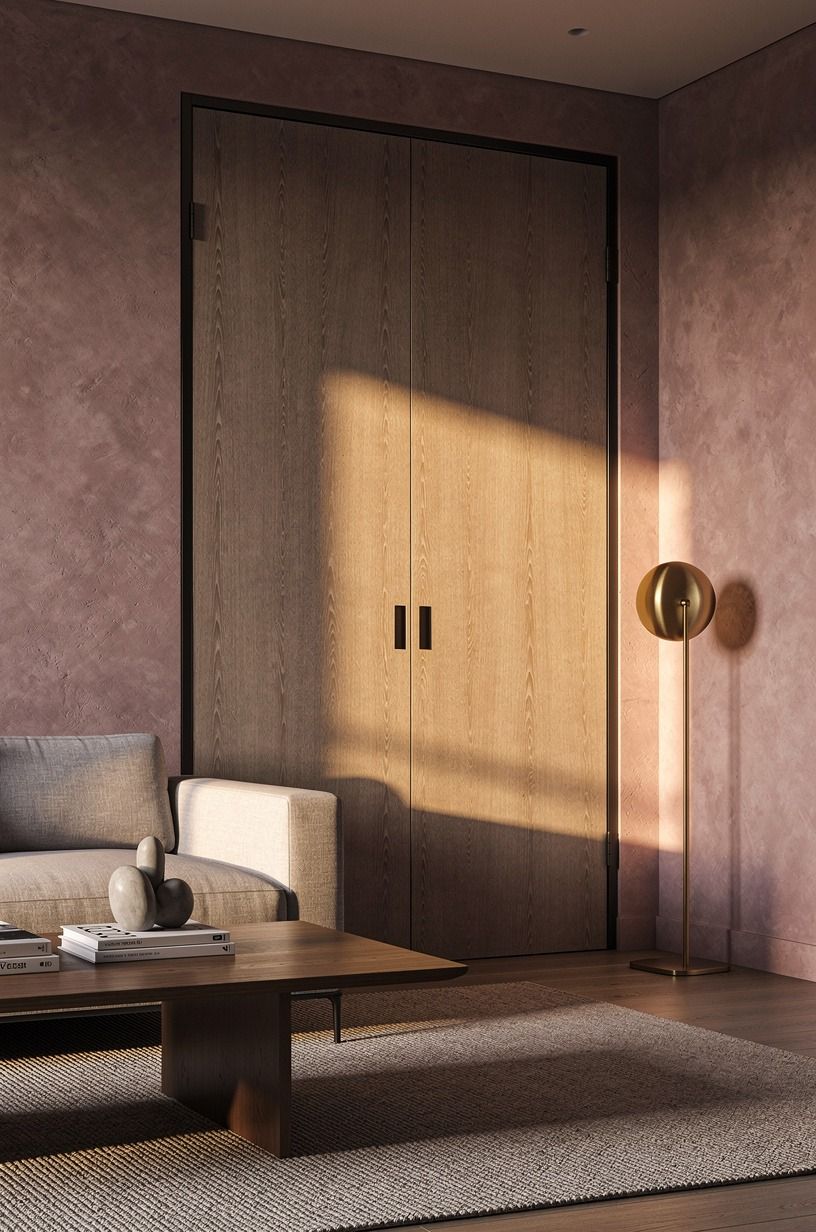
This works best when the hidden access also has to carry weight in the room.
8Wallpaper the door with the whole wall
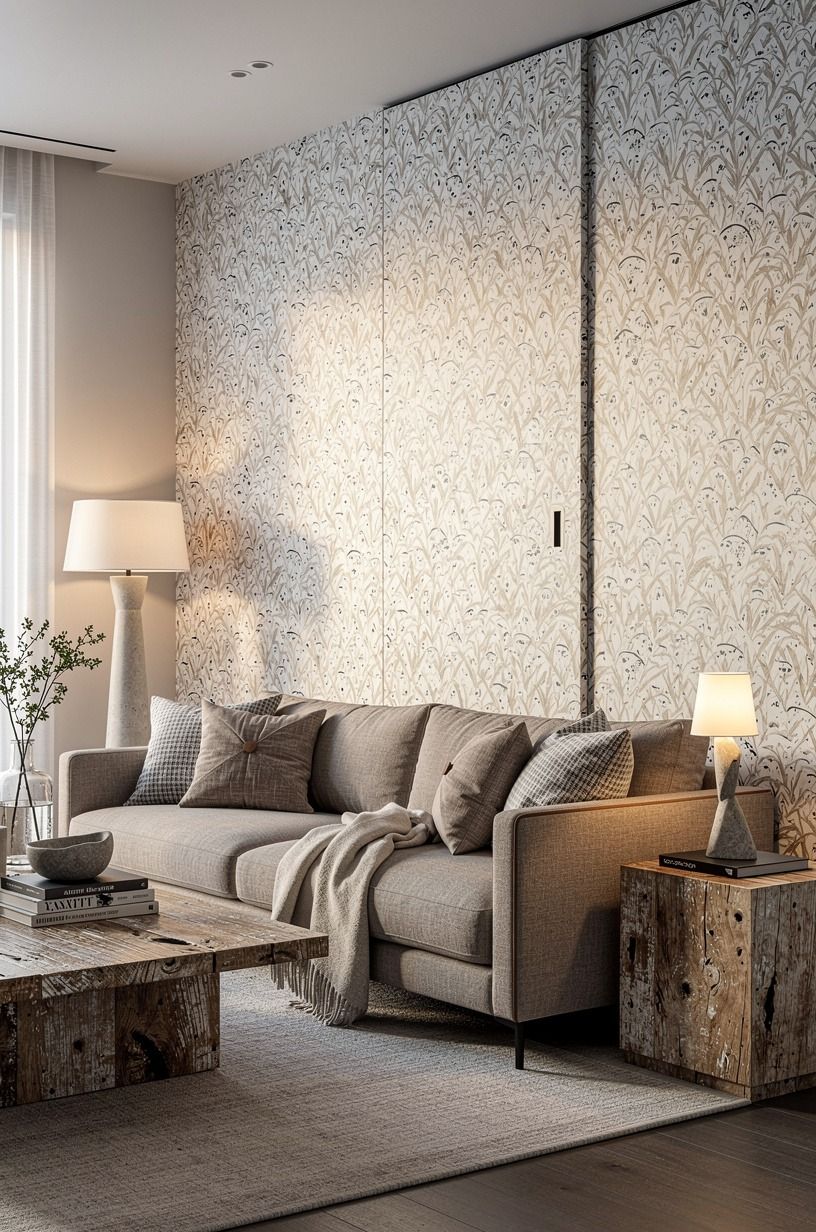
When the wall has movement already, wallpaper can make a door vanish faster than paint. In the warm white, camel, and black room from the photo, the reason it works is simple: the pattern runs right across the seam without announcing it. A grasscloth look can be beautiful, but for an actual hidden door I’d choose a smoother vinyl wallpaper or peel-and-stick with a stable repeat.
Grasscloth telegraphs breaks too easily.
And don’t stop the disguise at the paper. Match the baseboard color, keep the trim minimal, and let the nearby furniture stay low and relaxed.
Maybe a camel sofa with front legs on a 9×12 rug is the calmest place to start.
If you’re renting, this is one of the smartest no-damage ways to test how to hide doors. Reach for removable paper and a simple magnetic catch for the cleanest install. For more soft texture layering around it, I keep coming back to this piece on why velvet throws warm up a living room.
9Can a single piece of artwork hide the door?
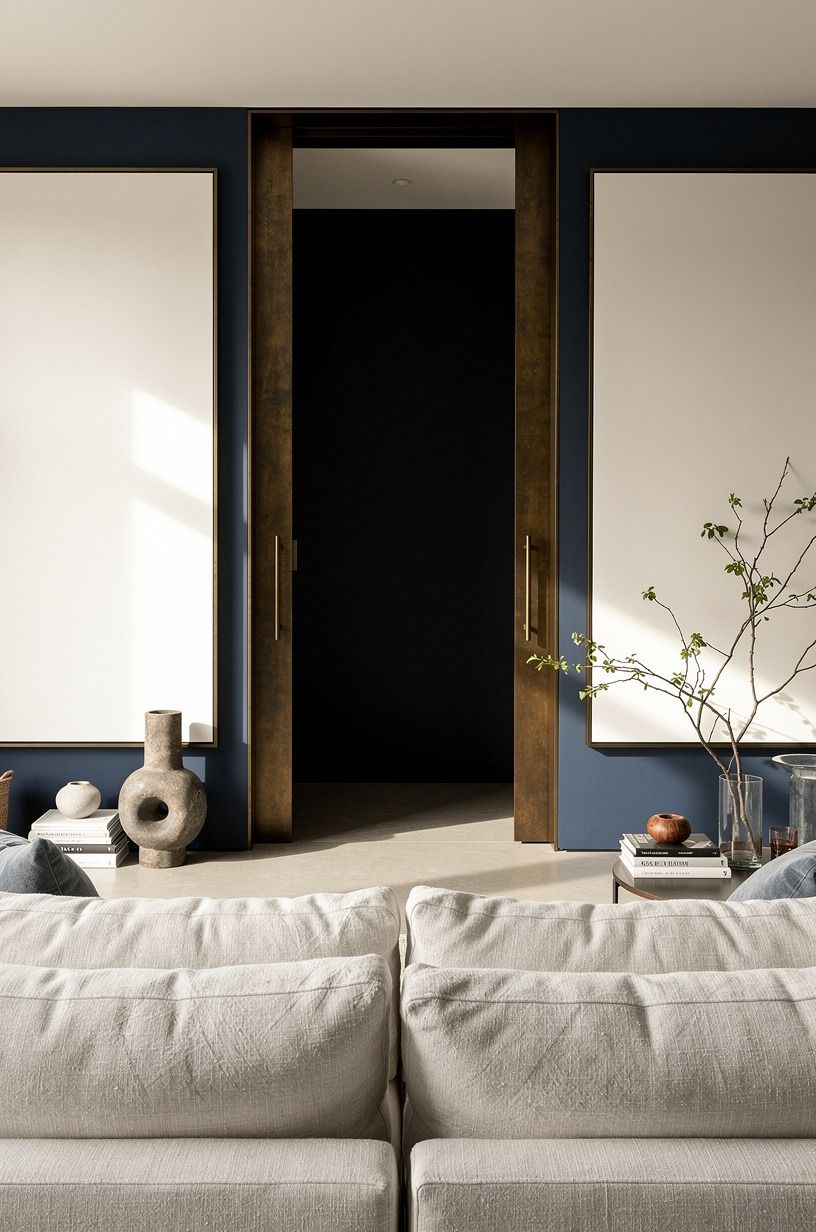
This is the bold answer, and I love it when the room can carry drama.
10Use push-latch panels beside the fireplace
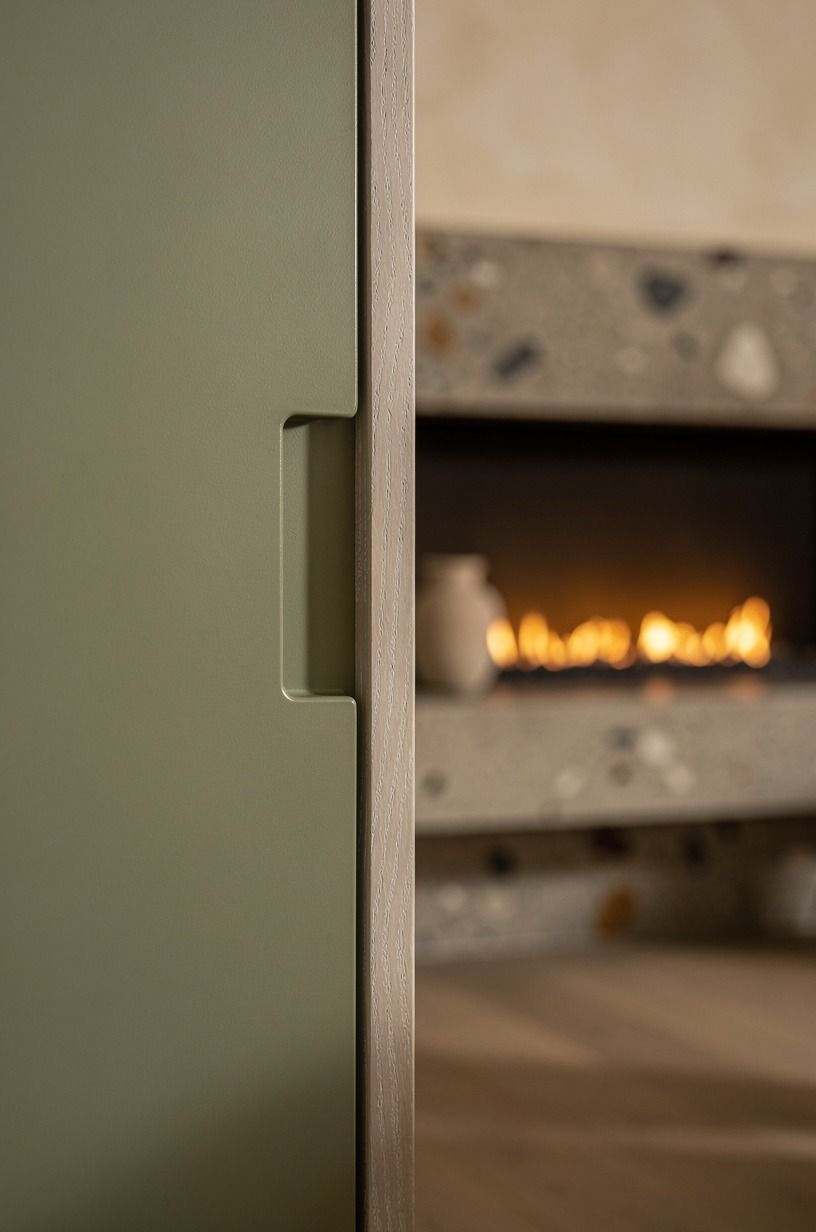
This is the neatest choice for shallow storage because the panel line can live inside all the other lines a fireplace wall already has. In the sage green, warm cream, and natural wood close-up, the seam almost disappears once the grain of the cerused white-oak panel continues cleanly past the opening. That’s why this detail feels so satisfying.
I’d keep the adjacent finish quiet, maybe painted in Sherwin-Williams Evergreen Fog SW 9130, and avoid ornate mantels here. Too much profile makes the hidden panel harder to calibrate.
You also want the latch pressure dialed in so the door pops with a hand press but doesn’t drift open when the room warms up. Been there. Not fun.
11Hide storage access behind curtain walls
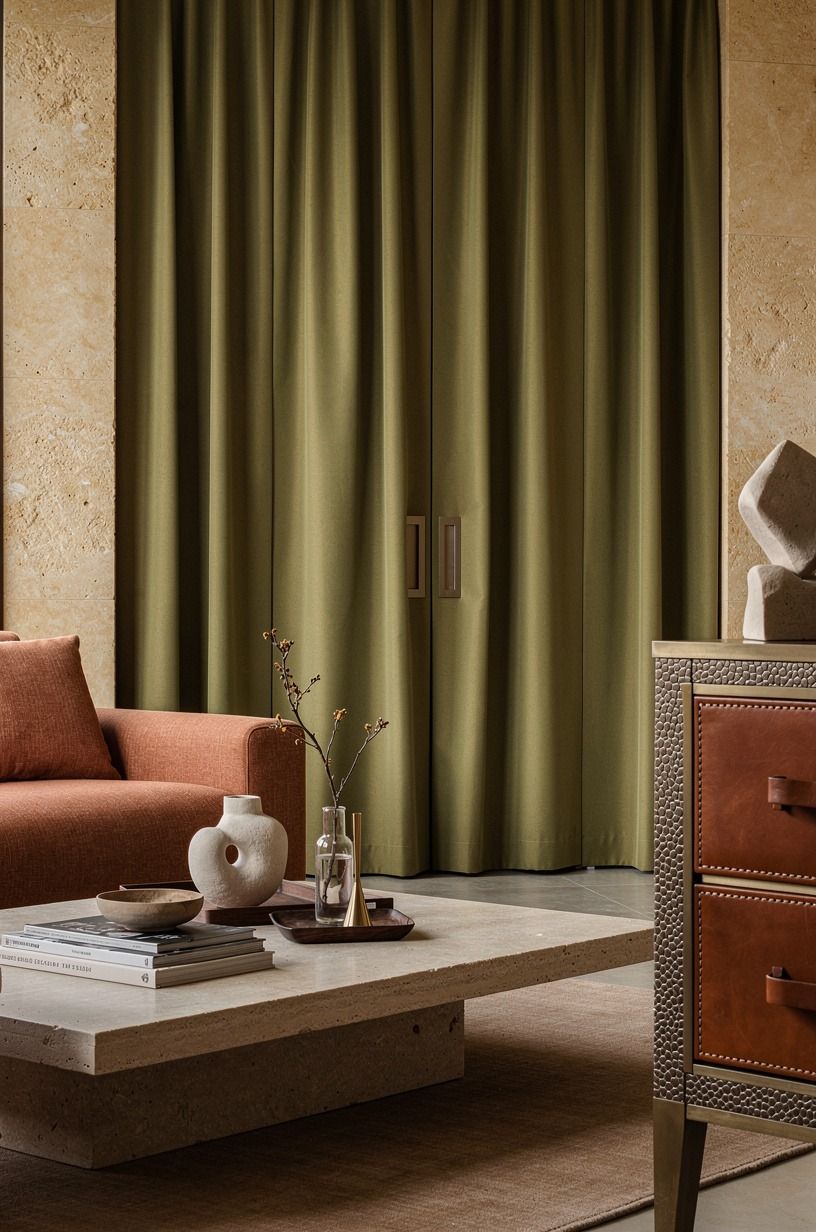
Curtain walls sound theatrical, but in the right room they feel soft and smart.
12Hide the doorway inside a faux reading nook
This is the move when you want the door to disappear behind a genuinely useful feature instead of a decorative one. In the cream, walnut, and soft green setup, the doorway sits inside what reads at first glance as a shallow window seat.
The seat is framed by a fluted walnut surround, then topped with a slim ledge shelf.
The key is consistent reveal lines: every horizontal seam lines up with a shelf depth, every vertical seam dies into a pilaster. Your eye stops counting joints.
I’d size the bench at about 18 inches deep so it functions as seating without looking like storage. A Fiddle Leaf fig sits on the ledge and pulls the eye away from the seam entirely.
Then a single bouclé cushion in oatmeal does the rest. If the room layout allows it, place a brass sconce above the nook so the warm pool of light falls on the bench. The unglazed terracotta planter stays put, in case you wondered.
For the rest of the room, this rich textured living room pull pairs back into the same layered quiet.
13Should you hide the door behind paneled wainscoting?
Yes, when the room already wants classical bones. In the moss green, navy, and bone white room, the lower half of the wall carries wainscoting.
The upper half carries a quiet portrait wall and the door lives inside the line where the two meet.
Vertical stiles land at consistent intervals so the door stile reads as just another stile. The whole room feels traditional without feeling stiff.
The detail that decides this one: pick a chair rail height between 36 and 42 inches, then set the door’s horizontal break to exactly the same line. If the heights drift, the seam shows instantly.
I’d run a Farrow & Ball Studio Green flat finish on the field.
Then a Benjamin Moore White Dove OC-17 semi-gloss on the trim so the contrast stays gentle.
Skip the decorative knobs here. A flush brass pull sits almost flush with the rail, which is the whole point. If your living room still needs warmth after the wall treatment, this cozy English cottage living room reference shows the soft furniture that loves this kind of wall.
14Can you hide the door with a textured plaster finish?
Yes, and it’s the move for anyone who wants seam-free walls without committing to a full paneled system.
The 80 Percent Budget Rule for Hidden Doors
Most hidden-door living rooms don’t need custom millwork to feel finished. They need the right layer in the right place.
That’s why I use the 80 percent rule: spend on the architectural disguise first, then let rugs, lighting, and seating support it instead of trying to distract from it. Most people do the opposite, and it shows in the seams.
If you’re debating where the money goes, a performance fabric sofa usually runs about $1,200-$4,000 and lined linen drapes often land around $120-$400 a pair. I’d save on accessories before I’d cheap out on the disguised wall itself. That’s the part your eye reads first, and that’s the part that decides whether the room feels intentional.
The Two-Seam Rule I Use Before Hiding Any Door
I’ve seen hidden living room doors fail in two totally different ways. The first is technical: the seam is visible because the finish changes too abruptly, the molding drifts, or the hardware gives the game away.
The second is emotional, and honestly it’s the one people notice faster. The room starts to feel suspicious. Like it’s trying too hard.
Once that happens, the hidden door stops feeling elegant and starts feeling like a theme wall.
So here’s the rule I keep coming back to: every hidden door needs to disappear at two distances. From across the room, the big mass has to read as one thing, whether that’s a bookcase wall, a media wall, a paneled surface, or a curtain plane.
From two feet away, the seam details still have to hold up. If only one distance works, you haven’t finished the job.
I tested this in my last project and the rooms that passed the two-distance test are the ones guests keep photographing.
That usually means making one disciplined choice instead of five clever ones. Match the wood species exactly. Repeat the paint finish, not just the color.
Keep the nearby styling quieter than you think you need to. And if the room already has one dramatic moment, let the door be the supporting actor.
Not the star. I went back and forth on this for a long time because hiding the opening feels like the fun part, but the better rooms are the ones where the disguised door almost disappears from your brain after the first glance.
What about trend-proofing? That’s where people overcomplicate it.
The hidden-door idea itself isn’t the trend. The shell you wrap around it is. A full oak library wall will age differently from a wallpapered rental panel, and that’s fine.
You just want the disguise to make sense with the rest of your living room right now. If your room leans soft and earthy, use terracotta, stone, oak, linen. If it leans moodier, use walnut, blue paint, mirror, brass. But keep the hidden opening speaking the same language as the rest of the room, or you’ll spend money solving clutter and create a new problem in plain sight.
The Questions I Get Asked Most
What is the best Hidden Door Ideas for the Living Room for a small living room?
The best pick is a paneled wall or media wall because it hides access without adding extra bulk. A slim IKEA BESTA run beside a concealed panel can help you keep storage low, and your room will still read open from the sofa. For a sleeker setup, this tv wall hidden-door example is a smart reference.
Where can I buy Hidden Door Ideas for the Living Room pieces on a budget?
Start with IKEA for shelves, curtain tracks, and simple cabinets.
Then check Facebook Marketplace for solid wood bookcases or framed art. Target Threshold is the next stop if you want new pieces without the markup.
I also like mixing one new piece with one secondhand score so the wall doesn’t feel too showroom-perfect. If you want the concealment to feel more architectural, this media-wall living room example shows the cleaner end of the spectrum.
How much does a Hidden Door Ideas for the Living Room makeover cost?
A typical refresh costs about $300 to $1,200 if you’re painting, adding a rug, and disguising the opening with shelves or curtains. What stays free?
Re-styling what you already own, editing clutter, and moving oversized pieces out of the traffic path. Honestly, that’s where half the win comes from anyway!
Can I create a Hidden Door Ideas for the Living Room on a budget?
Yes, and you don’t need custom carpentry to get the effect. Try removable wallpaper. Try a curtain track.
Try repainting the seam and matching the trim. For a warmer backdrop, this velvet throw idea also helps the disguise settle into the room.
Is a Hidden Door Ideas for the Living Room worth it in a small space?
Yes, it’s worth it because small rooms benefit most when storage disappears into the wall. Keep the opening away from the main seating focal point, keep the rug large enough for the front legs, and the space will feel calmer instead of busier. Don’t skip the rug sizing, that’s the move that makes everything else land!
Is Hidden Door Ideas for the Living Room a good idea for a rental?
Yes, if you use reversible versions. A tension-mounted curtain wall, peel-and-stick wallpaper, and removable magnetic catches are the safest bets. If you’re also fixing circulation, this sofa layout warning can save you from crowding the disguise.
Where I’d Start First, The Match-the-Wall Rule
If I had to pick one, I’d start with paint-the-door-flush wall paneling. You can’t hide clutter behind a door your eye catches in one second. Get the finish and seam right first.
Pin that move for later and the rest of the room gets easier. Every single time!