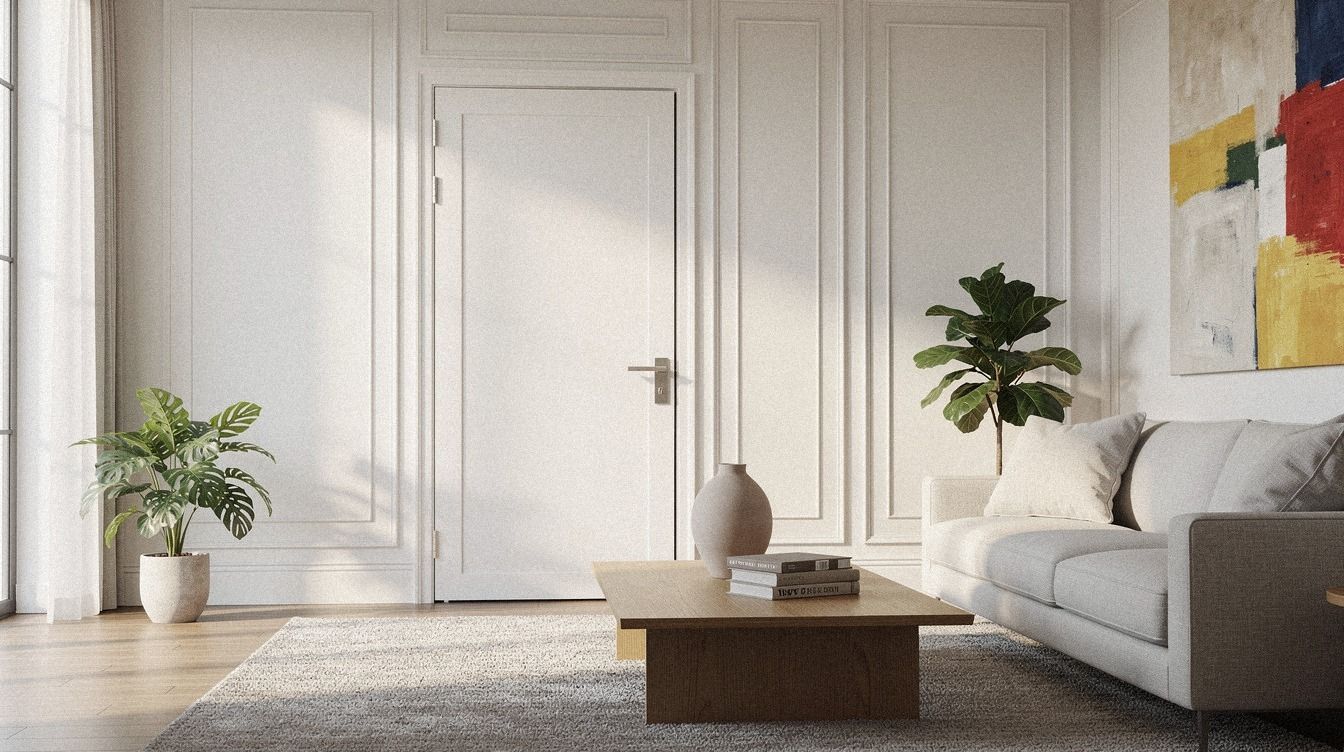
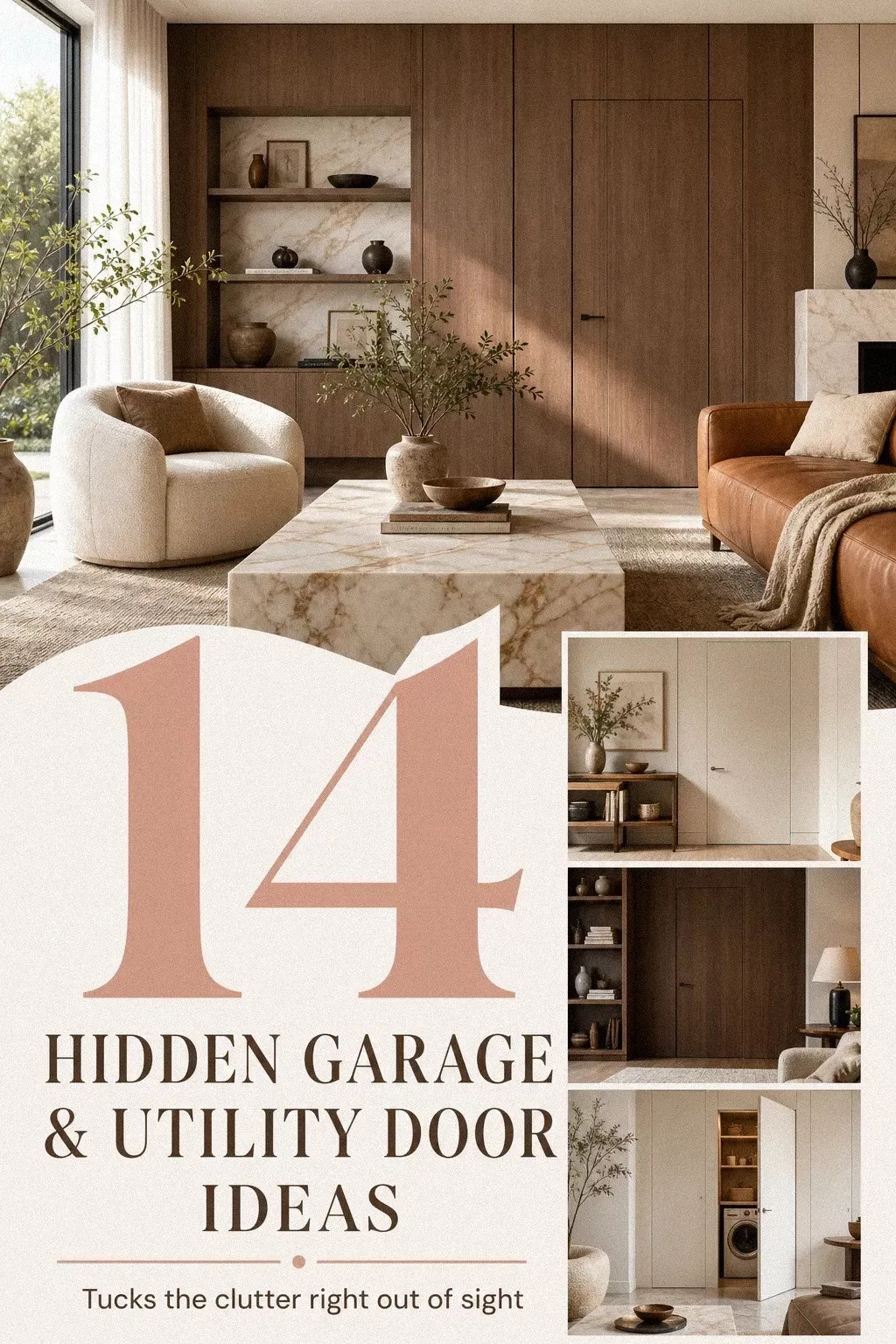
Hidden Garage & Utility Door Ideas for a Tidy Wall work best when you treat the door like part of the room, not a problem to hide at the end. I learned that the expensive way after leaving one utility panel bright white against a warm living room wall for months, and it shouted at me every single night. Once I stopped shopping for a miracle fix and started matching paint lines, trim depth, and hardware, the wall finally calmed down. That’s the shift you want here.
Don’t overthink: Wrap the garage door with reeded wood.
- Paint the utility door into the panel wall
- Wrap the garage door with reeded wood
- Disguise the swing door as built-ins
- Carry picture molding across the seam
- Mount oversized art on hidden hinges
- Blend the door into a bookcase wall
- Frame the door with full height curtains
- Use fluted panels for a quiet reveal
- Match the door to limewash walls
- Hide the utility access behind slatted oak
- Install push latches under gallery frames
- Repeat baseboards across the door gap
- Turn the garage entry into wainscoting
- Soften the hidden door with sconces
1Paint the utility door into the panel wall
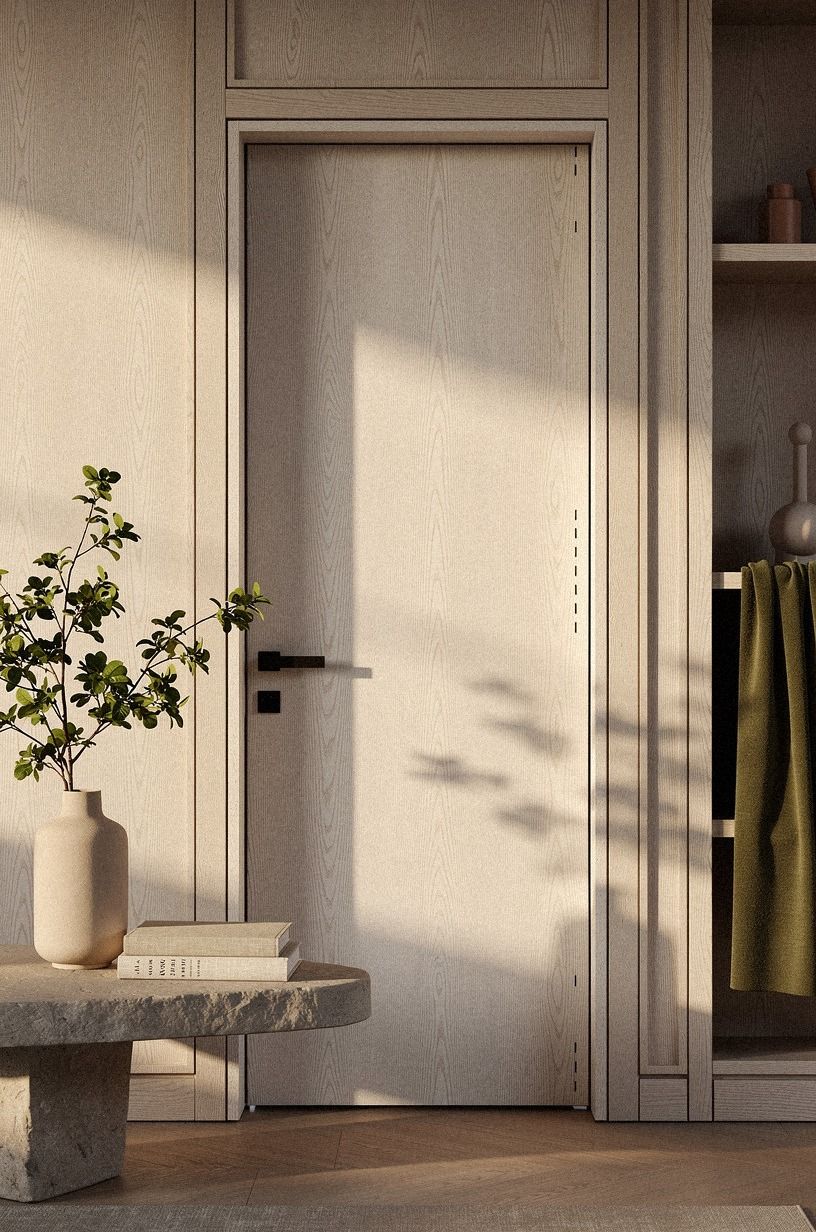
Start with paint before you buy one more decorative thing. If your hidden storage door sits inside paneling, you want the stile widths, rail color, and sheen to read as one field from 6 to 8 feet away, not as a patch. I like cerused white oak panel walls with a soft matte paint because the grain still whispers through, and you do not get the sharp glare that exposes every seam.
Use the same color on the door face, the panel rails, and the stop trim so your eye doesn’t catch a contrast line. In a room with terracotta, stone, and olive styling, I’d test Benjamin Moore Revere Pewter HC-172 before a bright white because the warmer cast sits better against clay tones. And if you’re already planning a full concealed door wall, this guide to hidden doors that vanish into wall paneling will help you line up proportions.
The mistake I made once? I painted the slab but left the jamb a cooler tone.
You could spot it instantly. Keep your brushwork tight, carry the finish across the seam, and let your hardware disappear too. Worth it.
2Wrap the garage door with reeded wood
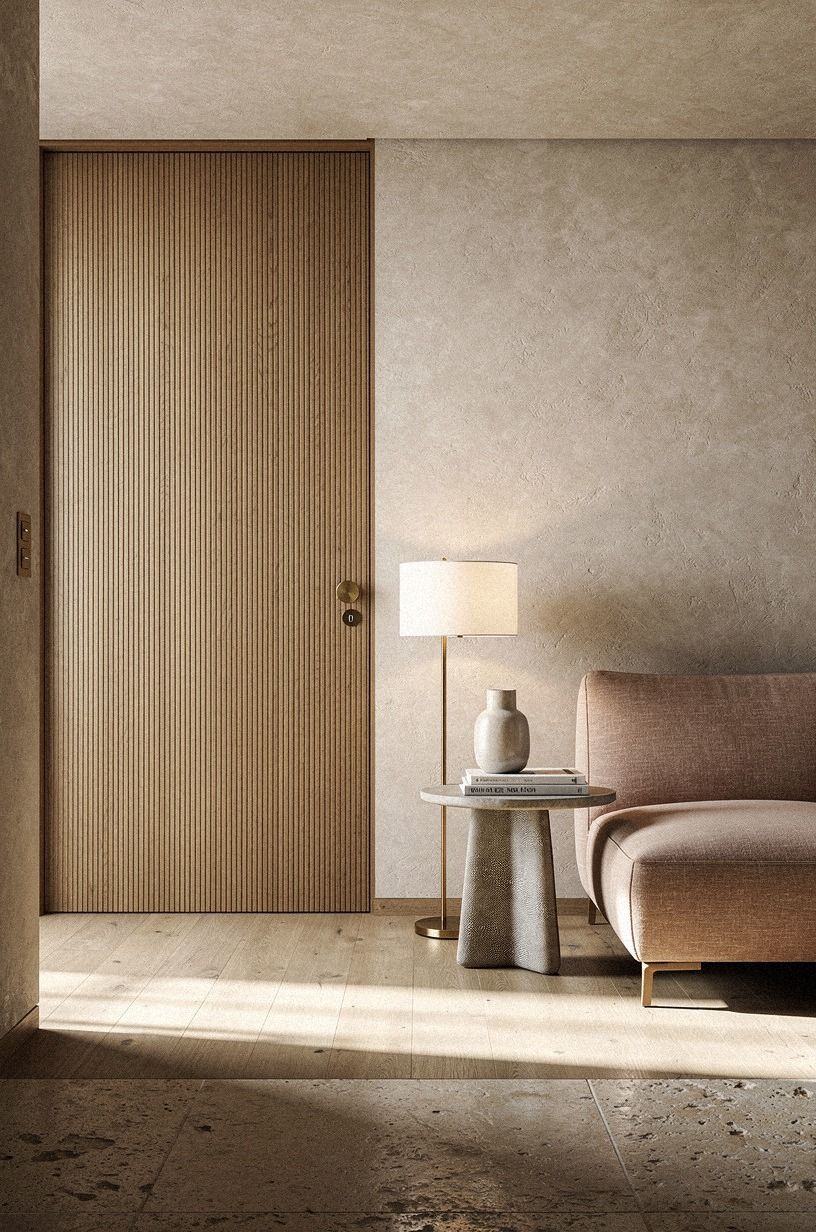
Reeded wood gives you movement, but it also gives you forgiveness. If your garage opening interrupts a tidy wall, wrapping the face in reeded oak veneer pulls attention toward texture instead of the reveal line, which is exactly what you want when you step into the room and catch the wall off-center.
I would not use a yellow oak here. It turns builder-fast.
Go for 3/4-inch white oak slats or a reeded walnut-look panel with a low-sheen finish, then keep the grooves running in one continuous direction across the opening. You get a concealed door idea that feels intentional, and you can echo the same rhythm with a media wall or side cabinet. If you want more of that lined texture, the hidden panel door guide shows why this works so well in living spaces.
And do not over-style the rest. One stone bowl.
One lamp. One low stack of books.
Too many accessories fight the reeding, and the whole tidy wall effect gets noisy fast!
3Disguise the swing door as built-ins
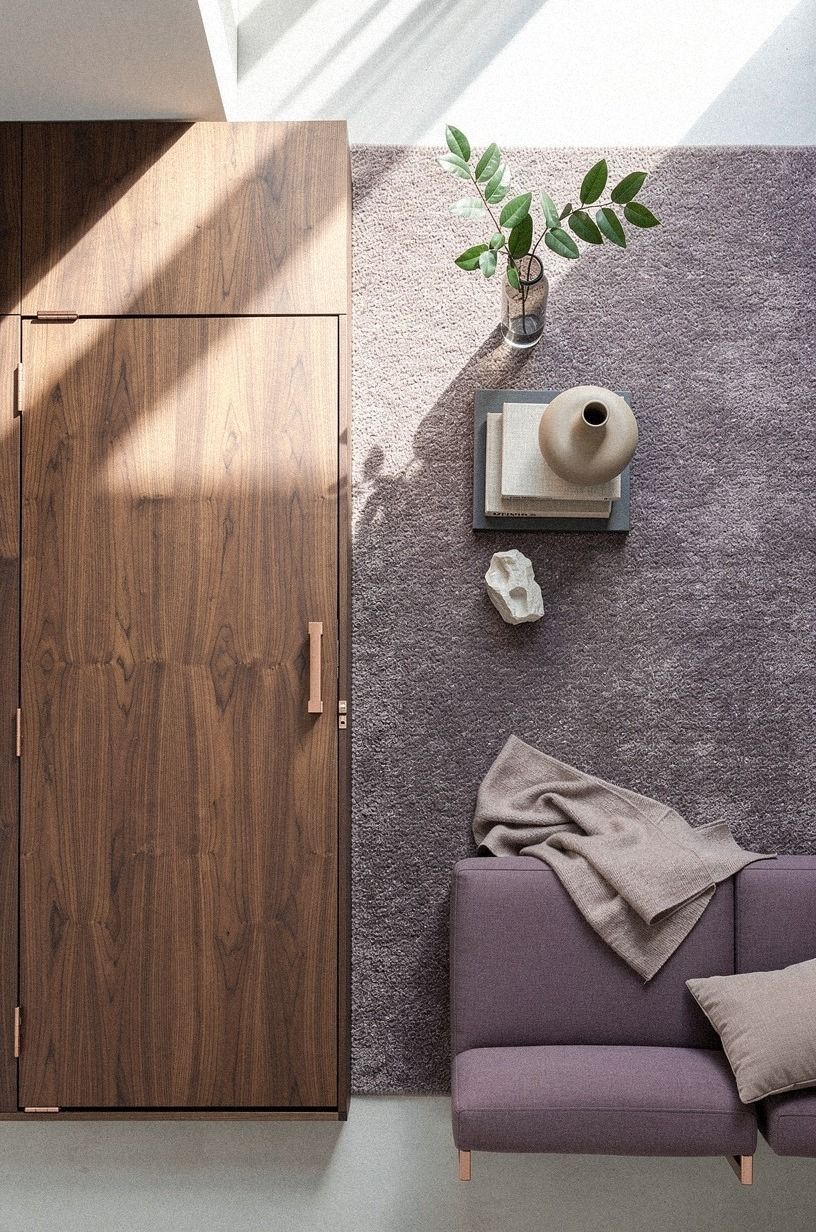
Build around the swing, not against it. A utility door can disappear when the face pretends to be part of a built-in composition, especially if you repeat shelf thickness, cabinet depth, and walnut stain across the whole wall. That’s my Built-In Bluff rule, and it works because your eye reads the storage grouping first.
In overhead views, asymmetry helps more than perfect balance. Put walnut veneer cabinets on one side, open shelves on the other, and keep the disguised door aligned with the larger block so the seam falls where your brain already expects a cabinet break. You can add a picture light, a stack of art books, or a closed bin from IKEA KALLAX birch-effect nearby if you need extra home storage solutions without making the wall feel precious.
But here’s the part people skip: leave enough clearance for the swing. If your sofa is 35 to 40 inches deep and the walkway is already tight, a fake built-in door that bangs into furniture will annoy you every day. I like this more than a flashy barn setup because it feels settled, not theatrical.
4Carry picture molding across the seam
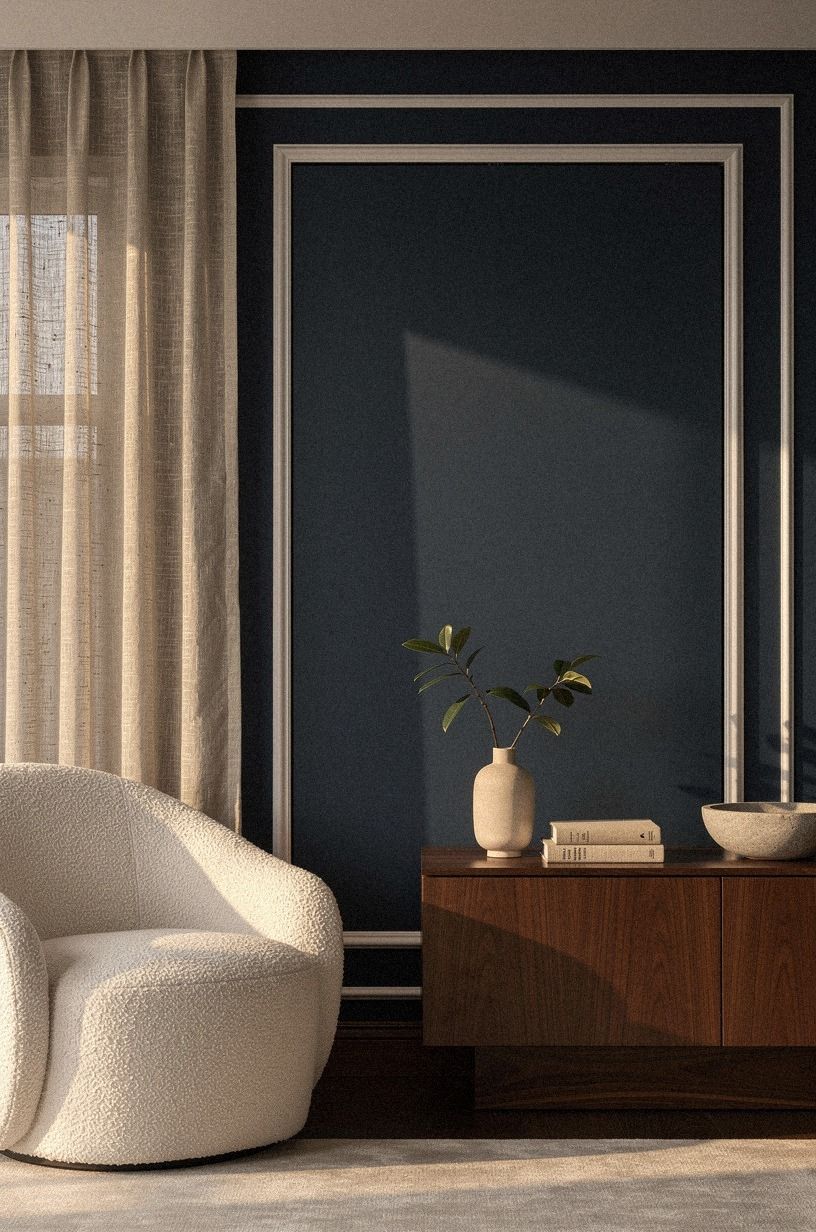
Picture molding is one of the cleanest ways to blend door into wall because it gives the eye a grid to follow. In a navy, white, and walnut room, that grid can make a hidden utility line disappear even when the door is technically visible. Your eye tracks the pattern, not the gap.
Keep the molding profile identical on both sides of the seam and let the rectangles land in believable proportions. I like Farrow & Ball Hague Blue No. 30 on the lower field with crisp off-white above, then a medium walnut console underneath to ground the whole composition. If you’re exploring more formal layouts, the TV wall with a hidden door roundup is useful because it shows how trim geometry keeps a large wall calm.
I would not mix ornate molding with a plain flush slab unless the room is already traditional. Too much contrast there, and the seam starts reading like a compromise instead of a design choice.
5Mount oversized art on hidden hinges
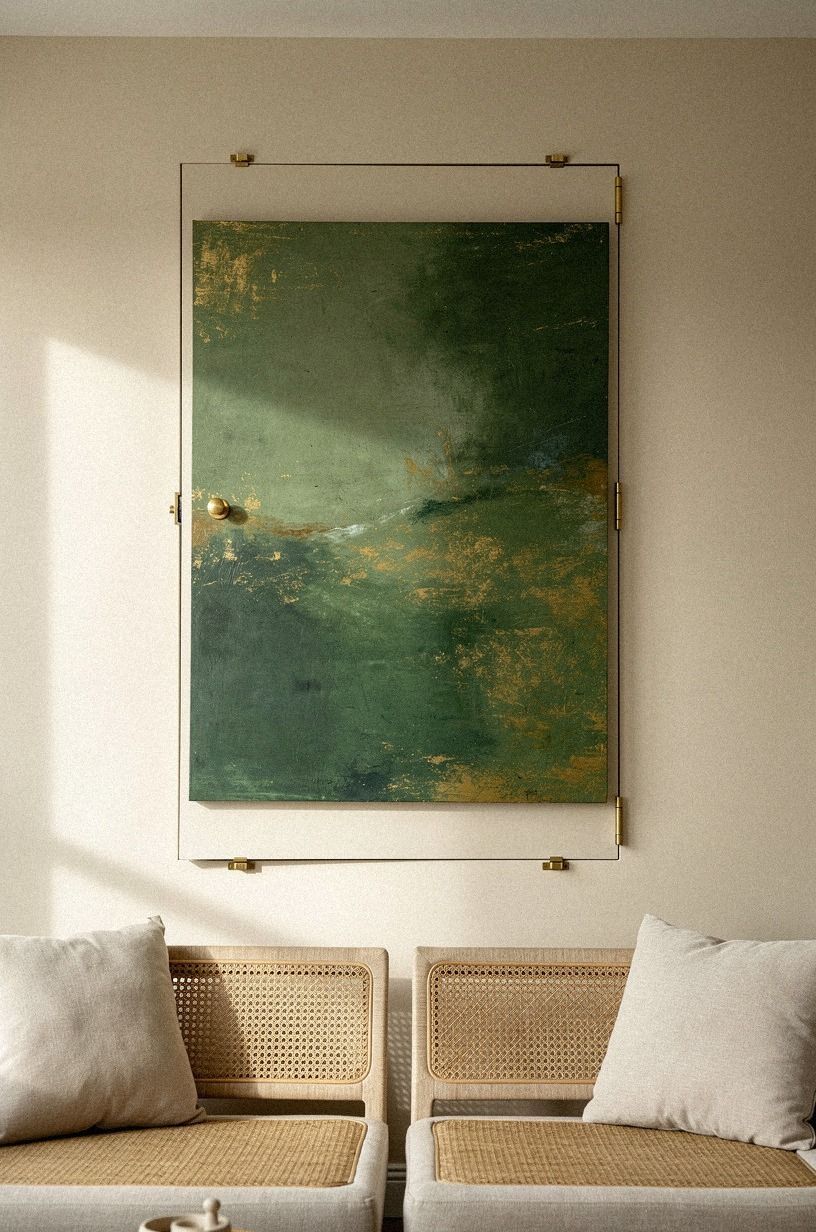
Big art can do what fussy camouflage can’t.
6Blend the door into a bookcase wall
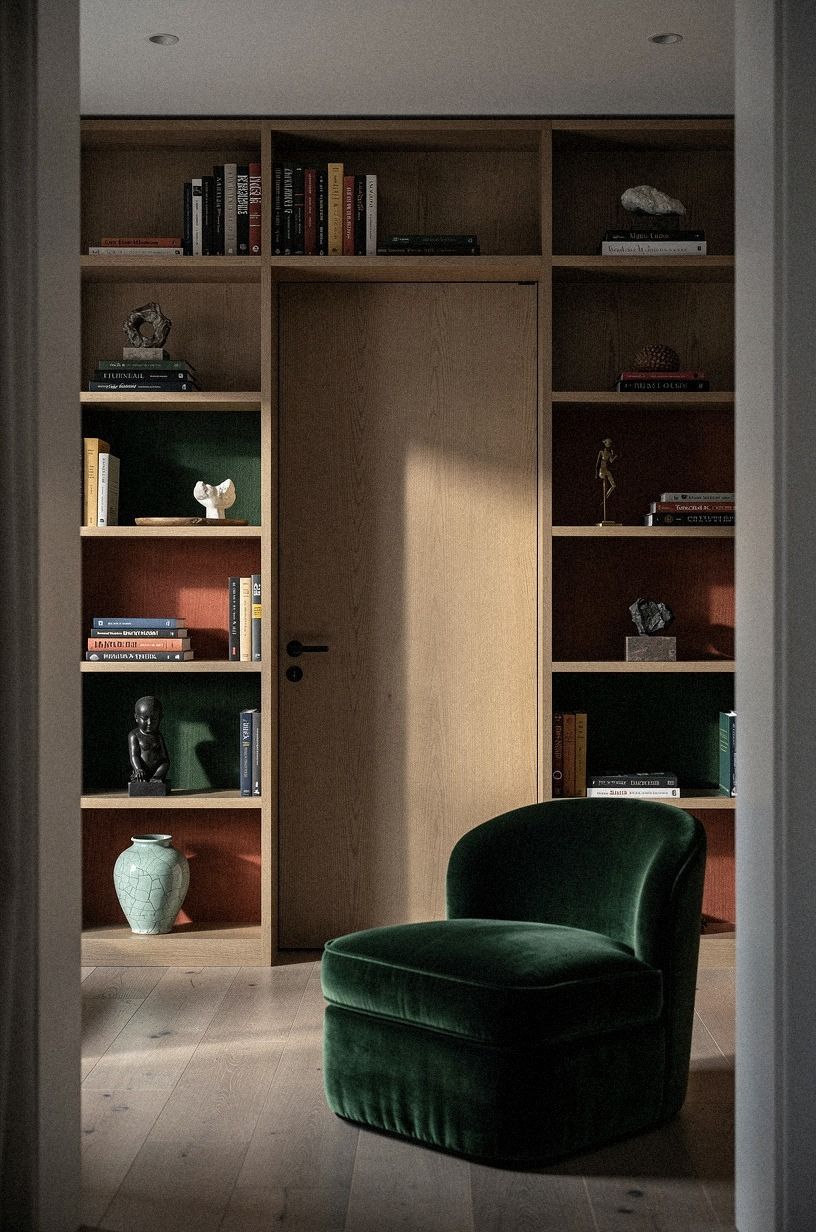
Bookcases are generous that way. They give you color, shadow, and enough visual interruption to hide a door line without turning the room into a gimmick. If you have continuous shelving across one wall, make the concealed door ideas work harder by repeating shelf pin spacing, face frame widths, and paint color over the door panel.
I prefer a bookcase wall painted one deep shade rather than mixing five finishes. Sherwin-Williams Evergreen Fog SW 9130 works if your room leans soft and earthy, while a darker walnut stain looks richer when you already have cream upholstery and stone.
You can use a shallow profile, around 10 to 12 inches deep, for the fixed shelves, then keep the door portion visually consistent with faux shelf fronts or slim ledges. For more wall-spanning layouts, the garage wall system article is worth a look even outside the garage.
I went back and forth on adding exposed handles here. Do not.
Push hardware or finger pulls only. Once you add obvious pulls, you lose the bookcase illusion in about two seconds.
7Frame the door with full height curtains
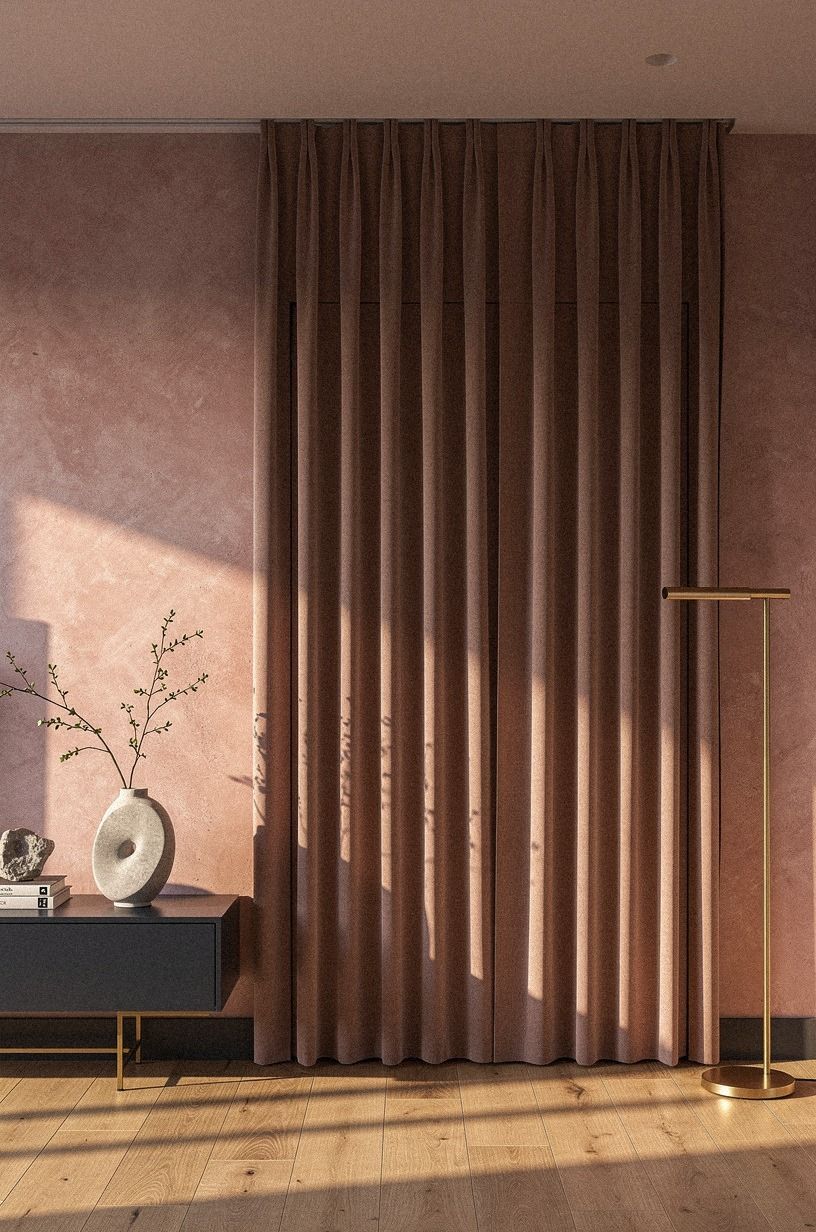
Sometimes the easiest answer is fabric. Full-height curtains can soften a garage opening, hide awkward panel breaks, and make your living room wall feel taller at the same time. If the room already needs warmth, this is one of the fastest concealed door ideas you can pull off on a real budget.
Hang the rod high, close to the ceiling, and let the panels kiss the floor. I like Belgian flax linen in a lined drape because it has enough body to hang straight without looking stiff, and a pair usually runs about $120 to $400 depending on width and lining. In a small seating area, keep your rug at 8×10 or 9×12 with the front legs on it so the softness of the drapery feels anchored instead of floaty.
But do not choose skimpy panels. You want fullness, not apology. And if you’re planning a whole paneled concealment moment later, this same hidden door in wall paneling guide can help you transition from temporary fabric to permanent millwork.
8Use fluted panels for a quiet reveal
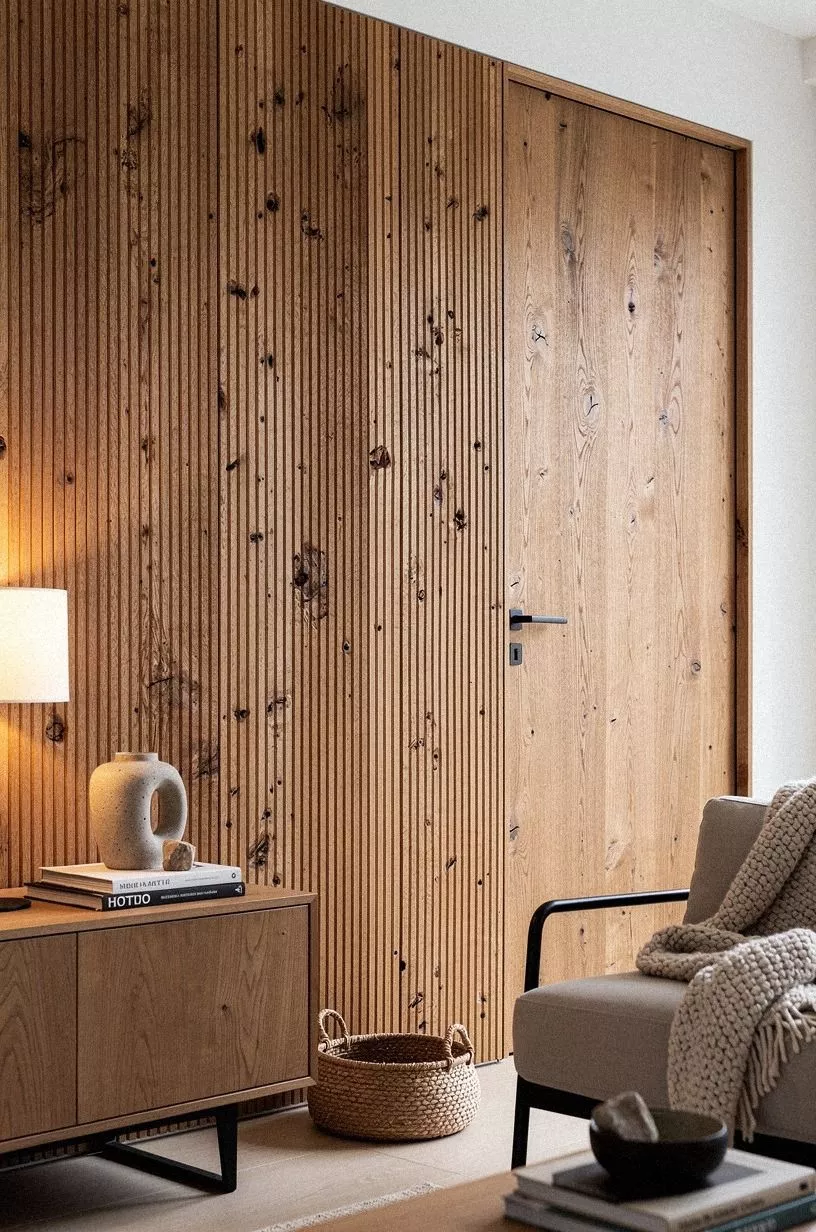
Fluted panels do something flat boards can’t. They blur the door edge because the eye is busy tracking shadow. In a relaxed three-quarter view, that soft rhythm makes a hidden utility door feel architectural, not sneaky, and that’s why I keep coming back to it for tidy wall projects.
Choose a flute profile with enough depth to cast a shadow but not so much that dust becomes the headline. Fluted MDF panels painted to match the wall are the budget route, while oak fluting looks better if the rest of your room already has warm wood on a console or coffee table. I like this paired with a sofa around 35 to 40 inches deep and a coffee table 16 to 18 inches tall so the horizontal furniture forms stay calm against the vertical texture.
And here’s my Quiet Reveal rule: stop the texture before it hits every surface. One fluted wall is elegant. Fluted wall, fluted cabinet, fluted lamp, fluted planter?
Too much. Your eye needs one smooth landing place.
9Match the door to limewash walls
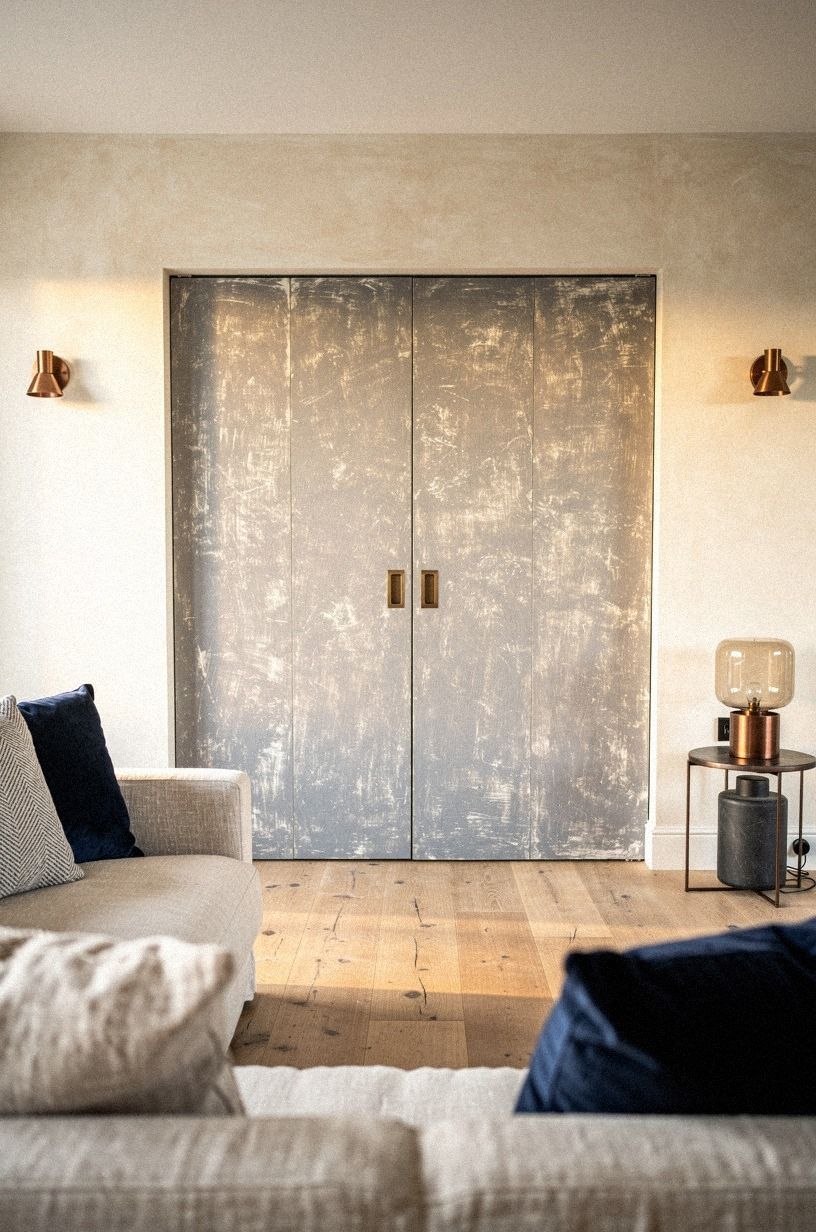
Limewash is forgiving in the best possible way.
10Hide the utility access behind slatted oak
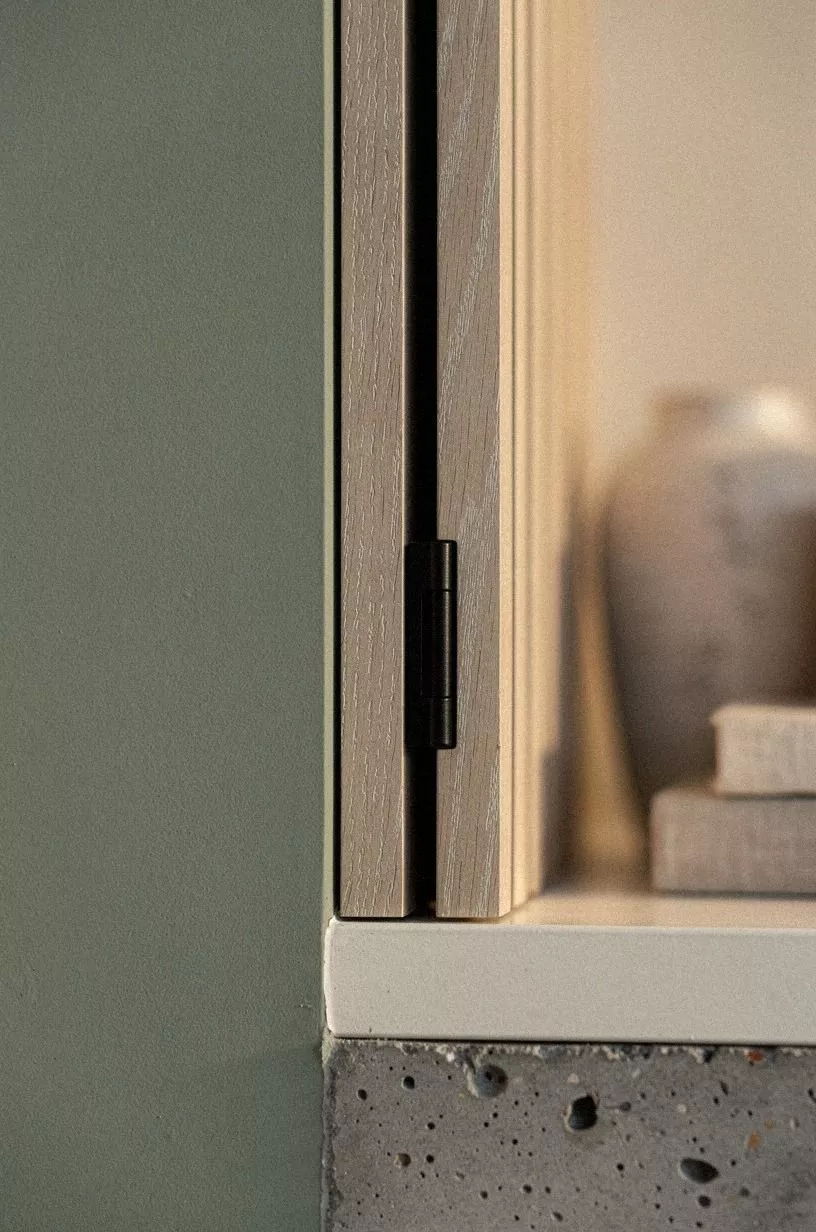
This is the detail-forward version of concealment. Narrow slatted oak gives you a deliberate reveal, a fine shadow line, and just enough craftsmanship to make the utility access feel custom. In close view, the push-latch edge matters, so your cuts need to be clean and your spacing consistent.
Aim for slim vertical slats with a tiny, repeatable gap and keep the latch centered where your hand can find it without searching. White oak slats with a matte clear finish look expensive without trying too hard, and they pair well with travertine, olive textiles, and low-sheen plaster walls. If you’re building a whole wall of linear texture, circle back to the paneling door examples for proportion ideas.
But do not let the gaps get too wide. Once the black shadow line starts reading striped instead of subtle, the hidden storage door becomes the loudest thing in the room. You want precision, not performance.
11Install push latches under gallery frames
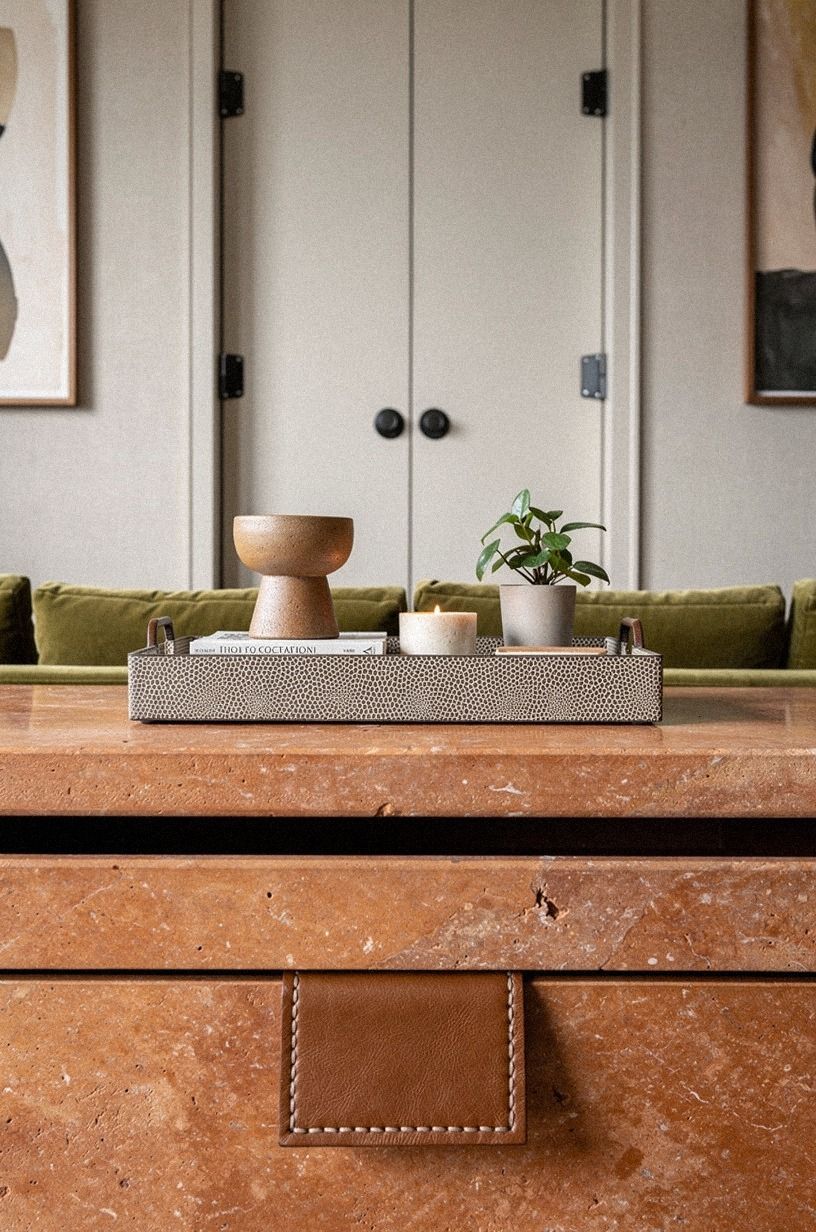
If you need access often, push latches are your friend. They let you keep the face clean while still opening the panel with one firm press, and they work especially well when the wall carries a relaxed gallery arrangement above a console. Nobody expects the frame wall to open.
Place the latch where your hand naturally lands, then let the gallery frames do the visual work. I like thin wood or black frames over a stone console so the wall feels layered without feeling heavy.
Keep the art spacing consistent, and use only a few larger pieces instead of a hundred tiny ones. You can even borrow placement ideas from the hidden wardrobe door layout article if your room is narrow.
And yes, test the latch strength before you hang the art. A weak catch plus a heavy frame is asking for a rattle every time the HVAC kicks on. Nobody wants that.
12Repeat baseboards across the door gap
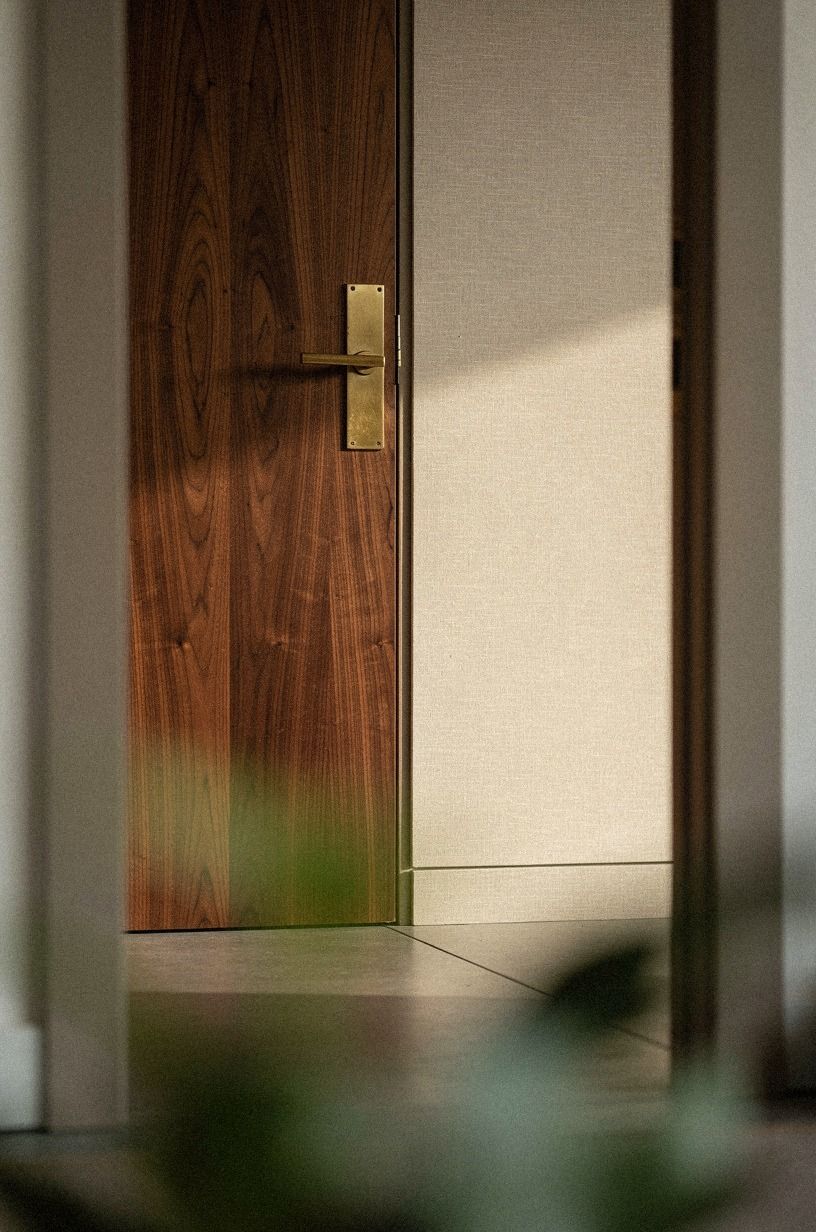
Baseboards are small, but they do a shocking amount of visual cleanup.
13Turn the garage entry into wainscoting
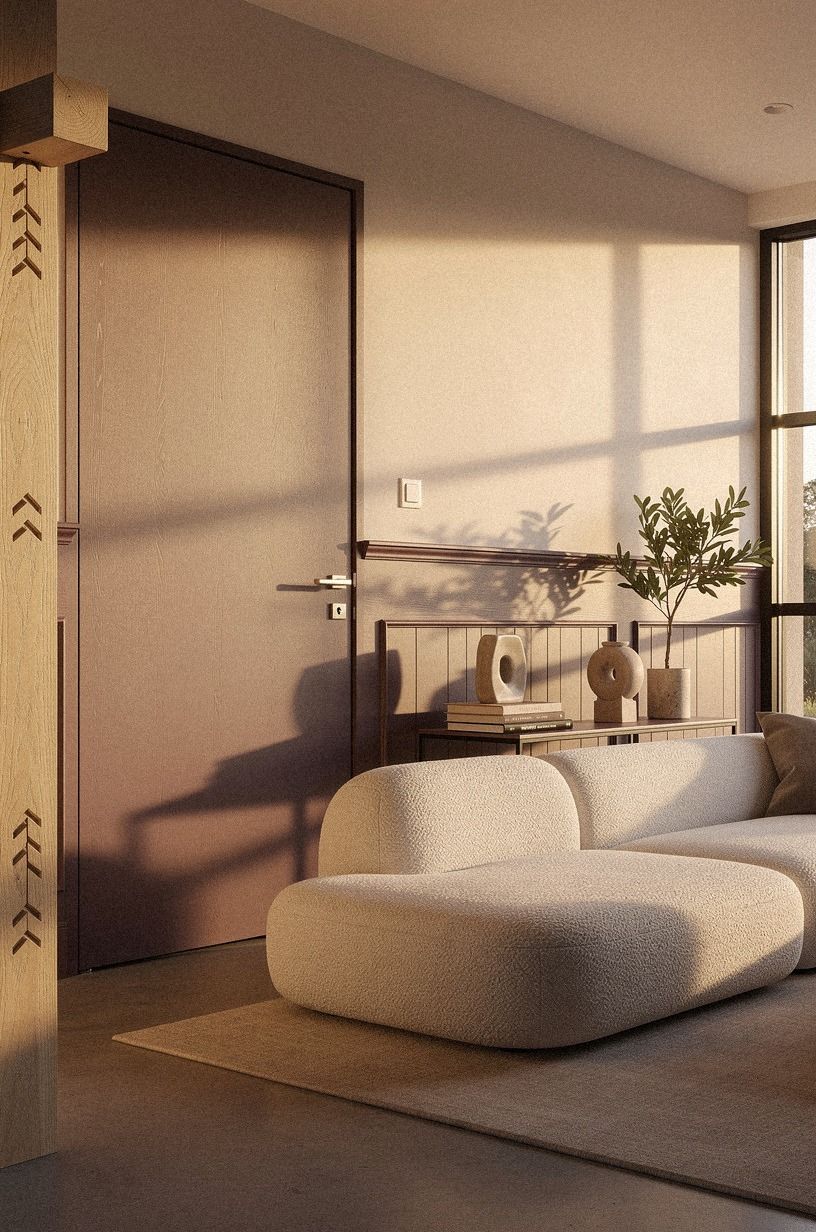
Wainscoting gives a garage entry a job to do. Instead of apologizing for the opening, you make it part of a lower wall treatment that already expects seams, rails, and repeated panels. That’s my Panel-First Thinking rule, and it’s one of the few moves that can make a large opening feel almost tailored.
Keep the upper wall quiet and let the lower third carry the detail. I like square or slightly vertical panels with a warm white topcoat, then a wood bench or console in front to keep the room from feeling too formal.
If you want the paint color to stay current in 2026, Sherwin-Williams Evergreen Fog SW 9130 or a softer greige both sit better with oak and stone than icy white does. For more examples of walls where the door disappears into millwork, use this wall paneling door guide.
But skip tiny fussy boxes. Large panels are calmer, easier to align, and much better at hiding a concealed door idea than a busy cottage profile. Bigger really is better here!
14Soften the hidden door with sconces
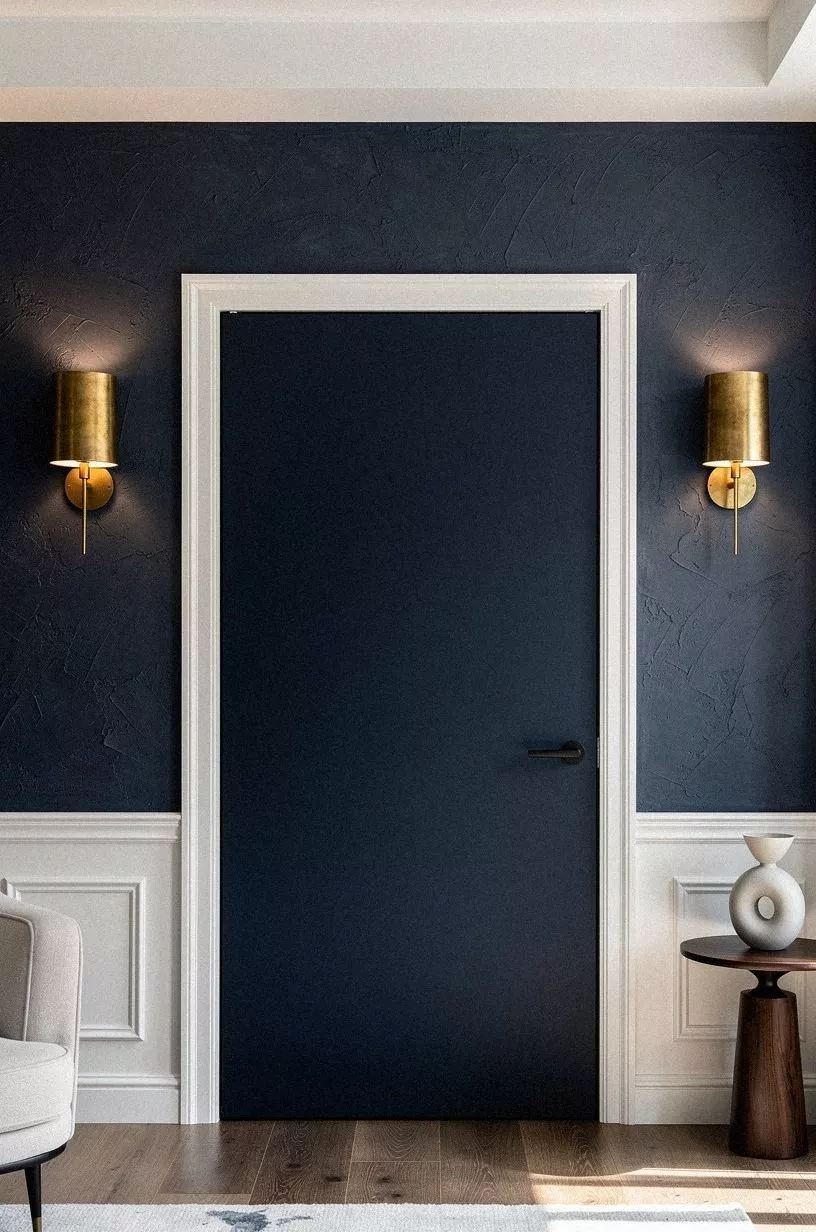
Lighting can save a wall that still feels a little too stiff. A pair of sconces flanking the concealed panel brings symmetry, soft glow, and enough distraction to keep the eye from staring at the seam. In a navy, white, and walnut room, that warm side light can make the whole wall feel settled by 7 pm.
Choose sconces with opaque or linen shades and bulbs in the warm range, then place them evenly so the panel sits centered between them. I like unlacquered brass or aged bronze here because both materials warm up against darker paint. If your TV sits nearby, keep viewing distance around 1.5 to 2.5 times the screen diagonal so the whole seating wall still functions, then use the TV wall hidden door article to balance light, screen, and concealment.
Would I do this before paint and trim are sorted? No.
Sconces are the softener, not the fix. But once the wall is already close, they make it feel finished in the best way!
The Quiet Wall Rule
If you’re trying to decide how far to take this project, I’d separate the visual fix from the full carpentry version. A tidy wall can happen with paint, art, and drapes first, and that’s often enough if your door already sits flush. Custom millwork is lovely, but it isn’t the only path.
You can also think in parts instead of full-room numbers. A performance-fabric sofa usually lands around $1,200 to $4,000, a wool rug in 9×12 often runs $600 to $2,500, an oak coffee table can be $300 to $1,200, and lined linen drapes tend to sit around $120 to $400 a pair. That’s why I usually tell people to spend on the wall treatment only after the seating, rug scale, and lighting already feel right.
The One-Story Wall Effect
I think hidden garage and utility doors are landing so well right now because people are tired of hard-working rooms looking accidental. You want storage.
You need access. But you also want the wall to feel calm when you’re sitting down at night.
That’s not frivolous. It’s comfort.
The part that changed for me was realizing a concealed door idea isn’t about fooling anyone. It’s about letting the room keep one visual story. When the trim, finish, scale, and lighting agree, the wall feels easier on your eyes, and you use the whole room more.
My Two-Wood Rule for Hidden Doors
Here’s my honest take after seeing a lot of these go right and wrong: the best hidden door is usually the least clever one. People get excited about novelty hardware, dramatic pivots, or overbuilt panel systems, but most living rooms do not need a stage moment. They need a wall that stays quiet while real life happens in front of it.
If I were walking into your room with a tape measure, I’d start by checking the stuff nobody posts about. Door swing clearance.
Baseboard continuity. The distance from your sofa to the wall. Whether your coffee table is roughly two-thirds the sofa length or if it’s already too cramped.
Whether your rug is undersized, which makes every wall decision look more awkward than it really is. Those basics matter more than a fancy hinge ever will.
I also think warm materials beat high contrast almost every time for this kind of project. Reeded oak, limewash, soft linen, aged bronze, wool, stone.
They blur edges in a way glossy paint and cold white drywall never can. And if you already have terracotta, olive, walnut, or a deep blue like Farrow & Ball Hague Blue No. 30, leaning into those tones makes the concealment feel natural.
Trying to force a hidden door into a stark, flat, builder-white wall usually creates the exact problem you’re trying to avoid.
The other thing? You don’t have to finish the entire room at once.
Paint the panel wall now. Add the drapes next month.
Save for the custom slatted oak face later if you still want it. I’ve done rooms in one clean weekend and others in three stages over a year, and the slower ones often felt smarter because I could see what the wall still needed.
That’s a good way to work. You make one decision, live with it, then make the next one with better eyes.
A Few Things Worth Answering
What is the best Hidden Garage & Utility Door Ideas for a Tidy Wall for a small living room?
Painted paneling is the best starting point for a small room because one continuous wall color keeps the footprint feeling cleaner. If you need storage too, pair it with a shallow cabinet or an IKEA KALLAX birch-effect piece nearby so your eye reads one tidy zone instead of two separate problems.
Where can I buy Hidden Garage & Utility Door Ideas for a Tidy Wall pieces on a budget?
Start with IKEA, Target Threshold, and Wayfair for drapes, frames, sconces, and simple storage pieces. Facebook Marketplace is still great for wood consoles and framed art. If you’re planning slats or panel trim, this garage wall system story can help you think through materials first.
How much does a Hidden Garage & Utility Door Ideas for a Tidy Wall makeover cost?
Most of these makeovers cost about $100 to $300 for paint, trim touch-ups, or a basic curtain solution, and more if you add custom millwork. The free win is editing the wall around the door. Fewer objects, better scale, and cleaner hardware can change the look before you spend much.
Can I create a Hidden Garage & Utility Door Ideas for a Tidy Wall on a budget?
Yes, and small changes stack fast. Paint the door and trim the same color. Repeat your baseboard across the gap.
Hang full-height curtains with a simple rod. If you need another visual cue, borrow ideas from these hidden door wall paneling examples.
Is a Hidden Garage & Utility Door Ideas for a Tidy Wall worth it in a small space?
Yes, it’s worth it in a small room because every visual interruption feels louder when the footprint is tight. A flush wall, warm paint, and one clear furniture layout make the whole space feel more intentional. Keep your largest seating piece anchored to the rug so the wall detail can fade back.
Is Hidden Garage & Utility Door Ideas for a Tidy Wall a good idea for a rental?
Yes, if you stick to no-damage layers. Try curtains on a tension rod, oversized leaning art, removable picture strips, or peel-and-stick molding where your lease allows it. I’d skip permanent slatted oak in a rental unless you already know you’re staying for years.
Where I’d Start First
If I had to pick one, I’d start with painting the utility door into the panel wall. A perfect hinge won’t save a wall with the wrong color shift. Pin that move for later and use the hidden paneling door examples when you’re ready.