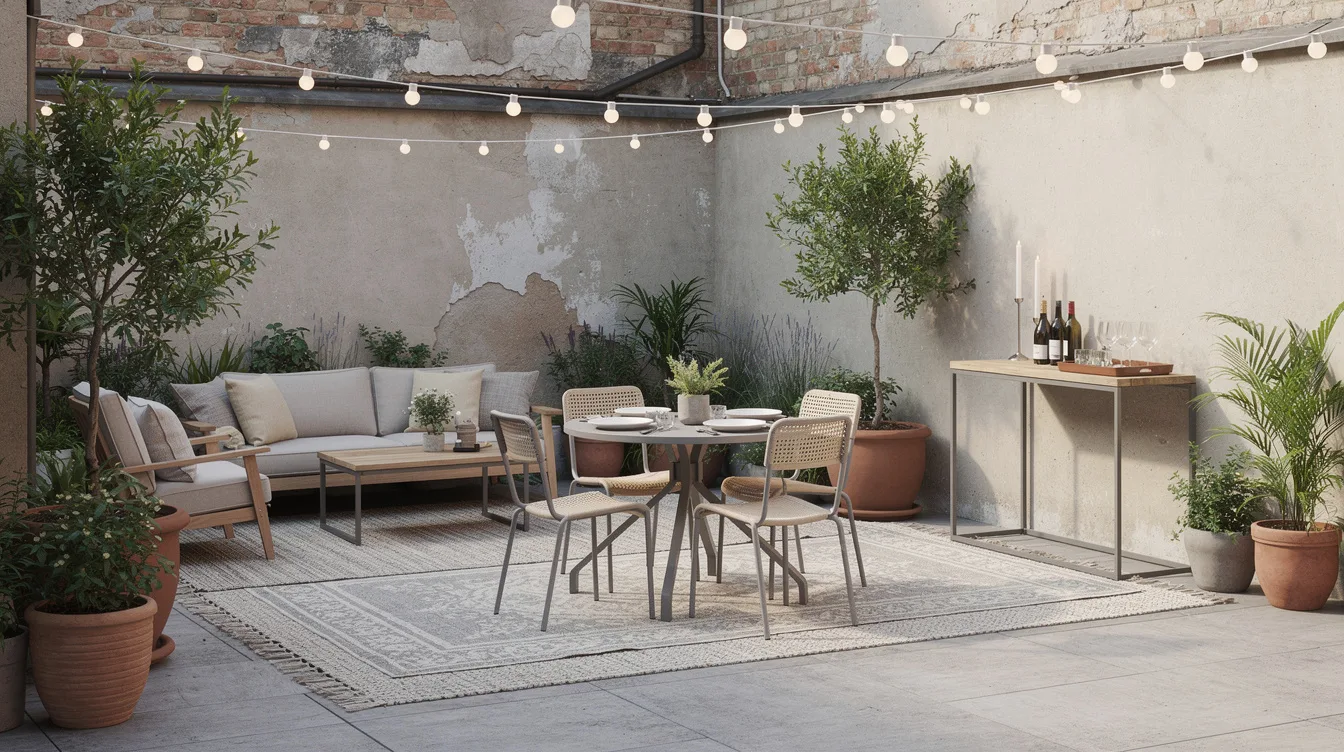
I know the patio spiral: you step outside on Friday night, see dusty concrete, two mismatched chairs, and nowhere obvious to set a drink. By Sunday, you do not need a custom build, you need a layout that actually lets six to eight people sit, eat, and move around without bumping knees.
The fastest fix is a three-zone setup on about 20 square meters, roughly 4 by 5 meters or 3.5 by 6 meters. That size is realistic for a one-weekend reset, especially if you already have a slab, pavers, or an old deck underfoot.
Map the patio into three working zones
Start with painter’s tape and mark a 3-zone layout before you buy anything. I like a 3 by 3 meter lounge, a 2.5 by 3 meter dining area, and a 1 by 2 meter bar or buffet zone against a wall or fence.
Keep traffic paths at about 80 to 100 centimeters around each section. That one spacing rule matters more than any accessory because a patio feels expensive when people can move easily.
On a compact footprint, I would rather size furniture down than cram in extra seats. Six comfortable spots beat eight awkward ones every time.
Cover bad ground with rugs or click deck tiles
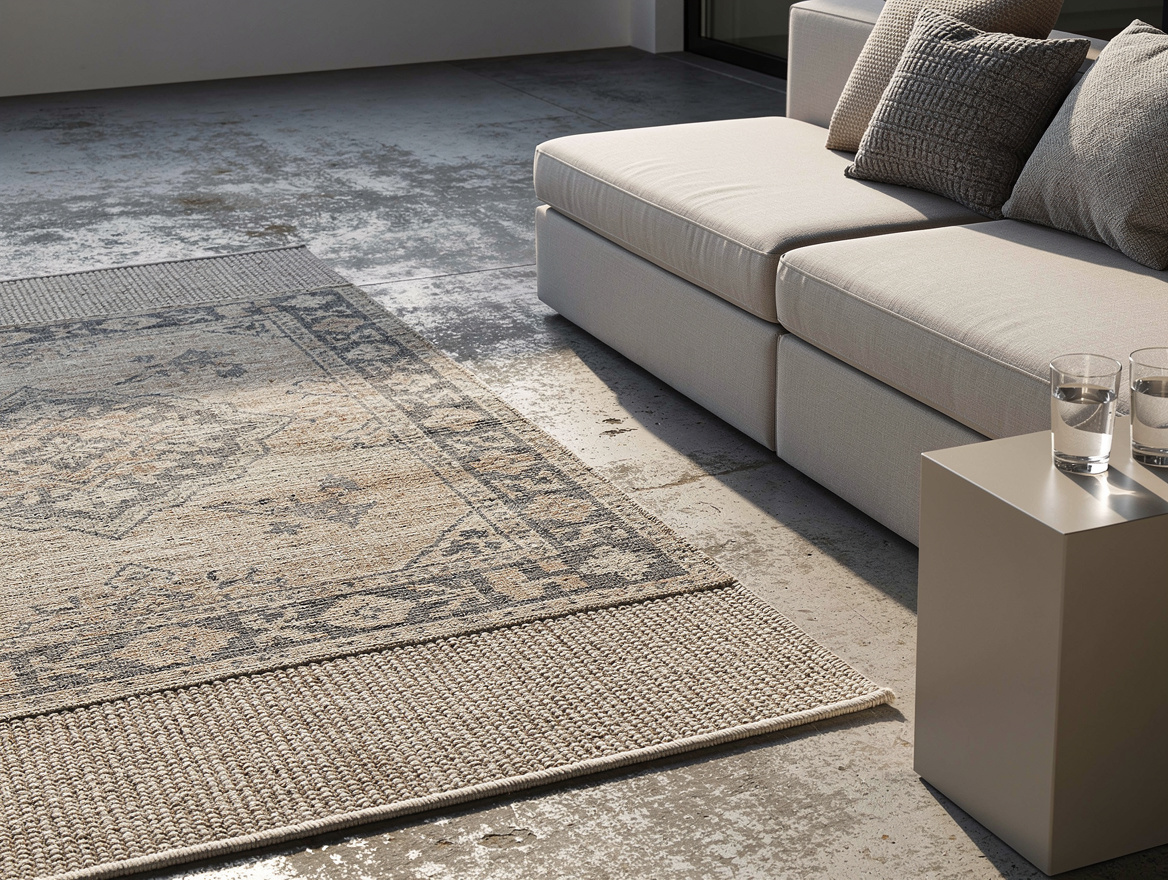
If the base is structurally fine but ugly, do not waste the weekend on masonry. Sweep it hard, pressure wash if needed, then use polypropylene outdoor rugs or interlocking tiles to hide the mess.
For rugs, two large 160 by 230 centimeter pieces usually cover the lounge and dining zones well. A typical price at Amazon or IKEA is about $45 to $90 per rug, depending on weave and UV resistance.
If you want a cleaner, more finished look, use interlocking deck tiles. A typical 2026 range is about $2.50 to $6 per square foot, so covering roughly 130 to 160 square feet for the core seating and dining area usually lands around $325 to $750 in materials.
I would only tile the central gathering area, not the whole patio. That keeps the install realistic with basic tools and avoids the fake-deck look that shows up when you overextend cheap materials.
Anchor the lounge with modular seating
The lounge is where people stay longest, so give it the biggest visual weight. A sectional around 240 to 260 centimeters wide with an 80 by 80 centimeter coffee table fits well in a 3 by 3 meter zone.
Entry-level modular sets from Amazon often run about $200 to $380 for a 4-piece setup and about $380 to $875 for a 6 or 7-piece sectional, based on the typical ranges for steel-frame and PE rattan sets. That is the sweet spot for a one-weekend project because assembly is annoying but straightforward.
If you want fewer but better seats, I would skip flimsy wicker and buy two POLYWOOD Adirondack chairs instead. They usually cost about $240 to $305 each, but they look cleaner for longer and do not beg for replacement next summer.
Add one or two small side tables, around 16 to 20 inches wide, so drinks do not crowd the coffee table. This is also where I get opinionated: a patio without enough landing spots always feels unfinished.
Choose a dining set that actually fits dinner
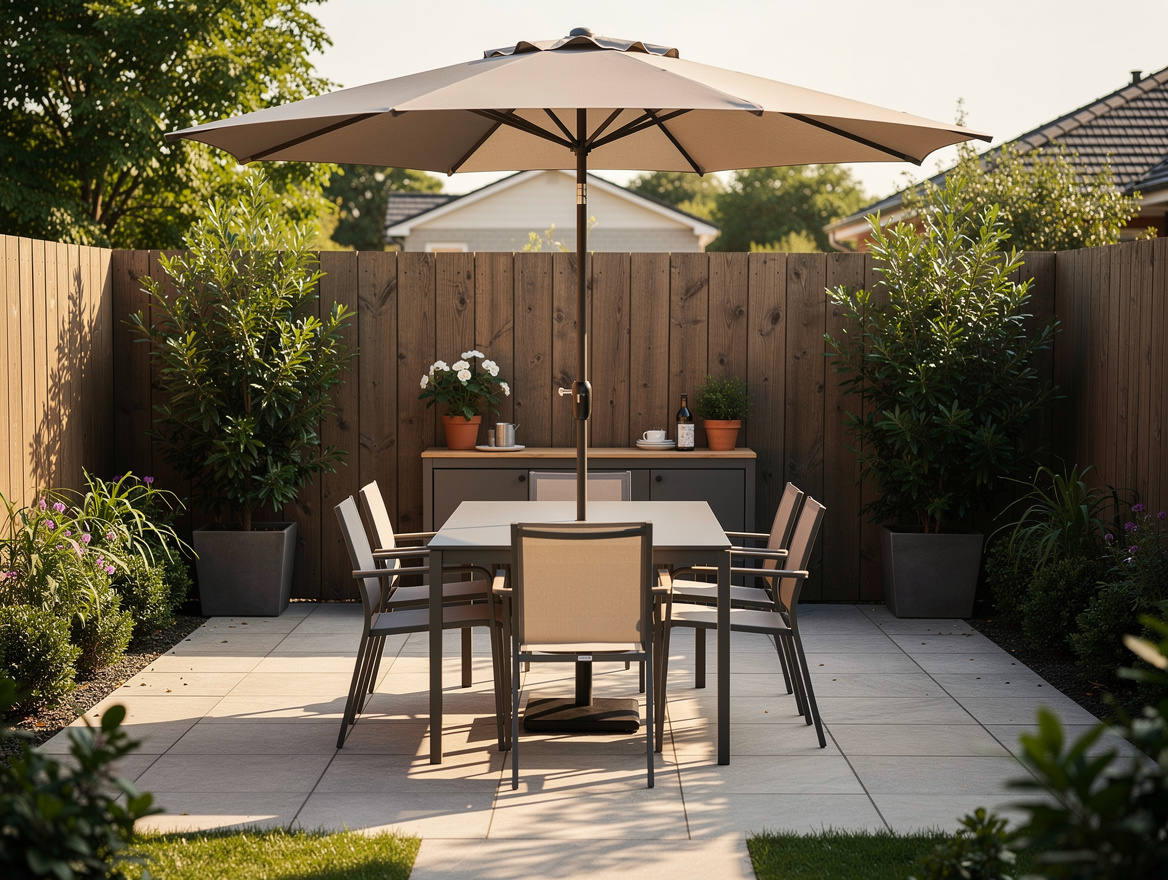
For the dining zone, pre-made wins. A table around 55 to 63 inches long and 31 to 35 inches wide is usually enough for four to six people without choking the walkway.
Look for a metal dining set or an acacia dining set at Target, Wayfair, Lowe’s, or Home Depot. A typical 2026 price band for a usable 4 to 6 seat outdoor set is about $325 to $875, depending on frame quality and whether cushions are included.
If the budget is tight, a folding table with stackable or sling chairs is still a smart move. I would rather see a simple dining setup with comfortable clearance than a trendy table jammed too close to the sofa.
Place the dining area closest to the house if you can. Carrying plates across the full patio gets old after one meal.
Build a simple bar or buffet against one wall
The third zone is what makes the whole patio work for a group. A bar console or buffet station about 1 by 2 meters gives you a dedicated place for pitchers, snacks, a speaker, and extra plates.
You do not need custom carpentry here. A narrow outdoor console from Walmart, Target, or Wayfair, or even a sturdy shelving table from Costco, does the job faster than a weekend DIY that still needs sanding on Monday.
If you love the pallet-bar look, keep it clean and restrained. One painted wood pallet front with a flat top can work, but only if the finish is smooth enough that nobody snags a sleeve or sets a drink on splinters.
I would also park a lidded storage bench nearby for cushions and bug spray. Outdoor setups fall apart visually when the practical stuff has no home.
Layer lighting, planters, and shade last
Lighting is the fastest way to make a patio feel finished after dark. Use string lights overhead, then add a lantern or table lamp at the lounge and dining zones so the whole space does not read as one flat pool of light.
Off-the-shelf options from Amazon, Ace Hardware, and Home Depot are usually enough. I like warm white bulbs because cool light makes outdoor seating look harsh and a little cheap.
For softness, use two or three oversized planters instead of ten tiny pots. A pair of tall containers at the patio edge and one medium planter by the buffet is usually all you need to frame the setup.
If your yard gets brutal afternoon sun, add a cantilever umbrella or a simple market umbrella over the dining side first. Shade beats decorative pillows every time, and it is the one upgrade guests notice within seconds.
Keep the styling disciplined: one outdoor throw, a tray, melamine dinnerware, and maybe a citronella candle. The setup should feel easy to reset after a real dinner, not like a staged photo you are scared to use.
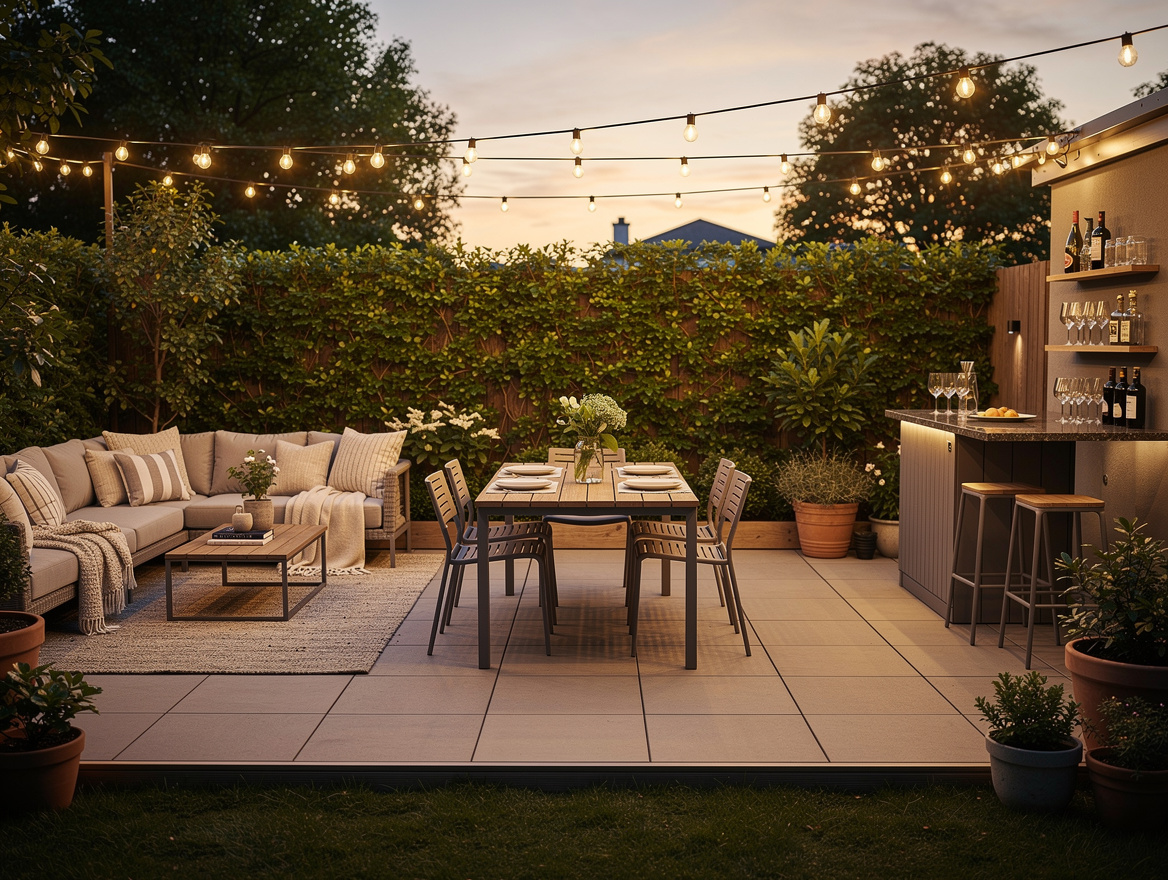
Begin with the ground and the traffic flow, then buy seating second. If those two decisions are right, the rest of the patio comes together fast and looks intentional instead of improvised.
Mia Carter writes about small-space living and budget home makeovers. She has restyled three rentals and tests most ideas in her own 45 sqm flat.