
Yes, you can pull off hidden room and pantry ideas behind the kitchen without renovating, and the cosmetic version usually sits in the $300-$1,500 range. I learned that the hard way after assuming a concealed pantry meant framing, drywall, and weeks of dust. It does not. If you match lines, finishes, and hardware, your kitchen can hide a lot more than you think.
- Conceal the pantry behind matching cabinet doors
- Panel a walk-in door with shaker fronts
- Disguise the entrance as a tall appliance wall
- Wrap a hidden pantry in fluted wood
- Hide dry storage behind a sliding backsplash
- Blend a detail door into pantry shelving
- Frame the doorway with floor-to-ceiling cabinets
- Camouflage the pantry with painted beadboard
- Tuck a butler pantry behind pocket doors
- Install a push-latch door under open shelves
- Mask a storage room with arched millwork
- Turn a cabinet run into a hidden corridor
- Cover the pantry door with chalkboard paint
- Build a bookcase-style door for cookbooks
- Use mirrored panels to hide the pantry
- Create a spice wall that swings open
- Hide a coffee station behind bi-fold doors
- Line the detail pantry with moody tile
- Add brass hardware only inside the reveal
1Conceal the pantry behind matching cabinet doors
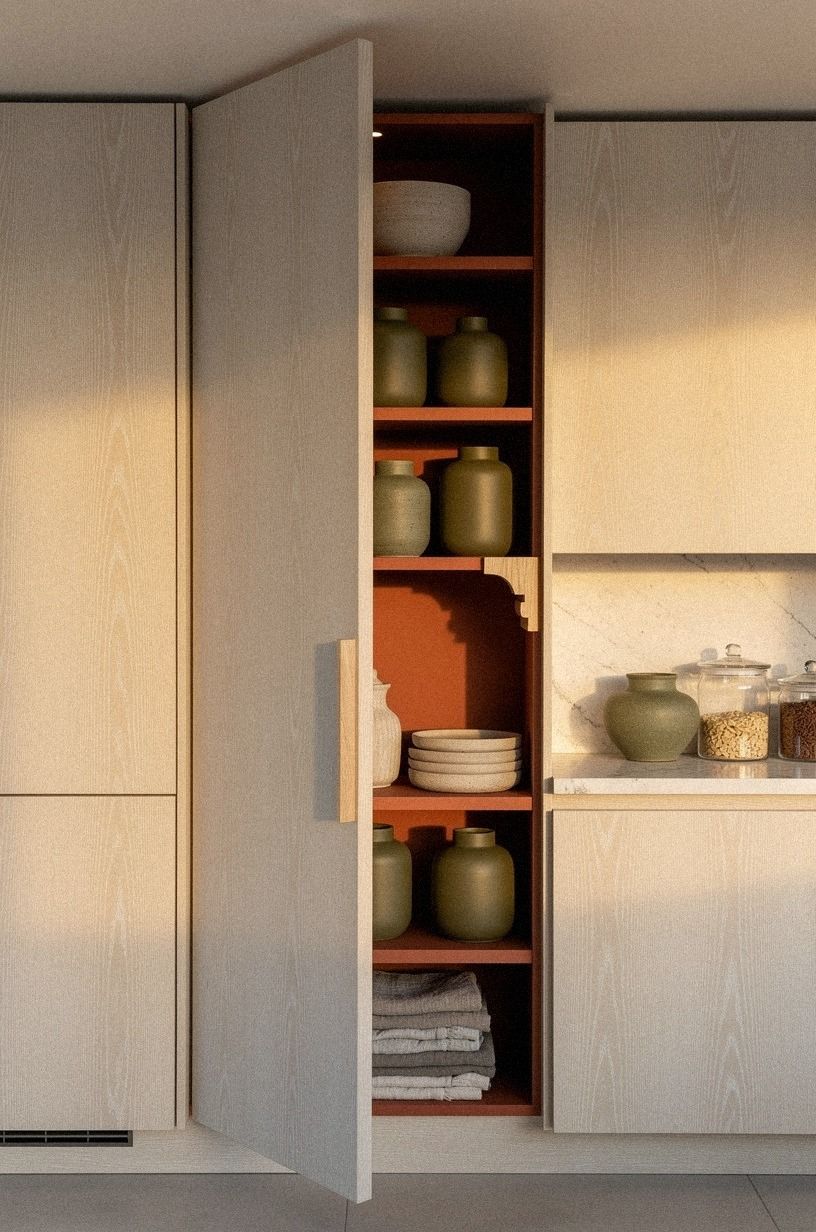
Run the pantry fronts in the same direction as the rest of your wall and your eye stops reading door, starts reading cabinetry. In a kitchen with cerused white oak, that means matching the grain, the sheen, and the rail width so the pantry sits centered instead of calling attention to itself.
I like a slim reveal here, about 1/8 inch if your carpenter can manage it, because you want the break line to look intentional, not fussy. If your counters sit at the standard 36-inch counter height, keep the horizontal door rails lined up with nearby drawers so your sightline doesn’t snag when you walk in.
But do not add a big statement pull on the outside. That is the mistake.
Use the visual cue, not the hardware. For ideas on how far this look can go, I keep coming back to hidden pantry layouts that disappear into the wall. The touch-latch gets you the calm, built-in look without touching the footprint.
2Panel a walk-in door with shaker fronts
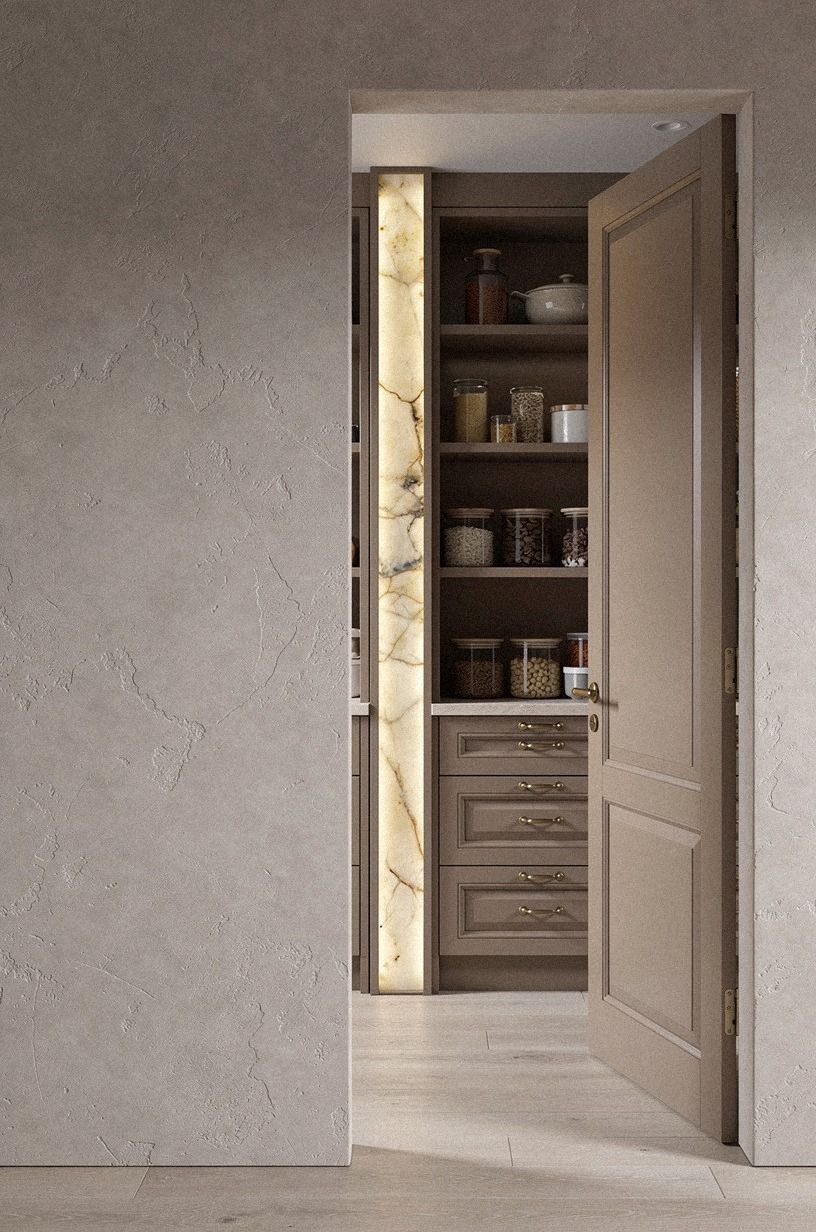
Shaker fronts work because they already belong in so many kitchens, so a paneled walk-in door doesn’t feel clever for the sake of it. If your wall is painted Benjamin Moore White Dove (OC-17), carry that same soft white straight across the door and let the shadows from the stiles do the work.
You want the panel depth to match the nearby fronts, especially if the pantry glows a bit when the door cracks open. I wouldn’t go ornate here.
A clean shaker profile looks richer once you see it beside upper cabinets that are 30-42 inches tall, because the scale feels consistent instead of custom in a showy way. The plain shaker front can stay quiet and still look quietly expensive!
And if you are worried it will look too plain, that is kind of the point. Plain is what hides best. I like this move even more after seeing kitchens that lean on dark cabinetry and soft contrast, because you realize the plain shaker front can stay humble and still feel composed and rich.
3Disguise the entrance as a tall appliance wall
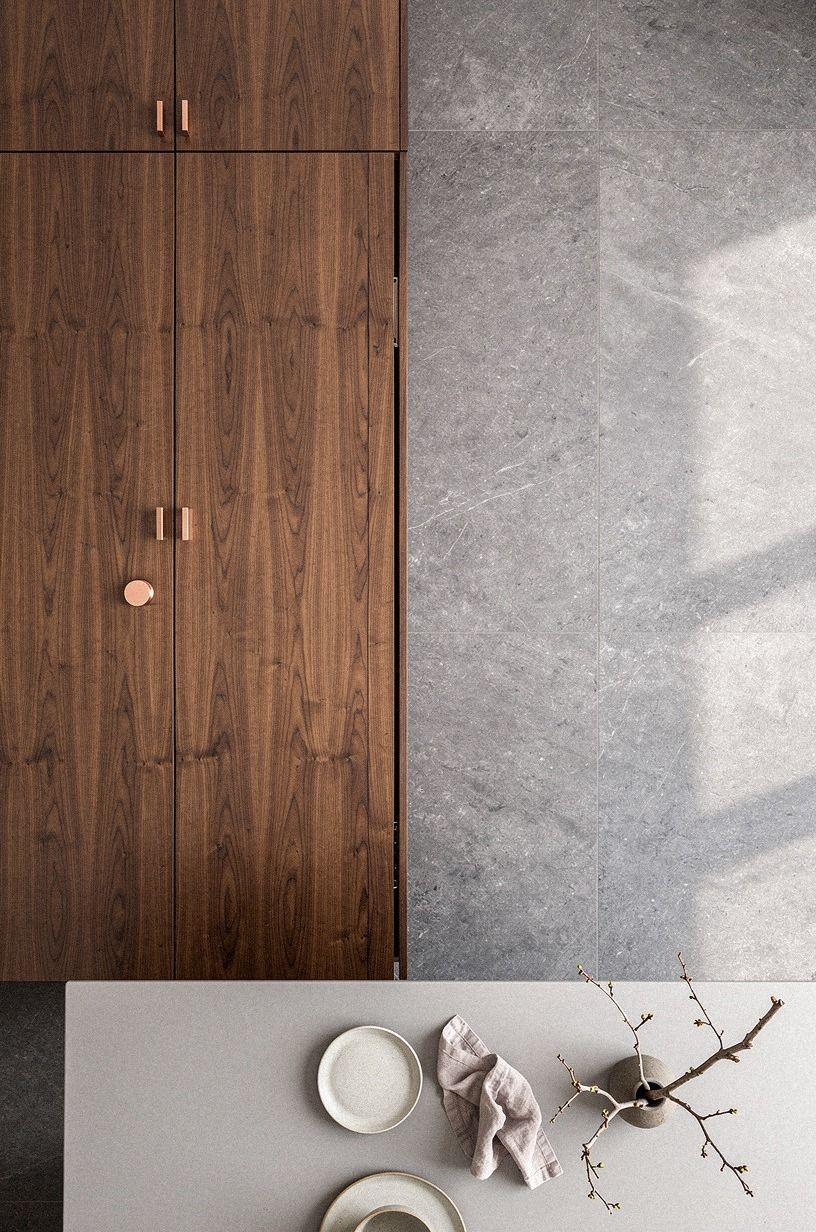
A tall run of cabinets is one of the easiest places to hide a pantry because your brain already expects full-height storage there.
4Wrap a hidden pantry in fluted wood
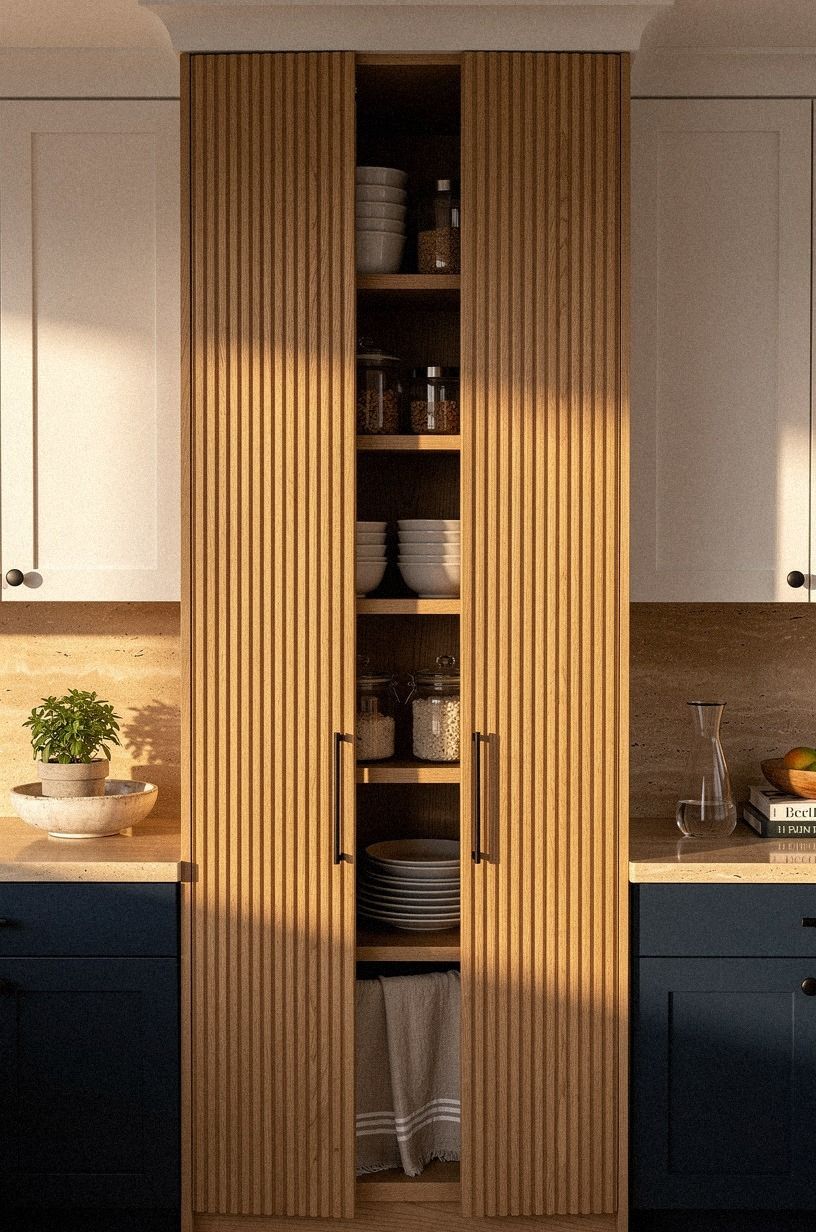
Fluting gives you texture without shouting door, and that’s why it works so well on a concealed pantry wall. When your lowers are navy and the counters are honed travertine, the vertical ribbing warms up the whole elevation and makes the pantry feel like a design feature instead of a compromise.
Keep the flute spacing narrow and consistent so the seams disappear into the pattern. I like this best when the pantry sits dead center, because your eye treats the whole wall as a single object. Add crisp uppers in Benjamin Moore White Dove (OC-17) and the ribbed wood suddenly looks collected, not rustic.
Worth every penny!
If you are styling the rest of the room, let the fluted wall stay the hero. One oak board, one stone bowl, done.
For more ideas with that built-in feeling, I often reference hidden pantry walls with stronger material contrast. You will see how little styling you really need.
5Hide dry storage behind a sliding backsplash
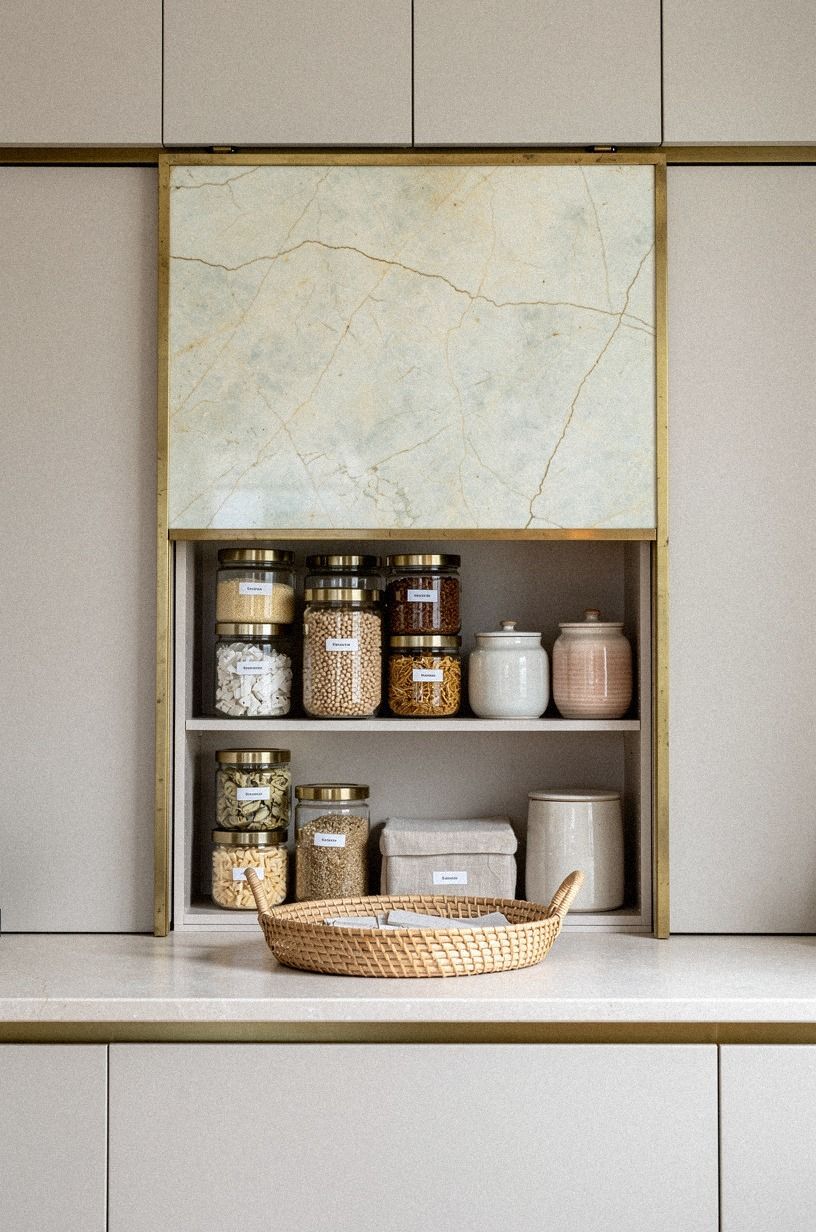
This is the move for people who need more pantry space but don’t want another full-height door in view. A sliding panel above the counter can hide oils, spices, and everyday dry goods while keeping the kitchen looking clean. In an airy kitchen, emerald zellige or a brass-trimmed cream panel gives you enough personality to make the mechanism feel worth it.
The practical part matters more than the novelty. Keep the storage shallow so jars don’t bang the track, and respect the usual 18-inch backsplash gap between counter and uppers if you’re building around existing cabinets. I made one too deep once and every olive oil bottle became a hand-to-hand combat situation.
But when the proportions are right, this one is so satisfying! If your kitchen already has dark accents, peek at this black and tan kitchen that feels more like a room than a workspace. You will notice how controlled contrast makes small storage moments look intentional.
6Blend a detail door into pantry shelving
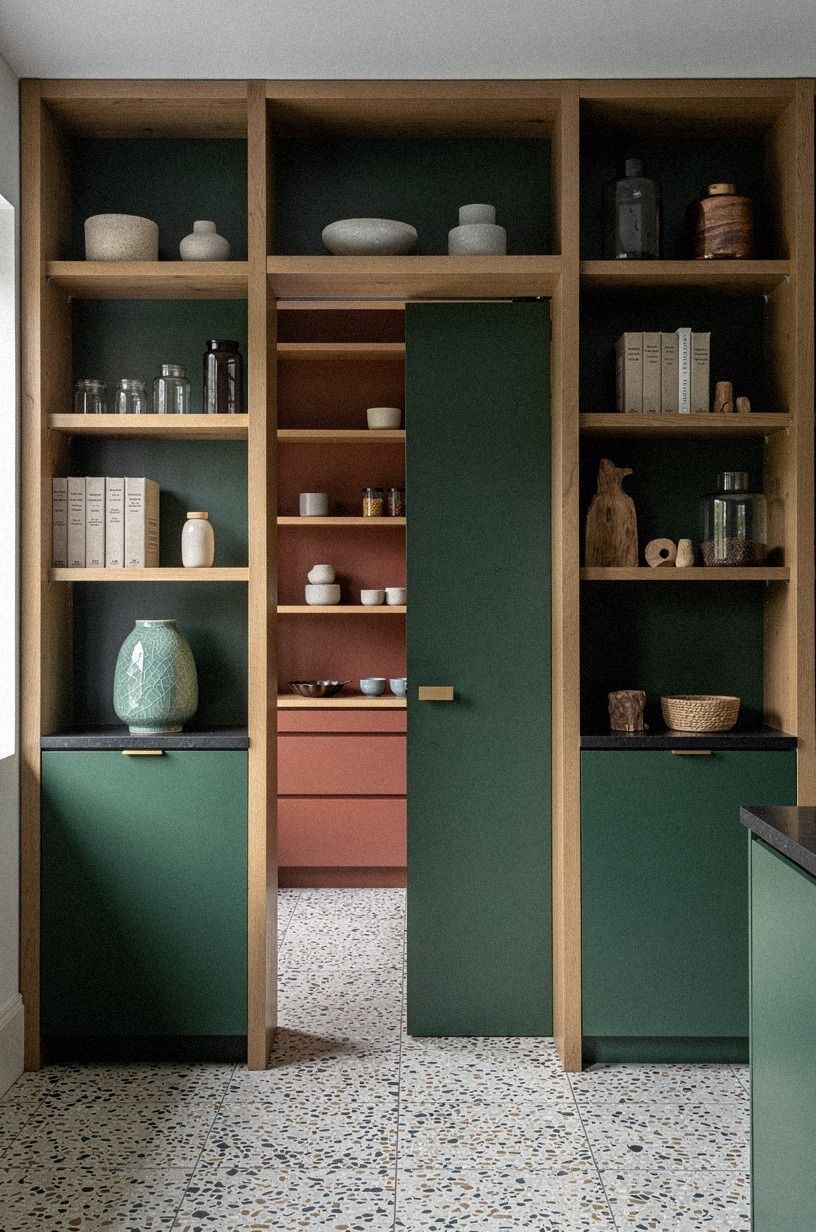
Shelving hides a doorway best when the shelf rhythm stays believable, not overloaded. In forest green cabinetry with natural oak trim, I like a few open spans, a few closed baskets, and enough negative space that the wall still breathes. The depth and color of Sherwin-Williams Evergreen Fog (SW 9130) on the trim side can soften the join if green feels too dark for you.
Use lighter items near the latch side so the door swings without fuss. A flush passage disappears better when your eye lands on object balance instead of mechanics.
Think natural oak ledges, stoneware canisters, folded linen, then stop. Too many tiny props give the game away because the shelf starts looking staged.
I prefer this over faux bookcase doors in kitchens because it feels more believable for daily-use shelving. You can study other concealed pantry approaches here if you want options, but shelving wins when you need your storage to earn its keep.
7Frame the doorway with floor-to-ceiling cabinets
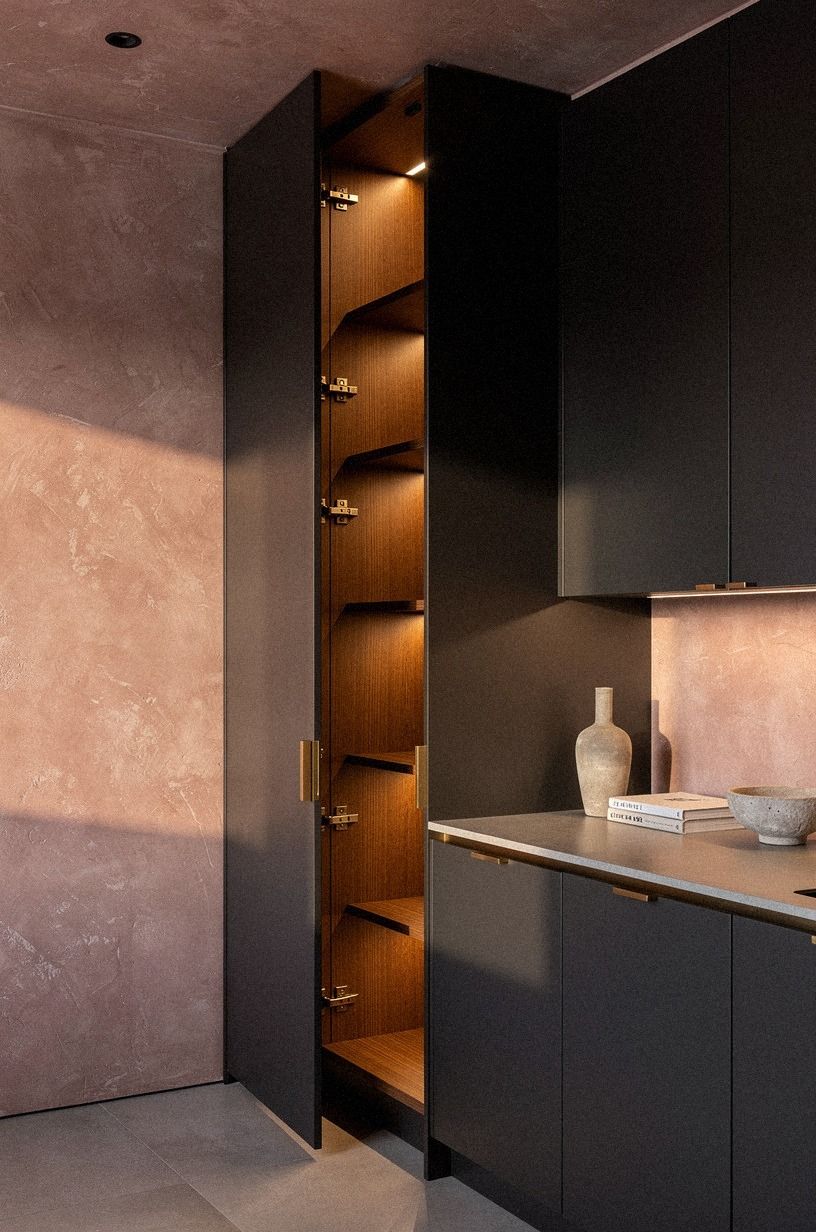
When you frame the opening with full-height cabinetry, the hidden pantry starts to read as a recess inside a millwork composition instead of a stand-alone door. That matters in a kitchen with dusty rose plaster and charcoal cabinetry, where the wall already has enough mood and doesn’t need one more feature fighting for attention.
Give yourself proper passage width, then let the side cabinets do the disguising. I aim for clean alignment from toe kick to crown, because you want the framing to feel deliberate. If your island needs room too, hold that 42-48 inch clearance around it so the pantry doesn’t make the kitchen feel pinched.
And yes, this works especially well in corners. The doorway almost vanishes when full-height cabinetry wraps it from both sides.
It’s such a dramatic move for such a tiny swap! For more hidden-entry inspiration, these unmarked doors and concealed passages show why a framed opening often feels grander than a decorated one.
8Camouflage the pantry with painted beadboard
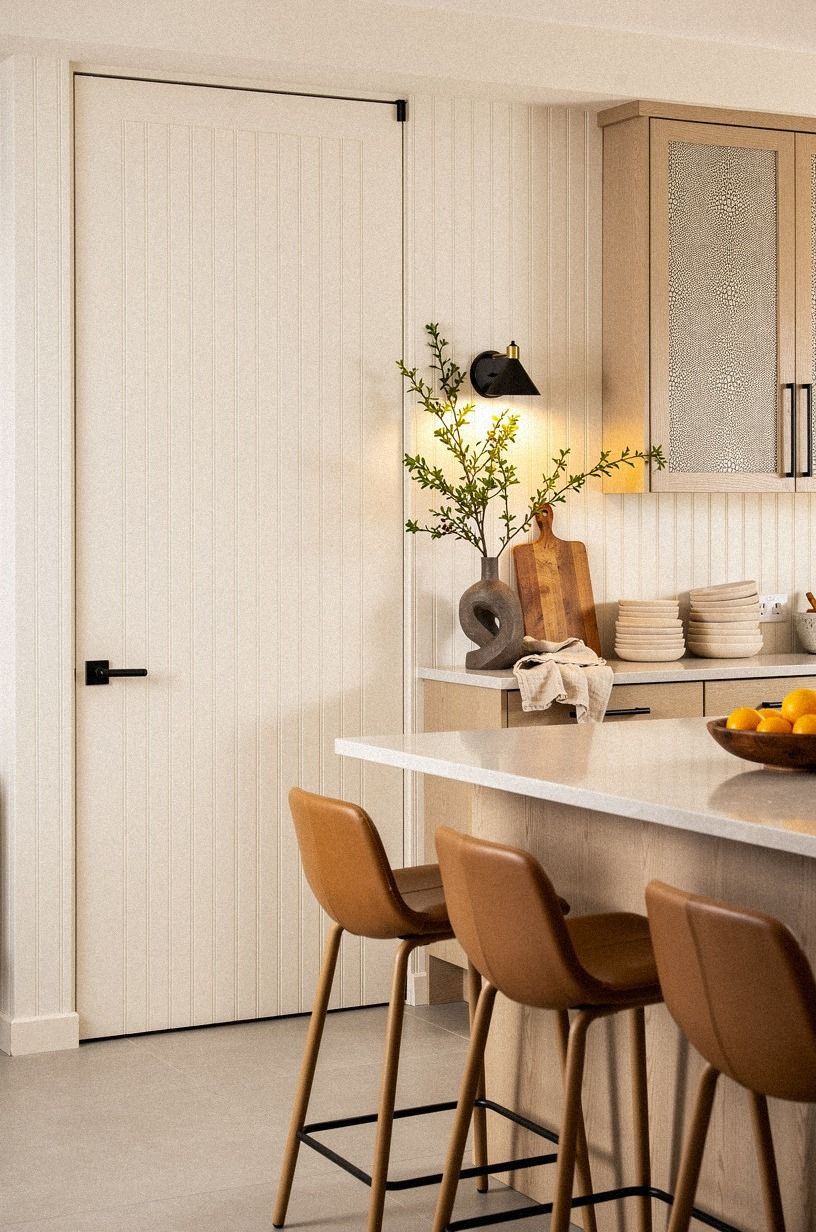
Painted beadboard has a forgiving, old-house quality that makes a pantry door disappear fast. If your kitchen leans relaxed rather than sleek, continue the same warm white beadboard across the wall and over the door so the grooves become the pattern. Done in Benjamin Moore White Dove (OC-17), it feels clean without going cold.
You do need to keep the trim simple. Too many applied moldings make the door look theatrical, and beadboard doesn’t need help.
I like it beside camel stools, black accents, and worn wood because painted beadboard brings enough texture on its own. It’s a nice renter-minded look too if you’re covering less-than-lovely existing surfaces.
But I would skip glossy paint here. Satin paint or matte hides the seams better and feels older in the best way. If you want a related lived-in palette, this black and tan kitchen mood piece shows how soft neutrals keep utility walls from feeling flat.
So forgiving on imperfect drywall too!
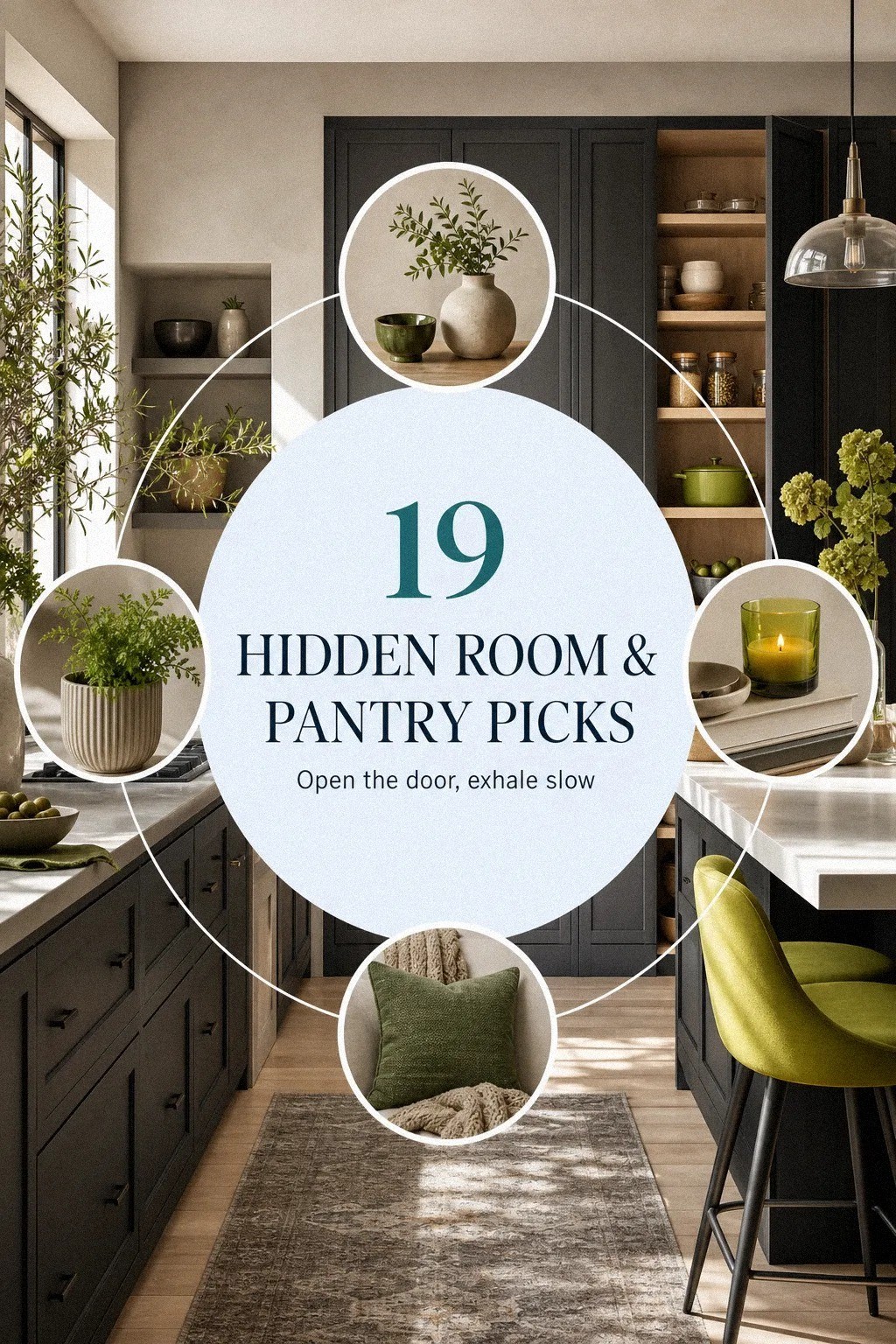
9Tuck a butler pantry behind pocket doors
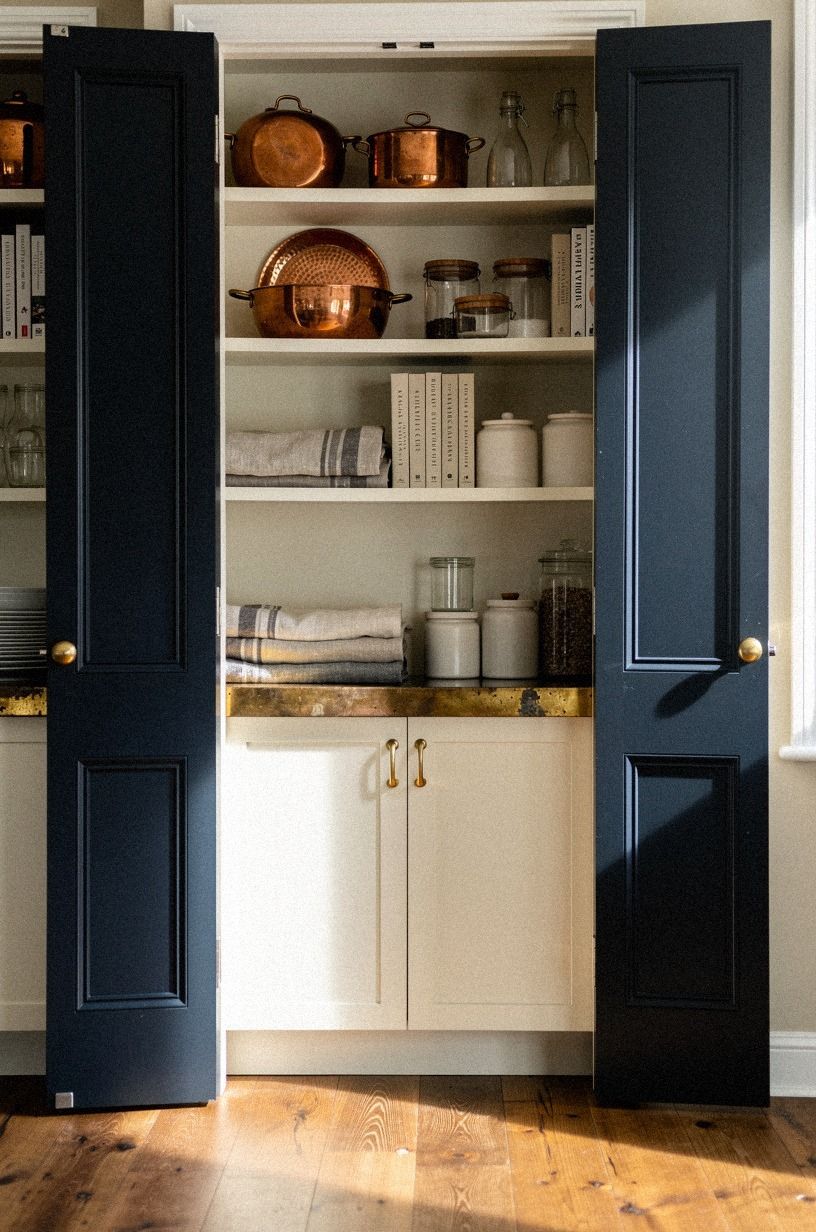
Pocket doors are the answer when you want the pantry open during prep and invisible by dinner.
10Install a push-latch door under open shelves
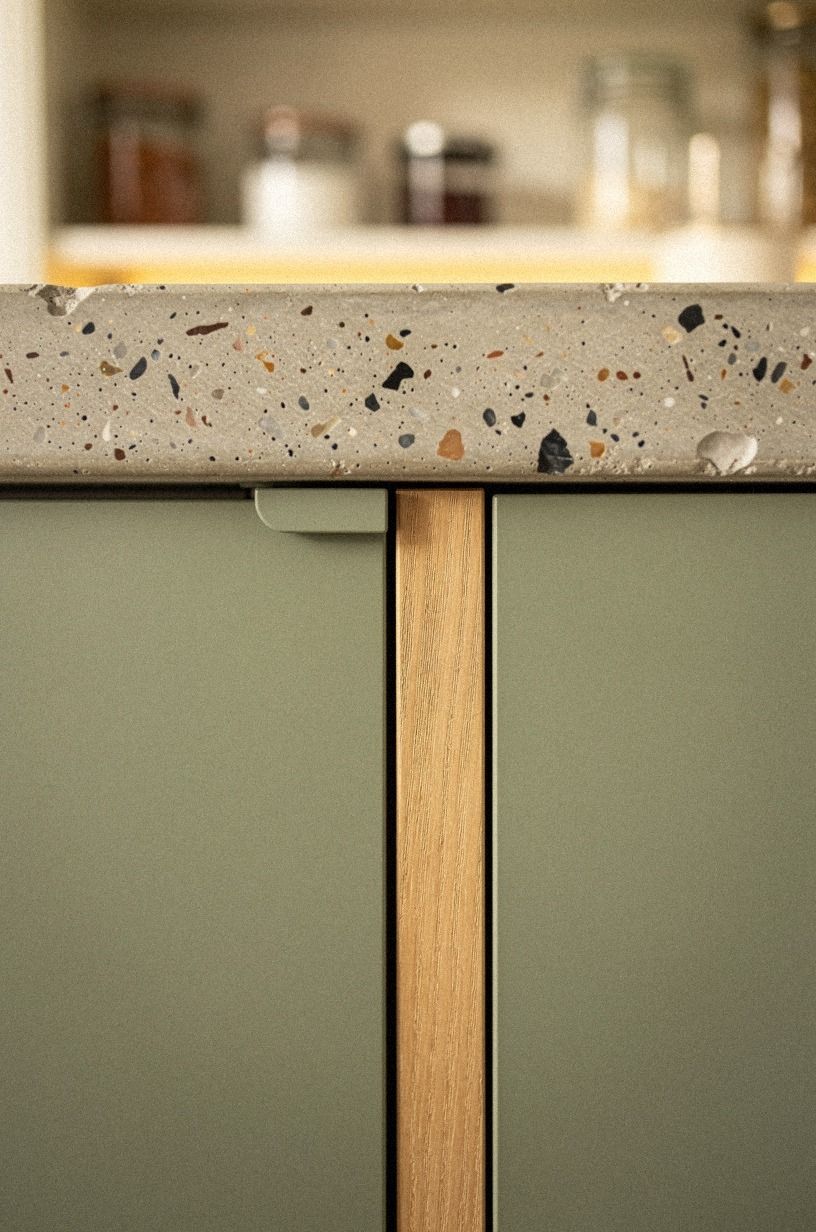
A push-latch door works best when it sits under open shelves and stays visually quiet. The reveal line should be tiny, the panel face should match the wall color, and the door shouldn’t advertise itself. In sage green under cream shelves, Sherwin-Williams Evergreen Fog (SW 9130) gives you that soft, dusty color that still feels grown up.
Keep the latch low profile and easy to hit with one fingertip (you shouldn’t see it until you touch it). I also like a slim stone edge nearby so the opening feels grounded. One stack of bowls above, one cutting board, one cream oak shelf.
That’s enough. Too much open styling makes you notice the hiding place instead of the shelf line.
And please do not add a knob just because you are nervous people will not find it. They will. A push-latch panel under shelving should feel discovered, not announced.
If you like subtle storage moments, this hidden-door roundup is worth saving for later.
11Mask a storage room with arched millwork
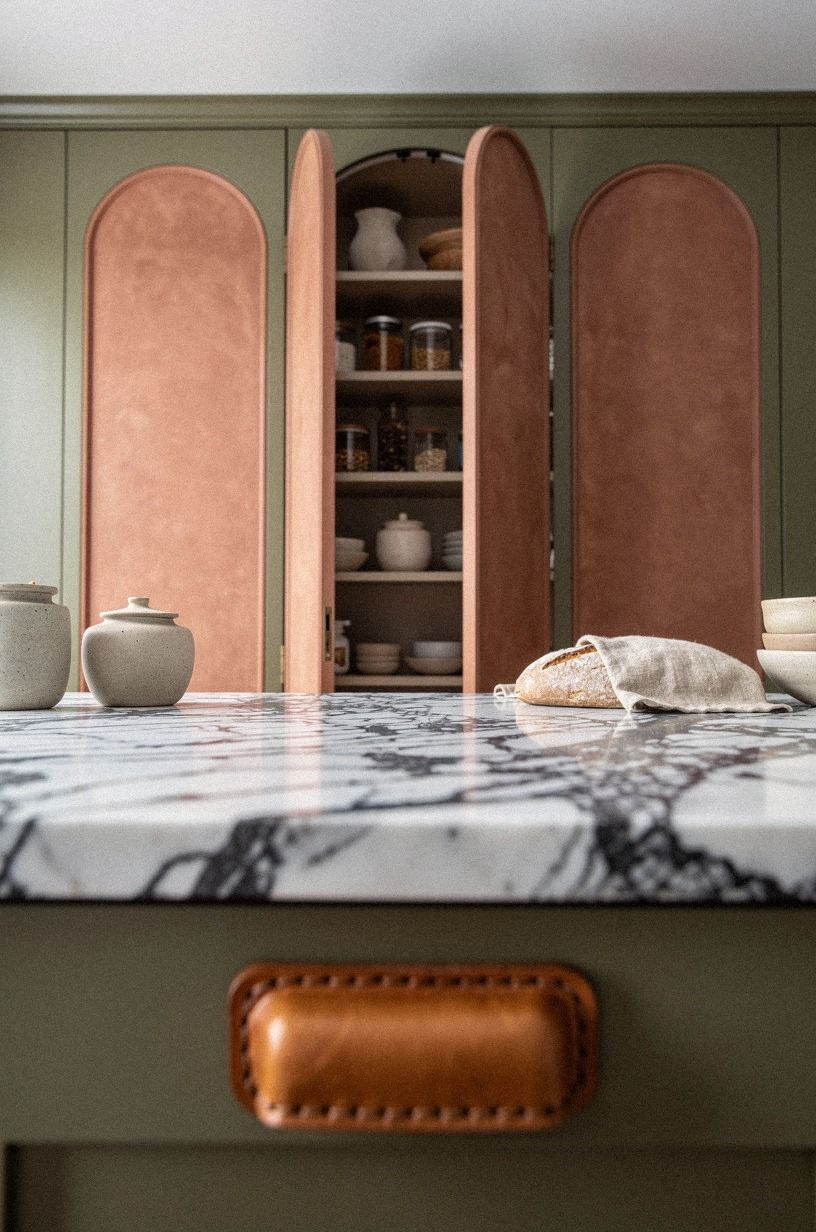
An arch makes a storage opening feel softer and older, which is why it can hide a room better than a square cutout. In terracotta millwork beyond a stone counter, the curve itself becomes the story. Paint the surround in a grounded color like Chestertown Buff HC-9 if you want the warmth without going orange.
You do have to commit to the shape. A timid arch looks accidental. A full one, tall enough to feel architectural, turns the pantry into part of the room’s rhythm.
I like olive accents and natural stone here because terracotta plaster loves company that looks earthy, not polished.
But I would not mix this with ultra-modern slab cabinets unless you are chasing tension on purpose. Arched millwork plus sleek can work, just not halfway. For a mood reference that leans hidden and historic, these concealed courtyards behind old walls capture the same sense of discovery.
12Turn a cabinet run into a hidden corridor
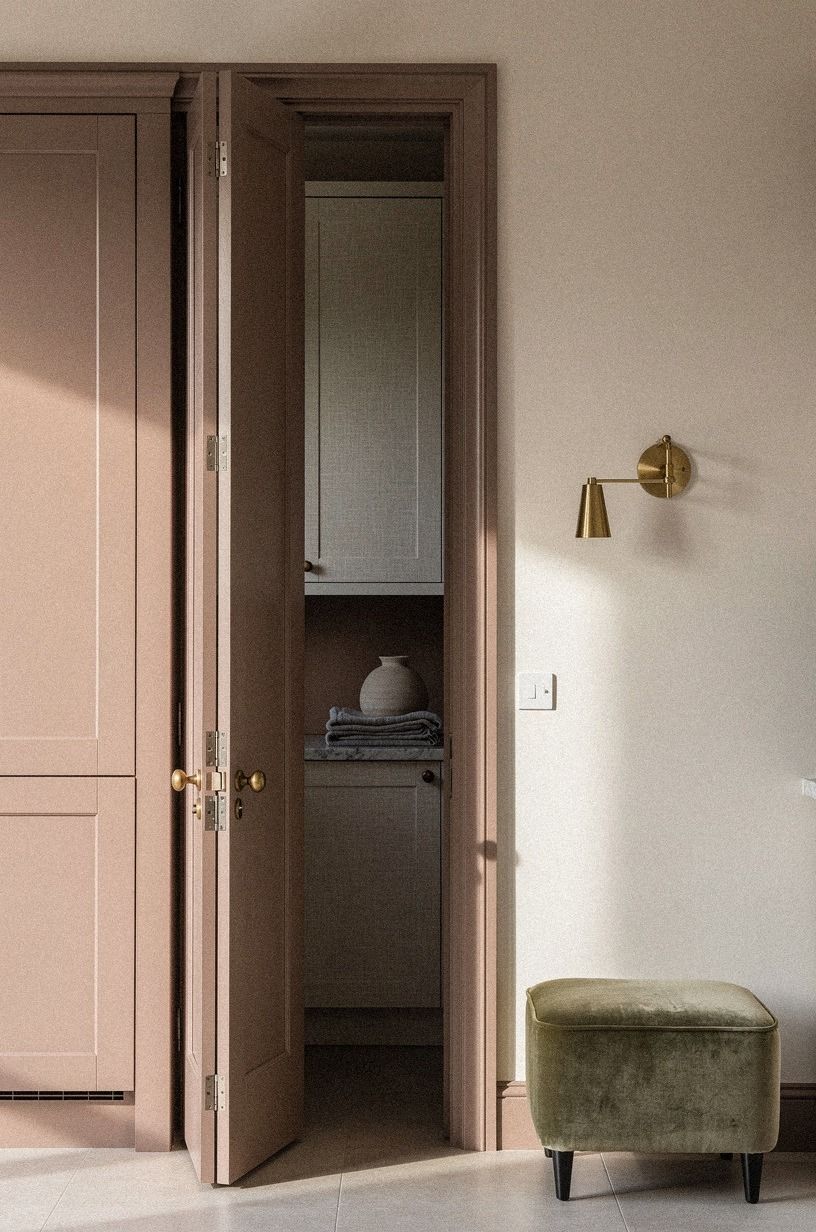
This is the move when the pantry sits deeper than a simple closet and you want the passage to feel intentional. Treat the entry wall like a run of tall storage, then let one set of doors open into a corridor lined with clay and linen tones. The key material here is aged brass, because even a small glimpse of it warms the transition.
You want the corridor to feel quieter than the kitchen, not busier. That means flat lighting, a restrained palette, and door faces that close flush. If you’re choosing colors, Farrow & Ball Studio Green (No.93) on the inside can make everyday storage feel serious in a way white shelving never quite does.
I love this when you need overflow space for appliances, trays, or bulk groceries because the clay-toned corridor itself becomes usable storage. For more examples of entries that disappear into cabinetry, this pantry idea collection is the first place I would look.
13Cover the pantry door with chalkboard paint
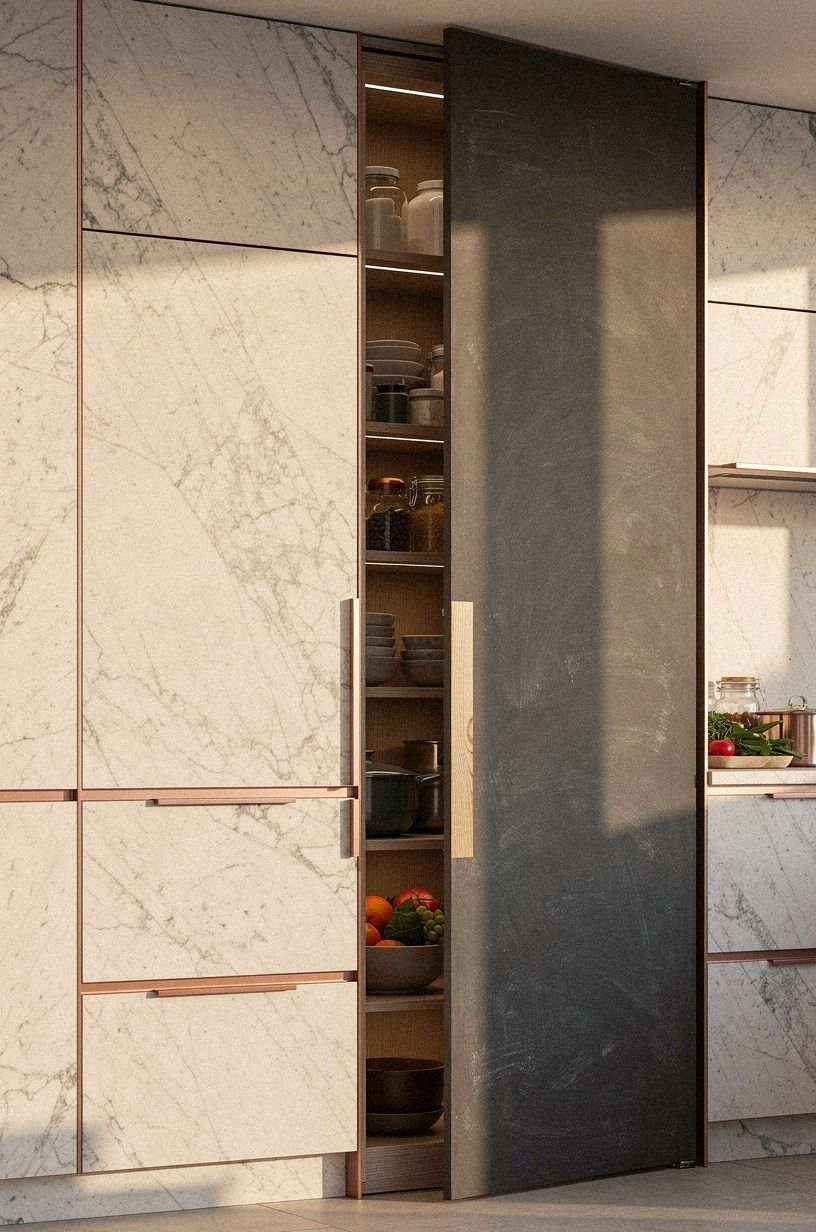
Chalkboard paint is best when you use it as a finish, not a novelty. A plum-grey panel inside a marble-and-rose-gold kitchen gives you a practical note zone while still hiding the entrance. Done in a restrained tone, plum-grey chalkboard paint looks moodier and more custom than the schoolroom black everyone reaches for first.
Use it for grocery lists, dinner notes, or one short menu, then wipe it back down. That’s why it works. You get movement on the surface without clutter in the room.
I like this beside Carrara marble because the soft veining keeps the dark panel from feeling heavy.
And if you rent, this can be one of the friendlier ways to cover an odd pantry door. Just keep the simple frame and the writing spare. Such an underrated move for a rental kitchen!
For another take on lived-in kitchens with personality, this black and tan room-like kitchen proves practical surfaces do not have to feel cheap.
14Build a bookcase-style door for cookbooks
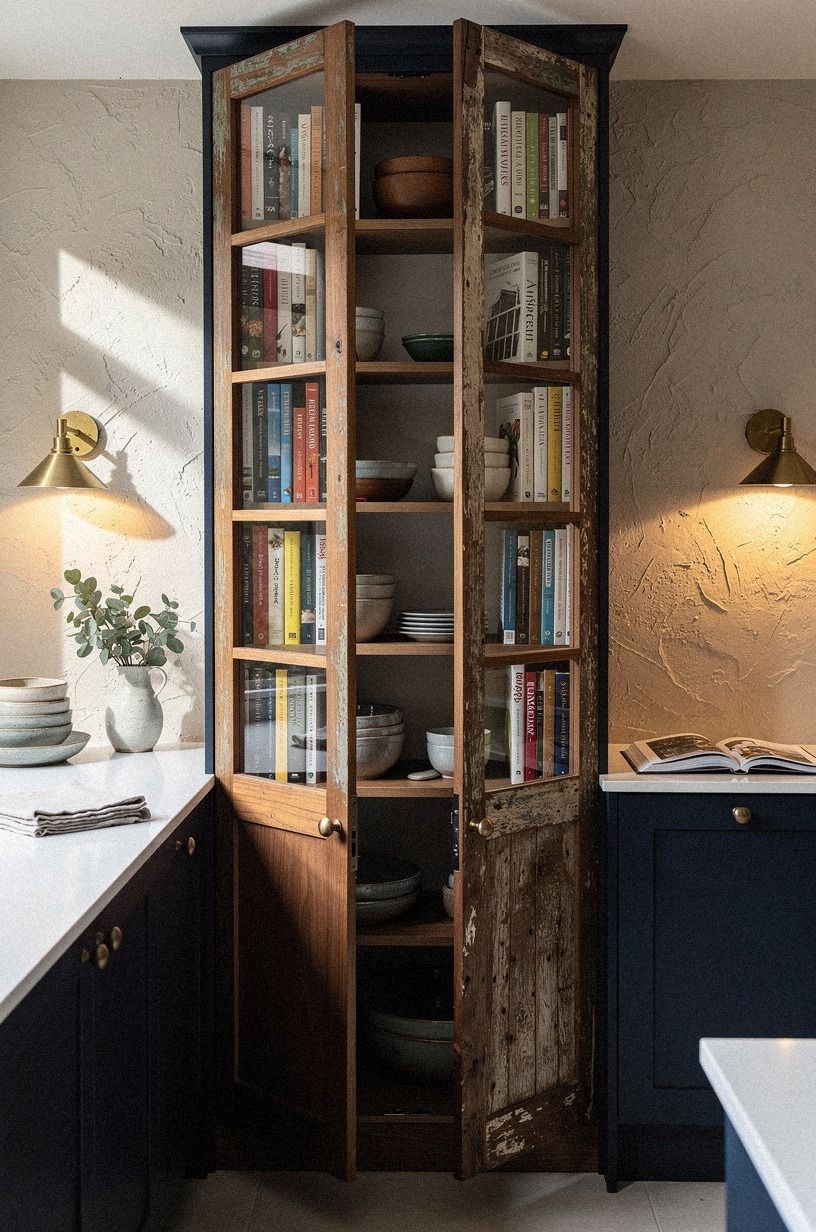
A cookbook door works when the shelves look real enough to be used every day. In a navy, white, and walnut kitchen, shallow shelves on a swinging panel can hold your prettiest cookbooks and still open inward to pantry storage. The magic comes from proportion, not gimmicks, and walnut shelving gives the whole thing more authority.
Keep the books light enough that the hinge doesn’t fight you, and mix them with one object every few spans so the panel doesn’t look overloaded. I prefer cookbooks over decor here because navy cabinetry plus real-use storage feels more believable than faux styling ever will. So inviting when it actually works as a library too!
But do not make the shelves too deep. That is the fail point.
Once the panel gets heavy, you stop using it and the whole idea turns into theater. If you want to study how concealed doors stay convincing, these hidden-door examples make the case for swing hinges and restraint.
15Use mirrored panels to hide the pantry
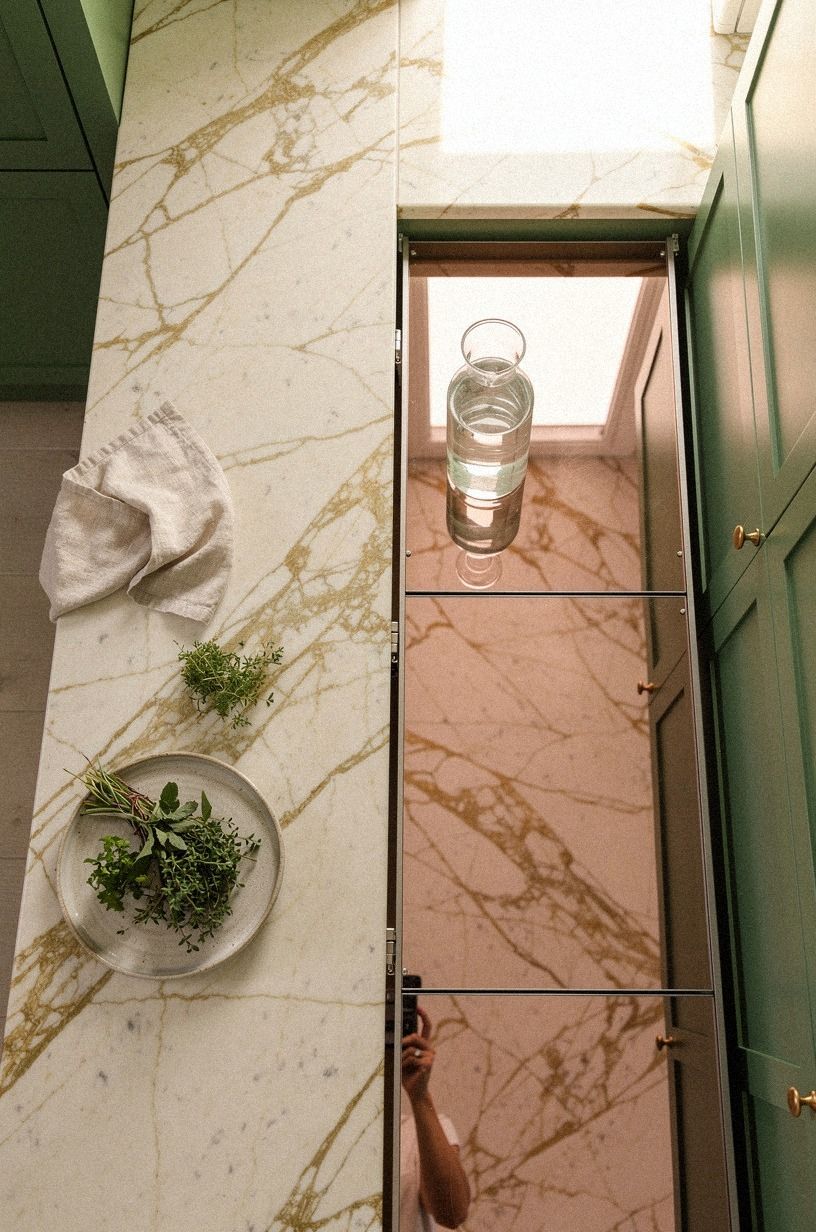
Mirrored panels are a smart small-kitchen move because they bounce light while taking visual weight off a pantry wall. In an emerald-and-cream space with Calacatta Gold marble, the reflection keeps the room airy and lets the pantry recede even though the panel is right in front of you. The mirrored version feels grand without trying at all!
The move is using mirror as an accent, not covering every inch. One or two panels are enough.
Pair them with quiet frames and let the stone do the glamorous work. I especially like this when gold veining or brass details already exist, because antique mirror picks up warmth better than clear mirror does.
And yes, you need fingerprints under control. That’s the tradeoff.
Still, in a tight kitchen, extra light is worth wiping once a day. If you want more ideas that make compact storage feel bigger, save this hidden pantry roundup and compare the mirrored versions side by side.
16Create a spice wall that swings open
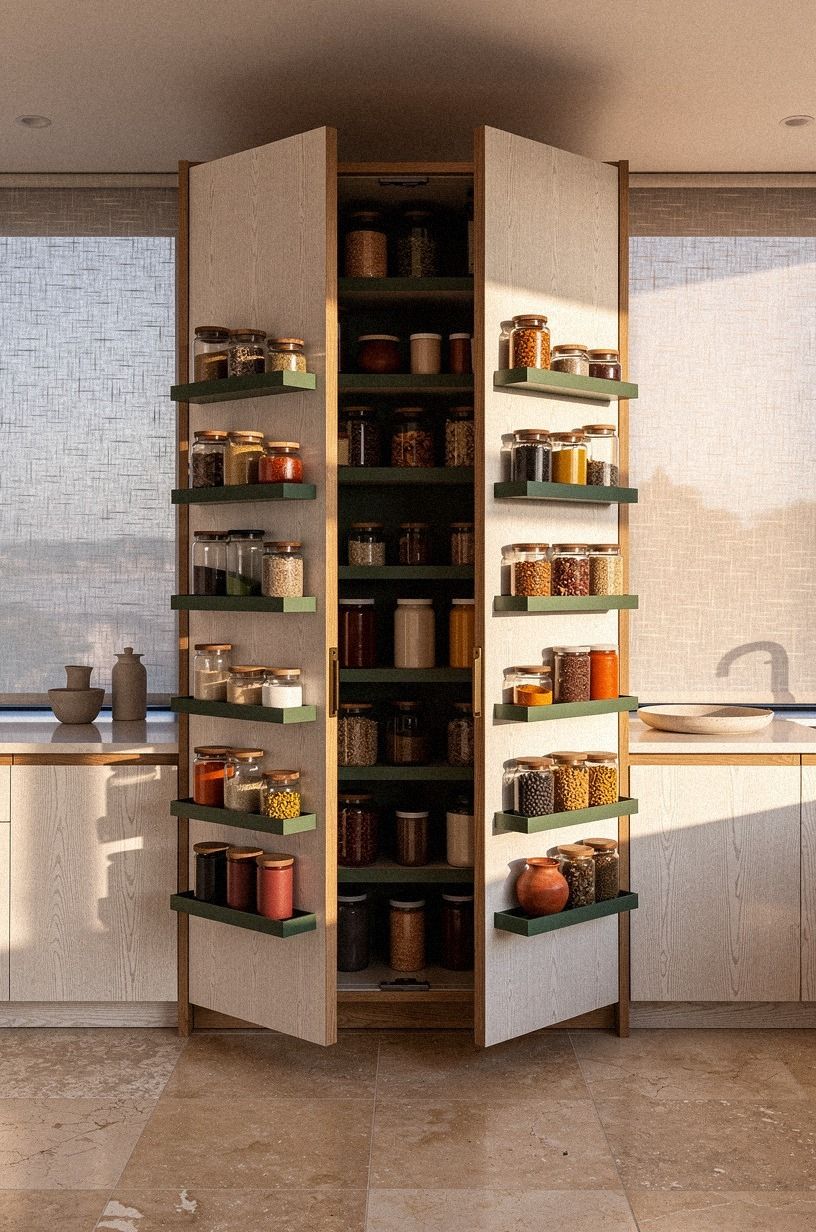
A swinging spice wall is one of the few concealed-storage ideas that earns its drama because you use it constantly.
17Hide a coffee station behind bi-fold doors
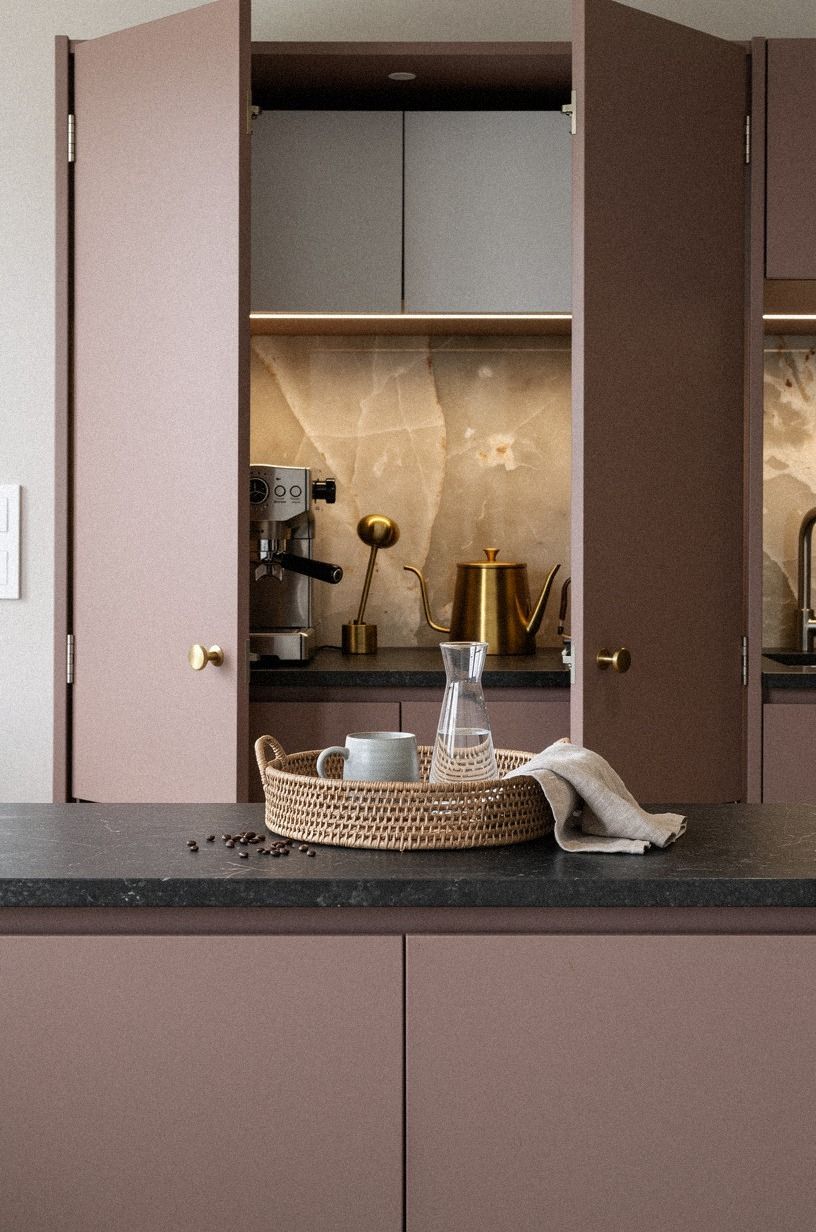
Bi-fold doors make a coffee station feel tidy in seconds, which is exactly why they’re so good behind the kitchen. In dusty rose cabinetry with charcoal counters, partly folded doors soften the opening and let you hide the visual mess of pods, mugs, and beans. A touch of unlacquered brass on the inside adds the right little glow.
You want the shelf heights planned around what you use, not what looks symmetrical on paper. Espresso machine below, mugs at eye level, beans and filters above. I also like a stone or laminate work ledge at 36 inches so your morning setup feels like part of the kitchen, not a cramped afterthought.
I would choose bi-fold doors over pocket doors in a narrower alcove because the opening feels easier to access fast. And once those panels close, the room exhales. If you love kitchens that read more like living spaces, this black and tan example shows the same logic beautifully.
18Line the detail pantry with moody tile
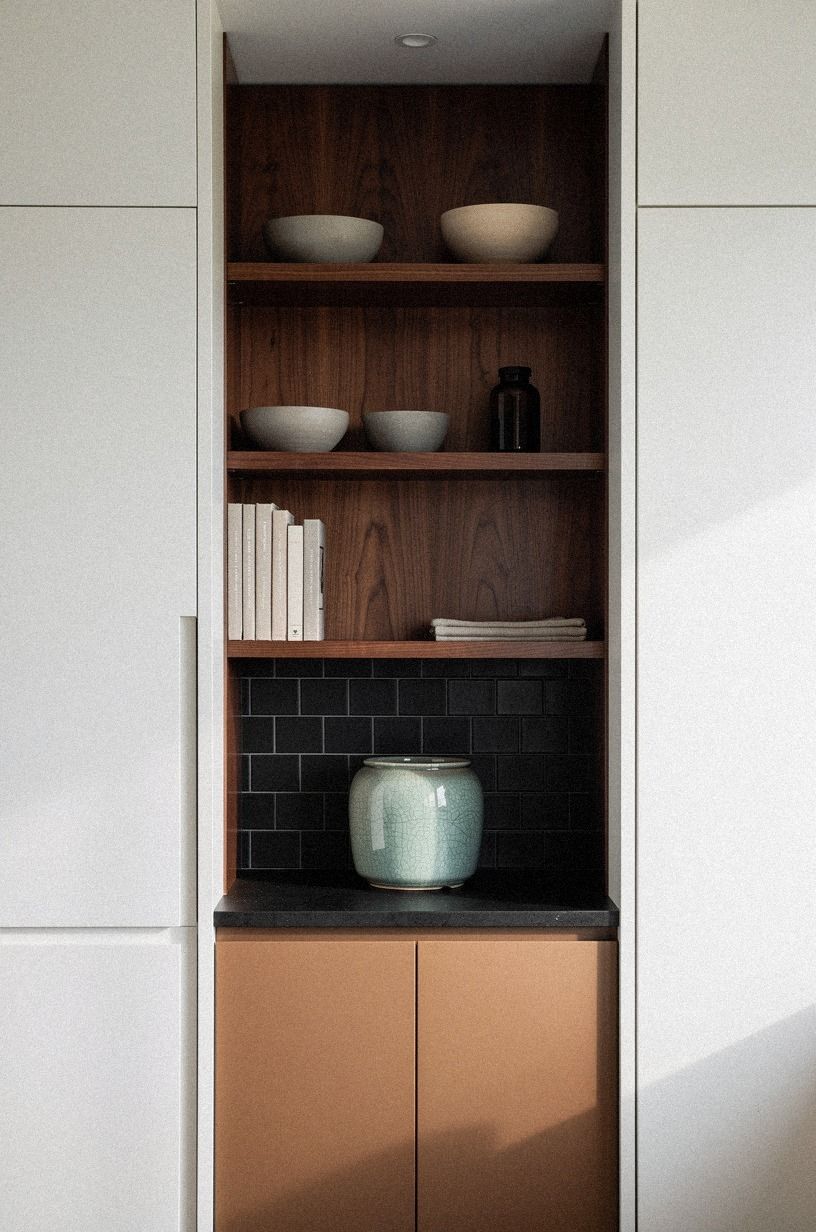
If the outer kitchen is calm, the pantry can carry the drama. Lining the inside with moody tile turns the reveal into a little destination, and it makes even snack storage feel considered. In a warm white and camel kitchen, black-accent zellige or another dark tile instantly deepens the view through the doorway.
This is also where real numbers matter. Zellige backsplash usually runs about $15-$35 per square foot, so you can create impact inside a small pantry without pretending the whole kitchen needs a full overhaul. I like book-matched wood shelves against it because the glossy tile and matte grain play off each other.
But keep the doorway edge itself quiet. Let the surprise happen inside.
If your wall color is soft and your outer cabinets are simple, the moody interior lands harder. For a few more examples of reveal-driven storage, this pantry idea guide is a solid comparison point.
19Add brass hardware only inside the reveal
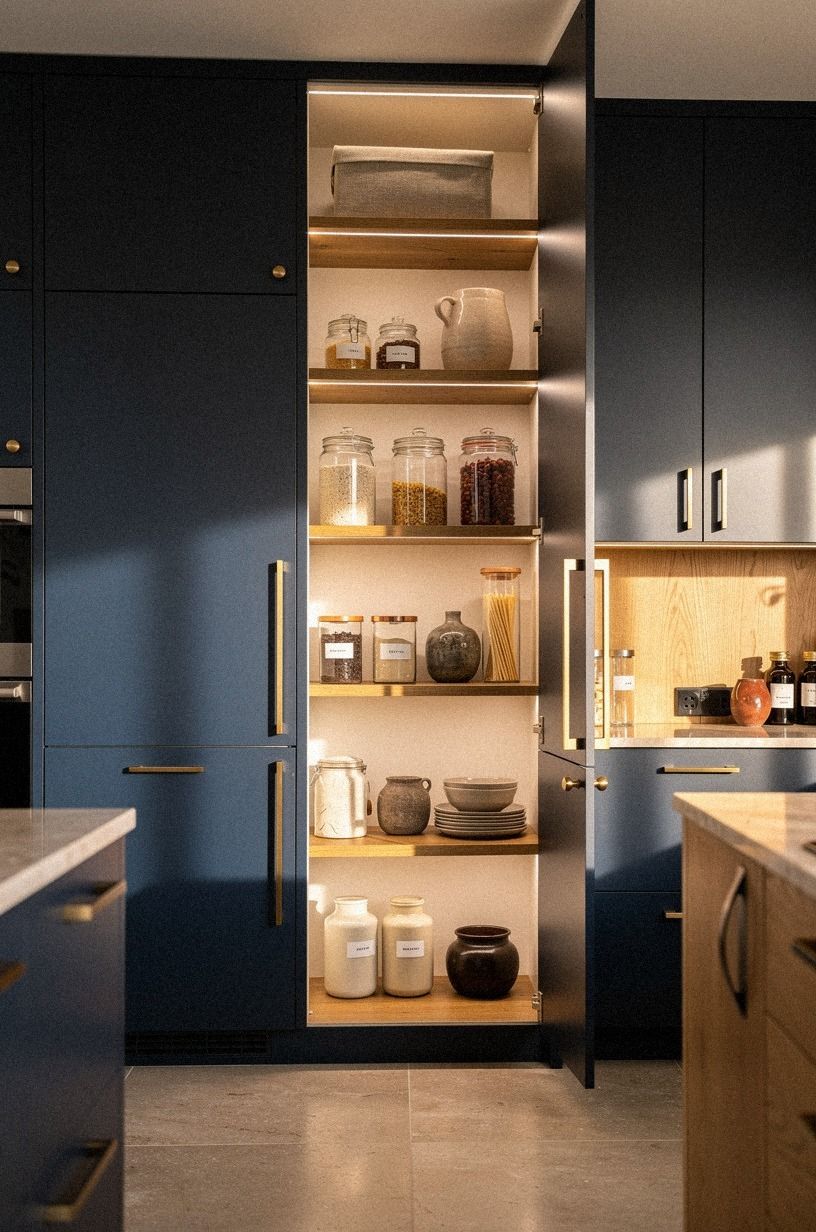
One of my favorite ways to make a pantry feel higher end is keeping the outer face nearly blank, then saving the shine for the inside. Open the concealed doors and suddenly you get the warmth of brass hardware against ivory shelving.
Closed, the wall stays calm. That’s a much smarter contrast than putting statement pulls on the outside.
Such a moody, intentional move when you walk past it daily!
This move works especially well in a centered midnight blue cabinet wall because the color already carries enough depth. Use knobs, latches, or cup pulls only where the reveal begins, and let the interior details do the talking. A few pieces of copper cookware nearby make the brass feel tied in, not random.
I keep coming back to this because it gives you payoff only when you interact with the pantry, which is more satisfying than constant display. Want the kitchen to feel finished without looking decorated to death?
Save the brass reveal for the reveal. You will notice the difference on day one.
What The Match-Line Rule Costs
If you’re trying to decide whether these ideas are worth it, the fastest answer is this: cosmetic concealment is far cheaper than moving walls or rebuilding cabinetry. Most people can get a strong result from paint, panels, hardware, and one clever door move before they ever touch a demolition tool.
A few material benchmarks help too. Quartz countertop usually lands around $60-$120 per square foot, laminate countertop around $10-$40 per square foot, and repainted shaker fronts often run $150-$400 per door.
You do not need the high tier to get the hidden look. You need discipline.
Why Does The Borrowed-Wall Rule Feel So Much Bigger?
Here’s the thing: the best hidden pantry ideas don’t make a kitchen feel packed with more stuff. They make it feel like the walls got smarter.
I used to think concealed storage was about cramming more behind a door, but every good version I’ve seen or lived with had the same lesson. The room worked because the visible surfaces got quieter.
Your eye could rest. Your counters stayed cleaner.
And the kitchen finally stopped broadcasting every cereal box and appliance cord the second you walked in.
That is what I mean by the Borrowed-Wall Rule. You borrow calm from the wall in front of you, then pay it back with better storage behind it.
If you cover a pantry with matching shaker fronts, or run cerused white oak across a whole cabinet wall, the kitchen suddenly reads as architecture instead of equipment. I think that is why these ideas are having such a long run into 2026.
People do not just want more square footage. You want rooms that feel easier to be in.
I also think this is where people waste money. They chase a full remodel when what they really need is one tighter line, one darker pantry interior, one better door choice. I’ve seen a plain wall painted Benjamin Moore White Dove (OC-17) look richer than a far pricier kitchen once the pantry stopped interrupting it.
And I’ve seen expensive hardware ruin a disguise because the outside tried too hard. If I sound opinionated, it’s because I am.
A concealed pantry only works when the visible side stays humble.
So if you’re deciding where to spend, spend where your hand lands and your eye pauses. Door edges.
Alignment. Paint finish. Lighting inside the reveal. Not ten decorative accessories.
Not another countertop appliance. The kitchen feels bigger when the everyday clutter has somewhere to disappear, and that feeling is hard to fake.
Once you’ve lived with that kind of visual quiet, you won’t want to go back.
The Match-Line Rule FAQ
What is the best Hidden Room & Pantry Ideas Behind the Kitchen for a small kitchen?
For a small kitchen, I’d pick matching cabinet doors or mirrored panels first because both keep the sightline open. IKEA-style simple fronts help, and a mirrored panel adds light without asking for more floor space. If you want inspiration, this hidden pantry roundup is the closest match.
Where can I buy Hidden Room & Pantry Ideas Behind the Kitchen pieces on a budget?
Start with IKEA, Target, and Wayfair for fronts, shelving, and simple hardware, then check Facebook Marketplace for doors and cabinet pulls. I also like local salvage yards for old panels because the paint-grade pieces are often cheap and full of character.
How much does a Hidden Room & Pantry Ideas Behind the Kitchen makeover cost?
A cosmetic version usually costs about $300 to $1,500, and that’s the sweet spot for most people. Peel-and-stick backsplash or paint can do a lot of heavy lifting, while mid-level refreshes with fronts, lighting, and counters jump closer to $3,000-$12,000.
Can I create a Hidden Room & Pantry Ideas Behind the Kitchen on a budget?
Yes, and you don’t need custom cabinetry to do it. Painted beadboard over an awkward door, a push-latch swap, and thrifted baskets inside the pantry can change the whole read of your wall.
Cheap wins. Better alignment.
Cleaner counters.
Is a Hidden Room & Pantry Ideas Behind the Kitchen worth it in a small space?
Yes, it’s worth it because small kitchens benefit the most from visual quiet. Mirrored panels or a flush pantry door keep the room from feeling chopped up, and holding that 42-48 inch clearance around your island helps the hidden storage stay easy to use.
Is Hidden Room & Pantry Ideas Behind the Kitchen a good idea for a rental?
Yes, if you stick to low-damage upgrades. Removable hardware, peel-and-stick backsplash, tension-shelf organization, and paintable panels can get you close without permanent changes. For a softer, lived-in color direction, this black and tan kitchen story is useful.
How do I hide a pantry door without remodeling the whole kitchen?
Start with the cheapest moves first: paint the door the same color as the surrounding wall in Benjamin Moore White Dove (OC-17) or Sherwin-Williams Evergreen Fog (SW 9130), swap to a touch-latch or push-latch, and align the panel reveals with your cabinet fronts. You’ll get most of the hidden look for under $200 in materials and one weekend of work, no drywall dust required.
Doors Over Drywall: Where I’d Start First
If I had to pick one, I would start with matching cabinet doors. You cannot fake a calm kitchen if the pantry cuts a visual hole in the wall. Pin matching cabinet doors for later and study these hidden pantry examples.