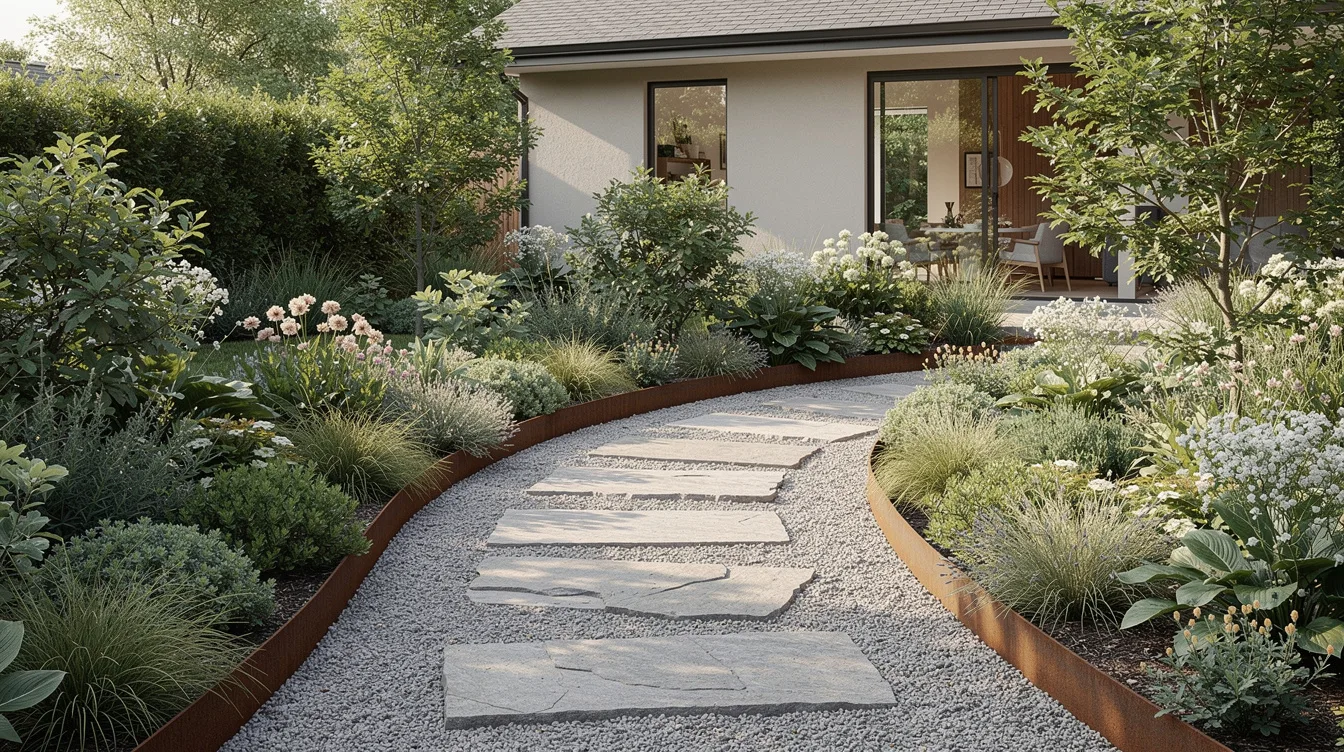
I can always tell when a yard path was picked from a quick weekend shopping trip. The walkway is usually too skinny, the gravel is blindingly white at noon, and a row of blue solar lights makes the whole space feel colder than the house behind it.
That look had a big moment a few years ago, but now it reads dated and cheap fast. The good news is that the fix usually has more to do with width, layout, and restraint than with spending a fortune.
Widen the Walk Before You Buy Anything
A path under 32 inches wide reads like a utility strip, not a garden feature. Designers usually want a main path to feel closer to 36 to 48 inches, because that is what lets two people pass without the awkward single-file shuffle.
This is the mistake that makes a yard feel instantly skimpy. Even a simple path made with Home Depot pavers looks more expensive when the width feels generous and intentional.
Break Up the Straight Shot Across the Lawn
A dead-straight run from patio to fence has a dated subdivision look, especially when it slices the yard into two blank halves. A path should guide you toward a seating spot, a grill area, or raised beds, not behave like a hallway stamped outdoors.
I like a slight shift or soft bend with large rectangular pavers because it creates rhythm without getting fussy. That one move makes a small backyard feel planned instead of rushed.
Swap Repetitive Faux Stone for Cleaner Materials
Molded concrete made to mimic random stone is one of the biggest 2019 tells. Once you notice the repeated pattern on imitation stone slabs, the whole yard starts to feel builder-grade.
A better update is neutral gravel with oversized stepping stones, or large-format concrete in sandstone or charcoal tones. At Lowe’s, typical basic 24-by-24-inch concrete step stones often land around $10 to $20 each, and they look far sharper than busy faux-stone textures.
Ditch Wavy Plastic Edging and Set Real Borders
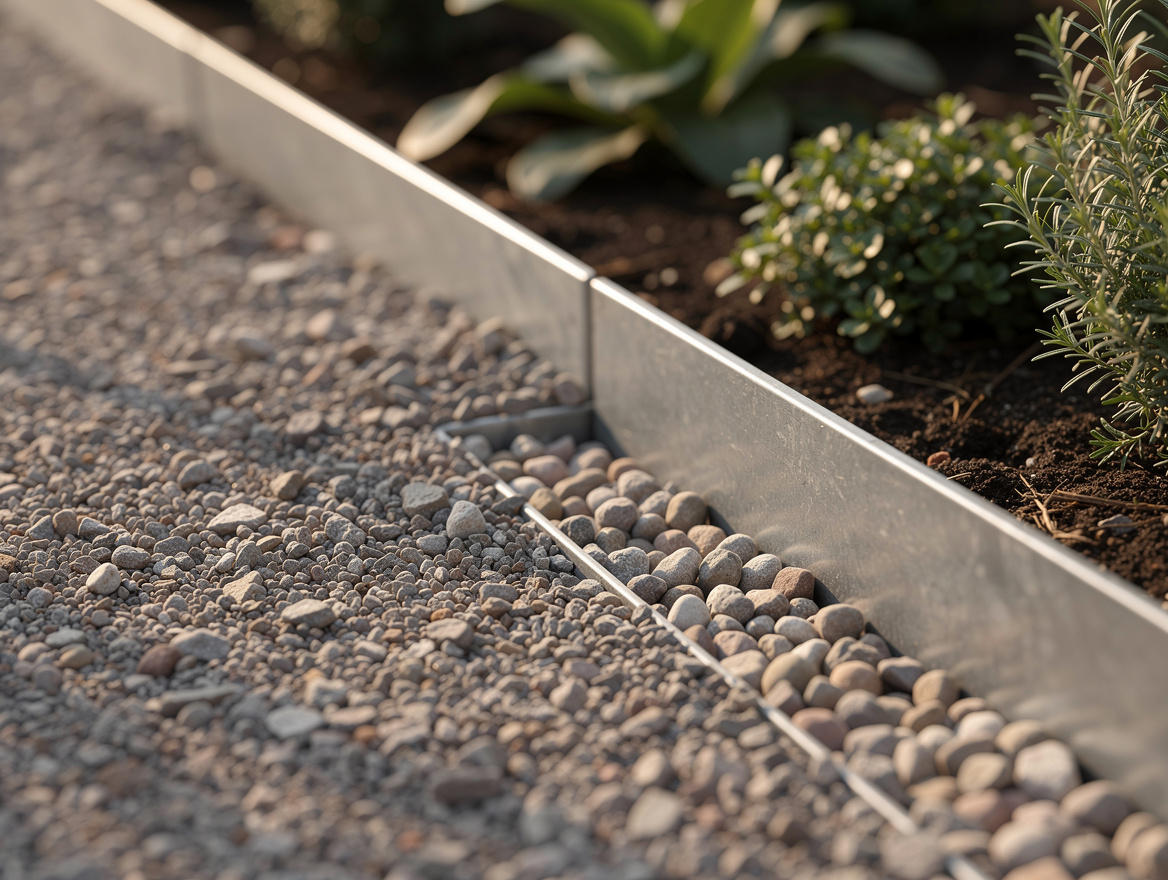
Cheap edging is usually the first thing I notice, because it buckles, lifts, and shows every install mistake. Those clip-in strips of plastic landscape edging can make a decent path look temporary within one season.
Go with steel, galvanized metal, or a clean concrete edge instead. At Ace Hardware or Lowe’s, metal landscape edging often costs about $3 to $6 per linear foot, which is not nothing, but it changes the finish line of the path in the best way.
Calm Down Bright White Gravel and Blue Solar Lights
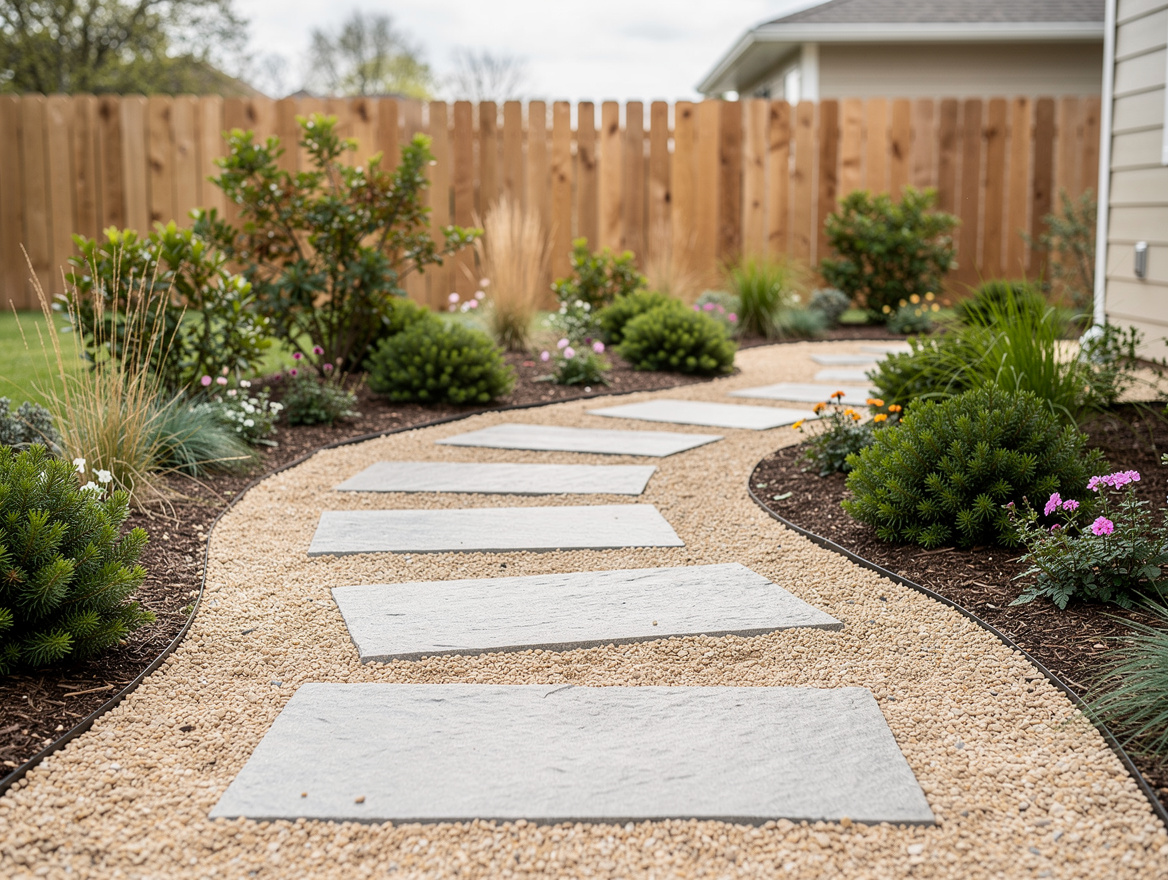
Fine bright-white gravel spread across a whole yard is harsh on the eyes and flat in photos. It also drifts everywhere unless it is stabilized, and that dusty crunch following you indoors gets old fast with white pea gravel.
The same goes for icy blue solar stake lights, especially the flower-shaped ones. Warm light is far more forgiving, and a strand of Amazon outdoor string lights, typically around $20 to $40, gives a softer glow than a row of cold spotlights that feels like a DIY display aisle.
Build the Base So the Path Still Looks Good Next Year
A lot of cheap-looking paths are really failed installs. Gravel dumped on raw soil or pavers laid over uneven dirt will settle, wobble, and hold puddles, and then even good materials start looking worn out.
A compacted base, proper leveling, and drainage matter more than people want to admit. If you are using gravel, a weed barrier and a stabilizing grid can help, and if you are using pavers, tight joints and a slight slope are what keep the finish crisp after heavy rain.
Mix Materials With Restraint Instead of Throwing in Every Trend
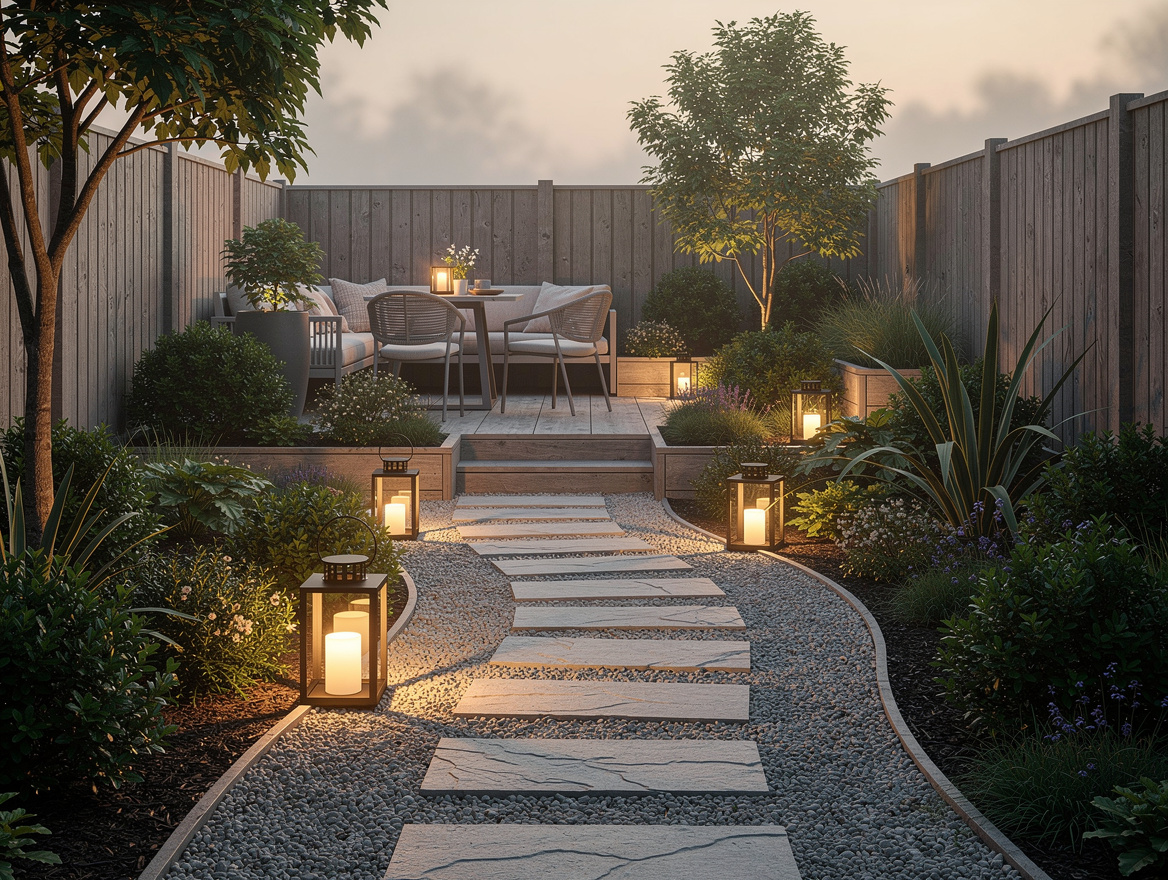
The fastest way to cheapen a yard is stacking too many ideas into a small footprint: bright gravel, speckled pavers, dark plastic edging, fake rattan, novelty lights. A garden path needs a point of view, and usually that means just two materials doing the work, like warm gray gravel with wood, or charcoal pavers with steel edging.
I like a restrained mix because it leaves room for plants to soften everything. A couple of IKEA lanterns, a galvanized edge, and neutral stone will age better than a pile of gadgets pretending to create personality.
Start with width and edging first, because those two choices decide whether the path feels deliberate or flimsy. Once that framework is right, even modest materials from Walmart, Lowe’s, or Home Depot have a much better shot at looking polished.
Mia Carter writes about small-space living and budget home makeovers. She has restyled three rentals and tests most ideas in her own 45 sqm flat.