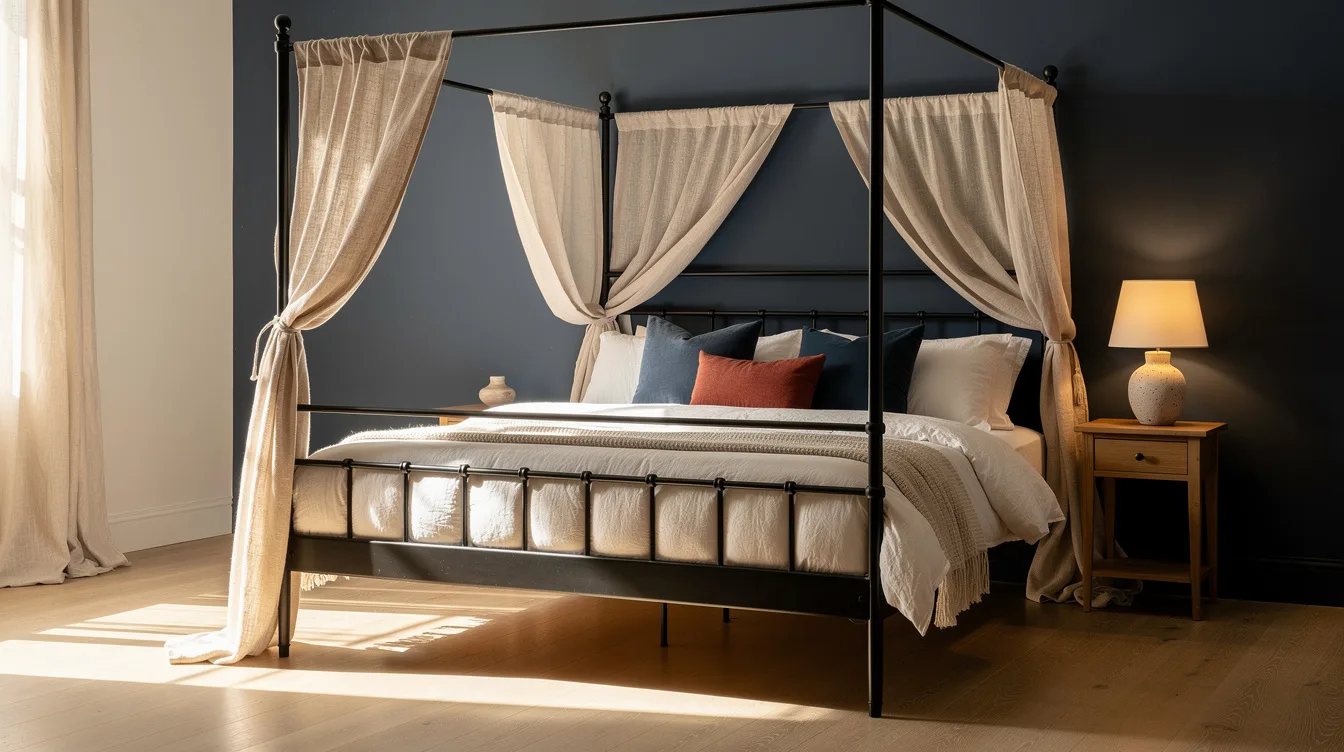
I wanted softness around my queen mattress, which measures 60 by 80 inches, without turning the bedroom into a dark fabric box. After trying panels on an about 80-inch-tall canopy frame, I learned that the drape, hardware, and empty space around the bed matter more than piling on decoration.
Measure the Frame Before Buying Panels
My first rule is practical: measure from the top rail to the floor, then add roughly 6 inches if you want a relaxed puddle. Most queen canopy frames are about 78 to 80 inches tall, and a standard curtain length can look accidentally short when it stops above the mattress platform.
I use 100% linen panels when the room needs an honest, rumpled finish, and I choose semi-sheer fabric when daylight matters. A full bed is about 54 inches wide, while a king is 76 inches wide, so one narrow panel per side rarely gives the generous fold that makes a canopy feel intentional.
For a queen, I prefer four panels with enough combined width to gather instead of stretching them flat across the rails. That extra fabric creates shadow and movement, which is the whole point of this look.
Measure the footprint too, especially in a rental bedroom. A canopy bed can run roughly 62 to 65 inches wide and about 82 to 87 inches long in queen size, leaving little room for a nightstand if the layout is already tight.
Keep the Linen Airy at the Headboard
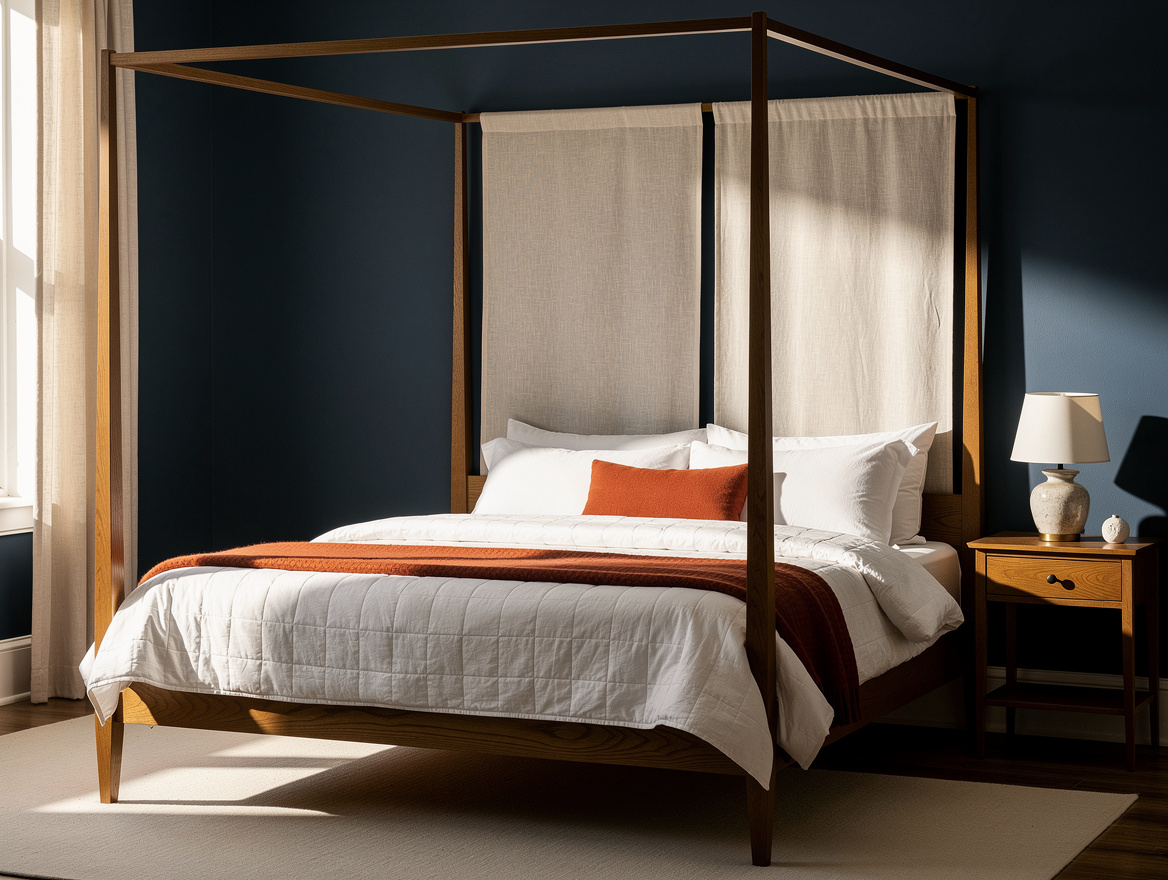
I leave the front of the bed open and concentrate fabric at the rear posts. Two back panels in washed flax linen frame the pillows without making every morning feel like I am exiting a tent.
This setup works especially well with a black metal frame from Amazon or Target, where the crisp structure benefits from something softer nearby. The contrast feels current because the bed still has visible lines and breathing room.
I tie each panel loosely with a matching strip of fabric about halfway down the post. A knot that sits too high looks precious, while one too low makes the canopy slump toward the floor.
Skip thick blackout panels unless the room truly needs them for sleep. Lightweight linen filters glare and gives the bed a quieter outline during the day, which is far more useful in a small bedroom.
Choose a Frame That Can Carry the Look
A simple four-poster frame earns my vote over an ornate canopy top because linen already brings texture. A typical basic frame from IKEA, Walmart, or Amazon can cost roughly $130 to $400, leaving money for panels and proper hardware.
I like black powder-coated steel for a clean, modern-rustic room, especially when the floor is pale oak or warm vinyl plank. It keeps the bedroom from drifting into theme-room territory.
Wood works too, but choose a straightforward profile. A heavy carved frame plus wrinkled linen asks the room to tell two different stories at once.
For a child’s room, a low wood house-bed frame with a light cotton or linen canopy is more sensible than tall posts. It gives the same sheltered feeling while keeping the scale friendly and the floor space usable.
Hang Hardware That Stays Out of Sight
I prefer a separate ceiling-mounted rod when the bed frame has no top rails, provided the ceiling structure can support it. A slim matte-black curtain rod from Home Depot or Lowe’s disappears better than shiny hardware that competes with the fabric.
For frame-mounted panels, pole pockets are the least fussy option because the linen slides directly over the rail. Clip rings look sharper at first, but they add little points of metal all around the bed and make casual linen feel over-styled.
Use anchors rated for the ceiling material, and keep the rod slightly wider than the mattress so the drapes land outside the pillows. I want fabric to outline the bed, never brush my face while I read.
A single ceiling point can also support a bell-shaped canopy over a smaller bed. It is an effective answer for rooms without four posts, although the fabric needs enough length to reach close to the floor rather than hovering at shoulder height.
Limit the Palette Around the Drapes
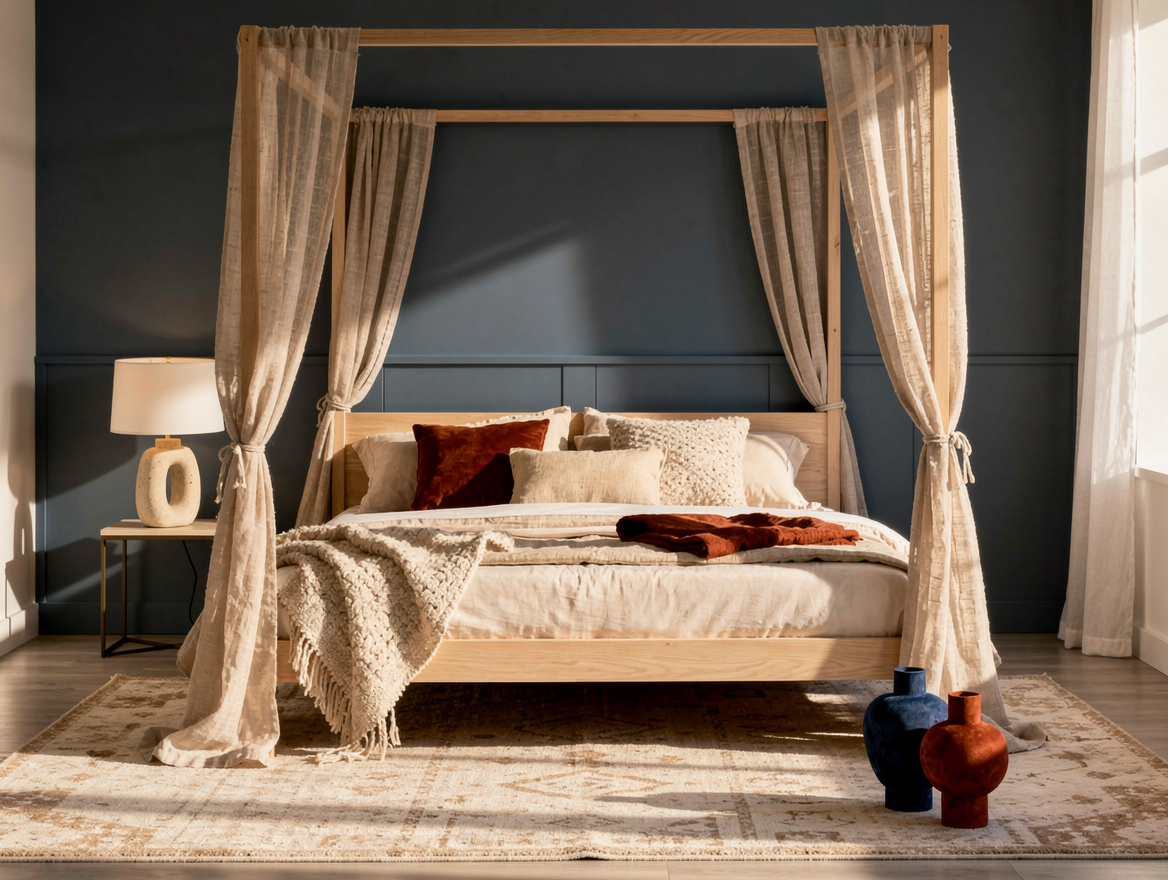
I treat the drapes as the room’s largest soft layer, then keep the rest of the bedding restrained. Natural linen, ivory, soft white, and muted oat tones work because they show texture without creating a heavy visual border.
My favorite pairing is warm white panels, a low oak nightstand, and one dark bedside lamp from Target or Wayfair. The dark note gives the bed definition, while the pale fabric keeps the room from feeling sugary.
A patterned duvet can work, but choose a small-scale print and let the drapes stay plain. Linen already has slubs, folds, and changing color in natural light, so it does not need competition.
I avoid matching every surface to the drapes. The room needs a few grounded materials, such as wood, ceramic, or aged brass, to prevent the canopy from looking like a wedding backdrop.
Budget for the Whole Bed Instead of the Frame
The frame price is only the opening number. A practical build can start with a roughly $200 to $600 plain full or queen bed, then add about four posts at roughly $50 each and linen curtains that typically run about $45 to $150.
I would rather buy fewer, fuller linen curtain panels than spend everything on a more elaborate frame. Thin panels are the fastest way to make a tall bed look underdressed.
Start with Amazon or Walmart for a budget frame, then reserve a little flexibility for hemming or longer panels. Ready-made curtains often need adjustment because canopy heights vary more than mattress sizes do.
Wash the fabric before the final hem if it is real linen, since it can shift after laundering. That small pause saves you from ending up with drapes that suddenly look too short after the first wash.
Buy the panels only after you have the frame height and bed footprint on paper. Start with two rear linen panels, live with them for a week, then add side panels only if the room still wants more softness.
Mia Carter writes about small-space living and budget home makeovers. She has restyled three rentals and tests most ideas in her own 45 sqm flat.