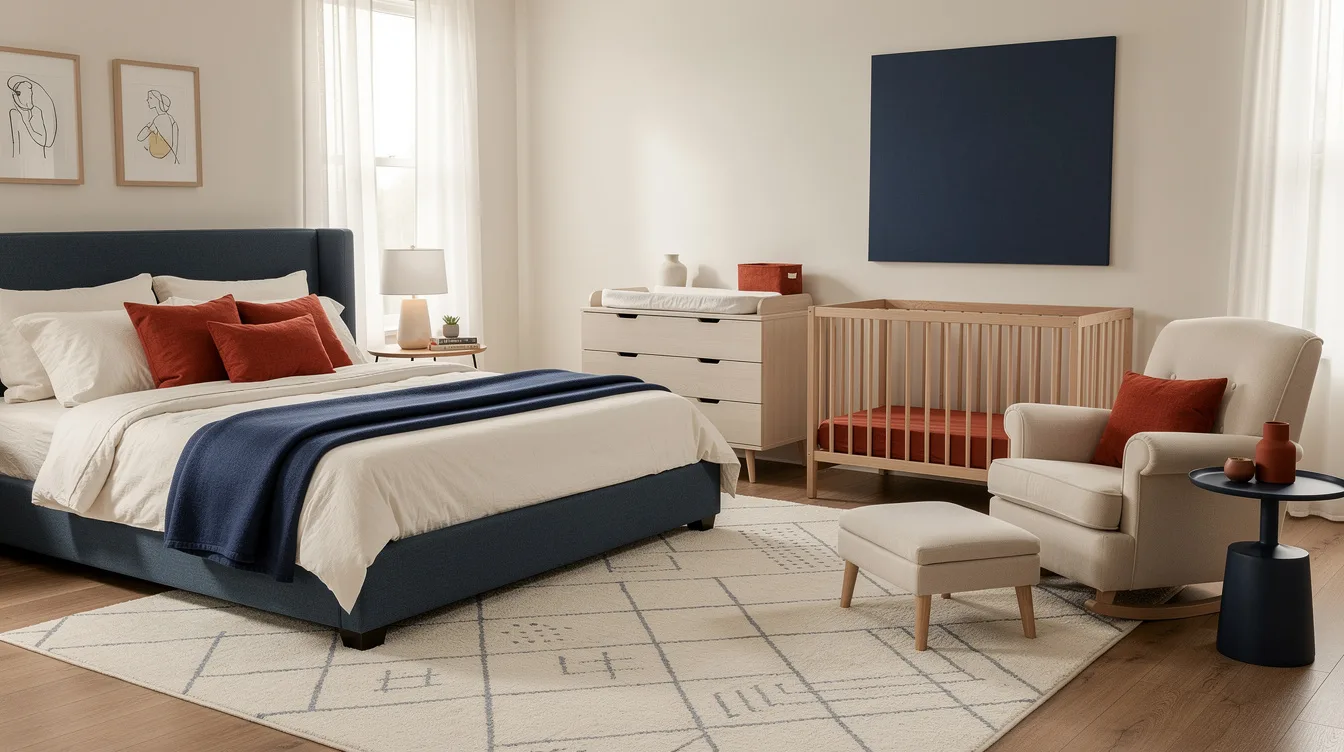
The empty end of an oversized primary bedroom can feel generous until a crib, chair, diaper supplies, and a hamper begin competing with the adult bed.
Plan for about 48 to 80 square feet for a workable nursery corner, with roughly 80 square feet giving a crib, glider, changing surface, and storage enough room to function together.
Oversized rooms tempt you to spread furniture along every wall, but that makes nighttime care feel like a long walk through loose equipment.
The fix is a defined baby footprint that supports adult rest on one side, protects a direct nighttime path, keeps sightlines open, and makes the corner feel like part of the room rather than an afterthought.
Map the Footprint Before Buying Furniture
Start with painter’s tape on the floor, marking a sleep-first footprint of roughly 6 by 8 feet for a crib, slim hamper, and dimmable lamp, then test the door swing and the path from the adult bed.
That compact plan suits the first several months, while a fuller setup with a chair, dresser, and storage wants roughly 8 by 10 feet so the adult side still has breathing room and the crib remains easy to reach from either direction.
Measure the space after accounting for baseboards, windows, closet doors, and outlet locations, because a corner that works on paper can become awkward once drawers open or a glider reclines, especially after dark.
A low-pile rug measuring roughly 5 by 7 feet can gather the baby furniture visually, and cotton, wool, or a washable synthetic gives the floor a warmer landing without swallowing the circulation lane.
Anchor the Crib on a Quiet Interior Wall
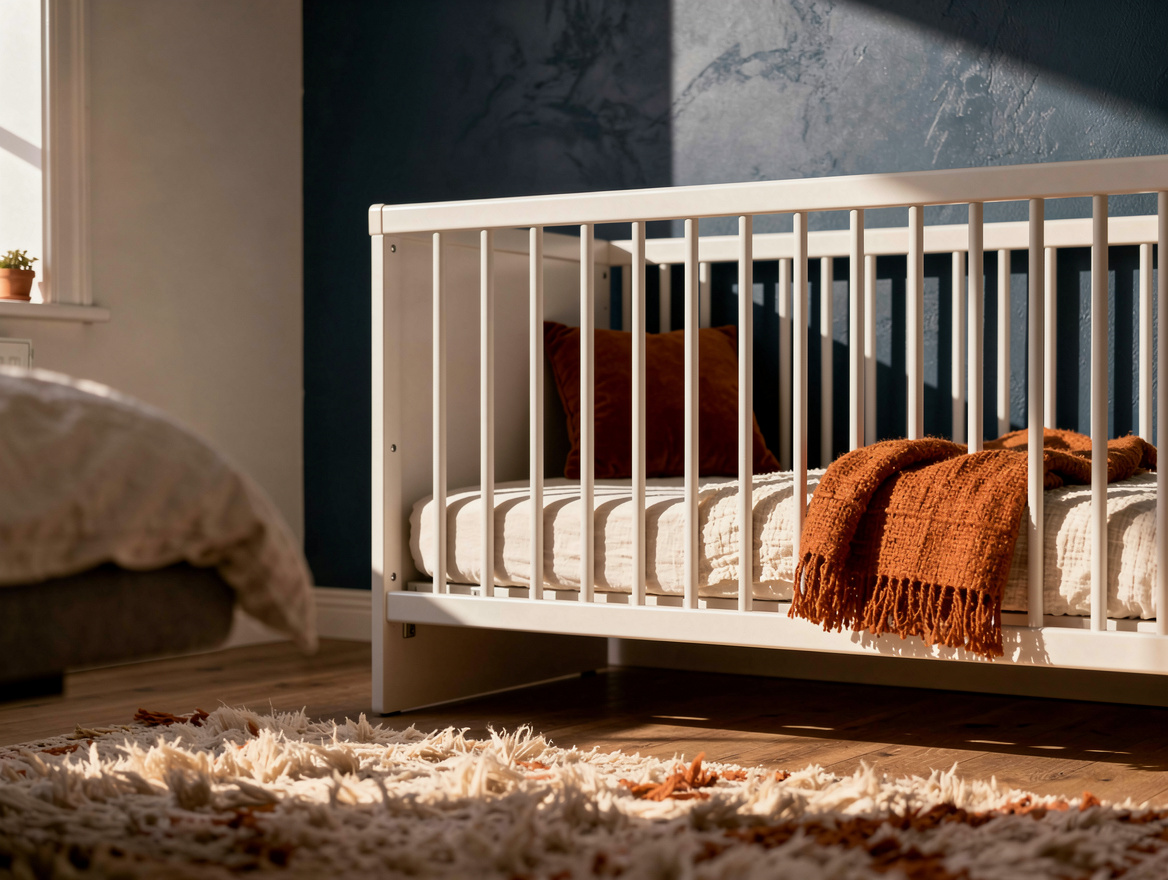
Anchor the crib on a solid interior wall, perpendicular to or opposite the adult bed, with the open side facing the room so a parent can approach without cutting across the sleep space.
Keep a practical lane of roughly 30 to 36 inches beside the crib and between the nursery corner and the bed, especially where a nighttime trip may happen with one hand carrying a sleepy baby.
IKEA’s GULLIVER crib is listed at about 27 1/2 by 52 inches, a useful planning reference for the wall length, rug placement, and the clearance needed to change sheets.
Keep the sleep space away from windows, drapery, blind cords, monitor cables, and floor lamps, then let the blank wall do the visual work instead of adding a tall divider. A quiet, uninterrupted backdrop also keeps the corner from feeling visually crowded when the rest of the bedroom has large-scale furniture.
Convert the Forgotten Sitting Area
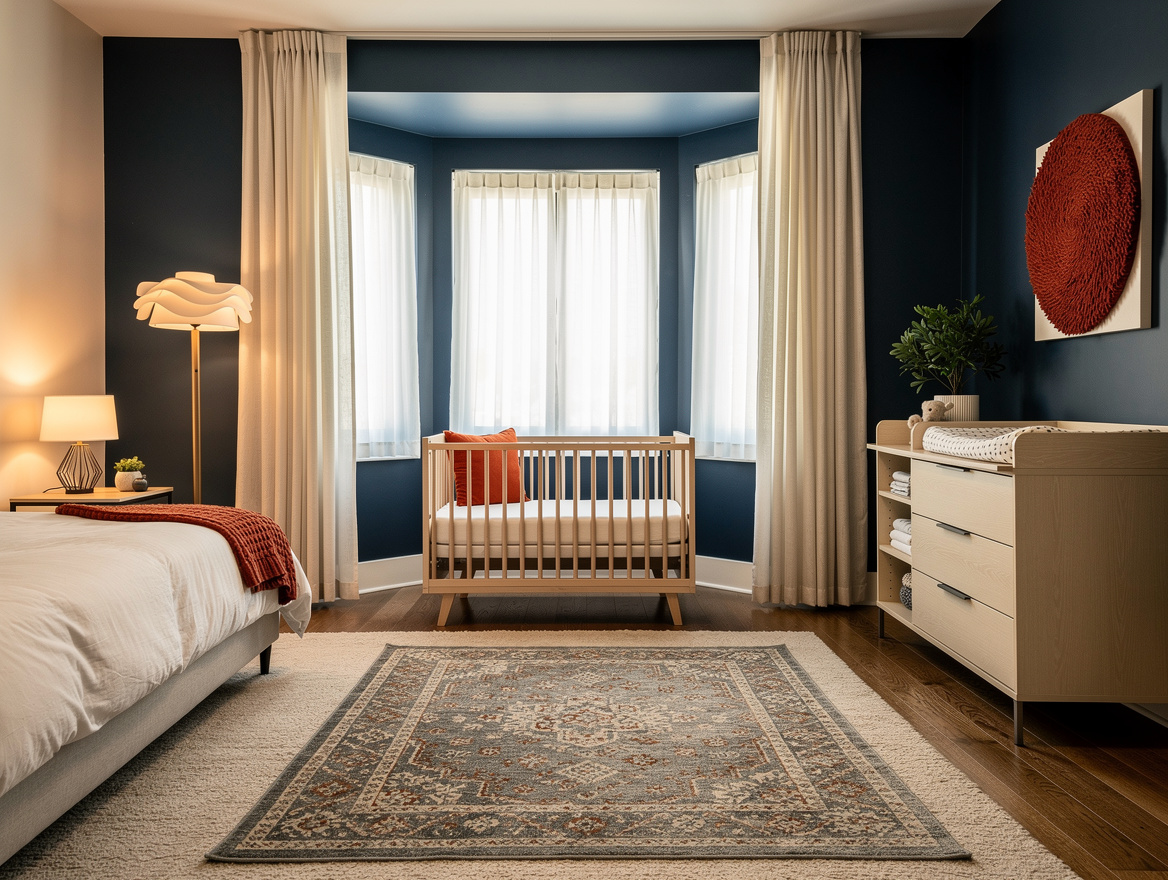
Many large bedrooms contain a forgotten bay-window seating area, chaise, or loveseat that already reads as a separate zone, making it a stronger nursery candidate than the narrow strip beside the adult bed.
Move the adult seating out, place the crib on the safest solid wall, and aim a glider toward it so feeding, settling, and putting the baby down follow one short sequence.
Pair the chair with a small round table on the parent’s dominant-hand side, then choose a low dresser with a changing surface that covers storage and diaper duty in the same footprint.
A wall-mounted picture ledge can hold a few board books above reach, while a restrained color behind it gives the converted sitting area a clear identity without adding more floor furniture. That small detail matters in a shared room, where the nursery needs a visual boundary without looking like a second full bedroom.
Build a Mini-Crib Pod Around Night Feeds
For room-sharing, choose a mini crib rather than a bassinet-only setup when the footprint needs to stay compact, since the crib can remain useful as the baby outgrows the smallest sleep option.
Place it on the wall closest to the adult bed, while keeping the walking path straight enough for a sleepy pickup and return, with no basket or ottoman parked in the lane.
A dresser you already own can carry a fitted changing pad and safety strap, provided its surface is stable, the pad is secured correctly, and the drawers do not collide with the crib.
Add a dimmed wall light near the chair or crib approach, so nighttime care uses a soft glow and the ceiling fixture stays off when everyone is trying to settle. Place it where the adult hand naturally lands, not behind the chair or across the walking route.
Give One Dresser the Storage Job
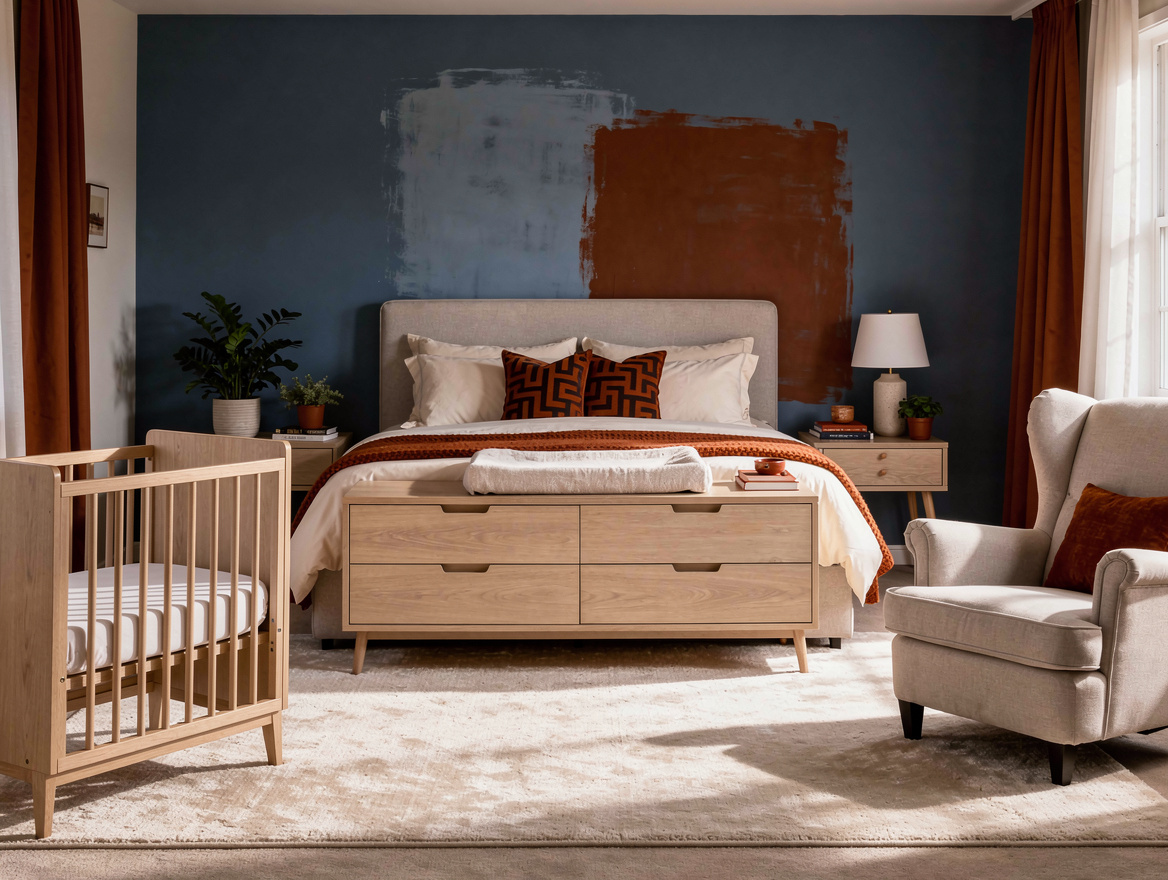
Let one IKEA dresser handle changing supplies, clothing, and spare linens when its drawers can stay reachable without blocking the crib lane or forcing a parent to step backward from the changing surface.
Store diapers and wipes in a woven basket on the top, then move the rest into labeled drawers below, keeping daily supplies visible without letting the surface become a catchall.
Use a shallow wall-mounted shelf on the adult side for books or a small sound machine, and anchor every furniture piece that could tip before the nursery corner is in regular use.
The strongest storage plan keeps care items close to the chair, leaves the center floor open for a future play mat, and gives the adult bedroom a calmer edge. Closed storage below keeps visual noise low, which matters more when the adult bedroom already has a large footprint.
Use Light and Color to Mark the Boundary
Define the boundary with a washable cotton rug or a low-pile wool version that stops short of the adult bed, creating a soft visual line without trapping furniture in a tight island.
Behind the crib, a muted paint block or removable wallpaper creates a backdrop that separates baby territory from the adult wall while remaining easy to revise later.
Choose a warm bulb in a lamp or connect a smart dimmer to the nursery light, keeping every cord routed away from the crib and every switch reachable from the chair.
Keep the adult side quieter in color and pattern, so the baby corner reads as a deliberate room-within-a-room rather than a pile of leftover gear gathered at one end. Keep the boundary light and reversible.
Begin with the tape measure and a clear route from bed to crib; the furniture list becomes much easier once that line works, and every later choice has a job.
Add the crib, dresser, and light in that order, checking each piece against the open path before buying finishing layers, so the room stays balanced as the nursery grows.
Mia Carter writes about small-space living and budget home makeovers. She has restyled three rentals and tests most ideas in her own 45 sqm flat.