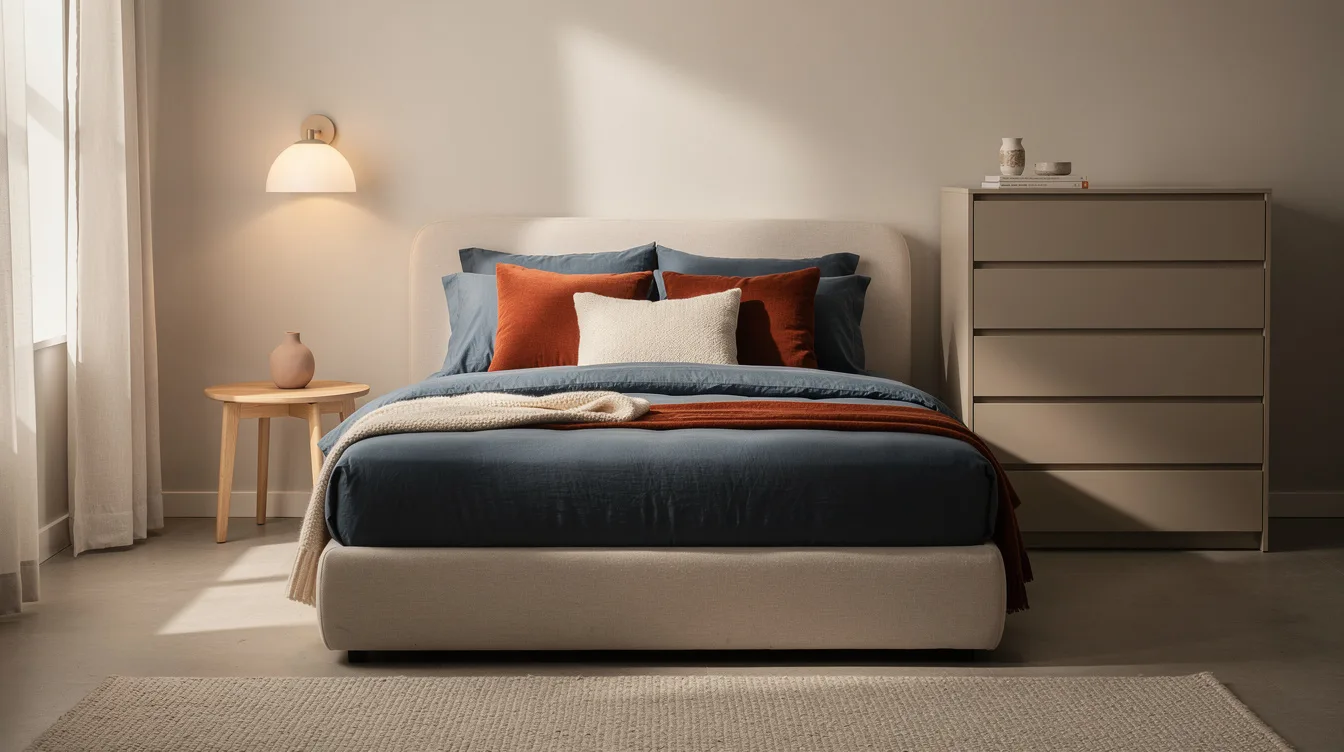
In a small bedroom, the hardest moment often comes when you round the foot of the bed carrying laundry. A clear path of about 60 cm can feel manageable, while a sharp bed rail or square nightstand turns the same route into a daily bruise risk.
Rounded furniture does not create more floor area. It makes the usable path kinder, especially around exposed bed corners, bedside tables, and dressers facing the door.
Measure the Route Before the Bed
Start with the walking path, not the furniture catalog. 60 to 75 cm of clear circulation is a practical target from the door toward the bed or wardrobe, while 45 to 60 cm beside one side of the bed can work in a genuinely compact room.
At the foot of the bed, keep at least about 60 cm open and aim closer to 75 cm when possible. A deep bench may look useful online, but it quickly becomes an obstacle in a short room.
Mark the proposed footprint with painter’s tape before ordering anything. This simple test catches blocked doors, awkward wardrobe access, and the hip-height corners you would otherwise discover after delivery.
Keep the Bed Narrow and Leggy
A narrow bed gives every other decision more room to breathe. A 140 cm bed usually works better in a tight bedroom, while a 160 cm size deserves careful measuring and a clear reason.
Rounded upholstered frames soften the exposed corners beside the bed, especially when the headboard and rails have a gentle curve. Look for solid wood or plywood construction with linen-blend or performance fabric, rather than a bulky frame that reaches heavily into the walkway.
A rounded solid-wood frame is the easier-care choice for many homes. Oak, ash, beech, and birch plywood can handle daily contact better than delicate upholstery, and typical 2026 pricing for a compact bed is roughly $500 to $1,500, with premium models higher.
Round Every Collision Point
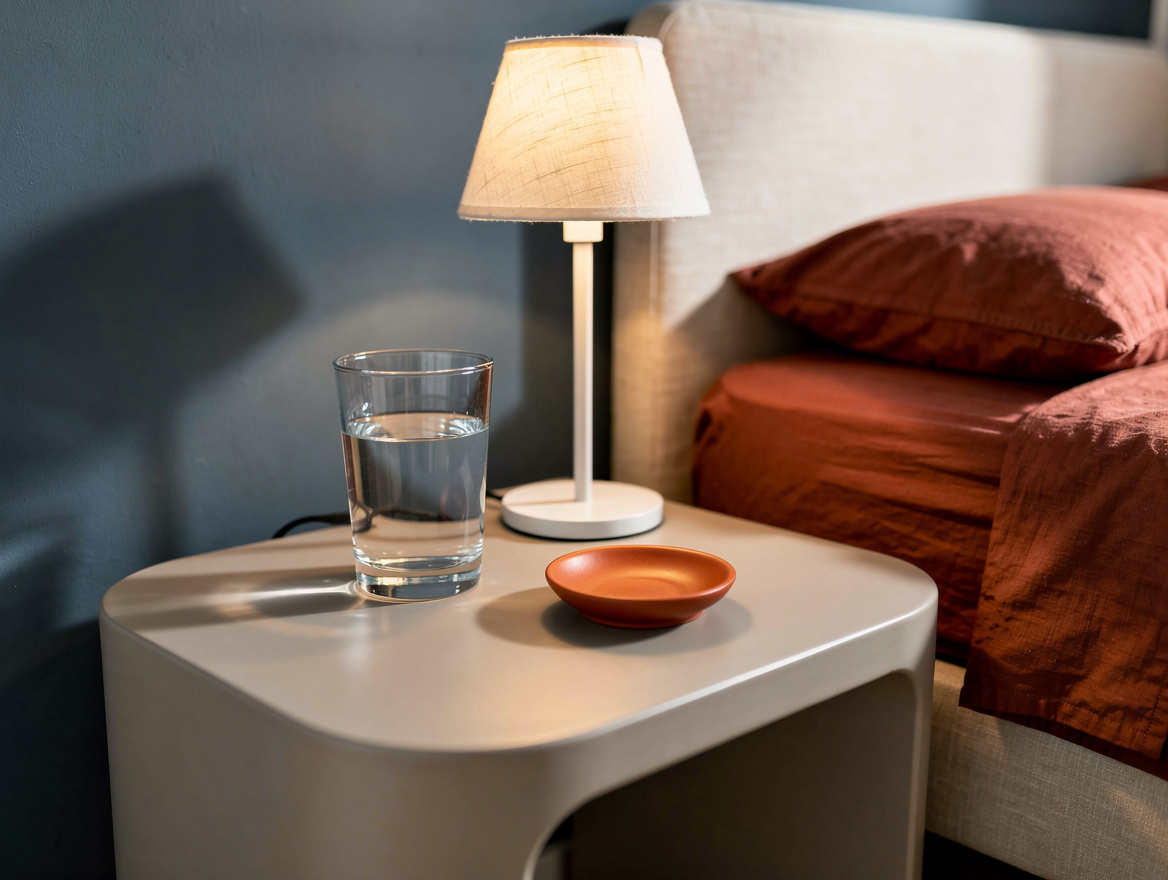
Put the softest shape where your body passes closest. A round bedside table measuring about 32 to 40 cm across and 45 to 58 cm high removes the outer corner that catches a knee when you turn toward the door.
Choose the table height within roughly 5 cm of the mattress. That keeps a phone, glass, or lamp easy to reach without forcing a deeper cabinet into the aisle.
For storage, a pill-shaped nightstand around 35 to 45 cm wide and 30 to 40 cm deep keeps one useful drawer while reducing the exposed edge. Powder-coated steel, oak veneer, and solid wood all work well, with a basic compact piece typically costing around $50 to $275.
Send Storage Upward
Small bedrooms usually lose circulation because storage spreads sideways. A tall chest around 40 to 50 cm wide, 35 to 45 cm deep, and 100 to 130 cm high holds clothing while preserving a wider route around the bed.
Prioritize a stable frame and a finish that can handle daily use. Solid pine, oak veneer over engineered wood, or birch plywood is a better long-term bet than a deep cabinet with fragile hardware, and fluted fronts should stay visually quiet in a narrow room.
A wall-mounted shelf or floating bedside unit takes the idea even further. A compact piece around 30 to 45 cm wide and 18 to 25 cm deep leaves the floor open for feet, luggage, and cleaning, with typical pricing around $45 to $225 at IKEA, Target, or Wayfair.
Clear the Lamp From the Floor
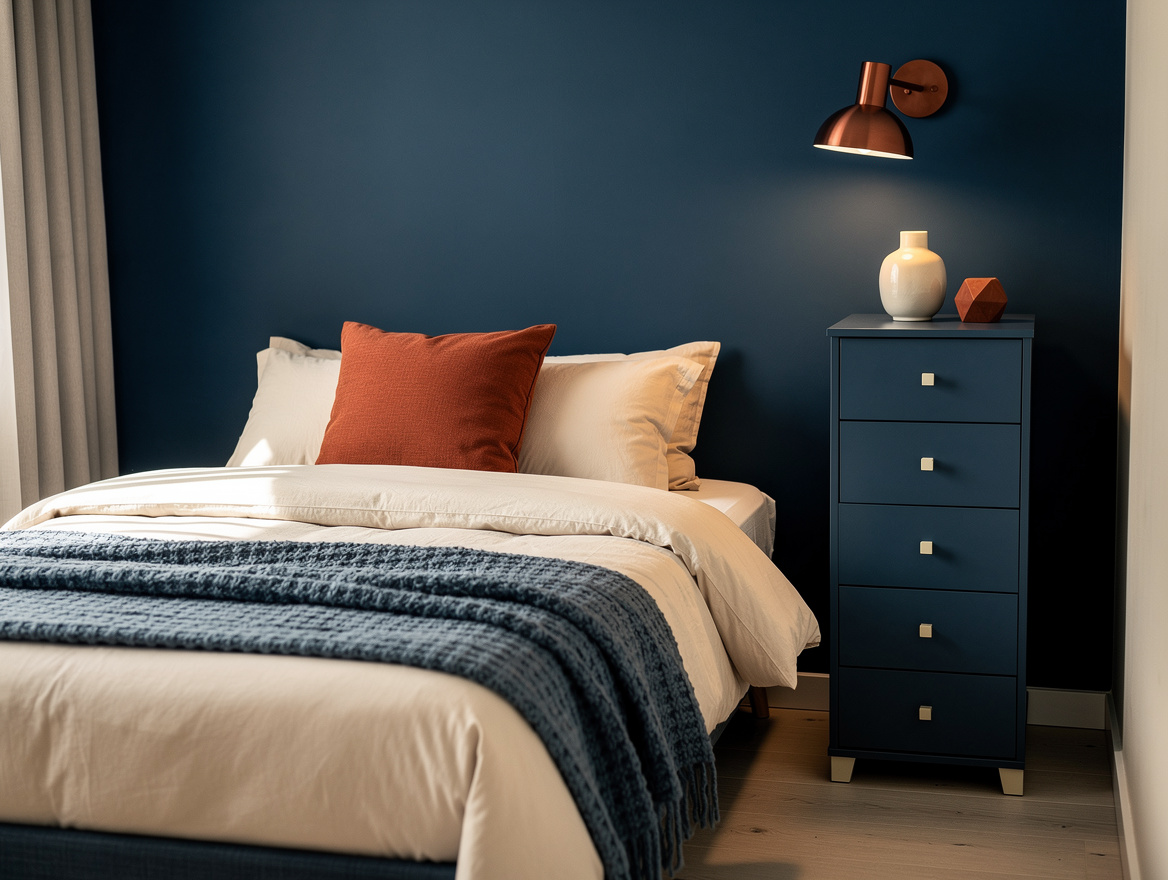
A bedside lamp can quietly steal the space a small table was meant to save. A wall-mounted lamp keeps the light source above the surface, allowing a smaller round table or a shallow floating shelf to do the actual storage work.
Place the switch where you can reach it from bed, then leave enough space for the mattress and bedding to move without brushing the fixture. Home Depot and Lowe’s carry simple wall-light options, while IKEA and Amazon offer compact styles suited to rental-friendly setups.
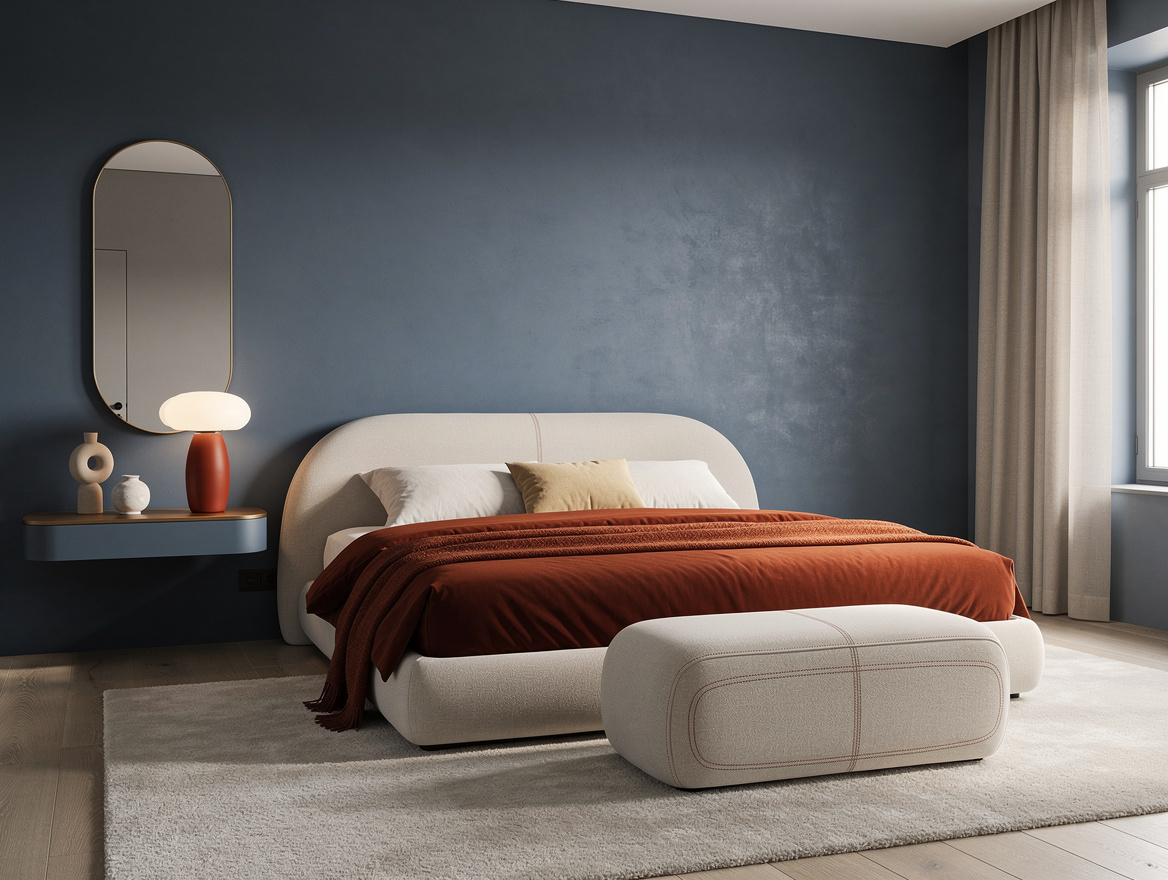
Use the wall for reflection, too. A small oval mirror around 40 to 60 cm wide and 70 to 100 cm high adds visual softness without consuming floor area, especially when its frame repeats the wood or metal used elsewhere in the room.
Use Flexible Pieces at the Foot
The end of the bed is where many small rooms become frustrating. A rounded storage ottoman around 35 to 45 cm across, or roughly 45 to 70 cm wide and 35 to 40 cm deep, can provide a landing spot without creating a hard rectangular barrier.
Choose one that can move easily when you need to open a drawer or carry laundry through the room. Woven upholstery, durable performance fabric, oak veneer, and firm foam are sensible materials, and a typical compact ottoman costs about $80 to $350.
Keep the rest of the palette restrained so the curves do real work. A neutral IKEA bed, a Target side table, or a Wayfair chest can look intentional when the shapes align, but mixing too many rounded pieces makes the room feel themed instead of calm.
Measure the main route first, then spend the budget on a narrow bed and one rounded piece at the worst collision point. Once that path feels easy, add vertical storage and wall lighting instead of another deep object.
Mia Carter writes about small-space living and budget home makeovers. She has restyled three rentals and tests most ideas in her own 45 sqm flat.