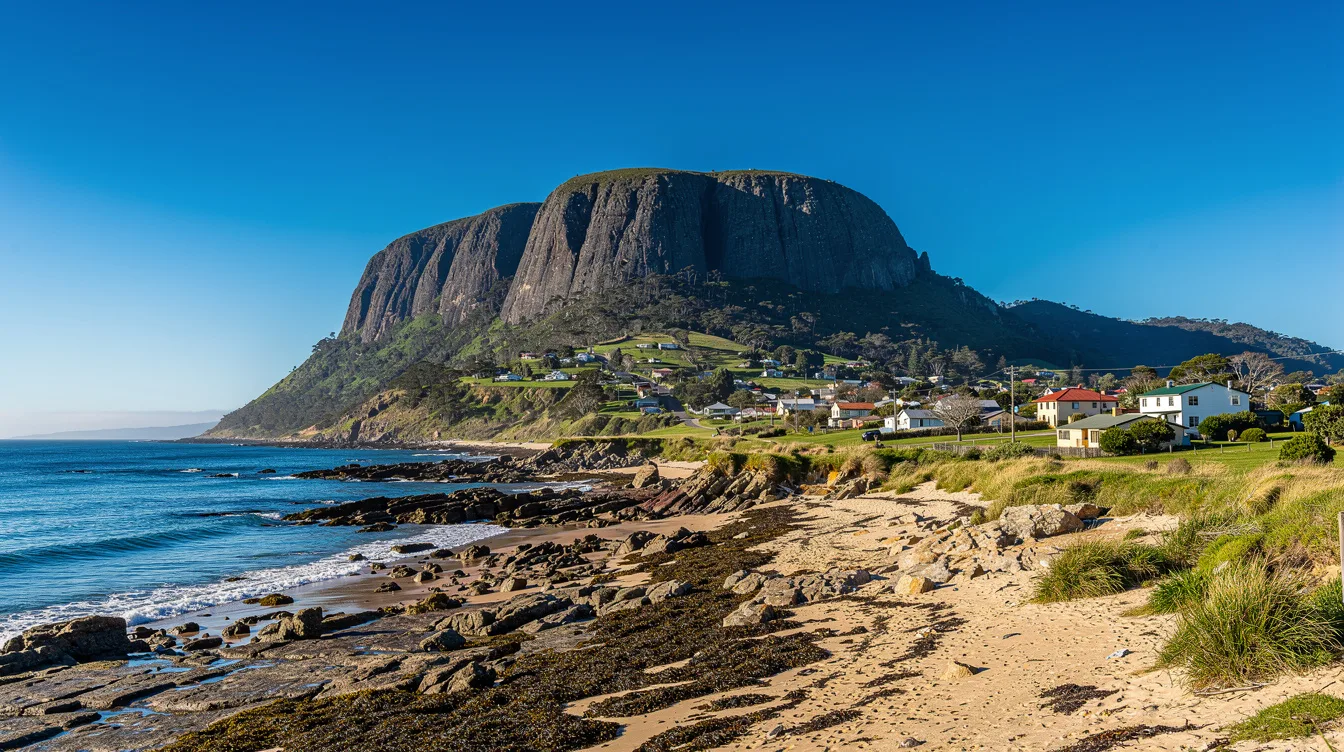
But Stanley makes a first impression that feels almost unfair: a village sits beneath The Nut, a 469-foot volcanic plug above Bass Strait. The cliffs and water do most of the talking here.
And the town stays small, with about 595 residents recorded in 2021. You come for the rock, then stay for the quiet streets, wind-bent coast, and the sound of fishing boats near the wharf.
But Stanley isn’t a quick photo stop. It rewards a slower day, especially if you like places where geology, history, and weather keep changing the mood.
The Nut gives Stanley its shape
But The Nut isn’t scenery behind the town. It rises directly above it, so nearly every walk ends with the same dark wall of volcanic rock overhead.
And from the upper plateau, you can look across the village, beaches, farmland, and Bass Strait. My view is simple: this is one of Tasmania’s strongest small-town arrivals.
The weather adds its own character. Wind moves through the streets and across the water, which makes a sunny afternoon feel brisk rather than lazy.
But you don’t need a full day to understand the place. Walk the waterfront, follow the road around the peninsula, and let the changing light do the work.
Can you climb The Nut?
But yes, you can reach the top on foot, though the path is steep. If you don’t want the climb, the chairlift provides an easier alternative when conditions are suitable.
And once you’re above the steep section, you can walk the plateau loop. The route takes roughly 45-60 minutes, with cliffs and broad views over the coast.
The full outing usually takes about 1-2 hours, depending on your pace and stops. I’d go early if you dislike strong wind, because exposed ground can feel much harder later.
But the climb isn’t the only reason to go outside. At Godfreys Beach, you can walk beside a wide, wild stretch of coast with fewer distractions.
A quiet port with a long memory
And Stanley’s calm streets reflect its earlier life as a fishing port. Victorian houses and cottages give the village a settled look, even when the weather turns rough.
But the town’s history reaches back to the Van Diemen’s Land Company, which began colonization here in 1826. You can feel that older layer without needing a museum-heavy itinerary.
Highfield Historic Site adds context outside the village. Allow 1-2 hours if you want to understand the colonial estate and the area’s early development.
And the harbor still keeps the day practical. Stop near the wharf for seafood, then watch the light fade across the water before looking for little penguins at dusk.
How do you reach Stanley?
But you’ll want a car for Stanley. From Devonport, the drive is about 77.7 miles and takes roughly 1 hour 30 minutes.
And from Launceston, plan on about 139.8 miles and 2 hours 30 minutes. The road distance is part of the appeal, but it also makes a short visit feel rushed.
If you’re arriving by the Spirit of Tasmania ferry, Devonport creates the most logical approach. I’d reach Stanley in midafternoon, then climb The Nut if the weather stays cooperative.
But don’t build a packed schedule around this town. One night gives you enough time for the coast, a seafood dinner, the penguins, and Highfield the next morning.
When should you visit Stanley?
But December to March brings milder conditions, longer light, and better odds for a comfortable walk. That’s also the busier season, so rooms and restaurants may feel less relaxed.
And Stanley works year-round if you prefer atmosphere over easy weather. April and May bring fewer visitors, while winter feels colder, wetter, and more exposed.
The town sits in the path of the Roaring Forties, powerful westerly winds that can arrive in any season. Bring a warm layer and a windproof jacket, even during summer.
But the wind is part of Stanley’s appeal. By evening, when the last light catches the cottages and the water goes gray, the village feels quiet enough to hear the coast breathing.