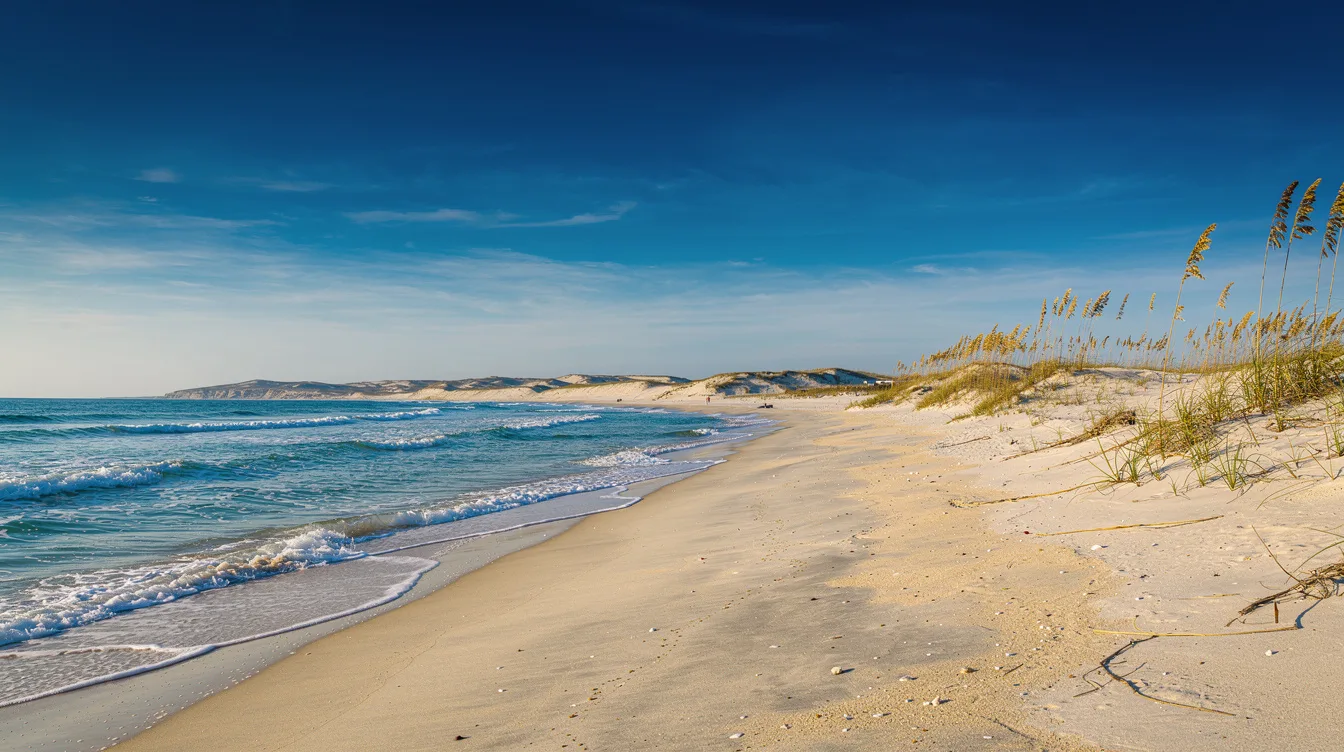
Port Aransas is the only established town on Mustang Island, a Texas barrier island with 18 miles of Gulf beaches. That combination is the draw: you get a long stretch of sand, but you don’t have to leave town for dinner, a marina, or a walk beside the water.
With 2,904 residents counted in 2020, Port Aransas feels like a small coastal town rather than a city resort. And because it sits between the Gulf of Mexico and Corpus Christi Bay, the water keeps shaping nearly every part of the visit.
18 miles of beach gives you room to roam
18 miles of beaches is enough space to change the mood of a day. You can swim, try light surfing, or walk until the town noise fades into wind and breaking water. I think the beach is Port Aransas at its most convincing, especially when you need less scheduling.
But the sand isn’t isolated from daily life. The compact center has tourist shops, seafood restaurants, bars, marinas, and vacation rentals, so you can move from the beach to town without turning the day into a drive. See the Texas coast guide before choosing where to stay.
Getting there is easy, with one coastal caveat
Port Aransas sits about 31.1 miles from Corpus Christi, in Nueces County on the northern end of Mustang Island. And you can reach it by road from Corpus Christi or by the free ferry from Aransas Pass, which makes the arrival feel more like a crossing than a transfer.
But Gulf weather can change the practical details. Tropical weather can affect roads and ferry service during summer and early fall, so you should check alerts and operating conditions before leaving. Remote, but not difficult to reach, Port Aransas earns that balance.
Fishing is the town’s strongest identity
Fishing is central here, from the shoreline and passes to bay trips and offshore charters. And if you like being near working water, you’ll notice the difference immediately: boats move through the channels, the marinas stay active, and the day seems organized around tides rather than clocks.
Port Aransas promotes itself as the Fishing Capital of Texas, a claim that fits the town’s character more than its size. But you don’t have to book a charter to enjoy it. At Roberts Point Park, you can watch boats enter the port and may spot dolphins from shore.
Birds and dolphins slow the day down
Mustang Island sits on a major bird migration route, with wetlands, lagoons, and nearby reserves drawing many species. And at the Leonabelle Turnbull Birding Center, raised walkways lead you above wet areas where the pace is quieter than the beach.
But wildlife watching here isn’t a guaranteed performance. Dolphins are frequently seen from the port or on boat trips, yet nature keeps its own schedule. You should bring patience, especially if your idea of a good afternoon includes still water, distant wings, and no loud itinerary.
Small history gives the town more texture
Port Aransas Museum and the Tarpon Inn add context beyond beach time. And the Tarpon Inn dates to 1886, when it was built with surplus lumber from Civil War barracks before becoming a hotel. Its history gives the town a weathered center beneath the vacation polish.
But Port Aransas isn’t a preserved museum piece. You can spend the morning around old buildings, then follow the smell of seafood toward the harbor or walk back onto the sand. For a wider look at the area’s past, the Port Aransas history guide is worth reading before you arrive.
When should you visit Port Aransas?
October through December is the calmer window, with more moderate temperatures and the possibility of better prices. And if you prefer room on the beach, I’d choose that period over the busy summer stretch, when heat and visitors both rise.
But summer has its own appeal if you want the full beach-town rhythm. Go then with weather alerts in mind, and let the ferry, wind, and tide set the tempo. By evening, the sand cools beneath your feet, and the harbor lights begin to replace the sun.