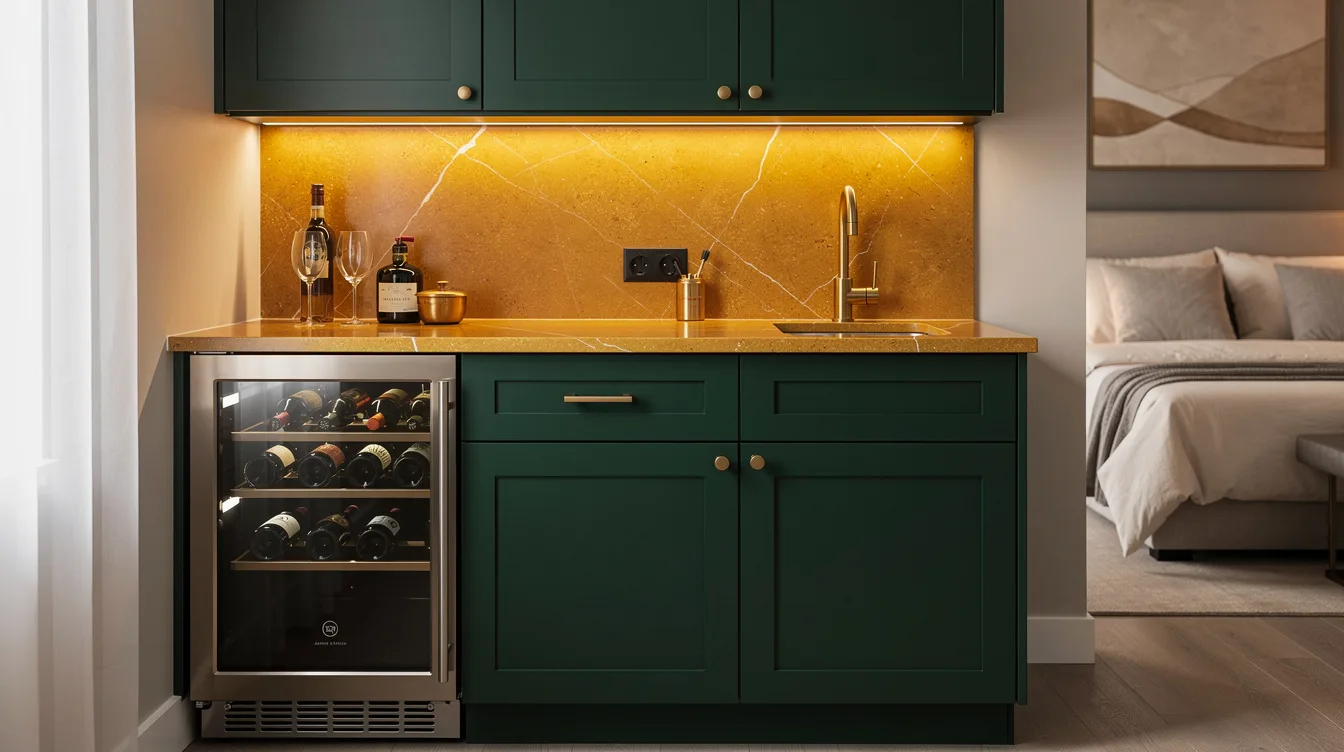
A roughly $5,000 built-in can bring chilled water, tea, medication storage, and a quiet rinse sink within a few steps of the bed. The trick is writing the brief around sleep, not cocktails.
Think of the station as a nightstand-plus-hospitality station: compact, concealed, softly lit, and ready for the routines that usually send you walking to the kitchen.
Build the Counter at 36 Inches
Plan a roughly 36-inch counter-height cabinet run instead of a conventional 42-inch cocktail bar. That lower surface makes it easier to fill a carafe, operate a tea maker, and reach an undercounter refrigerator from bed.
A compact arrangement can fit into about 48 to 60 inches of wall space, with the fridge, sink, and landing area arranged in that order. I would skip stools entirely unless the bedroom is unusually large.
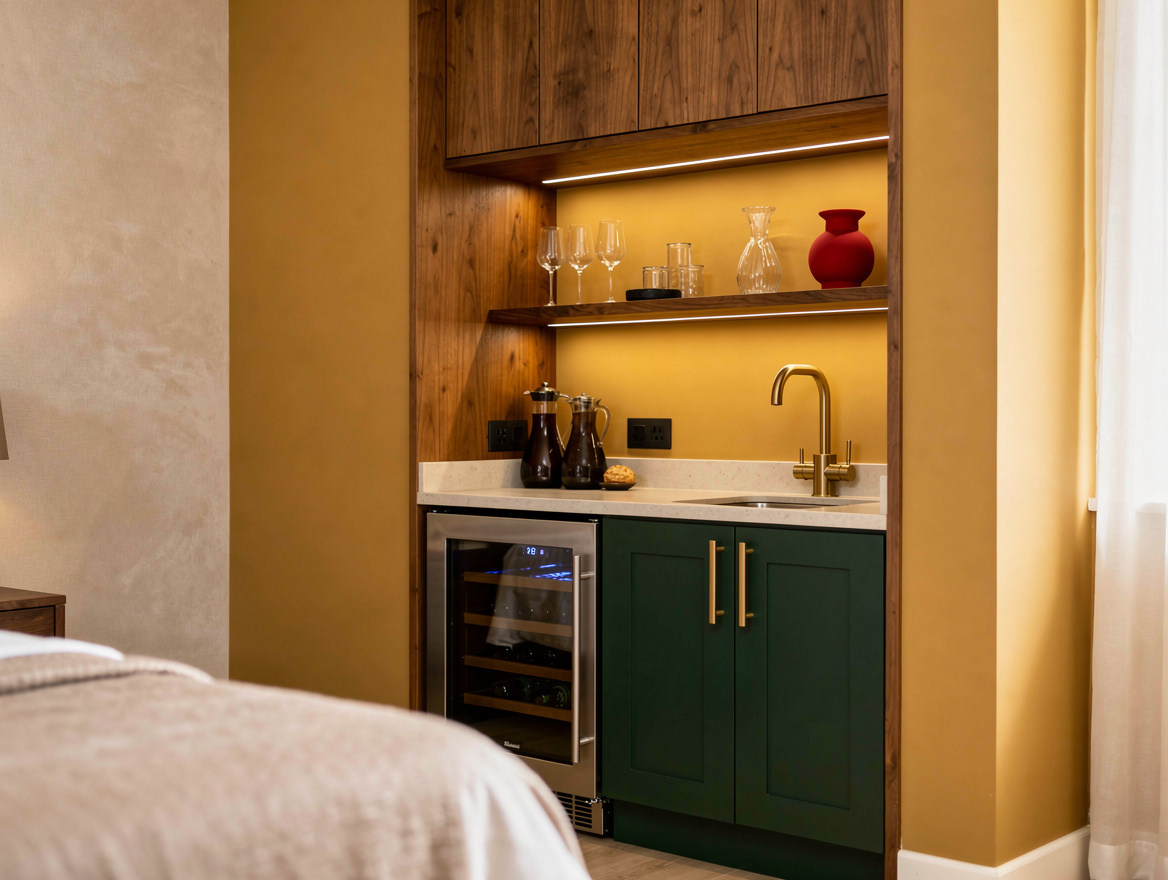
Use a quiet, durable surface such as quartz, with a shallow upper cabinet for cups, tea, supplements, and linens. This setup feels like a polished hotel amenity because every object has a practical nighttime purpose.
Keep the Hydration Zone Compact
A 60-inch alcove can hold a roughly 15-inch beverage refrigerator, an 18-inch sink cabinet, and a 24-inch drawer base. That is enough room for chilled water, milk, electrolyte drinks, and a small preparation surface.
For a wet installation, budget roughly $5,000 to $10,000 for this compact format, depending on plumbing, cabinetry, and electrical work. A dry version can cost roughly $2,000 to $6,000 when the sink and water lines disappear.
Choose a panel-ready appliance from Home Depot or Lowe’s so the refrigerator can disappear behind the cabinet finish. Visible stainless steel makes the space read like a kitchenette, which is the wrong mood for a restful bedroom.
Hide Appliances Behind Cabinet Doors
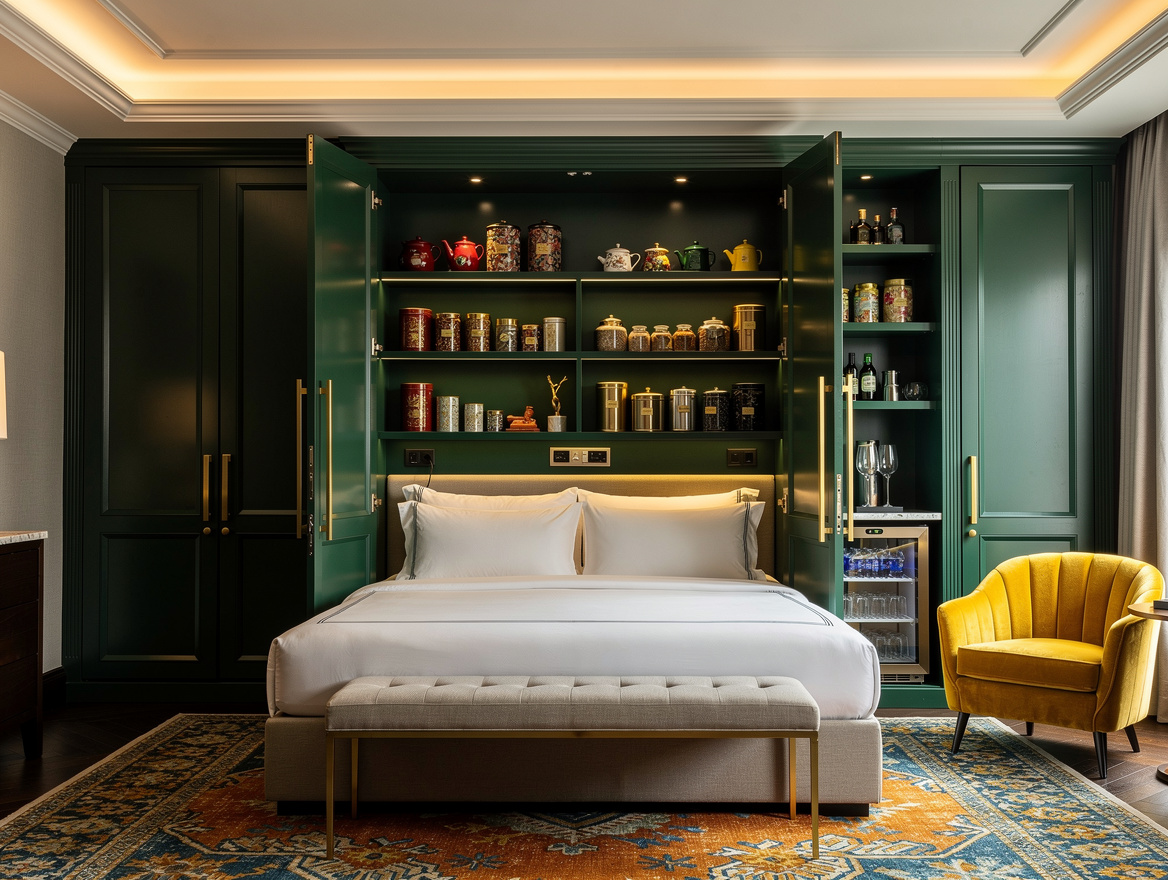
The most successful premium version uses about 60 to 84 inches of wall space and roughly 84 to 96 inches of height, with the counter concealed behind pocket doors or bi-fold doors. Close the doors after the nighttime routine, and the room immediately feels calmer.
Inside, allow space for a sink, refrigerator, shelves, and an appliance garage, with a little breathing room around each item. A concealed night pantry can cost roughly $18,000 to $40,000 or more when it includes custom cabinetry and several appliances.
Use IKEA cabinetry for a cost-conscious starting point, then upgrade the fronts, counter, and hardware where the installation will be touched most often. The goal is a quiet wall of furniture, not a restaurant station.
Use Low-Glare Light Below Eye Level
Install dimmable undercabinet lighting beneath the upper storage or inside the cabinet opening, keeping the source below eye level. Bright ceiling fixtures defeat the entire reason for adding a nighttime beverage station.
Warm light around 2700K usually feels softer than a cool white lamp, especially beside cream bedding, walnut cabinetry, or muted paint. Put the lighting on a separate switch from the bedroom’s main fixtures so one person can use the bar without waking a partner.
A small strip of LED lighting inside the lower cabinet can guide a late-night glass of water without making the counter glow. Keep the light output restrained, because the room should still feel like a bedroom first.
Give Medication Its Own Storage
Nighttime storage should include more than mugs and bottles, so add a shallow medication drawer with a removable organizer. It keeps prescriptions, supplements, and personal care items away from the sink while leaving the counter clear.
Use a pull-out bin for wrappers, tea bags, and small packaging, then reserve one drawer for napkins, coasters, and spare bottle caps. A typical hotel-suite beverage wall costs roughly $10,000 to $25,000, making these small planning choices worth addressing early.
For containers and organizers, Target has simple options that can be replaced easily when routines change. Avoid storing medication that requires special temperature control unless the refrigerator is designed for that use and the instructions allow it.
Add Charging Without Visual Clutter
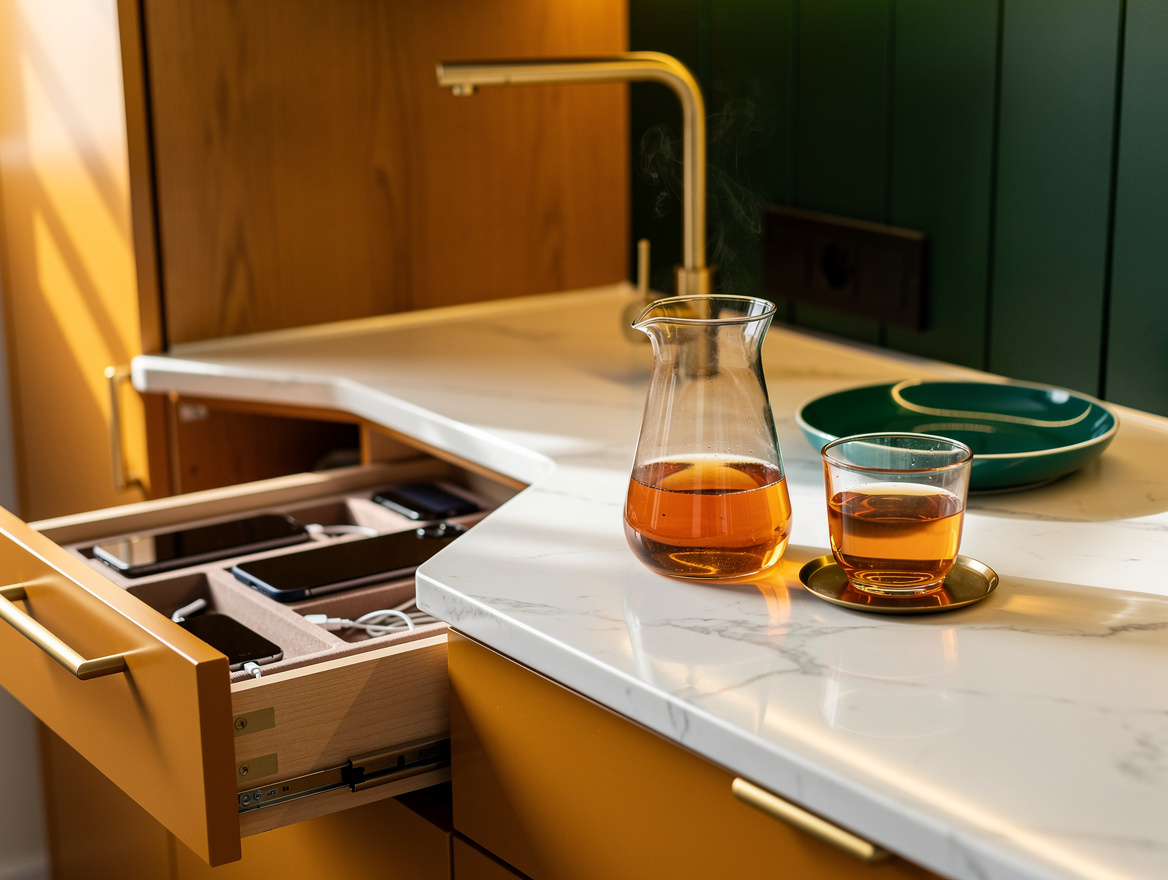
Reserve one drawer for a phone, sleep tracker, e-reader, and white-noise device, with an integrated charging drawer outlet installed by a qualified electrician. The cables stay hidden, while the devices remain close enough for a quiet morning start.
A hotel-suite wall can stretch from roughly 72 to 96 inches wide, giving you room for a sink, beverage center, hidden bin, tea drawer, and appliance garage. Use the extra width for storage rather than a stool overhang, which rarely earns its footprint in a bedroom.
Add a small tray made from clear glass or stone for the items used every night, then leave the rest behind closed fronts. That balance keeps the station convenient without turning it into another display surface.
Start by marking out a roughly 36-inch counter and a 60-inch wall section, then decide which nighttime tasks deserve a dedicated drawer. Once the routine works on paper, choose the finish, appliance panels, and lighting that let the wet bar fade into the bedroom.
Mia Carter writes about small-space living and budget home makeovers. She has restyled three rentals and tests most ideas in her own 45 sqm flat.