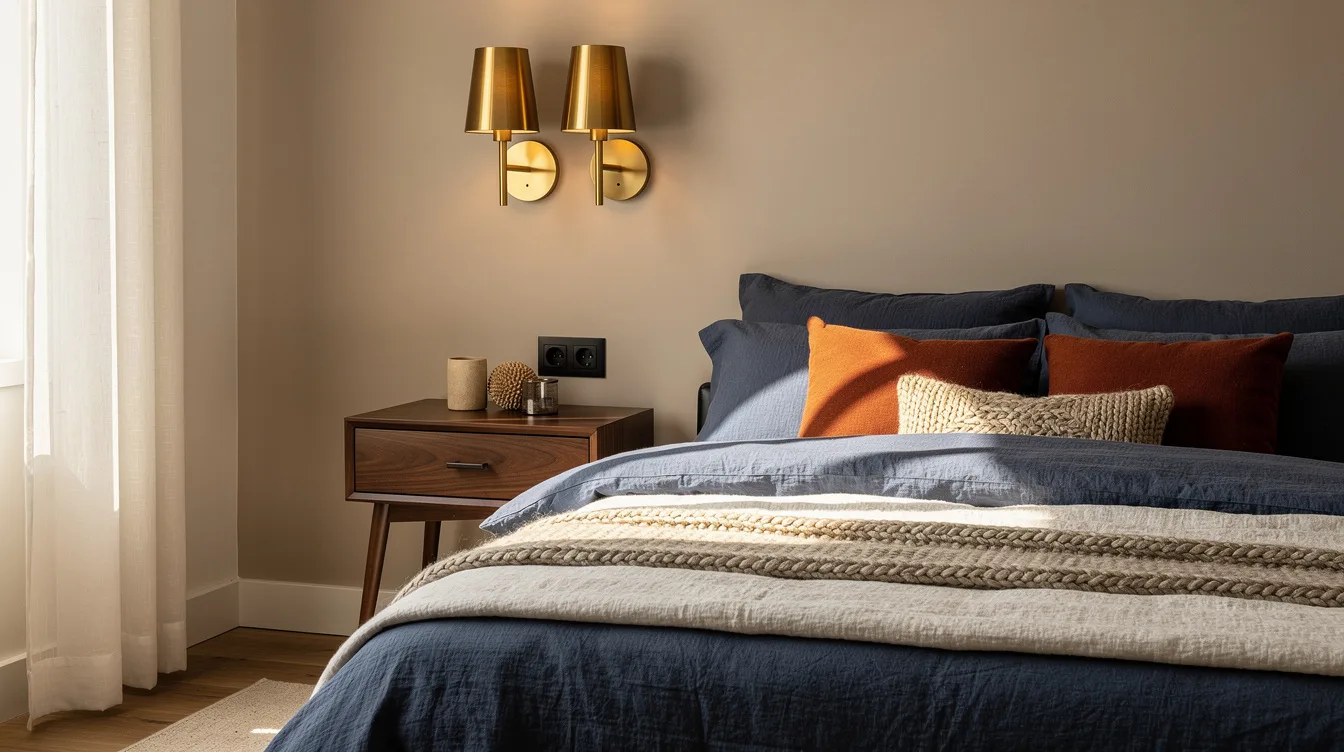
Metal finishes can make a bedroom feel settled or oddly assembled. When a brass sconce, black curtain rod, and chrome lamp all compete, the problem usually starts with color rather than hardware.
For a compact bedroom, a three-color palette is a practical starting point: one dominant wall or fabric color, one supporting tone, and one finish-friendly accent. The goal is a room where the metal adds structure without dictating every purchase.
Designers usually get there by choosing the metal first, then adjusting paint, bedding, wood, and lighting around its temperature.
Choose the Dominant Metal First
Begin with the finish already fixed in the room, such as a headboard frame, ceiling fan, or wall sconce. A bedroom with satin brass hardware needs a different color direction than one built around polished chrome.
Let that main metal appear in two or four visible places, then keep smaller finishes quieter. A $39 IKEA lamp with a similar warm finish can make the palette feel intentional without forcing every object to match.
Match Color Temperature to the Finish
Warm metals pair naturally with creamy whites, clay tones, camel, and muted greens. Use warm ivory on the walls when brass or copper is the visual anchor, especially if the room has oak furniture.
Cool metals need colors with a little crispness, including blue-gray, soft white, and charcoal. Dark bronze can bridge both directions, so it works well when the room mixes warm wood with cooler bedding.

Repeat the Finish at Bedroom Scale
A metal finish looks accidental when it appears once and disappears, so repeat it through lighting, drawer pulls, or a small frame. A matte black curtain rod from Home Depot can connect black hardware on a nightstand without making the bedroom feel severe.
Keep the repetition spaced across the room instead of clustering every matching object beside the bed. One finish near the window and another across from it creates a steadier visual rhythm.
Balance Brass With Muted Color
Brass becomes more relaxed beside dusty, softened colors than beside loud jewel tones. Try dusty rose in a lumbar pillow or painted dresser, then ground it with cream bedding and a medium wood nightstand.
For a quieter bedroom, pair brass with mushroom, olive, or warm gray and let texture provide the contrast. A natural oak bench adds weight while keeping the color palette from looking overly polished.
Cool Nickel With Warm Texture
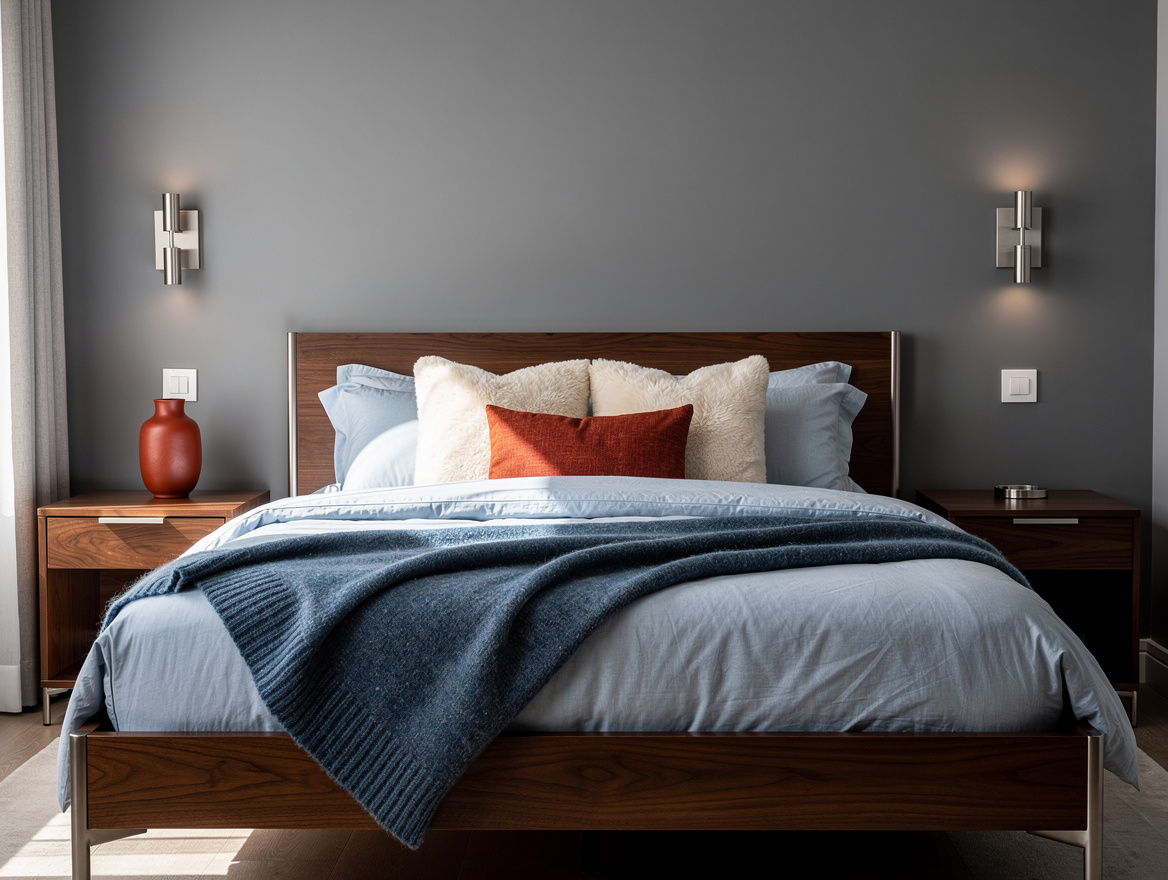
Brushed nickel can read flat against an all-white bedroom, especially under cool bulbs. Give brushed nickel more presence with oatmeal linen, a walnut nightstand, or a woven basket from Wayfair.
Blue is a strong partner when it has a gray or smoky base. Use pale blue on the duvet or a single accent wall, then add warm wood so the room feels restful rather than clinical.
Edit the Palette From the Bed
Stand at the foot of the bed and identify the first three colors your eye notices. If the bedding, wall, and metal finish compete equally, remove one accent before buying anything else.
A soft gray coverlet from Target can quiet a room filled with mixed hardware, while soft gray walls can make bronze or black details feel deliberate. Keep the strongest contrast near the bed, where it will frame the room instead of scattering attention.
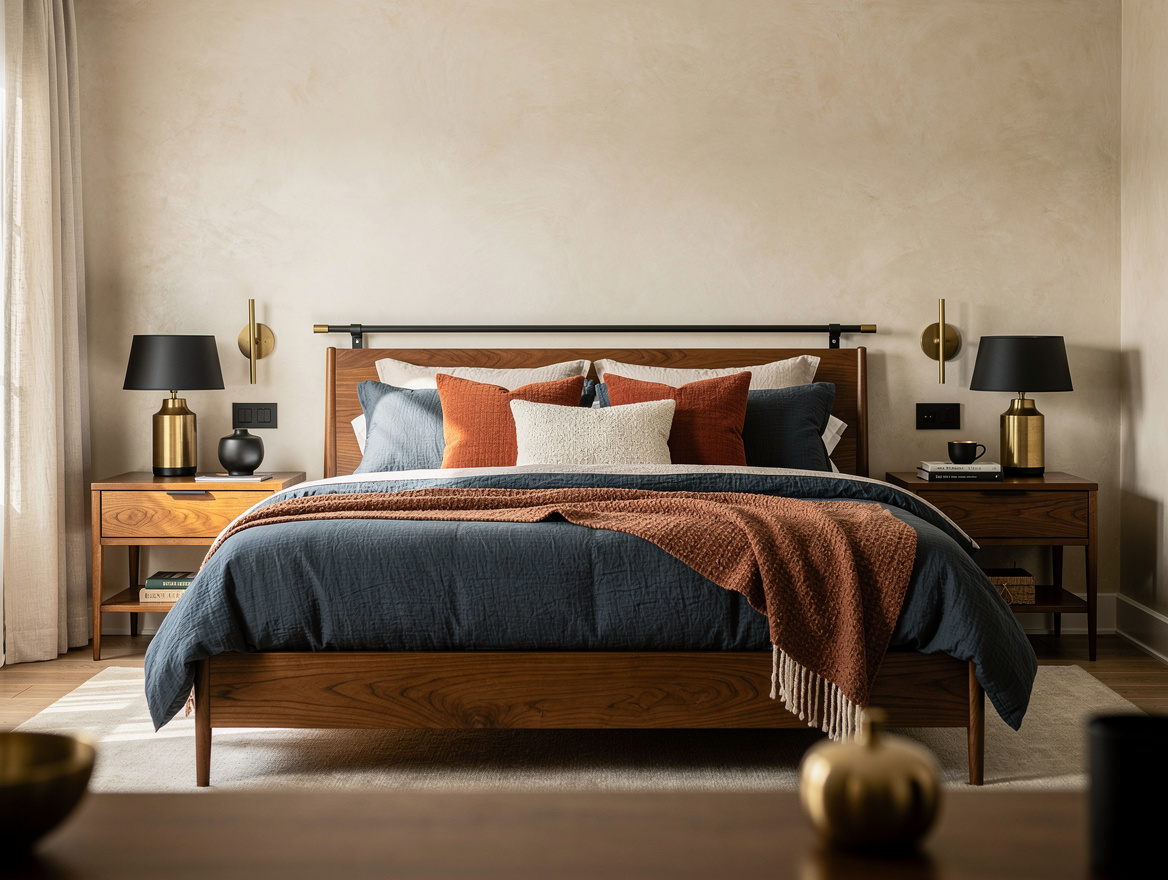
Start with the largest fixed metal in the bedroom, choose one wall color that supports it, and repeat the finish twice before adding another accent.
That simple order keeps the palette calm, gives mixed metals room to work, and prevents small purchases from steering the whole room.
Mia Carter writes about small-space living and budget home makeovers. She has restyled three rentals and tests most ideas in her own 45 sqm flat.