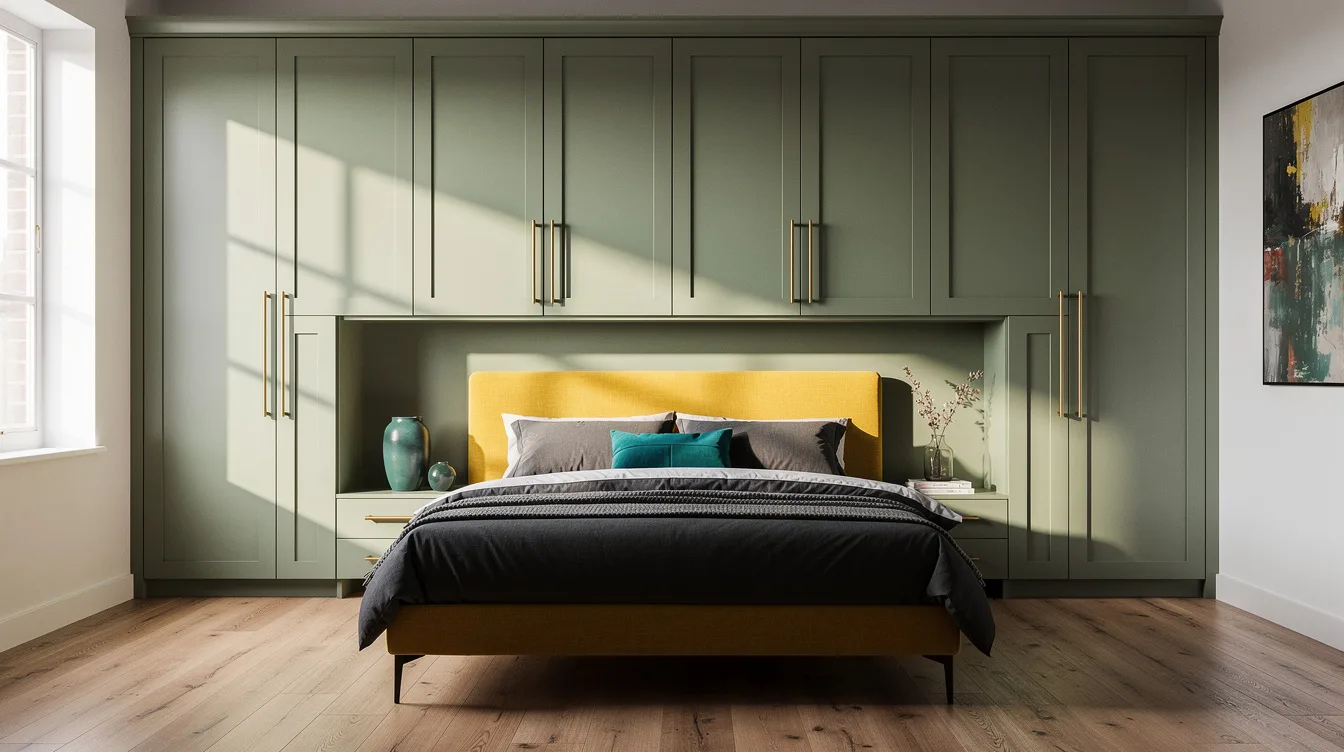
A bedroom can feel oddly unfinished when a wardrobe stops inches below the ceiling and leaves a sliver of wall on either side. A deep IKEA PAX frame is about 23 inches deep, enough to hold real hanging storage without pushing a standard bedroom into hallway territory.
I learned this in a rental where the closet was tiny and the dresser ate up the only clear wall. The answer was not more furniture, it was making one storage wall look intentional.
Start With the Right Frame Depth
Use a deep IKEA PAX frame when you need full hanging space for coats, dresses, and shirts. Its roughly 23-inch depth feels substantial, while the shallower versions work better beside a door or in a narrow sleeping zone.
Measure the door swing before buying hinged fronts. A bedroom needs a clear path around the bed, and crowded doors make even expensive-looking cabinetry feel poorly planned.
For low ceilings, build with IKEA PLATSA modules instead. Their flexible boxes let you use awkward vertical space without the defeated look of a wardrobe that nearly fits.
Raise the Units on a Solid Plinth
Set the frames on a level MDF plinth before anchoring anything to the wall. This small construction move gives the installation a furniture-maker’s foundation and helps correct uneven flooring.
A typical plinth is roughly 2 to 4 inches high, depending on baseboards and ceiling height. Keep the face recessed slightly so the wardrobe appears to sit on a deliberate shadow line.
Do not rely on adjustable wardrobe feet as the finished visual. They are useful underneath, but a visible run of plastic feet immediately gives away the budget origin.
Box In Every Ceiling Gap
Run painted MDF across the top and down both exposed sides to erase the gaps around the frames. This is the detail that shifts a freestanding wardrobe toward a built-in look.
Attach hidden wood battens to the wall or ceiling, then fasten the panels to those supports. Particleboard edges are not the place to force a heavy finish panel.
Use a narrow crown molding only when the room already has traditional trim. In a newer bedroom, a crisp flat fascia looks more convincing and keeps the whole wall calm.
Give Flat Doors Some Architecture
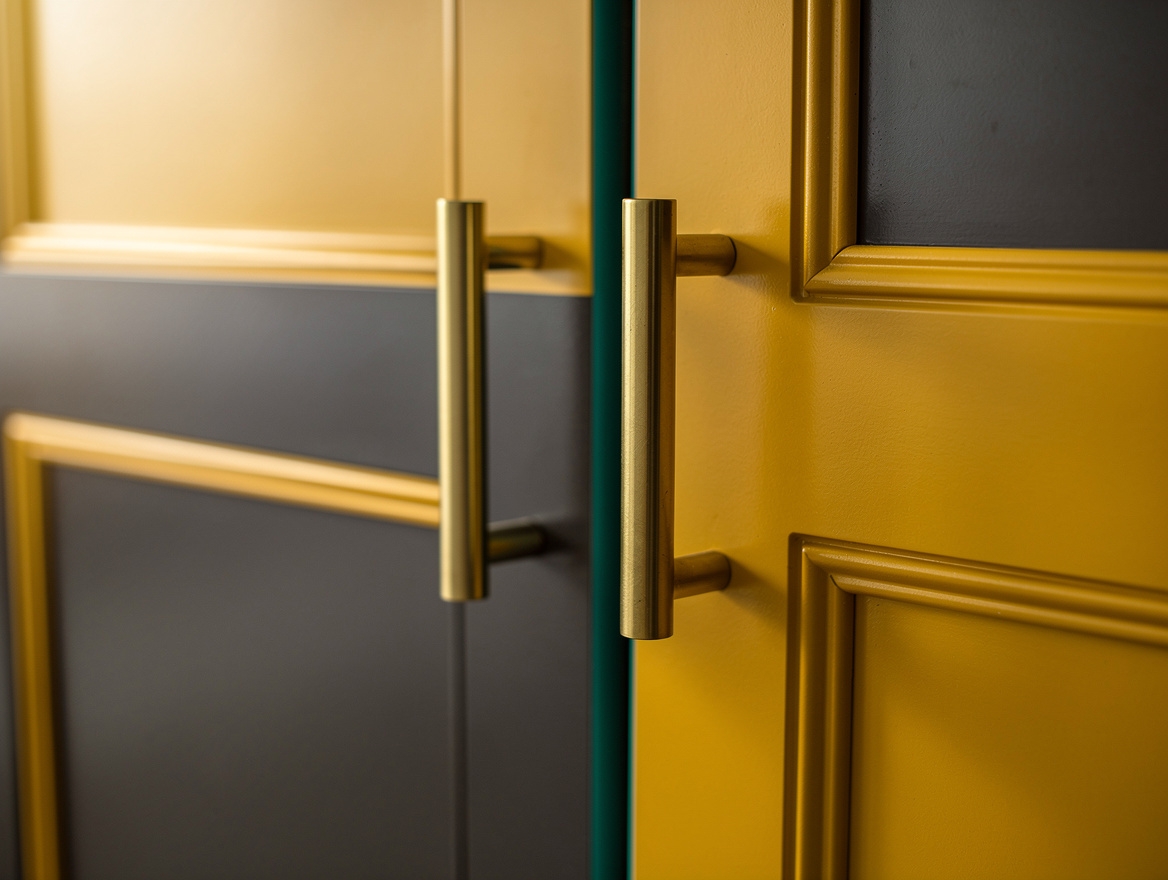
Plain FORSAND doors are a smart blank canvas, especially when the bedroom has simple walls and clean-lined furniture. Add slim picture-frame molding in a measured grid, then paint doors and trim together for one continuous surface.
Use a shellac-based primer before painting laminate or foil finishes. Skipping primer is the shortcut that turns a weekend project into chipped corners around the handles.
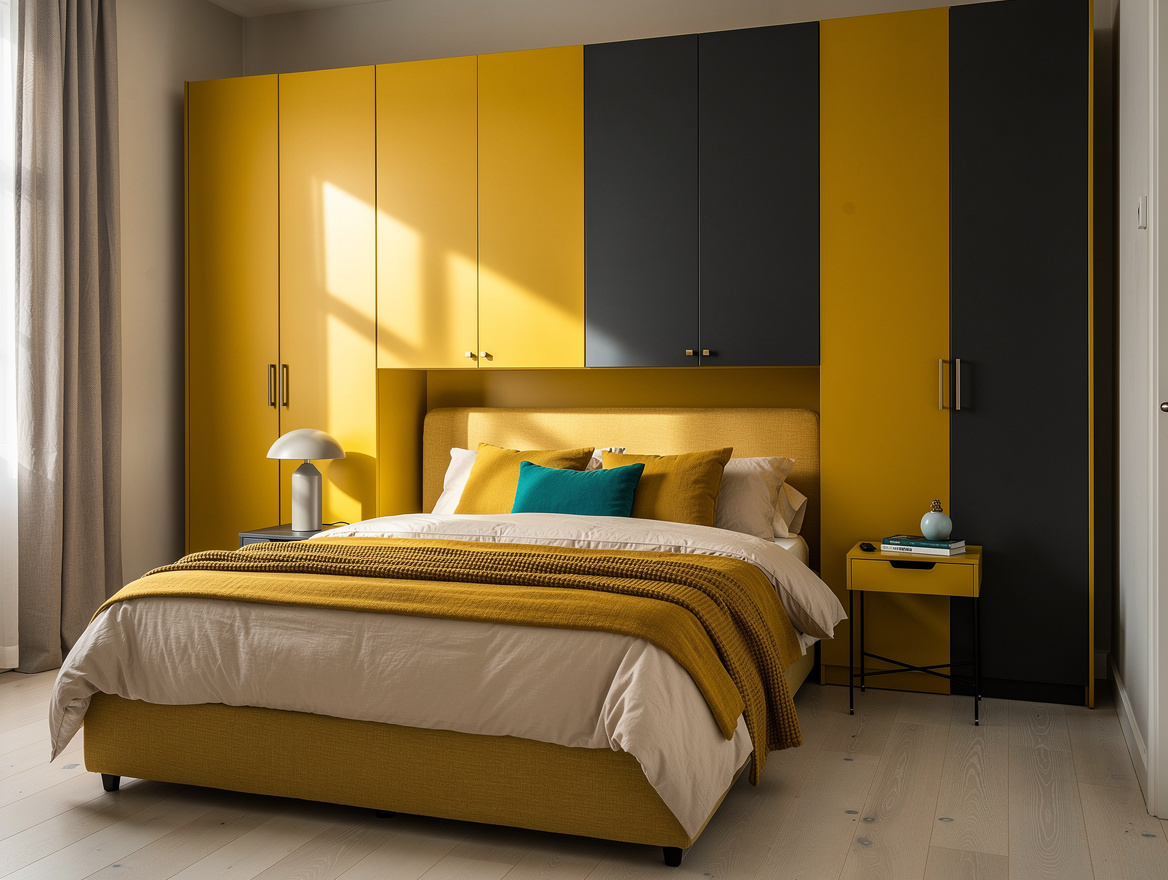
A muted sage green, warm putty, or dusty blue has more staying power than stark white in a bedroom. Pick a color already present in the rug or drapery so the wardrobe reads as part of the room.
Replace Small Hardware With Weight
Trade the supplied knobs for substantial brass pulls from Amazon, Home Depot, or Lowe’s. Long pulls make tall doors feel tailored, while tiny knobs can make a full wardrobe wall look like a row of utility cabinets.
Expect to spend about $15 for a basic pair of knobs and more for solid metal hardware. Buy one sample first, because the finish can look very different against your paint color in evening light.
Keep the spacing consistent across every door. One handle placed even slightly off line is surprisingly visible on a large bank of cabinetry.
Build the Interior Around Your Actual Routine
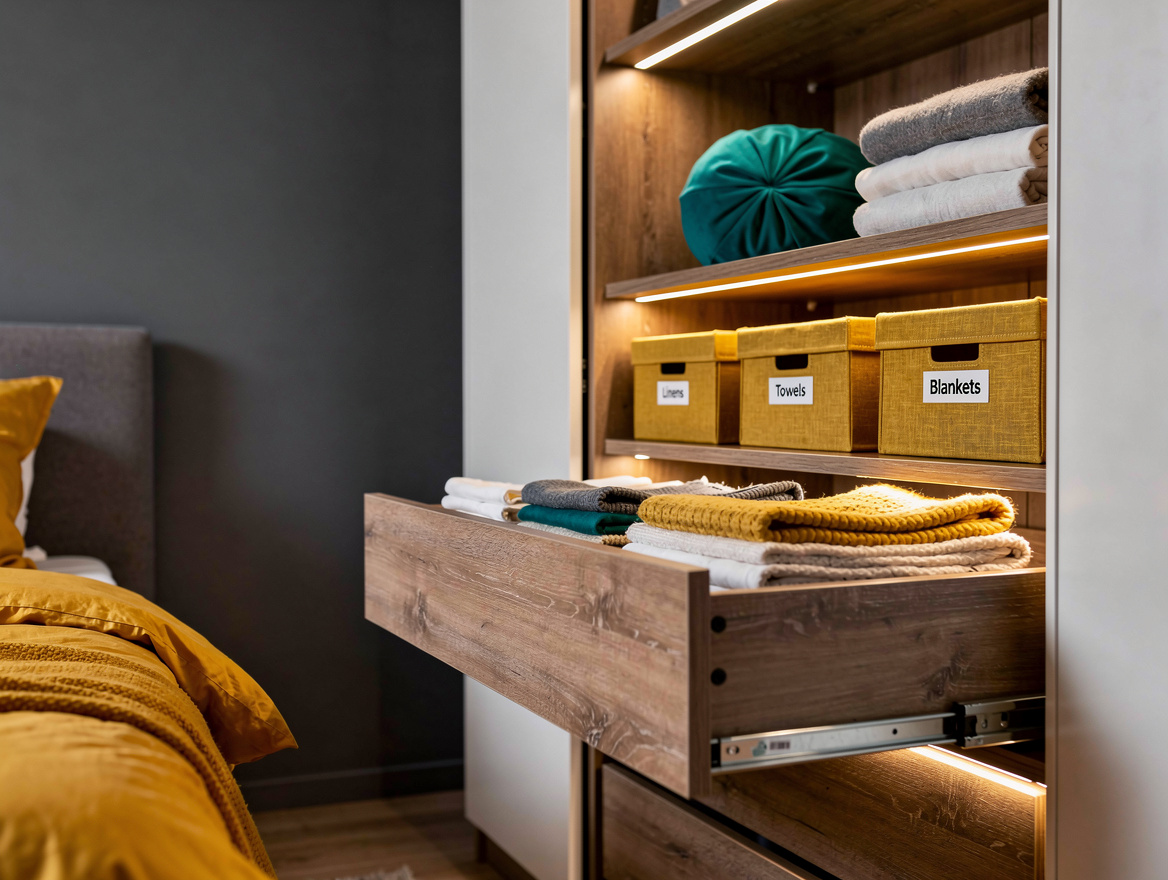
Fill the inside with KOMPLEMENT drawers, rails, and shelves according to what you reach for every morning. Hanging space is valuable, but most bedrooms need folded storage and a place for shoes more than a second long rail.
Use labeled SKUBB boxes on the highest shelf for off-season linens or sweaters. A full wall of storage only feels luxurious when the daily items are easy to grab.
Put a battery-powered light strip inside the darkest section, particularly near drawers. Start with the plinth and ceiling boxing, then choose doors and hardware after the structure looks right.
Spend the first hour measuring ceiling height, baseboards, and door clearance. A wardrobe wall succeeds when it fits the room’s architecture before it tries to impress anyone.
Mia Carter writes about small-space living and budget home makeovers. She has restyled three rentals and tests most ideas in her own 45 sqm flat.