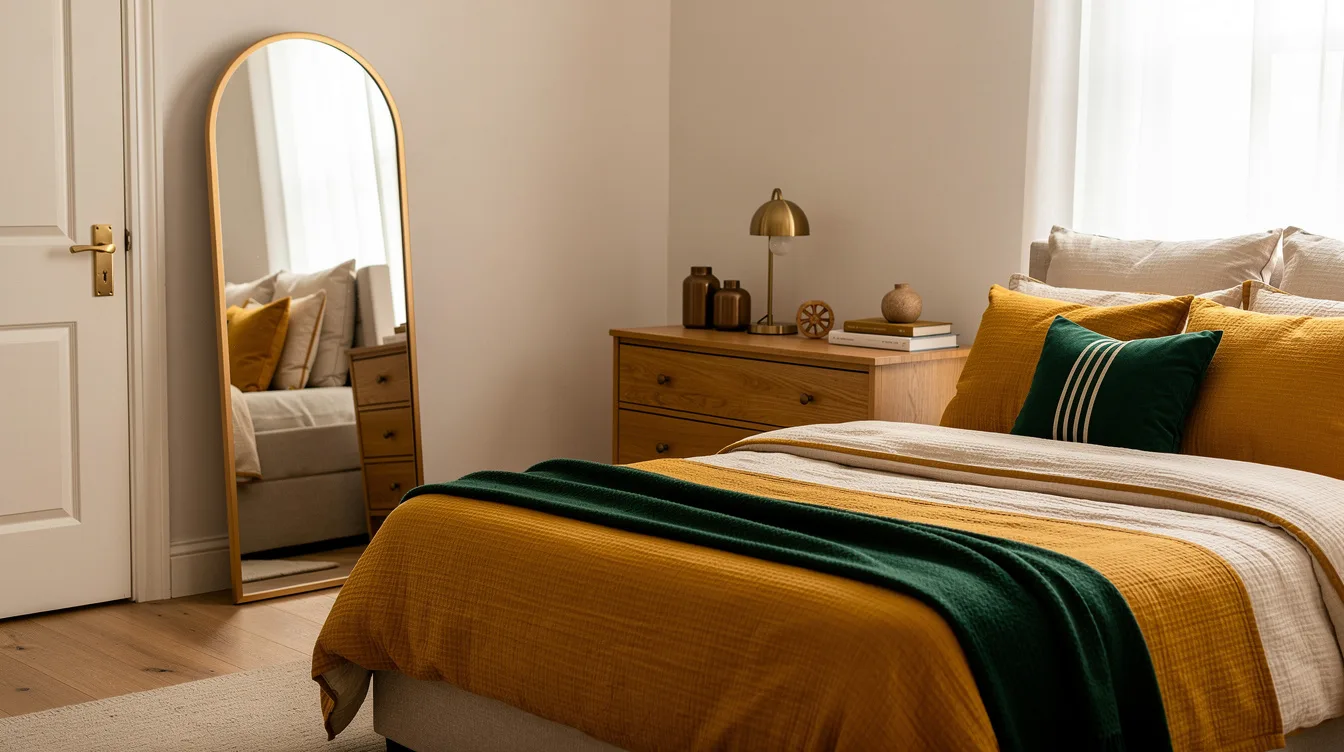
Guests rarely complain about the paint color, but they notice when a room has nowhere to check an outfit before heading out. In a typical $50 to $150 range, a 65-inch full-length mirror can add a useful dressing point while making a compact bedroom feel more open.
The mistake is treating the mirror as leftover decoration. Its height, frame, reflection, and location all affect whether the guest room feels thoughtful or improvised.
Place the Mirror Near the Dressing Route
A full-length mirror works hardest when guests can reach it after getting dressed, so place it near the bedroom door, closet, or wardrobe. A **black aluminum frame** keeps that practical location visually light and usually costs less than a heavy wood design.
A mirror across the room may look attractive in a photograph but can become awkward in daily use. For a typical guest room, the wall beside the door often gives visitors the clearest path without interrupting the bed or luggage area.
Choose a Size That Shows the Whole Outfit
For most rooms, a model around 65 to 71 inches tall and 22 to 24 inches wide is the reliable default. That size gives a convincing head-to-toe view while keeping enough wall around the mirror for art, hooks, or a small chair.
A **64-by-21-inch mirror** suits a narrow guest room, while a larger space can handle a wider piece around 70 to 76 inches tall. Designers generally prefer a complete reflection over an oversized frame that leaves no breathing room around the furniture.
Trade Thin Metal for Warm Wood When Needed
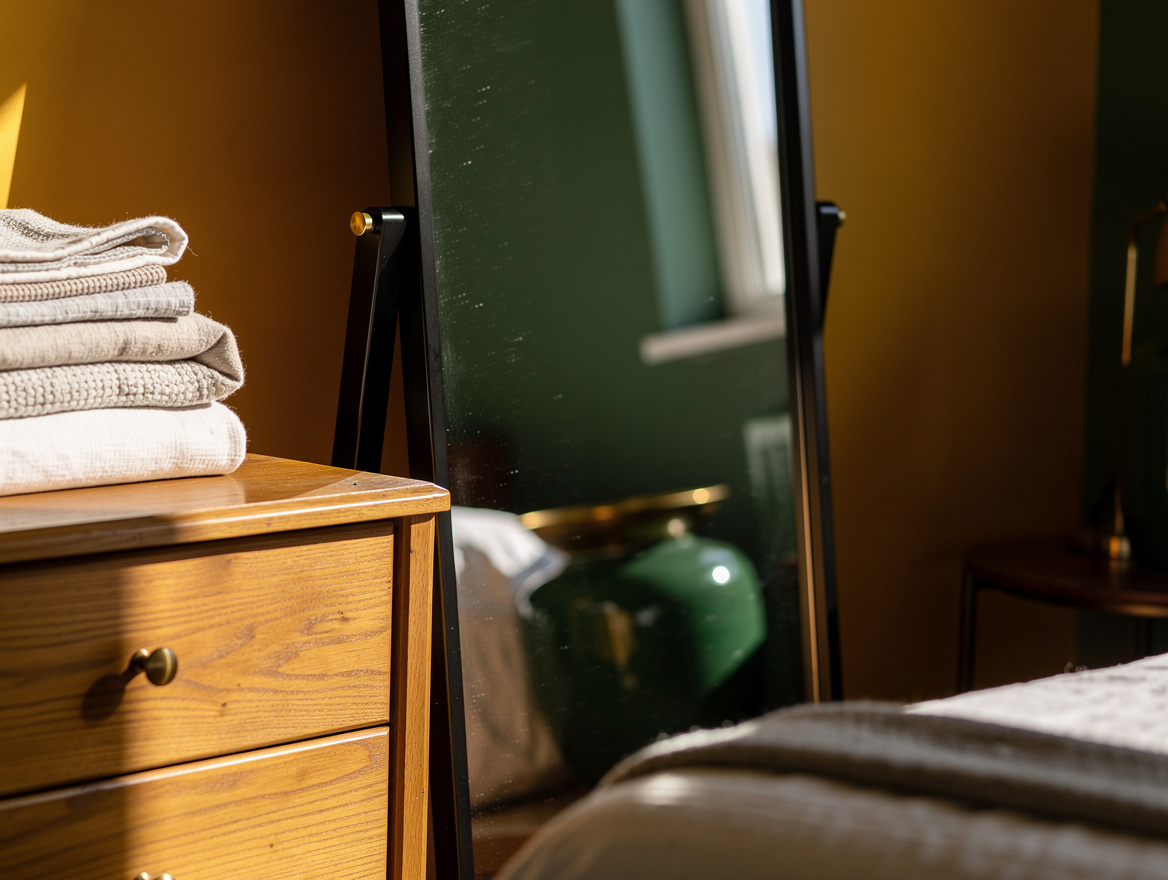
Metal is a sensible choice for a rental, frequently used guest room, or home where the mirror may need to move. A **layer-glued wood veneer frame** creates a more furniture-like look, and IKEA offers a freestanding option at about $200.
Solid wood changes the budget quickly, with premium statement mirrors often reaching roughly $200 to $1,000 or more. That expense makes sense when the bedroom already has walnut, oak, or another strong wood finish, but it feels excessive beside basic flat-pack furniture.
Aim the Reflection Toward Useful Light
Set the mirror where it can catch daylight from a window without pointing directly at the bed. A **clear glass surface** placed opposite or beside a window can make a compact room feel brighter, although a direct glare spot will make the space less comfortable.
In a dim room, pair the mirror with warm lighting instead of expecting reflection alone to solve the problem. A brass-finished frame works well with cream walls, walnut furniture, or dark green accents, and comparable statement styles begin around $200.
Build a Small Dressing Zone Around It
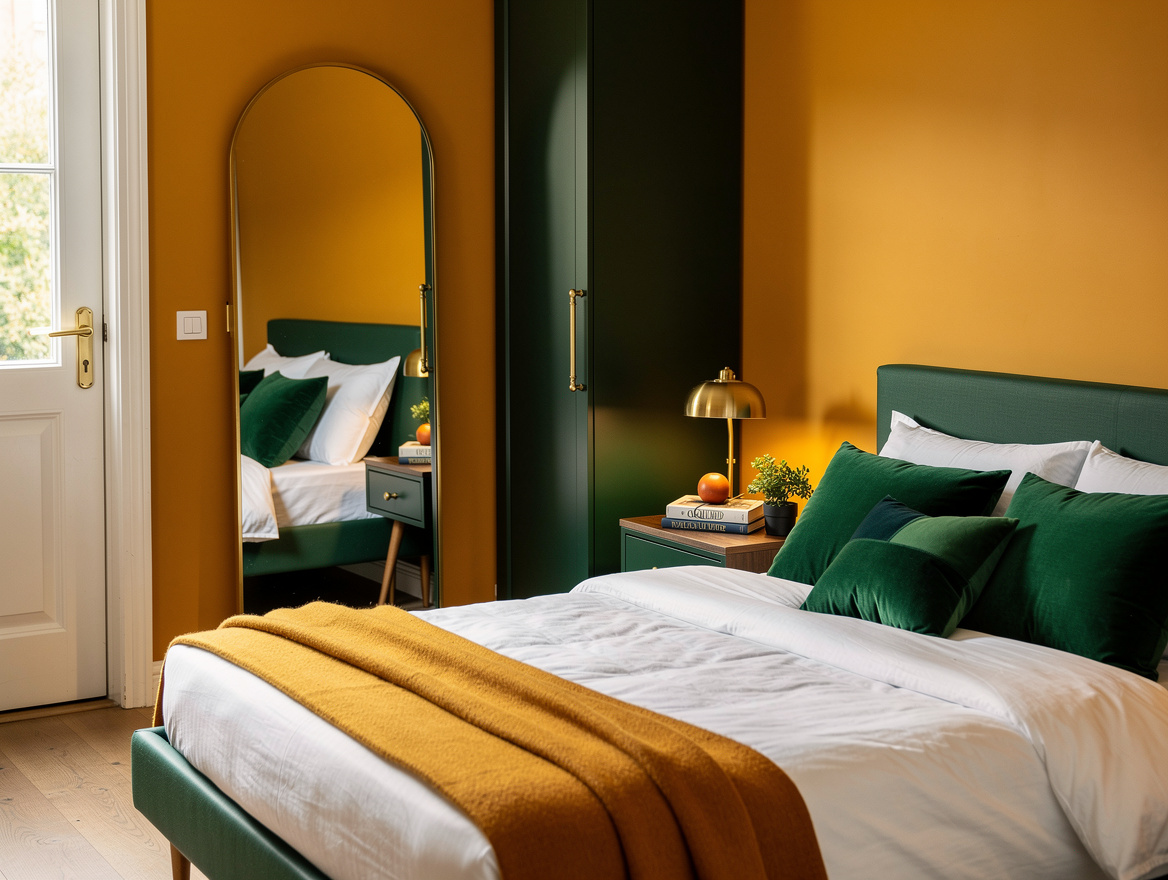
A mirror becomes more useful when guests have somewhere to place jewelry, shoes, or a handbag nearby. A **wall-mounted rectangle** beside a dresser can save floor space, with typical options measuring about 48 to 65 inches tall and 16 to 24 inches wide.
Where the entry area is tight, choose a mirror with hooks, shelves, or compact storage, usually priced around $120 to $400. This setup earns its footprint because it gives guests a clear place to prepare without turning the bedroom into a second closet.
Secure Leaning Mirrors Before Guests Arrive
A leaning mirror has an easy boutique-hotel feel, especially when it sits in an unused corner or beside a wardrobe. Still, a **solid oak frame** can be heavy, so secure the top whenever the piece is accessible to children, pets, or rolling luggage.
For a freestanding arch, look for a typical height of 64 to 71 inches and a width between 21 and 30 inches, with many practical options priced around $60 to $180. Start by anchoring the mirror, then adjust the angle until the reflection shows the full outfit rather than a slice of the ceiling.
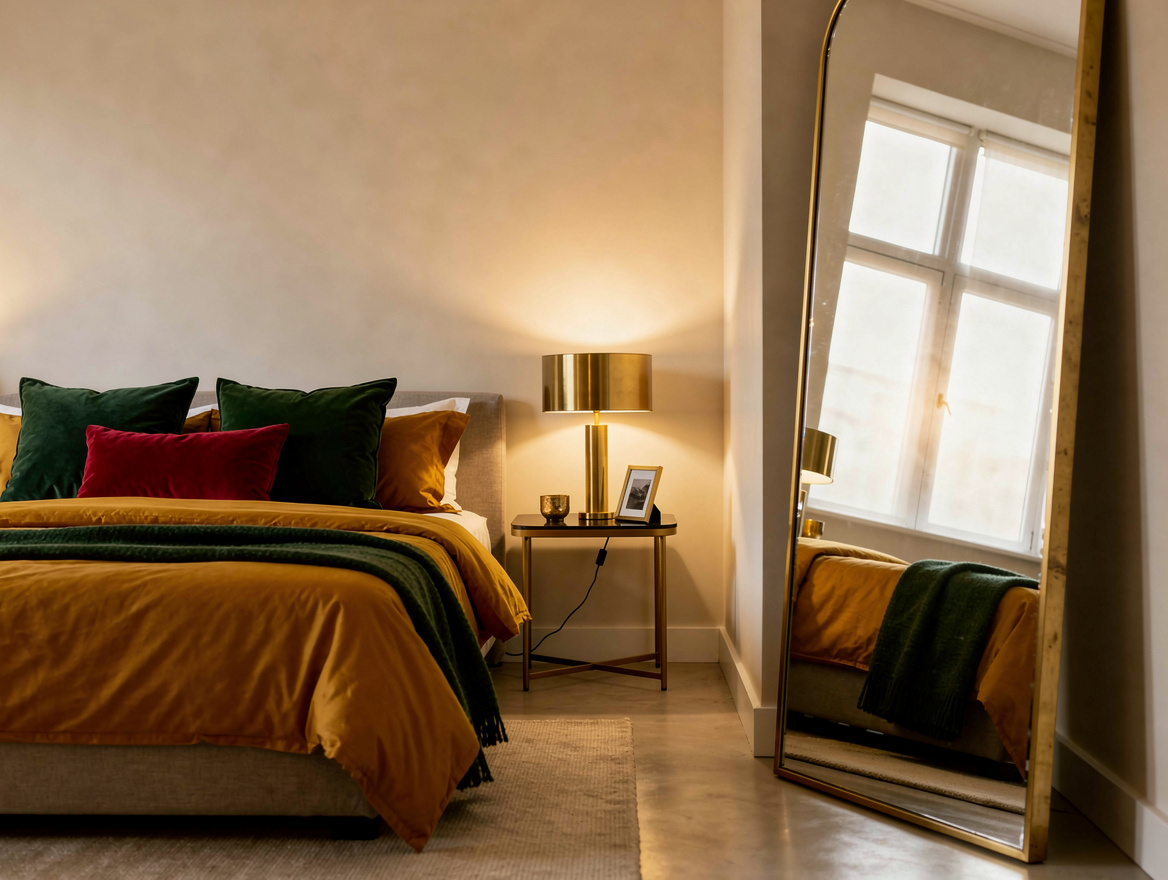
Measure the clear wall beside the door first, then shop for a 65 to 71-inch model that leaves room for movement. That one decision usually delivers more value than a larger mirror placed where guests cannot comfortably use it.
Mia Carter writes about small-space living and budget home makeovers. She has restyled three rentals and tests most ideas in her own 45 sqm flat.