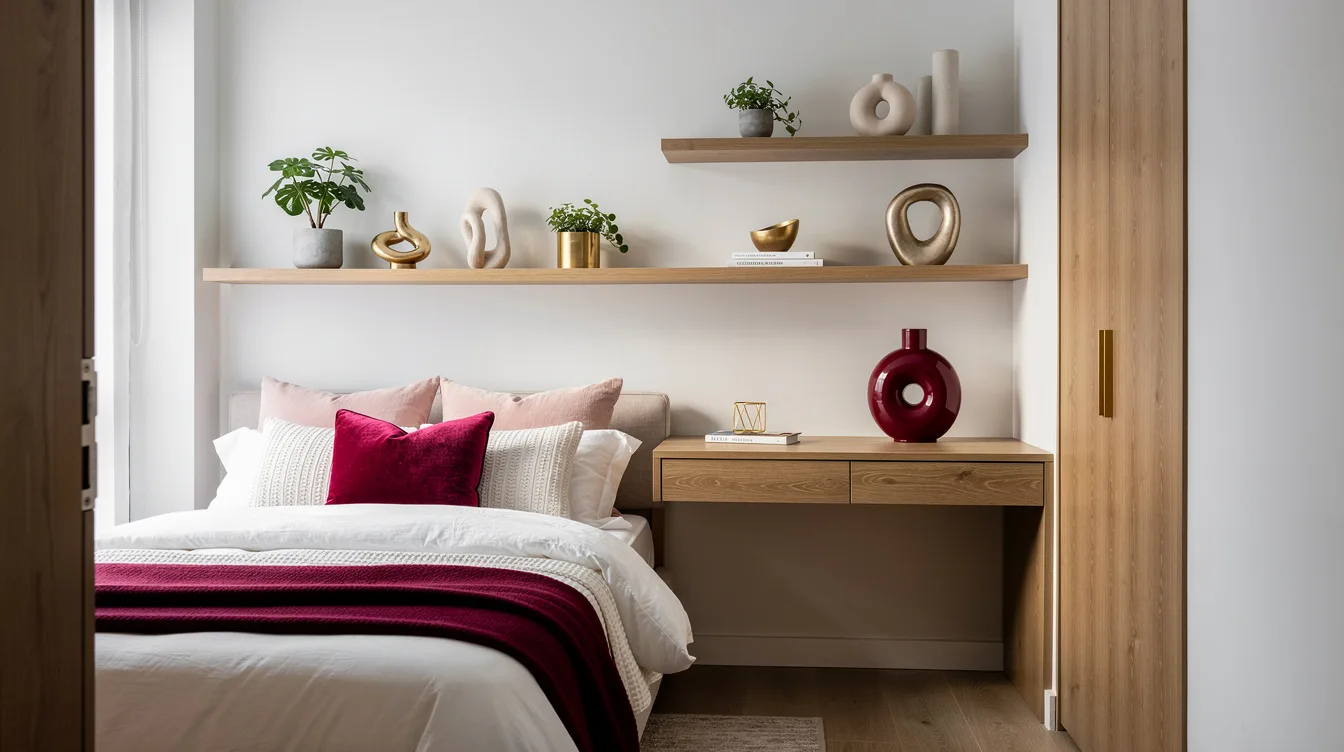
In my last rental, a 54-inch bed left me roughly a 31-inch path to the window, yet I still needed a real place to open my laptop. I learned quickly that a narrow bedroom desk layout succeeds when the furniture respects depth, not when it tries to squeeze in every standard-size piece.
The turning point was choosing a shallow work surface and treating clear floor as a nonnegotiable. Once the chair could move without clipping the bed, the room stopped feeling like a compromise.
Run the Desk Along the Long Wall
I started with the least glamorous decision: put the bed against the long wall and protect the center of the room. A desk that continues beyond the headboard keeps the walking lane obvious, while a desk pushed across the room makes every trip to the closet feel like an obstacle course.
My favorite version uses a roughly 40-inch-wide IKEA MICKE desk beside the bed, with a slim dresser on the short wall. Its 20-inch depth is the limit I’d accept for a desk with drawers in a narrow bedroom, because anything deeper starts stealing the room’s useful width.
Mount wood floating shelves above the work surface instead of adding a bookcase beside it. The floor stays open, and the desk reads as part of one continuous wall rather than a second, competing furniture zone.
Skip the temptation to center the desk under artwork. In a narrow room, circulation is the decoration people actually notice.
Claim the Window as a Work Surface
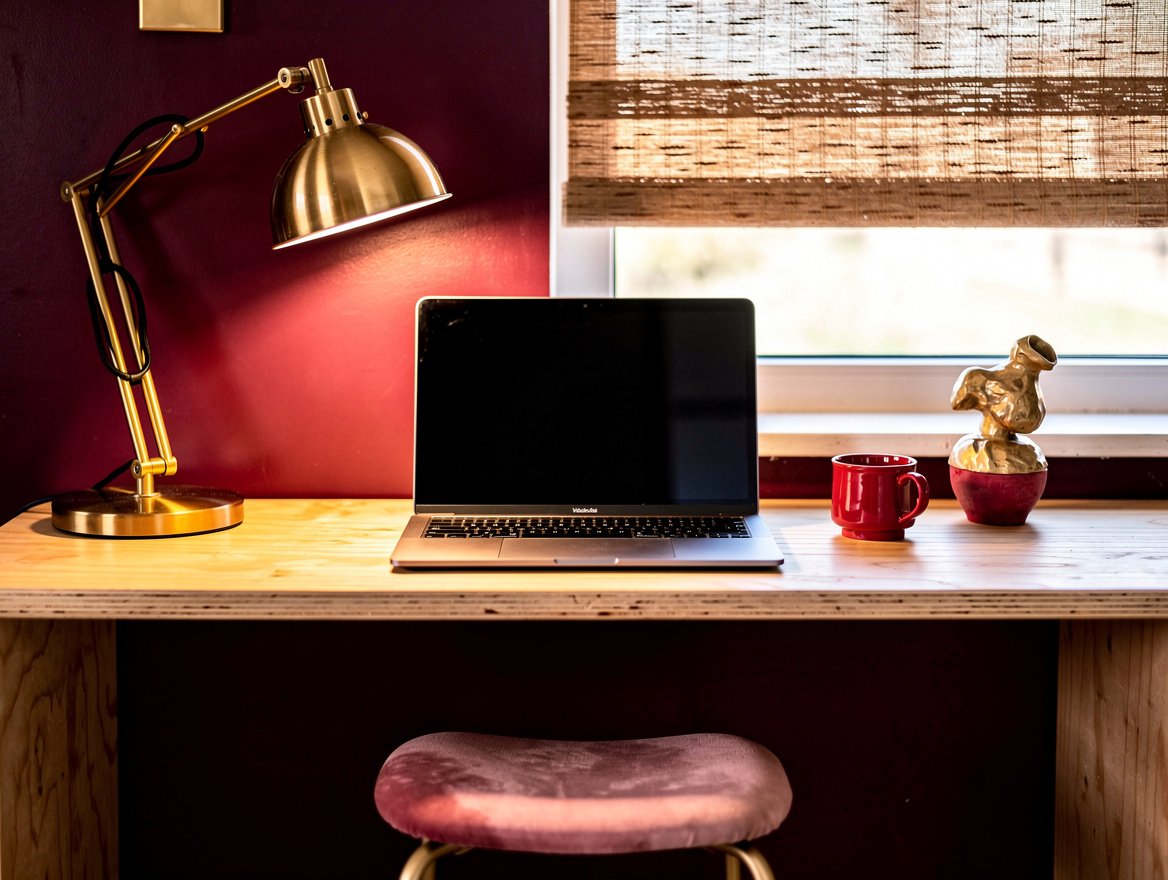
A window wall can solve the layout without asking for another inch of floor. A shelf-style desk that is roughly 16 to 20 inches deep turns an underused sill into a laptop station and gives the work zone daylight.
I’d use a simple birch plywood top on sturdy brackets, then add a backless stool that disappears underneath. A typical 32- to 40-inch-wide surface is enough for a laptop, a lamp, and a notebook, which is plenty for a bedroom office.
Keep the bed opposite the window when possible so the chair does not jut into the route around the mattress. A Target brass task lamp adds warmth after dark without needing another table.
Window desks look best when the treatment is spare. One woven shade beats bulky panels dragging across your workspace.
Fold the Work Zone Away
For the tightest rooms, I’d choose a wall-mounted desk that closes flat after work. Some fold-down designs are under roughly 6 inches deep when shut, which gives a guest room or sleeping area its floor back in seconds.
Look for a painted MDF wall desk with a solid latch and enough interior depth for charging cables. A floating surface around 32 inches wide works for a laptop setup, but it is not the place for a desktop monitor and a tower of paperwork.
Mount it near an outlet, then hide the cord in a white cable raceway painted to match the wall. That small detail matters because exposed black cords make a compact room look unfinished fast.
This is the right answer when the desk is occasional. If you work there every weekday, a stable full-time surface will feel better than a clever disappearing act.
Tuck Storage Beneath the Bed
A narrow bedroom fails when every need gets its own piece of furniture. I moved linens, off-season clothes, and spare tech out of the desk area and into low under-bed storage bins, which let the work surface stay clear.
Use lidded bins that fit fully under the frame, not soft bags that bulge into view. A typical low bed with about 7 inches of clearance can hold far more than a shallow nightstand, and it keeps visual weight below the mattress line.
At the desk, one Amazon monitor riser can lift a screen and create room for a keyboard or paper tray underneath. I avoid desktop organizers with six tiny compartments, because they turn a useful desk into a permanent to-do list.
A wall hook for headphones and one drawer for chargers are enough. The rest belongs out of sight.
Let the Nightstand Do Double Duty
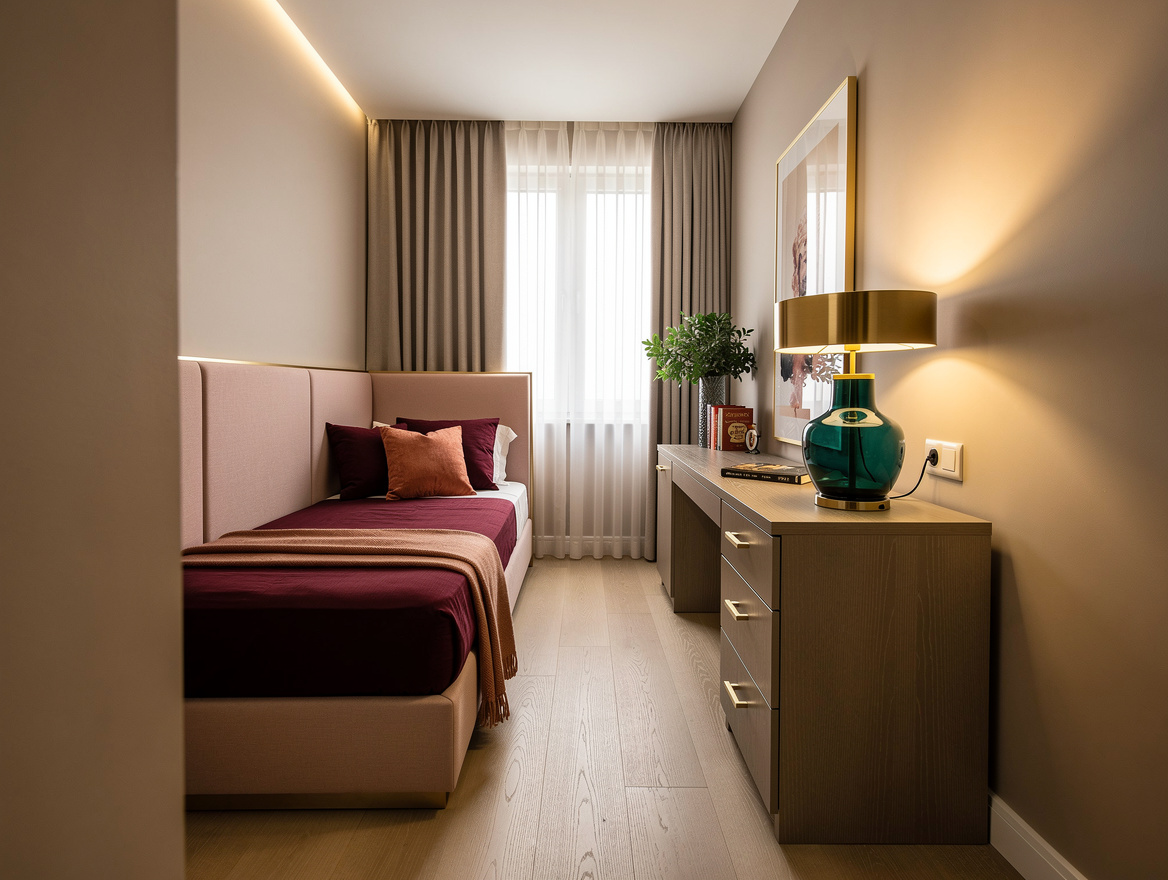
When a separate desk and nightstand simply will not fit, I make one shallow surface handle both jobs. Match its height closely to the mattress, then leave one end open for a book and the other for a laptop.
A narrow oak writing table beside the bed feels intentional when its top is roughly mattress height and no more than about 20 inches deep. Choose a chair that tucks all the way in, preferably a black metal stool with a slim profile.
This layout needs a stricter bedtime reset than any other. Close the laptop, clear the mug, and leave only a small ceramic table lamp on the surface so the room returns to sleep mode.
I would never pair this setup with a giant upholstered headboard. The desk already adds a horizontal line, and the bed should stay visually calm.
Start by measuring the clear space behind your chair before you buy a desk, aiming for roughly 30 to 36 inches where the room allows. That single measurement will tell you whether the answer is an inline desk, a window shelf, or a fold-down surface.
Mia Carter writes about small-space living and budget home makeovers. She has restyled three rentals and tests most ideas in her own 45 sqm flat.