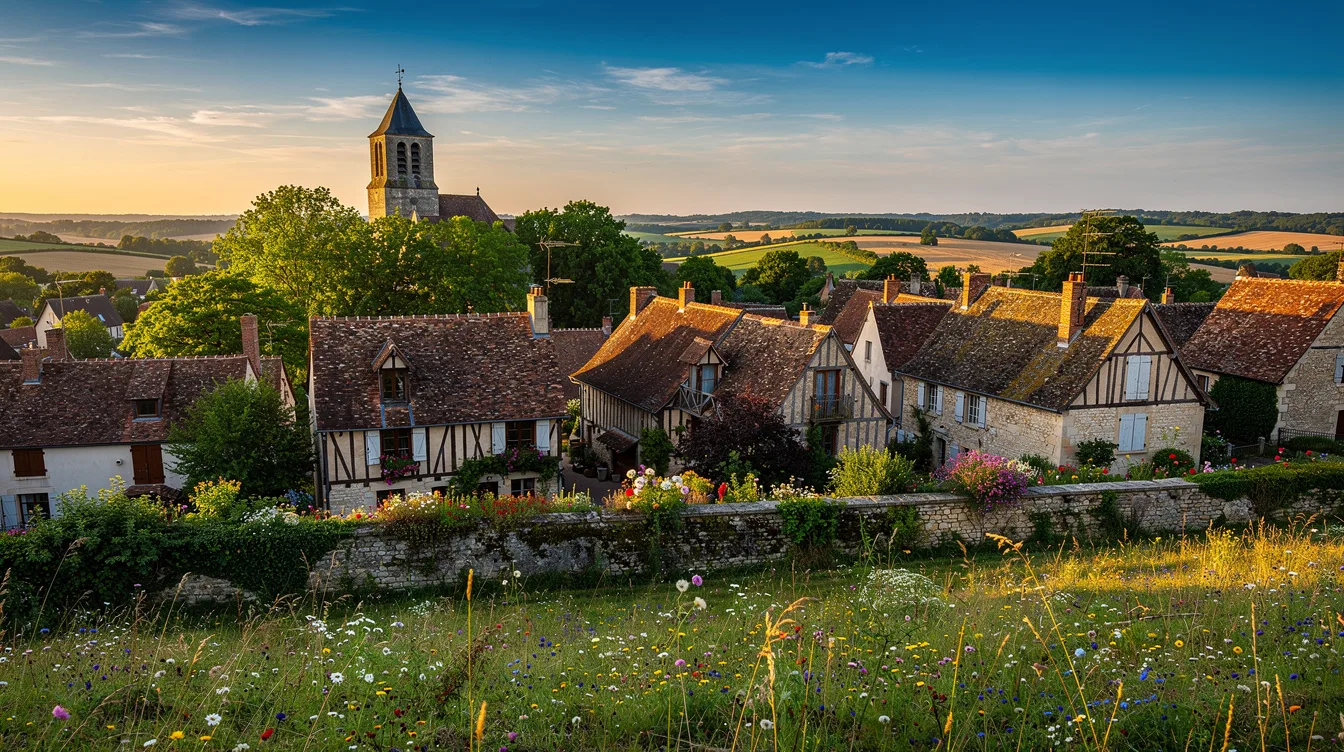
Gerberoy has only 82 residents, yet it holds a family conflict large enough for any history book. In the winter of 1078-1079, William the Conqueror fought his son Robert Curthose here, on this small rise near the Normandy border.
That contrast is Gerberoy’s whole appeal. You come for cobbled lanes and flower-covered walls, then realize the village once sat at the center of a bitter fight between father and son.
A small village with a very old argument
But Gerberoy isn’t a museum piece with ropes across the doorways. Half-timbered and brick houses still edge the streets, while traces of the medieval castle keep the battle close without turning every corner into a lesson.
And the scale changes how the history lands. With so few people living here, you can imagine winter settling over the old village and understand why a confrontation in 1078-1079 still feels unusually intimate.
Gerberoy received its historic town title from King Philippe Auguste in 1202. That makes the place feel grander than its population suggests, but it remains small enough that you should expect uneven cobbles and a slower pace.
You don’t need to chase every medieval detail. Let the old castle traces, the collegiate church, and the tight streets do the work. The village is charming, but its history has real sharp edges.
Roses soften the stone from May to July
Gerberoy is often called the village of a thousand rosebushes, and the floral display changes its mood completely. From May to July, roses climb facades and petals gather along the pavement, so even a short walk feels almost theatrical.
And the flowers don’t erase the village’s age. Wisteria and hollyhocks soften the brick and timber, while the cobbled ground underfoot keeps reminding you that this is an old settlement, not a staged garden set.
The annual Fête des Roses takes place on the first Sunday in June. It’s the day to visit if you want the village fully given over to flowers, though you’ll trade some quiet for the occasion’s shared energy.
But June isn’t your only option. A visit outside the festival can feel more personal, especially if you want time to look at doorways and garden walls without feeling rushed through the prettiest corners.
Gardens are the reason to linger
The Jardins Henri Le Sidaner are one of Gerberoy’s main draws, created by the painter whose name they carry. You should give them more attention than a quick photo stop, because the village’s appeal lies in details rather than spectacle.
And Jardin des Ifs offers another garden stop, while La Poterie de Gerberoy adds a local workshop to the day. These places keep the visit grounded in the present, not solely in the battle that made the village famous.
The Collégiale Saint-Pierre is worth seeking out as well. Its presence gives the lanes a quiet center, and the shift from flowered walls to older stone makes Gerberoy feel lively, but never loud.
But don’t treat the village center as effortless terrain. It is partly accessible for strollers and reduced mobility, though some cobbled streets can be difficult, particularly when you’re trying to keep your eyes on the roses.
Close enough for a day, better without a rush
Gerberoy sits about 12.4 miles northwest of Beauvais and 51.6 miles north of Paris. That puts it within reach for a day trip, but the place rewards travelers who leave room for wandering rather than ticking off stops.
And practical details are refreshingly simple: free parking is available year-round, with bike parking too. The village is remote in feeling, but not difficult to fold into a northern France itinerary.
Nearby dining includes Le Jardin des Ifs, Hostellerie Le Vieux Logis, and l’Atelier Gourmand de Sarah. Hotel rates tend to be lowest from March through May, while December through February is the pricier period.
But the best reason to come is still the strange marriage of conflict and softness. By late afternoon, roses lean over the cobbles, the old walls hold the light, and Gerberoy feels much smaller than its history.