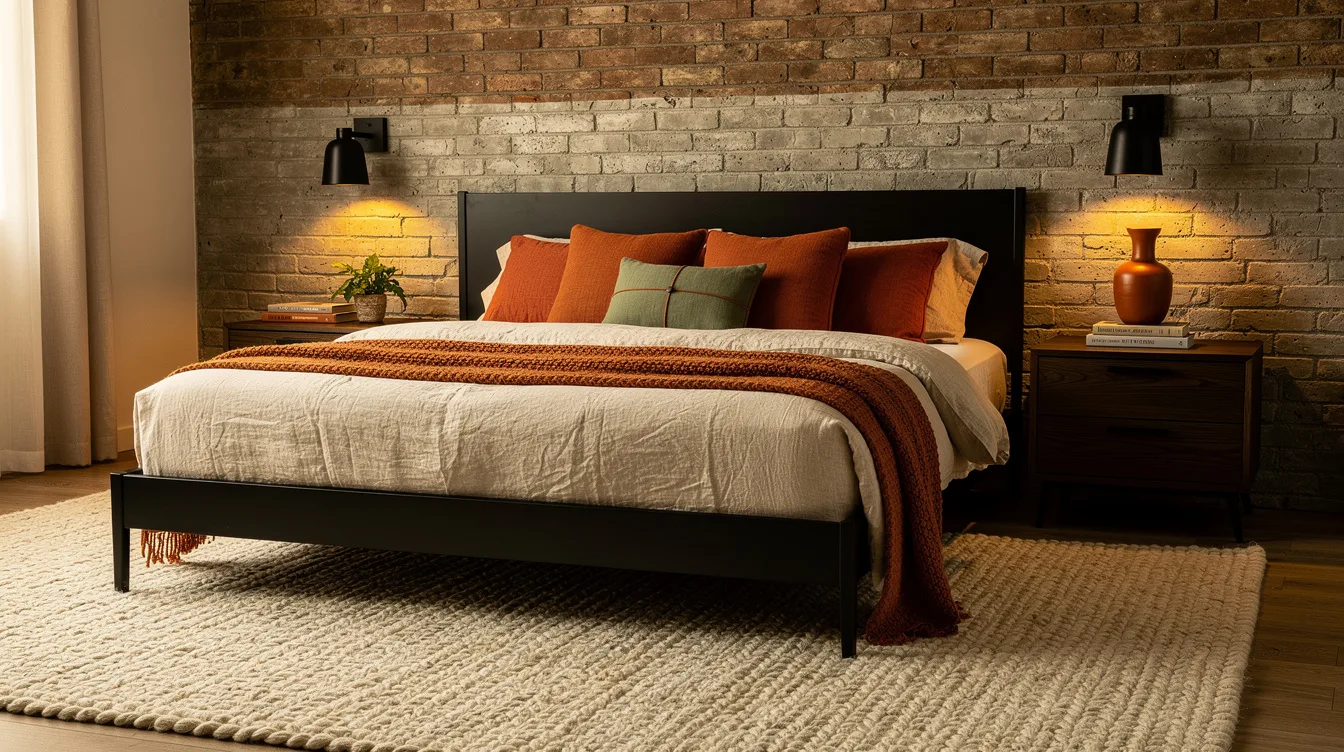
I love the grit of exposed metal, but a bedroom turns bleak fast when a black frame, black lamps, and black storage all compete for attention. Around a 63-by-79-inch bed, the hard finishes need a softer landing zone before the room starts reading like a workshop.
The most convincing industrial bedrooms use restraint: a few honest materials, then bedding and light that make them livable after dark.
Anchor the Room With One Matte Steel Bed
Start with a powder-coated steel bed frame, then let it carry most of the industrial attitude. Its matte finish is practical for everyday use and looks calmer than raw steel, which can feel overly literal in a sleeping space.
Skip the urge to match it with metal everything. A black frame, two bedside lights, and one storage piece are usually enough, especially in a room under roughly 130 square feet.
A low-profile frame keeps a compact room from feeling boxed in. For a queen-size mattress, allow roughly 69 to 71 inches wide and 85 inches long once the frame is included.
Warm wood beside dark metal is the move I’d make every time. A dark oak nightstand from Wayfair or Home Depot gives the frame a human counterweight.
Soften Black Metal With Oatmeal Bedding
Industrial style needs textile relief, and oatmeal linen bedding does that job without becoming precious. Cream, warm white, faded tobacco, and mushroom tones make black metal feel intentional rather than severe.
Choose a substantial quilt or duvet cover with visible weave. A thin gray comforter against a black bed is the fastest route to a chilly, flat-looking bedroom.
Bring in a wool-blend rug before adding more wall decor. Under a queen bed, a roughly 79-by-118-inch rug is the easy default, with about 24 to 35 inches extending beyond the foot.
I’d avoid glossy synthetic throws here. One nubby blanket from Target, a cotton lumbar pillow, and rumpled sheets have more character than a stack of matching accent cushions.
Mount Focused Lights Instead of Adding Lamps
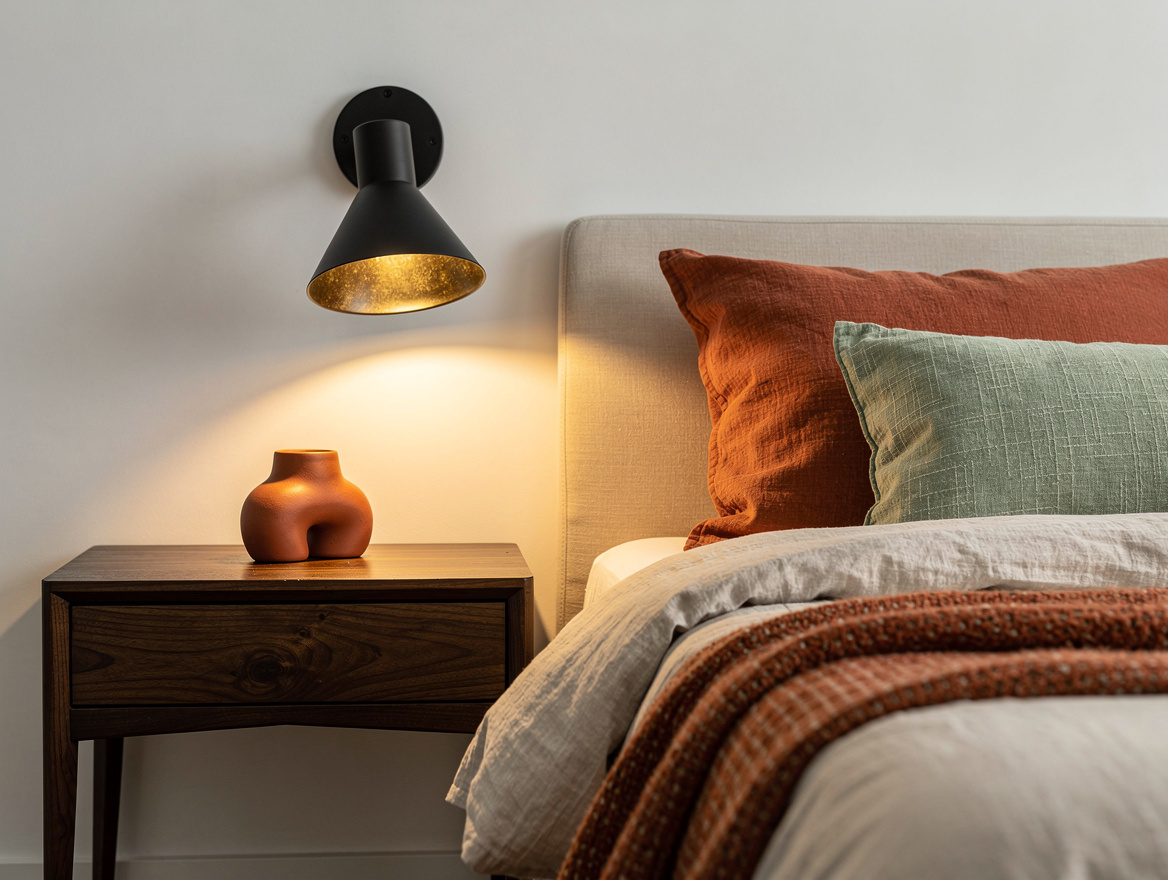
Wall-mounted black metal sconces free up nightstand space and make an exposed-metal scheme look deliberate. Set the center of each light roughly 47 to 57 inches from the floor and about 6 to 10 inches beyond the headboard edge.
Keep the projection under roughly 6 to 8 inches when the bed sits close to a walking path. Swing-arm fixtures are useful for readers, but they need extra clearance and can become a shoulder-catching nuisance.
Look for E26 sockets at Lowe’s or Ace Hardware, then use dimmable LED filament bulbs. Warm light around 2,200 to 2,700 K flatters wood grain, linen, and aged metal far better than cool white bulbs.
A aged brass interior inside a black shade is especially effective. It throws a gentler pool of light across the pillow instead of making the room feel like a utility bay.
Pair Mesh Storage With Closed Wood Surfaces
A wire-mesh locker cabinet is a strong industrial accent, but it should not become the room’s entire storage plan. Mesh exposes every folded shirt and charging cable, so use it for books, shoes, or a restrained display.
Balance it with a closed walnut veneer dresser or a dark-stained MDF cabinet where knocks and clutter are less visible. The mix feels collected and is easier to live with than open pipe shelving from wall to wall.
In a small bedroom, a slim metal-and-wood shelf works better than a bulky locker. Keep an open hanging rail roughly 31 to 47 inches wide and 16 to 20 inches deep, with about 59 to 67 inches of vertical room for shirts and jackets.
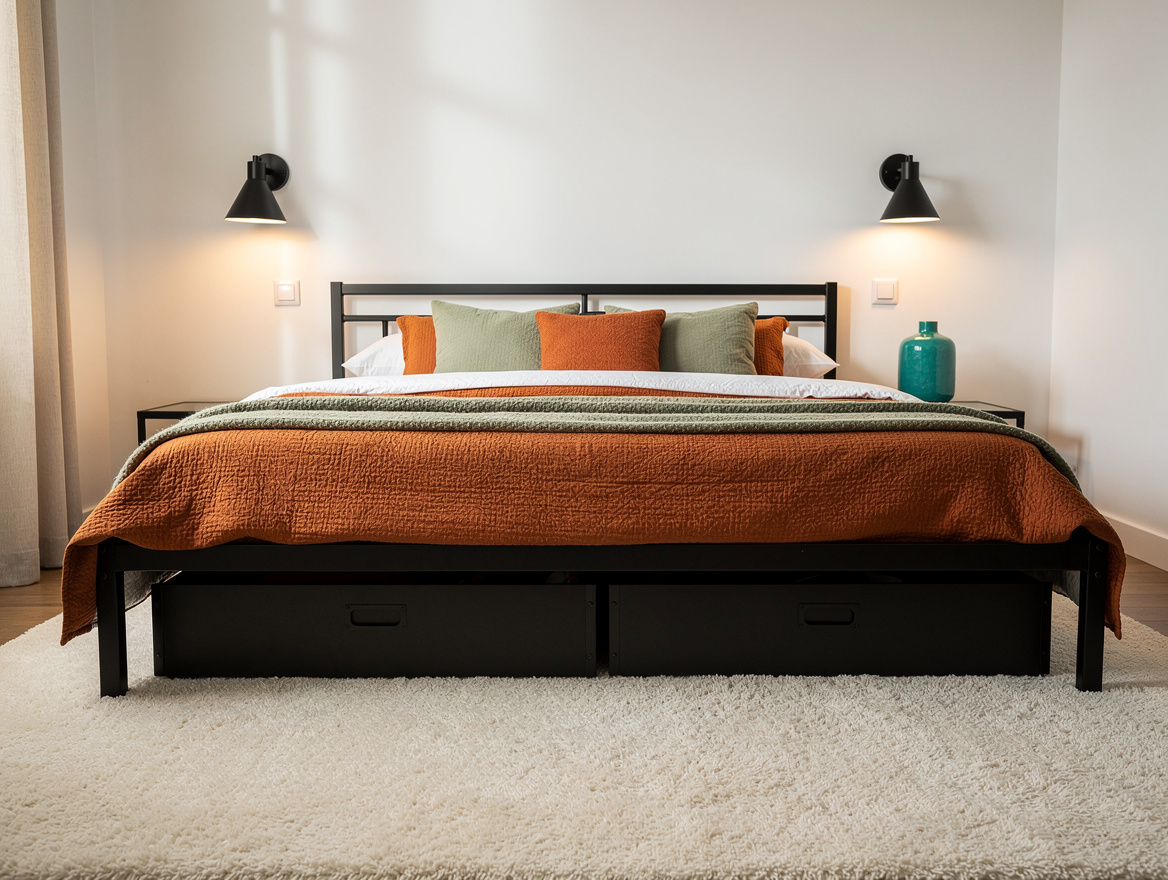
IKEA storage boxes can disappear beneath the bed while the visible pieces stay spare. That contrast, concealed practical storage with one exposed structure, keeps the look polished.
Use Concrete and Brick as Accents, Not a Set
A concrete-look wall can sharpen the room, but one surface is plenty. Pair it with medium or dark wood, then keep the remaining walls in warm off-white so daylight still has somewhere to bounce.
Real exposed brick has enough texture on its own. Don’t crowd it with fake factory signs, oversized gears, or an array of pipe fittings, because those props make a room feel themed.
For a more polished boutique-hotel version, frame an upholstered charcoal headboard with narrow metal details and add bronze-toned sconces. The fabric gives your head a comfortable place to rest and stops the hard finishes from taking over.
Test the palette in daylight before committing to charcoal paint from Home Depot. Dark walls can look rich in a larger bedroom with good windows, but they swallow depth in a tight, poorly lit room.
Buy the bed frame first, then choose the rug before any decorative metal object. Once those two pieces feel balanced, the sconces and storage will be much easier to edit with a firm hand.
Mia Carter writes about small-space living and budget home makeovers. She has restyled three rentals and tests most ideas in her own 45 sqm flat.