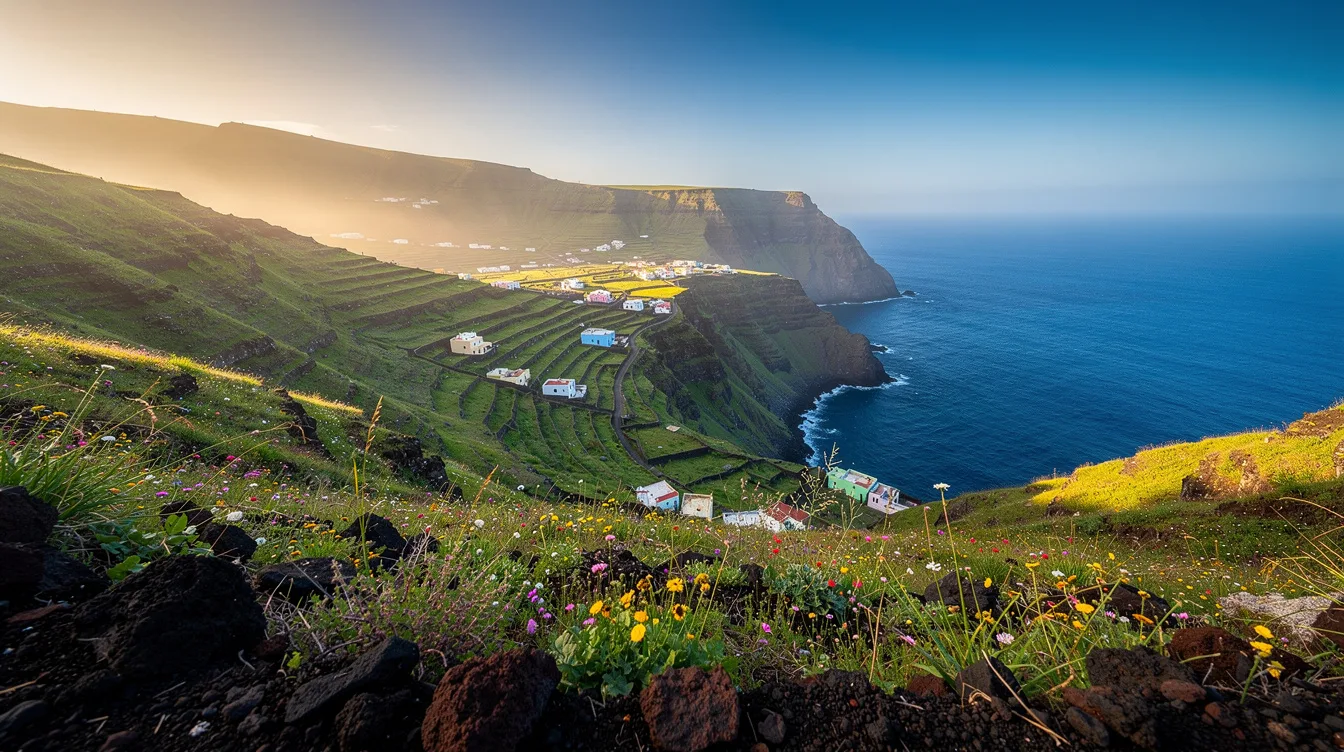
Brava rises to 3,202 feet, and that height changes the mood of this small Cape Verde island. Moisture catches in the highlands, so an island only 6.8 miles long feels green, steep, and unexpectedly roomy.
You come here for walking and quiet, not broad beaches or late nights. But that’s exactly Brava’s appeal: its volcanic slopes and cloud-covered interior make the rest of Cape Verde feel very far away.
Monte Fontainhas makes the island feel larger
Monte Fontainhas, at 976 m, is Brava’s high point and the reason flowers and green slopes appear where visitors may expect dry Atlantic terrain. The elevation brings cooler, more humid air, so evenings in the mountains can feel fresh.
And the scale plays tricks on you. Brava measures just 6.8 miles long and 5.6 miles wide, yet steep valleys break up every view and slow every plan. You shouldn’t arrive with a packed itinerary.
Its 5,638 residents live among small villages and a calm main town, Nova Sintra. The island is low-tourism, but not empty, and that distinction matters when you’re looking for a place with daily life rather than a resort script.
Nova Sintra is the sensible base
Nova Sintra is where most stays begin. It’s a hillside town with a practical role, a place to arrange taxis, find shared aluguers, and settle into the island’s slower tempo before heading toward the interior.
But Brava’s transport is limited and informal. Taxis and aluguers connect places as needed, so leave room for changed plans and ask your accommodation for current arrangements instead of treating the island like a timed attraction.
The strongest days here involve a walk toward Cachaço or the highland viewpoints. You’ll trade quick sightseeing for steep ground, village passages, and valleys that hold onto cloud cover after the coast has cleared.
Can you come for beaches?
Not really, at least not if you mean easy sandy swimming. Brava’s coast is defined by rugged cliffs, volcanic edges, and natural rock pools, which gives it drama but doesn’t promise dependable beach days.
And that limitation sharpens the experience. Instead of claiming a lounge chair, you can head to Fajã d’Água, a coastal settlement framed by steep green slopes, then let the Atlantic do the visual work.
Furna is the threshold, not a quick stop
Furna is Brava’s port and the usual arrival point for ferries from São Filipe on nearby Fogo. There is no operational commercial airport, so the boat ride is part of the decision to come.
Sea conditions can be rough, and weather can affect schedules. Because of that, don’t schedule a tight international connection after your return ferry. Brava works better when you give it slack.
The coastline around Furna has cliffs and volcanic rock pools rather than resort infrastructure. It’s raw, but not inaccessible, and the contrast between the harbor’s practical purpose and the surrounding rock is part of its pull.
A two-to-four-night detour that earns its time
Brava is best treated as a 2-4 night extension to Fogo. That window gives you time to absorb a ferry delay, walk through the interior, and see why this island’s altitude makes its small footprint feel expansive.
There are only a small number of guesthouses and hotels, so book ahead and confirm before you travel. Dining choices are also limited, and your accommodation may be the most reliable place for a meal.
But the trade-off is a rare kind of stillness. Brava is for travelers who prefer volcanic coastlines and village roads to all-inclusive ease, and who don’t need every hour planned before they arrive.
The last ferry eventually pulls away from Furna, leaving the cliffs, rock pools, and green highlands to the island’s own quiet weather.