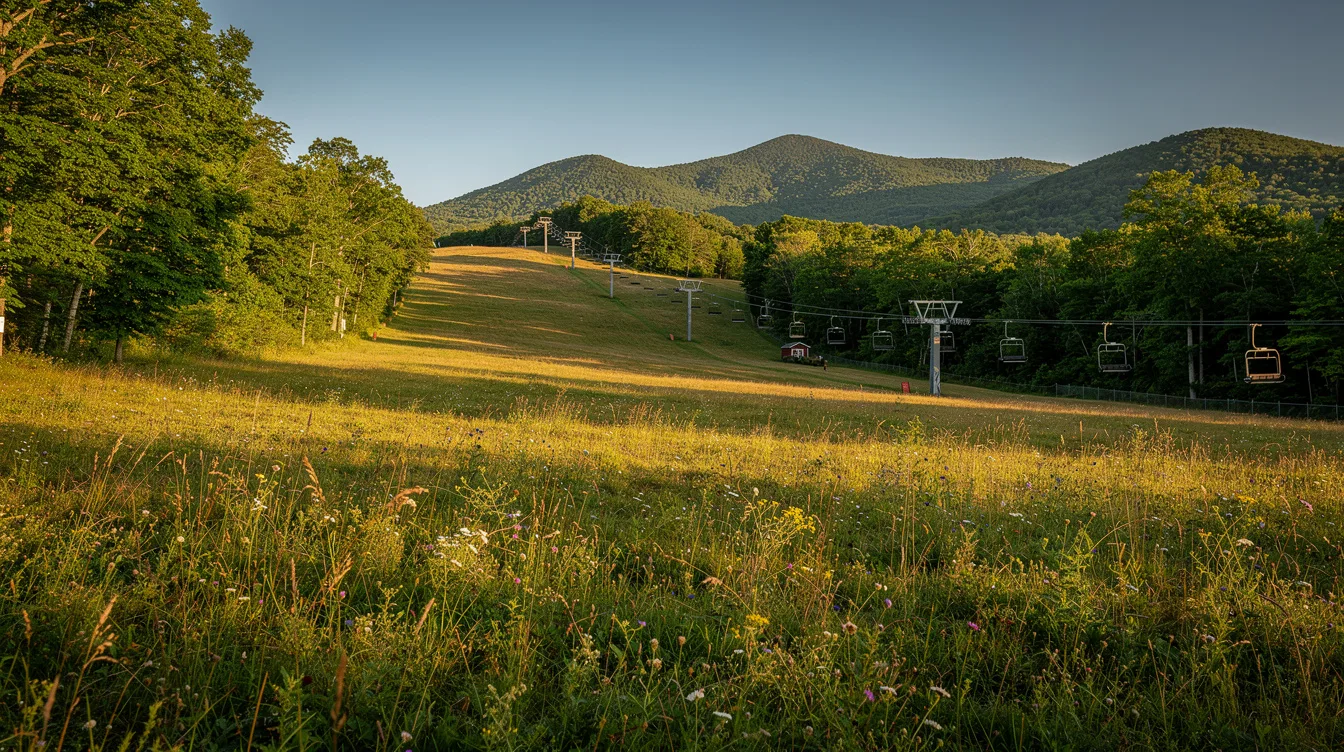
Saskadena Six, outside Woodstock in Vermont’s Windsor County, introduced America’s first mechanical ski lift in 1934. That fact gives this modest ski hill more pull than its size suggests, because you can stand where a new kind of American winter recreation began.
But this isn’t a museum piece trapped behind a rope. Saskadena Six still operates, and it also opens for mountain biking in summer. You come for the history, then find a hill that feels refreshingly local.
A 1934 first that still shapes the visit
The first mechanical lift arrived here in 1934, changing what a day on skis could be in the United States. Before that, the uphill work was part of the bargain. The lift’s arrival made repeat runs possible, so the sport could become less punishing and more social.
And that’s why this story lands best on the hill itself. You don’t need an elaborate itinerary to understand it. The slope, the trees, and the cold-season quiet make the innovation feel immediate rather than academic.
There’s a useful contrast here. Woodstock is known for polished inns, careful meals, and postcard-ready streets, but Saskadena Six keeps the mood grounded. If you prefer a mountain outing with some rough edges and real history, this is the better kind of detour.
Woodstock makes the ski hill part of a fuller weekend
Woodstock is a compact Vermont town built around the Village Green, with old houses, independent shops, cafes, galleries, and inns close enough for an easy walk. You can spend the morning outside, then return to warm windows and the smell of coffee.
But don’t confuse walkable with car-free. A car is practically necessary if you want farms, covered bridges, trails, and the smaller communities around town. The village center handles the strolling part beautifully.
The Middle Covered Bridge sits in the center of town and is one of Woodstock’s defining sights. It’s a small stop, not an all-day attraction, which is exactly the point. Pause there, listen to the river, then keep moving.
And there’s more substance nearby than the tidy facades suggest. Marsh-Billings-Rockefeller National Historical Park is Vermont’s only national park, with forest trails, a historic mansion, and a focus on conservation history. Billings Farm & Museum adds a working dairy farm and rural agriculture to the picture.
How to fit it into a Boston escape
Woodstock is about 2 to 2 1/2 hours from Boston by car, depending on traffic and conditions. That makes it plausible for a long weekend, but it’s not a place to rush through. Leave enough time for the village after the drive.
Boston Logan is the most practical major airport option in the notes. You can also fly to Lebanon, New Hampshire, then rent a car for roughly 30 minutes to Woodstock. Either way, having wheels matters once you leave the Green.
Can you do Woodstock without making it a ski trip?
Yes. Saskadena Six is historic, but Woodstock isn’t only a winter destination. In summer, the hill has mountain biking, while the town’s farms, food producers, and easy village walks give you a different reason to come.
That said, winter has its own appeal. Snow, skiing, and Christmas-season atmosphere suit the town, though cold weather and road conditions demand more planning. You’ll want to check the forecast before treating the drive as effortless.
Fall is glorious, and it comes with a price
Late September through October brings the foliage that made Woodstock famous, with wooded hills and red barns set against sharp autumn light. Fall color is the draw, so this is the season for slow roads, farm stops, and long looks from the passenger seat.
But everyone knows it. A recent guide cited an average of 23,800 fall visitors a month for a town of about 3,000 residents. Lodging gets expensive around peak foliage weekends, and the calm you came for can feel thinner.
If your budget has limits, avoid those peak weekends and late-year holiday periods. June through August brings hiking, biking, farms, markets, and music, while March through May is quieter but can be muddy and unpredictable.
By late afternoon, the Green settles into a softer rhythm. The covered bridge holds its dark silhouette over the Ottauquechee River, and the old ski-hill story feels less like a record book entry than a reason to stay one more night.