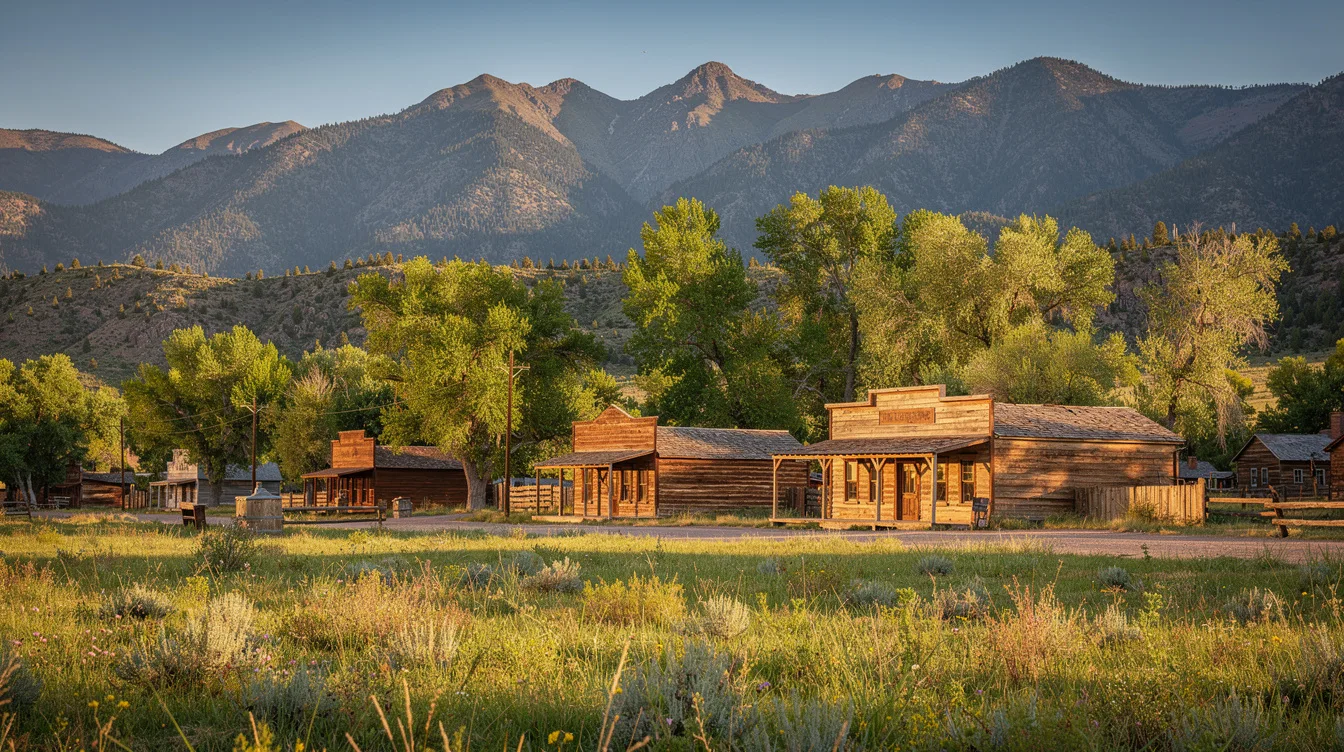
Genoa began in 1851 as Mormon Station, a trading and supply stop for California Trail travelers before they crossed the Sierra Nevada. That origin is why this Douglas County settlement is considered Nevada’s oldest permanent one. You come here for a small, tangible piece of the state’s early travel story.
But don’t expect a museum town frozen behind ropes. Genoa still works as a real stop on a day out, with shops, restaurants, and an old center that gives the history room to breathe.
Mormon Station made permanence possible
Mormon Station had a practical purpose. Travelers needed supplies before the Sierra crossing, so a trading post could become more than a brief camp. That early role anchors Genoa’s claim, and it gives the place more weight than a roadside historical marker.
And that is the appeal if you’re driving through western Nevada. You can stand near the site of the state’s first permanent trading post at Mormon Station State Historic Park, then keep walking through a compact downtown rather than trying to imagine a vanished settlement from a highway pullout.
The town was later renamed for Genoa, Italy. The pronunciation is “juh-NO-ah”, which saves you from saying it like the Italian port city.
It’s close to Tahoe, but the mood changes fast
Genoa sits about 21.7 miles from Lake Tahoe and 9.9 miles from Carson City. That proximity makes it an easy half-day or full-day detour when you want history instead of casinos or a packed resort schedule.
But it’s quieter than its nearby draws, and that’s the point. The Sierra Nevada rises nearby, while Carson Valley gives the town a more open feeling than Tahoe’s busier corridors. You can shift the day’s pace without committing to a long drive.
Reno is about 42.3 miles north. The local visitor office puts the trip from Lake Tahoe at roughly 25 minutes and Reno at about an hour, though you should allow your own margin for road conditions and stops.
The Genoa Bar has been open since 1853
The Genoa Bar announced its opening in 1853 and is presented as Nevada’s oldest saloon still operating. It’s the kind of date that makes the town’s early history feel less abstract, because the building is part of the outing rather than a fact on a plaque.
And you don’t need to turn the visit into a history lecture. Step inside, then return to the historic center for its 19th-century buildings, shops, and restaurants. The atmosphere leans Old West, but the experience remains straightforward and approachable.
There’s a trade-off. Genoa is small, so it won’t fill several days on its own. Pair it with Carson City or Lake Tahoe, and its short scale becomes an advantage instead of a limitation.
September brings the Candy Dance & Faire
Genoa Candy Dance & Faire is generally held during the last full weekend of September. The event brings several hundred vendors, so this is when the town’s calm center takes on a much busier rhythm.
But the crowds are a choice, not an obligation. If you want browsing and local activity, plan around the faire. If you want to linger over the settlement’s older story, pick another day and let the streets feel more spare.
You’ll get a clearer sense of the place either way by keeping expectations right-sized. Genoa isn’t competing with Tahoe for outdoor spectacle. It offers a compact stop where Nevada’s permanent-settlement story is easy to follow.
Go for the origin story, stay for the pause
1,343 residents were counted in 2020, and the number helps explain Genoa’s scale. This is a small community with a large historical claim, close enough to major western Nevada stops that you don’t need to build a whole trip around it.
And that’s why the 1851 date still matters. A supply station before the Sierra became a permanent settlement, then a town where you can still walk from a state historic park to an 1853 bar in the same unhurried afternoon.
By the time you head back toward Tahoe or Carson City, the old center is still there, low-key and dusty in the mountain light.