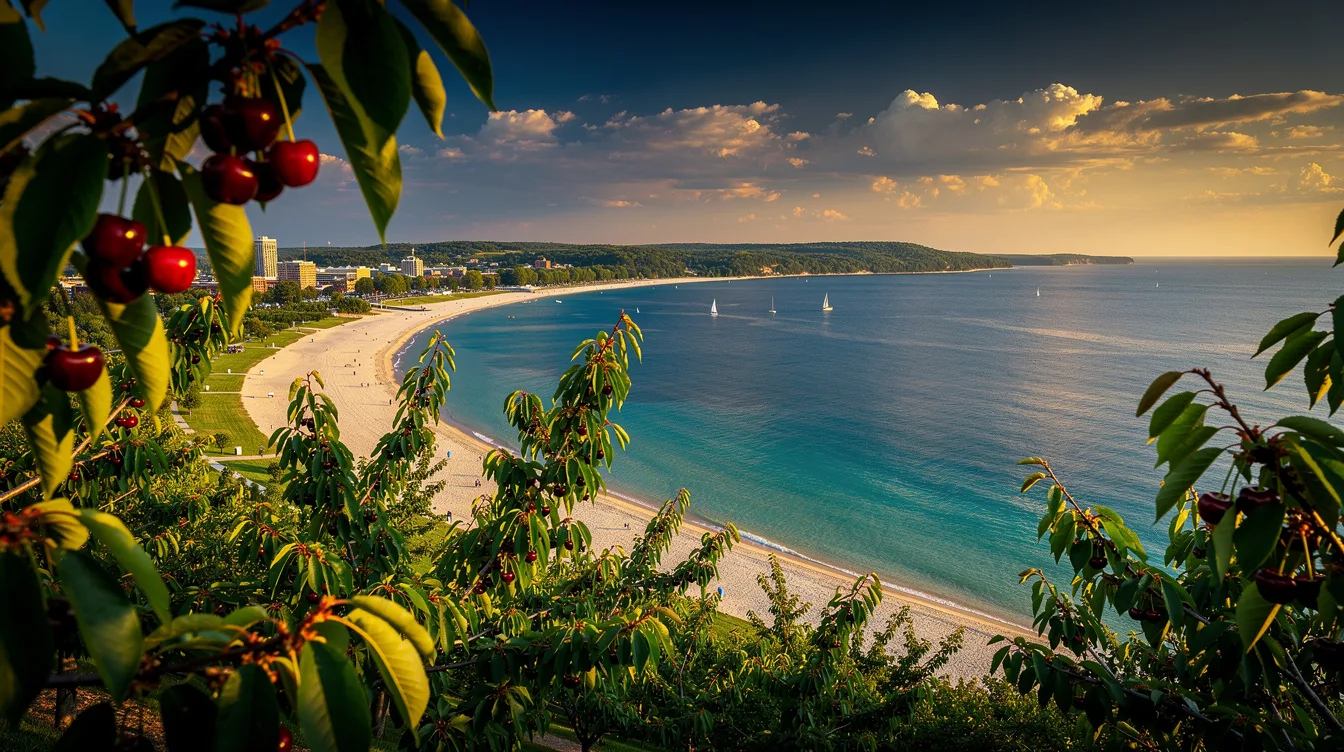
Traverse City has about 15,000 people most weeks. Then the National Cherry Festival arrives, and the city swells to roughly 500,000 people during its early-July run. That scale is the story, not a marketing line.
You can feel the pressure in downtown: fuller sidewalks, café doors opening and closing, the sweet-tart smell of cherry treats near Front Street. It’s busy, certainly. But the festival turns a small northern Michigan city into a summer meeting place.
One July week changes the city’s rhythm
The first festival took place in 1925, originally as a spring event called Blessing of the Blossoms. It later moved to summer, which matters because the city’s cherries became the reason for the gathering rather than just its backdrop.
And that tradition has real pull. The National Cherry Festival draws about 500,000 annual visitors, with parades, concerts, and cherry-centered events filling the week. If you want quiet pavement and an unhurried table, this isn’t your moment.
But if you enjoy a town with a clear reason to celebrate, it’s hard to beat. The crowds are part of the point, because Traverse City doesn’t pretend the festival is a private local secret.
You’ll want reservations well ahead of time for early July. The festival brings energy, but it also brings lines, fuller lodging, and a downtown that asks you to slow your pace.
Grand Traverse Bay gives the crowds somewhere to exhale
The city sits at the head of Grand Traverse Bay, where the East and West arms meet around town. Water changes the mood quickly, so a packed block can give way to open shoreline and a breeze within minutes.
And the bay is why Traverse City feels more relaxed than its festival numbers suggest. You can swim, kayak, sail, fish, or simply walk near the water after downtown starts to feel too full.
The Boardman River runs through the center of town and reaches the bay near downtown. It gives the street grid a softer edge, with water close enough that you can hear it instead of traffic in some spots.
That said, summer is the most popular and expensive season. June through September works well for beaches, patios, vineyards, and water time, but you’ll share all of it with other travelers.
Old Mission and Leelanau reward a slower day
Traverse City is the right base if you like driving between stops without changing hotels. A rental car makes the trip easier, because wineries, beaches, dunes, and small towns sit beyond the compact center.
Head north on Old Mission Peninsula, where vineyards sit on both sides of the bay and Old Mission Point Lighthouse marks the route’s far end. The peninsula lies near the 45th parallel, a detail that gives the drive an odd sense of being precisely placed.
But don’t rush it. You’re better off choosing one peninsula for the day, because trying to fit Old Mission and Leelanau into a single outing turns a pleasant drive into a checklist.
On the Leelanau Peninsula, Suttons Bay, Leland, and Northport offer wine stops and coastal villages. The appeal is quieter than festival week, though you’ll still find summer traffic and limited room for spontaneity.
Can you visit without staying a full week?
Yes. Two to four nights is enough for downtown and the bay, then one peninsula or a day at Sleeping Bear Dunes. You don’t need to chase every cherry event to understand why this place pulls people north.
Sleeping Bear Dunes is the day trip worth protecting
Sleeping Bear Dunes National Lakeshore is the excursion to save a full day for if you want hiking, big dunes, and water views. The climb can be demanding, so bring more patience than you think you’ll need.
And this is where Traverse City earns its road-trip appeal. Downtown gives you coffee and dinner; the surrounding area gives you beach time, wineries, and dunes without asking you to abandon the city as your base.
By September and October, the pace eases and harvest season takes over. You’ll trade festival noise for food, wine, and autumn color, which is my preferred version of Traverse City if you can skip early July.
The 2020 census counted 15,678 residents here. By the time the festival crowd thins and the evening settles over the bay, that small-town number suddenly feels believable again.