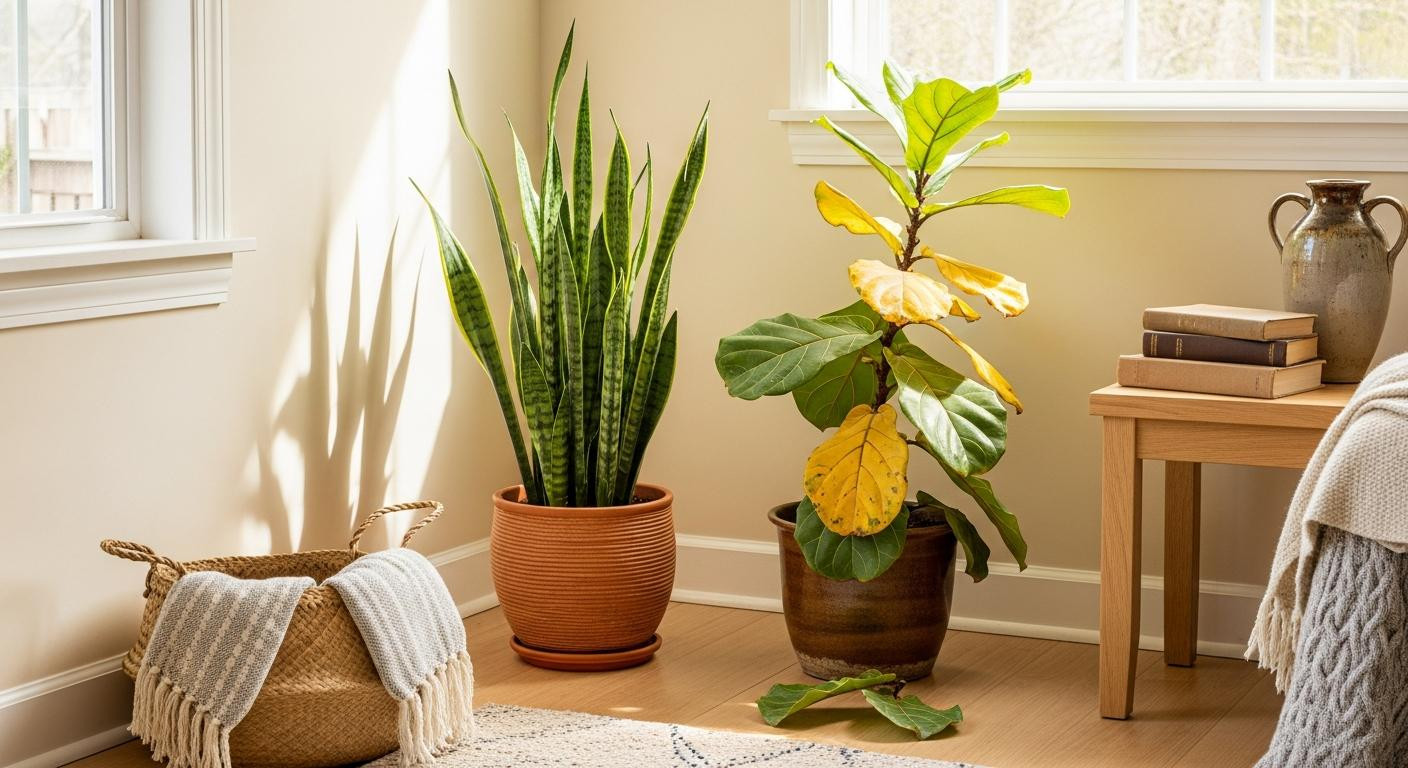
The fiddle leaf fig you bought in March for $89 sits in the corner now, dropping three more leaves this week. The pot cost another $47 at Target. But your north-facing corner gets maybe 180 lux on a sunny afternoon, and Ficus lyrata needs a minimum of 400 lux to keep those paddle-shaped leaves from turning yellow and falling off. That’s the gap between aspiration and reality, and it’s why most fiddle leaf figs purchased for dim corners show visible decline within eight months.
The corner isn’t wrong. The plant choice is.
Fiddle leaf figs need more light than your corner provides
You can test your corner’s light with a free smartphone app. Download any lux meter app, measure at 2pm on an overcast day, and you’ll see the truth. North-facing corners more than six feet from windows rarely break 200 lux. East-facing corners get morning light but drop to 150 lux by afternoon. And fiddle leaf figs start struggling below 300, showing it with leggy growth first, then smaller new leaves, then the slow drop that starts at the bottom and works its way up.
The paddle leaves you loved in the nursery photos came from plants sitting under bright indirect western light for six hours daily. Your corner can’t replicate that, and no amount of wishful watering will fix it. Artificial lighting helps, but you’d need a dedicated grow bulb running eight hours daily, which changes the aesthetic from natural corner accent to deliberately lit plant display.
Snake plant survives what kills fiddle leaf figs
Sansevieria tolerates 50 to 100 lux without complaint. It grows slowly, adding three to five inches per year, and reads architectural rather than lush. You can find a 24-inch specimen at Home Depot for $25 to $45, and it’ll sit in that dim corner for three years without drama. The sword-shaped leaves catch whatever light exists without demanding more.
But it won’t give you the jungle effect. That’s the trade-off. Snake plant stays compact, keeps its vertical structure, and tolerates the kind of neglect that would kill a fiddle leaf in six weeks. According to horticultural specialists who work with commercial interiors, snake plants survive in conditions where reading a book feels like squinting, which makes them the safest choice for corners that get morning light only or sit more than eight feet from windows.
ZZ plant fills space without the fuss
Zamioculcas zamiifolia handles 100 to 200 lux and grows 18 to 30 inches in standard 10-inch pots. The waxy leaves reflect whatever ambient light exists, which helps dim corners feel slightly brighter. You’ll pay $35 to $60 at local nurseries for a mature plant. And it grows slowly, adding maybe one stem per year, so don’t expect it to fill a large corner quickly.
The glossy foliage reads modern rather than tropical. It’s the kind of plant that looks deliberate in minimalist spaces but feels out of place if you’re going for collected boho. Furniture arrangement matters here, because ZZ plants need at least 18 inches of clearance from sofas to avoid feeling cramped.
Pothos trails instead of standing tall
Epipremnum aureum tolerates 150 to 250 lux and costs $15 to $30 for a hanging basket at Target. It trails or climbs depending on how you support it, but it won’t stand upright like a fiddle leaf. That means you need a macramé hanger, a corner shelf, or a wall hook to create vertical dimension. The look shifts from sculptural to casual, and not everyone wants that aesthetic shift.
The heart-shaped leaves grow fast, adding 12 inches of vine length every two months in decent conditions. And pothos reads forgiving in a way fiddle leaf figs never do. You can forget to water for two weeks, and it’ll droop but recover. Design experts who specialize in residential plantscaping note that pothos works best when you lean into the relaxed vibe rather than trying to force it into a structured corner display.
Dracaena gives you height without the drama
Mass cane tolerates 200 to 300 lux, grows four to six feet in pots, and costs $40 to $75 for a three-foot specimen. The leaves are narrower than fiddle paddles, less visually dramatic, but the survival rate in dim corners runs around 85 percent compared to 40 percent for fiddle leaf figs according to nursery sales data. That’s the difference between a plant that adapts and one that sulks.
The canes add architectural interest even when growth slows in winter. And you can find variegated versions with cream stripes if you want more visual texture. But dracaena won’t give you the instant impact of a mature fiddle leaf. It needs space to breathe, at least a 12-inch pot for corners under 36 inches wide, and it takes 12 to 18 months to fill out properly.
Your questions about corner plants answered
How do I know if my corner has enough light before buying?
Download a free lux meter app and measure at 2pm on a cloudy day. Under 200 lux means snake plant or ZZ only. Between 200 and 400, pothos and dracaena survive. Over 400, anything works including fiddle leaf figs. If you can’t read a book comfortably in that corner without straining, assume you’re under 200.
Can I fake it with a grow light?
Yes, but it costs $40 to $80 for an adjustable LED grow bulb. A GE BR30 runs $22 at Amazon but needs a compatible fixture. The light quality changes how plants read in evening hours, shifting from natural corner accent to deliberately spotlit display. Some people like that look. Most don’t.
What size pot prevents the corner from looking empty?
Minimum 10-inch diameter for corners under 36 inches wide, 12 to 14 inches for larger corners. Pot width matters more than plant height initially since vertical growth takes eight to 18 months. A narrow pot makes even a tall plant feel insubstantial.
The snake plant you bring home in June, $28 from the nursery down the street, sitting in a 12-inch terracotta pot where the fiddle leaf struggled for nine months. The sword-shaped leaves catch late afternoon light without demanding it, and the corner finally stops feeling like a problem you can’t solve.