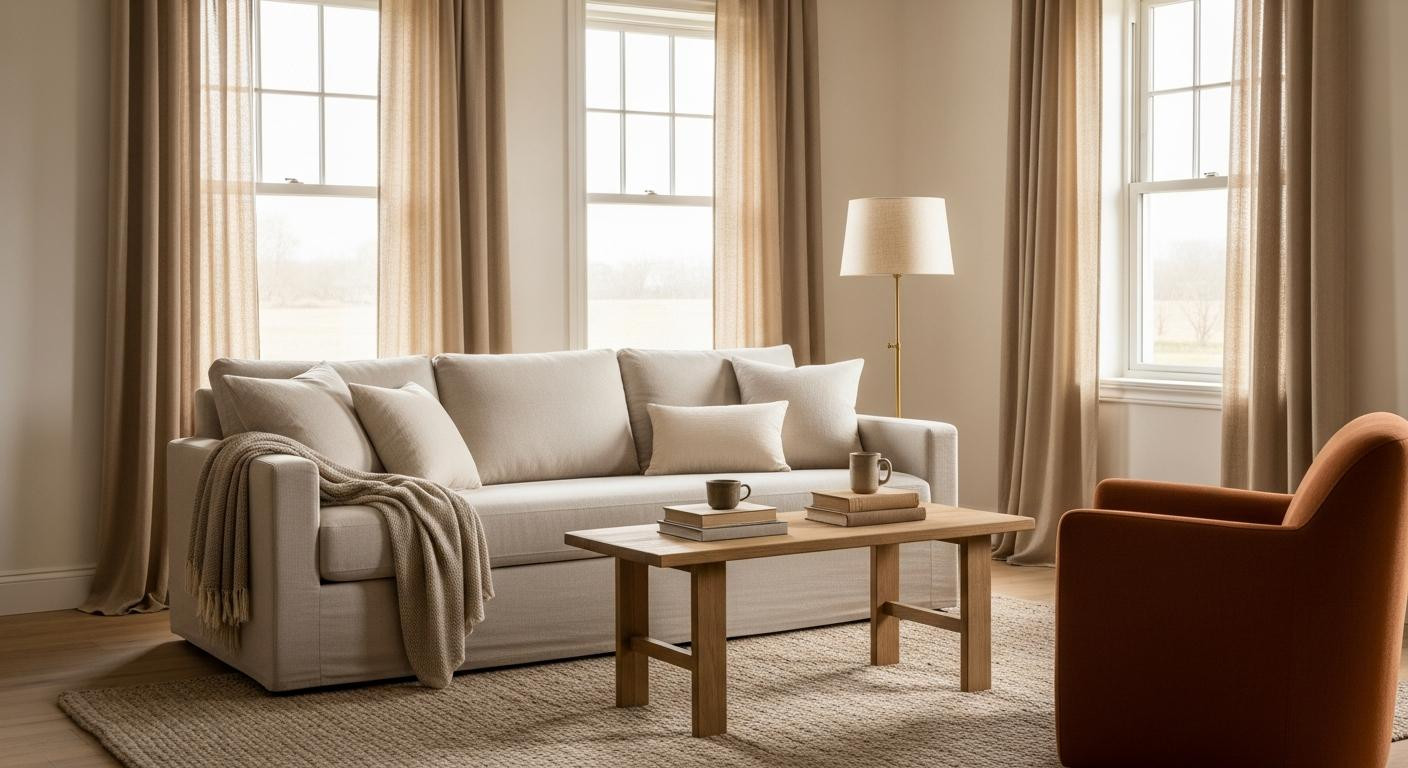
Your living room at 7:18pm on a Tuesday when you flip the overhead switch and the beige linen sofa you bought in March suddenly looks like institutional gray under the ceiling fixture’s flat white glare. The lamp’s packaging said “soft white” and the cashier confirmed it matched your old bulbs, but something about the light makes your carefully chosen warm neutrals photograph cold in every Instagram story. Your sister’s living room glows golden at this hour. Yours feels like a dentist’s waiting area.
The difference isn’t the furniture or the paint. It’s 300 Kelvin degrees you didn’t know you were choosing.
The soft white label hides a 300K gap that changes beige to gray
Soft white covers both 2700K (warm white) and 3000K (bright white) on most bulb packaging, which means you’re choosing blind between temperatures that render the same beige throw pillow as honey-toned or cement-colored. Home Depot’s Philips LED “soft white” line includes both ratings without front-label distinction. Target’s Brightroom bulbs bury the Kelvin number in 6-point font on the base.
When you switch from the 3000K bulbs your apartment came with to 2700K replacements, your orange accent chair stops looking gray and sad. The 300K shift restores the rust tone you bought it for. The visible difference isn’t subtle under evening lamps. It’s the reason your warm palette reads cold after sunset.
What you actually see when you swap from 3000K to 2700K tonight
Warm neutrals get their depth back
Beige sofas, cream walls, and taupe rugs regain the golden undertones that disappear under 3000K’s crisper cast. The same linen curtain that looked dingy-yellow at 3000K reads as intentional warm ivory at 2700K. Design experts featured in ELLE Decor note that 2700K restores the Parisian apartment glow Instagram aesthetics require because it mimics late-afternoon sunlight rather than midday harshness.
And the transformation happens the second you flip the switch. No paint, no furniture moves, just warmer photons hitting the same fabric you thought was the problem.
Wood tones stop looking orange
Oak floors and walnut furniture lose the exaggerated amber cast that 2700K can create in small doses but photograph beautifully when balanced with 3000K task lighting in kitchens. The TikTok “Bulb Swap Challenge” proves this contrast in 500,000 views. Her dining room’s 2700K pendants made pine chairs look rich, while bedroom 3000K made the same wood read as cheap honey-stained particle board.
But it’s not just social media theater. One Amazon reviewer from March 2026 wrote that Philips 3000K bulbs made her greige sofa “look cold gray” and she returned them for the warmer option within a week.
Where 3000K wins without feeling sterile
Kitchens need crisp without cold
3000K keeps white subway tile and stainless appliances looking clean rather than yellow-tinted (the 2700K problem in task spaces), while avoiding the blue-tinged harshness of 4000K+ that makes morning coffee prep feel clinical. Lighting specialists with residential portfolios specify 3000K for food prep because it renders colors accurately without the “everything looks beige” effect of warmer temps.
That’s why task lighting matters so much for focus. The same principle applies here, just applied to chopping vegetables instead of reading contracts.
Home offices want focus, not cozy
The same 3000K that makes living rooms feel uninviting keeps desk work crisp past 5pm without triggering the blue-light sleep disruption of cooler LEDs. Design professionals featured in trend reports cluster 3000K monopoints above work surfaces because it highlights without flattening, keeping papers readable and Zoom backgrounds professional without the golden glow that photographs as unprofessional warmth.
And it works alongside dimmer controls when you need to shift from focused work to relaxed browsing without swapping bulbs.
The $25 test that proves which temperature your room needs
Buy one 4-pack of 2700K Philips A19 bulbs ($12.97 at Home Depot) and one 4-pack of 3000K ($13.97, same aisle). Install 2700K in your main living room lamp at 7pm. Sit on your sofa for four minutes. Swap to 3000K.
The beige pillows will either regain crispness or lose soul. Your gut reaction in 30 seconds tells you which temperature your specific paint and fabric combo requires. Renters doing this test report “instant calm” at 2700K or “finally bright enough” at 3000K, never ambivalence. That’s how you layer lighting that actually transforms a space instead of just filling it with more light.
Your questions about 2700K vs 3000K bulb temperatures answered
Can I mix 2700K and 3000K in the same room without it looking weird?
Yes, if you assign each temperature a function. Use 2700K for ambient floor lamps and table lamps in relaxation zones, 3000K for reading sconces and task pendants in work zones. The contrast reads as intentional layering rather than mismatched bulbs when the warmer temp dominates square footage.
NKBA-certified kitchen designers apply this logic by specifying 3000K for prep areas to ensure produce colors stay accurate, while recommending 2700K for adjacent dining spaces to promote mellow evenings.
Will 2700K make my white walls look yellow and dirty?
Only if your whites have cool blue undertones like Chantilly Lace. Warm whites like Swiss Coffee and Alabaster glow golden at 2700K in the evening, which most homeowners describe as cozy rather than dingy. Test one bulb before committing. One GE customer from January 2025 complained that 2700K Relax bulbs looked “too yellow on beige walls” and made everything feel dated, but her walls were likely a cool-toned beige fighting the warmth.
That’s the kind of mismatch you avoid when you test first instead of buying twelve bulbs at once.
Do I need to replace every bulb at once or can I phase it?
Start with the lamps you use after 6pm in your living room and bedroom. Mismatched temps between unused guest room bulbs and main spaces won’t register visually. But the rooms where you actually spend evening hours need consistency, or your brain registers the shift every time you walk from warm kitchen to cool hallway and back.
And outdoor spaces benefit from the 2700K-3000K range too, especially patios needing warm evening glow without yellow harshness.
Your Tuesday living room at 8:03pm after the 2700K swap, when your partner walks in and asks if you painted because the beige walls suddenly hold that golden-hour warmth you’ve been chasing since you moved in. Same walls, same sofa, same Tuesday. Different 300 degrees.