
The short answer: 13 vintage tea party table setting ideas can look warm, collected, and novel-worthy with thrifted china, layered textiles, and measured spacing. You don’t need a matching set or a grand dining room. A few tactile details can carry the scene, and your table won’t feel staged.
- Compose a floral china place setting
- Layer lace over a faded linen cloth
- Center a tiered cake stand with roses
- Cluster mismatched teacups around a silver pot
- Fold embroidered napkins beneath dessert forks
- Frame each place with antique portrait cards
- Hang a chandelier of teacups overhead
- Fill crystal bud vases with garden blooms
- Mix brass candlesticks at varied heights
- Display petit fours on a mirrored tray
- Style a runner from crocheted doilies
- Add pearl-handled spoons beside each saucer
- Anchor the centerpiece with a vintage tureen
1Compose a floral china place setting
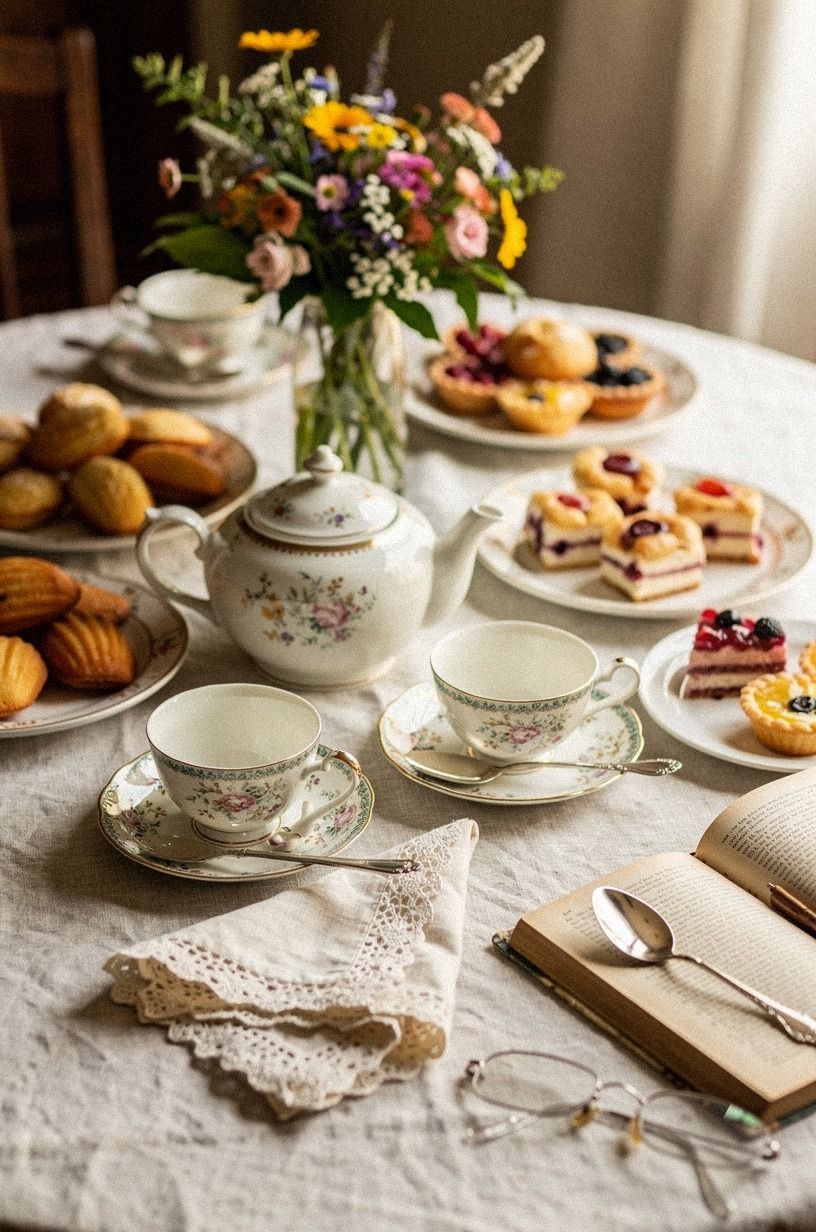
Start with one floral plate, then build outward with pieces that share a color rather than a pattern. Your best combination might be rose flowers, olive leaves, and a thin terracotta rim.
Floral transferware works especially well against cerused white oak because the pale grain keeps the setting from looking heavy. That contrast creates a collected, graceful effect.
Give each guest 24 in of table width, so cups, saucers, dessert plates, and napkins can sit without crowding. You’ll want the dining room visible beyond the table, especially when the palette includes terracotta, stone, and olive.
But don’t match every flower to every accessory. One repeated shade is enough.
– Cerused white oak tabletop with visible grain – Olive-green stoneware side plate – Terracotta linen napkin with a soft fold – Aged silver teaspoon and dessert fork
If your china is busy, keep the centerpiece quiet. A low bowl of pears or clipped olive branches can let the floral pattern breathe.
You don’t need a large arrangement, and guests won’t have to look around it during conversation. For another layered table reference, see these small-budget Thanksgiving table settings.
2Layer lace over a faded linen cloth
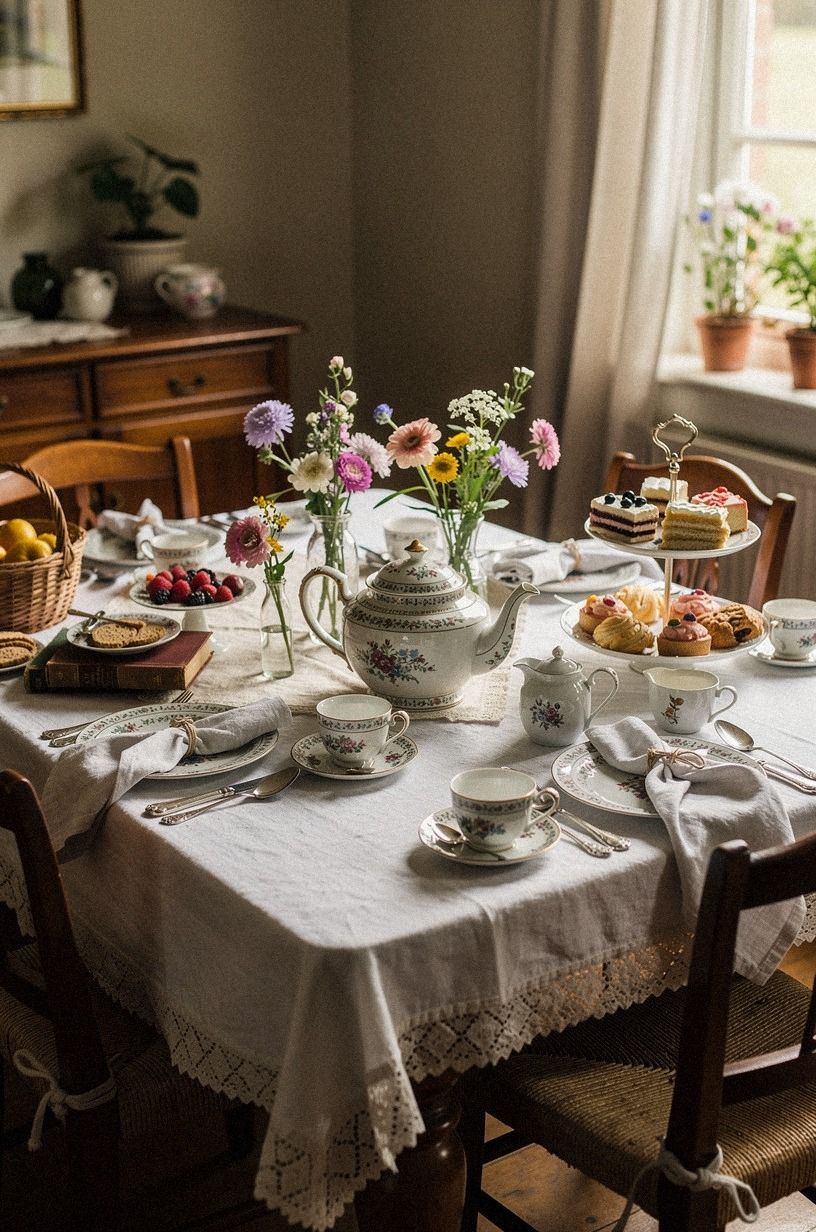
A lace overlay looks most convincing when the cloth beneath it has a little irregularity.
3Center a tiered cake stand with roses
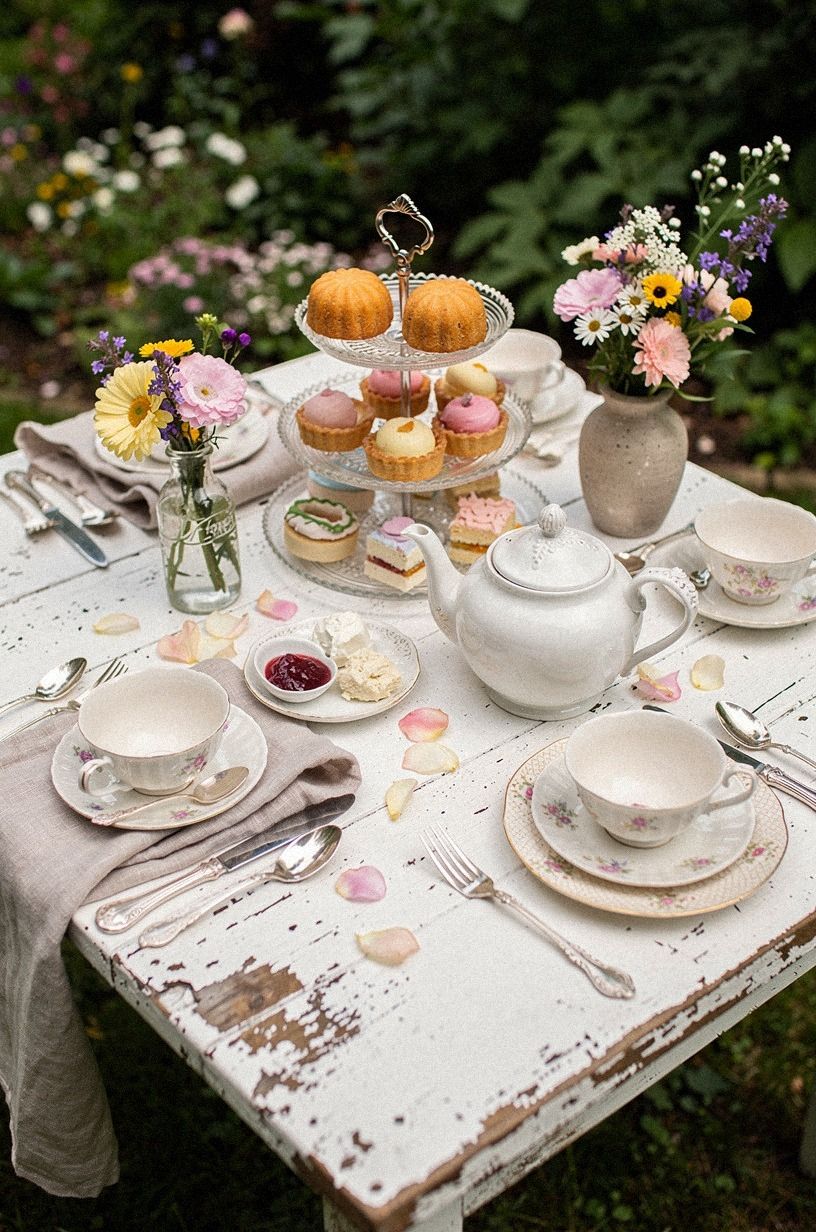
A tiered cake stand should act as the visual center, not a tower that blocks the entire table. Choose a two-level stand in silver, glass, or painted ceramic, then fill it with petit fours, shortbread, and rose-colored macarons. Blush garden roses can bring a plum, grey, and rose-gold palette into the food display without demanding another vase.
Your dining room will read clearly when the centerpiece stays below eye level from a seated position. A book-matched walnut console or table gives the arrangement a deeper backdrop, especially under soft afternoon light. It’s tempting to add more flowers, but you won’t need them if the roses repeat one shade from the china.
– Book-matched walnut surface with flowing grain – Rose-gold dessert forks with narrow handles – Plum velvet ribbon around the lower tier – Hand-cut glass cake stand with scalloped edges
A small stand can sit on a stack of vintage novels for extra height, though the books should remain stable and clean. Don’t use fragile pages beneath anything damp.
Your best version will feel generous but practical, with every sweet easy to reach. For another centerpiece arrangement, browse these senior table centerpiece ideas.
Consider a second, smaller cake stand for the sideboard rather than adding height to the main table. That choice keeps the service area clear and gives the dining room a more layered rhythm. What a difference a little breathing room can make!
4Cluster mismatched teacups around a silver pot
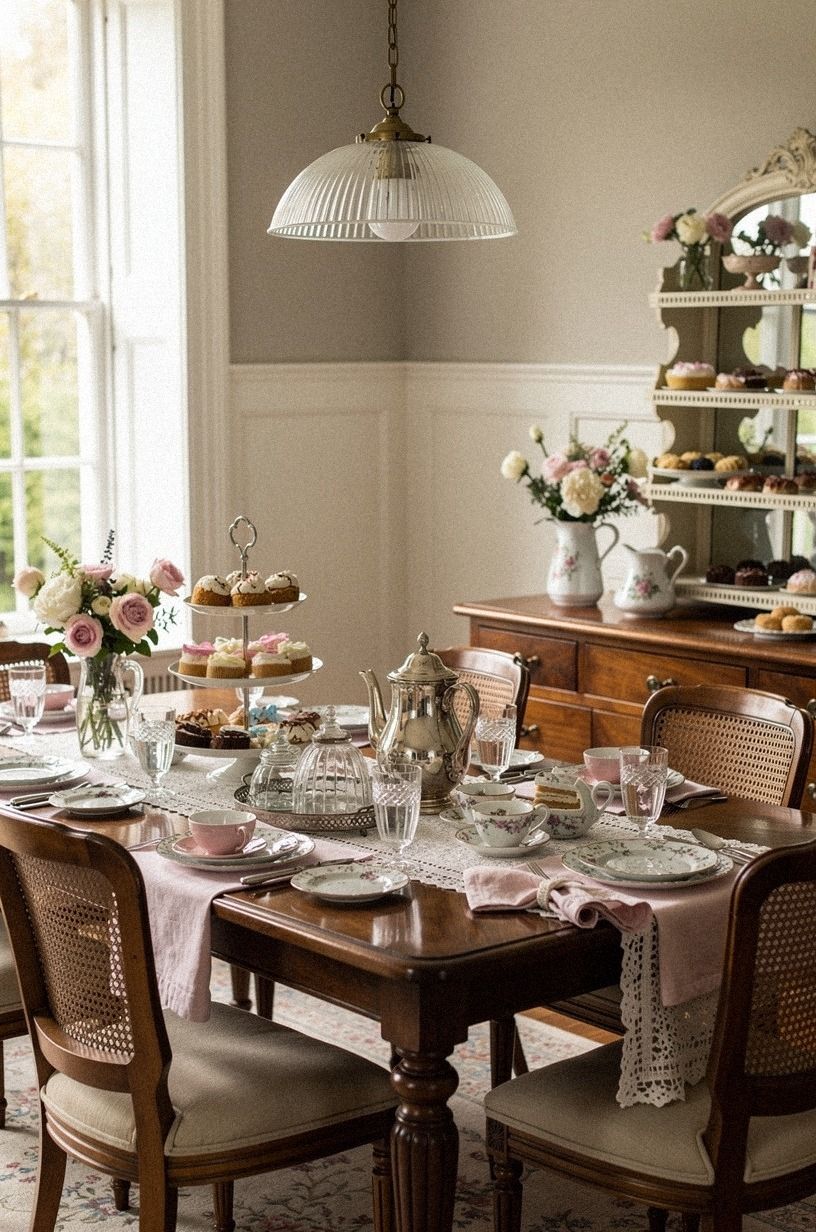
Mismatched cups work when one feature links them.
5Fold embroidered napkins beneath dessert forks
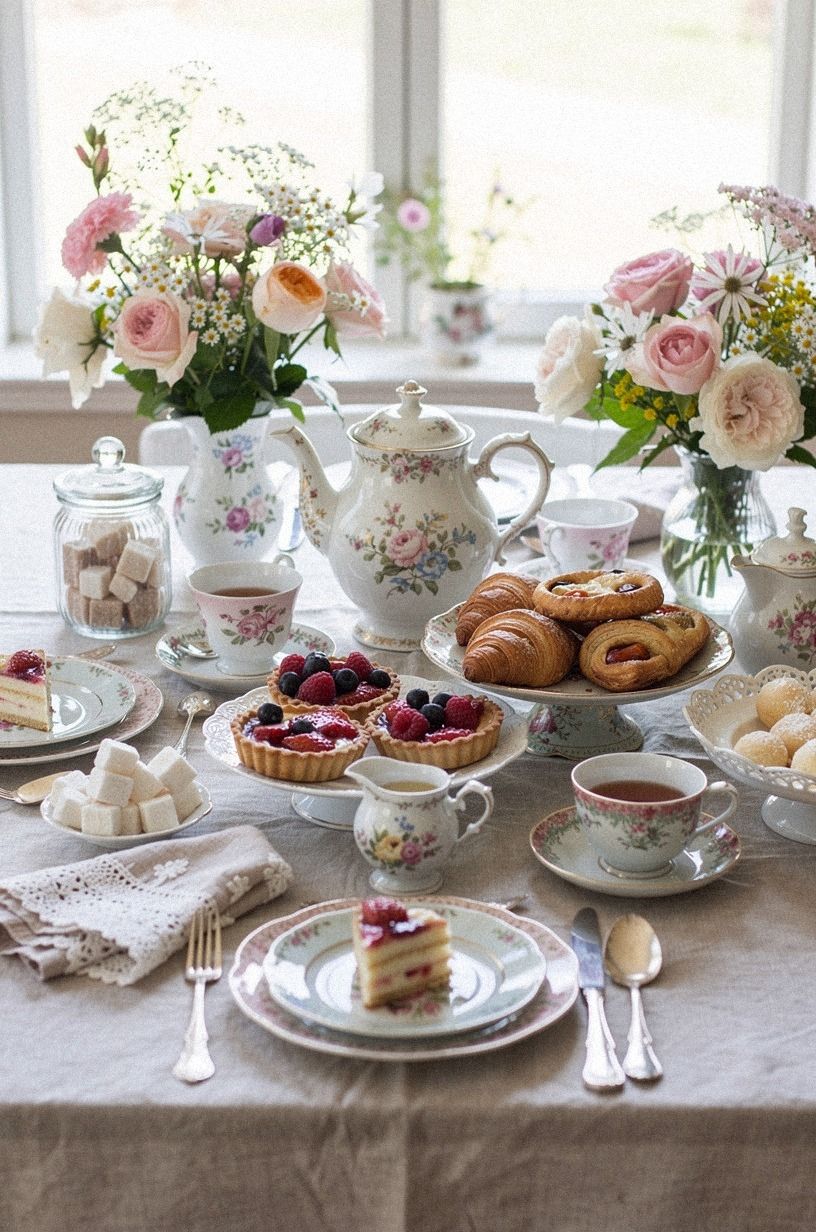
A folded napkin beneath each dessert fork creates a small frame around the place setting. Choose cream linen with emerald thread, pale gold embroidery, or a narrow botanical border. Embroidered cotton feels more personal than a plain rental napkin, especially when paired with gold, cream, and green.
Fold the napkin into a rectangle rather than a complicated shape. Your fork can rest across the top edge, with the embroidery visible beside the plate.
It’s easier for guests to unfold, and you won’t have to refold every napkin after a breeze. Keep the fold relaxed, since a slightly soft corner is welcome.
– Emerald threadwork in a leaf motif – Cream cotton with a 600gsm woven feel – Gold dessert fork with a slender profile – Unlacquered brass candlestick with developing patina
If your table is narrow, this arrangement keeps the center free for a low floral bowl. You can also use the napkin color to connect separate china patterns.
Don’t introduce a fourth strong shade here. The emerald should support the table, while flowers and dessert provide the livelier notes. That small shift matters!
For a more playful gathering, fold the napkins into loose rectangles and place them under the saucers instead. The table will feel less formal while retaining its refined, nostalgic character.
6Frame each place with antique portrait cards
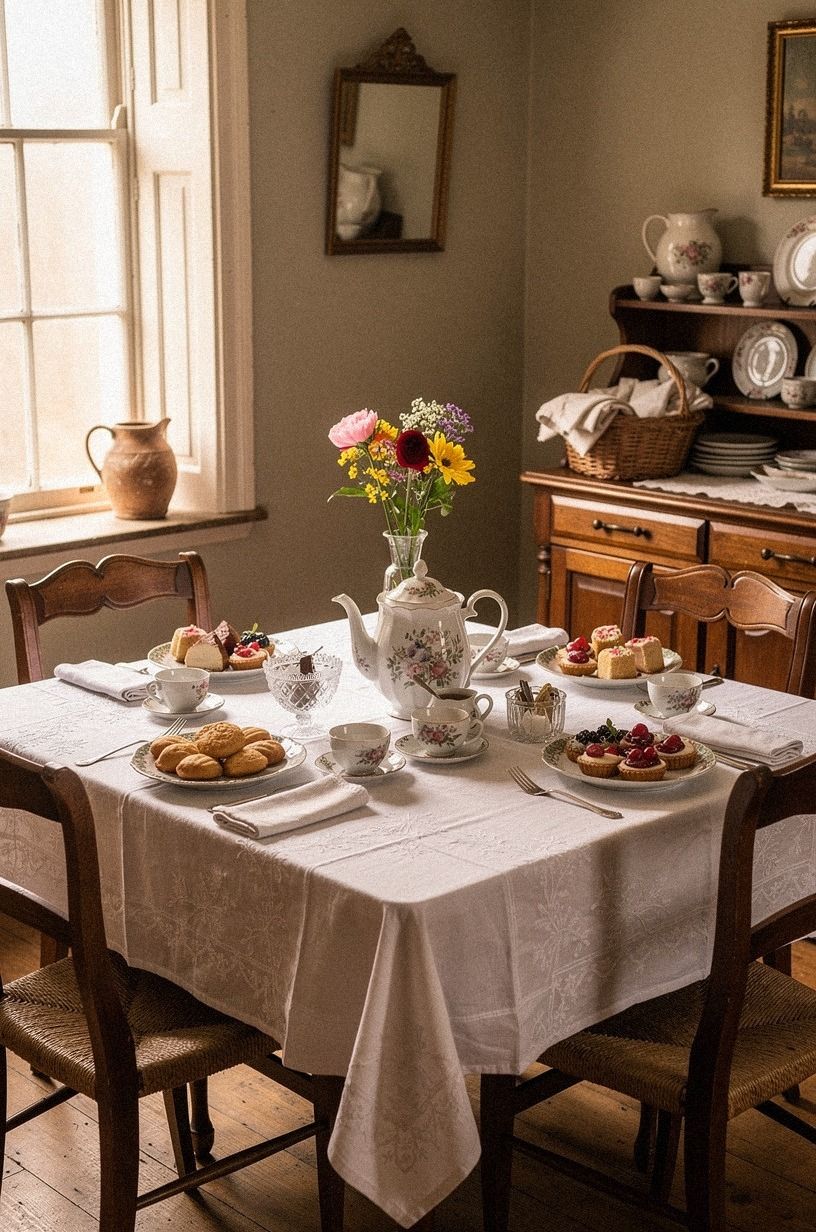
Antique portrait cards turn each place into a quiet little vignette. Use sepia portraits, botanical postcards, or old architectural prints, then tuck one behind each plate. Oversized-chip terrazzo can look surprisingly fitting beside natural oak because its mineral flecks echo the aged paper.
Your cards don’t need to represent the guests. They can simply suggest a period, a garden, or a familiar fictional household.
Place them low enough that conversation still feels open. And if you’re worried about the setting becoming theatrical, keep the card stock muted and let the forest green, rust, and oak palette do the work.
– Sepia portrait card with a deckled edge – Natural oak frame with visible knots – Rust cotton ribbon around a card bundle – Forest-green ceramic side plate
A small table tent can hold the card upright, though a folded card often looks more authentic. Guests may pick up the portraits, so use reproductions rather than irreplaceable originals.
For a family gathering, this approach can feel warmer than formal place cards. Pair it with dinosaur party table setups when a playful table needs a stronger visual structure.
You can also write a single word on the reverse side, such as “garden,” “library,” or “rose.” The detail remains subtle, but it gives each place a small narrative spark. Keep it understated!
7Hang a chandelier of teacups overhead
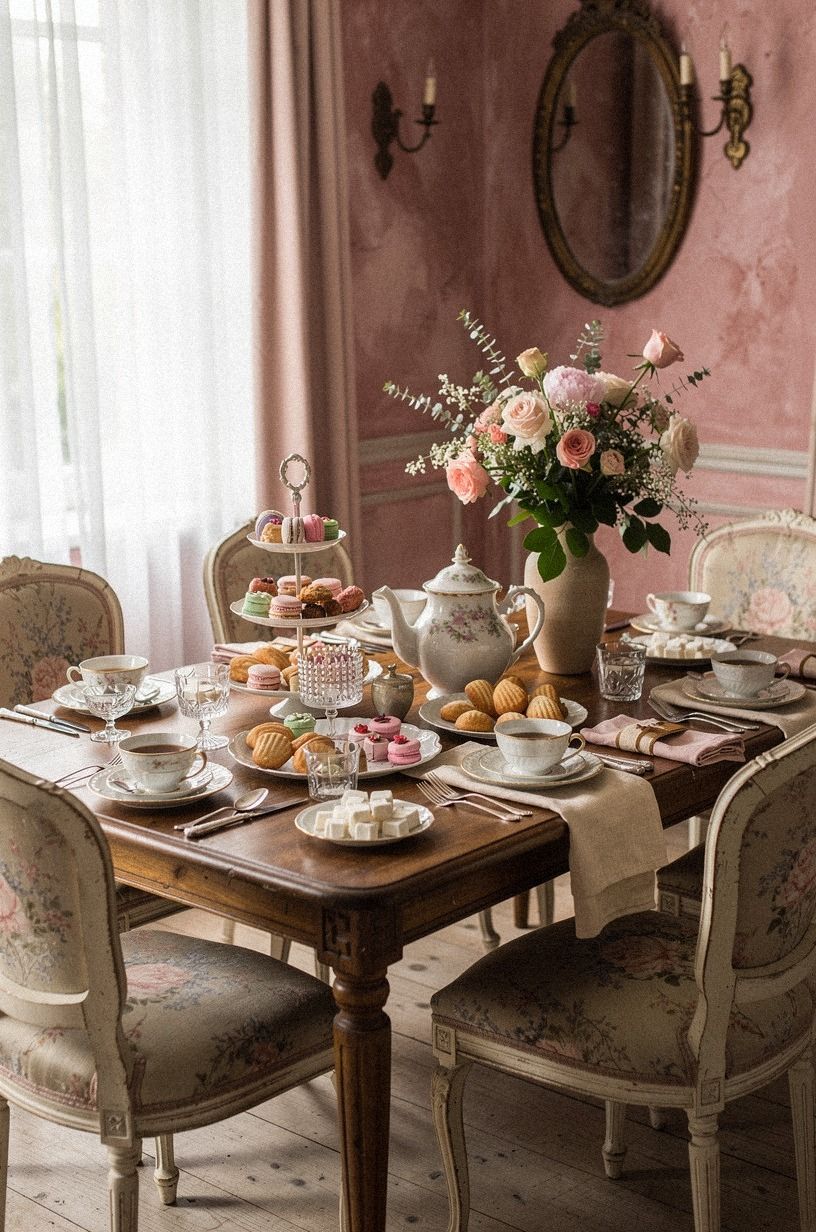
A chandelier of teacups is a dramatic idea, but it needs a secure visual anchor and very light pieces.
8Fill crystal bud vases with garden blooms
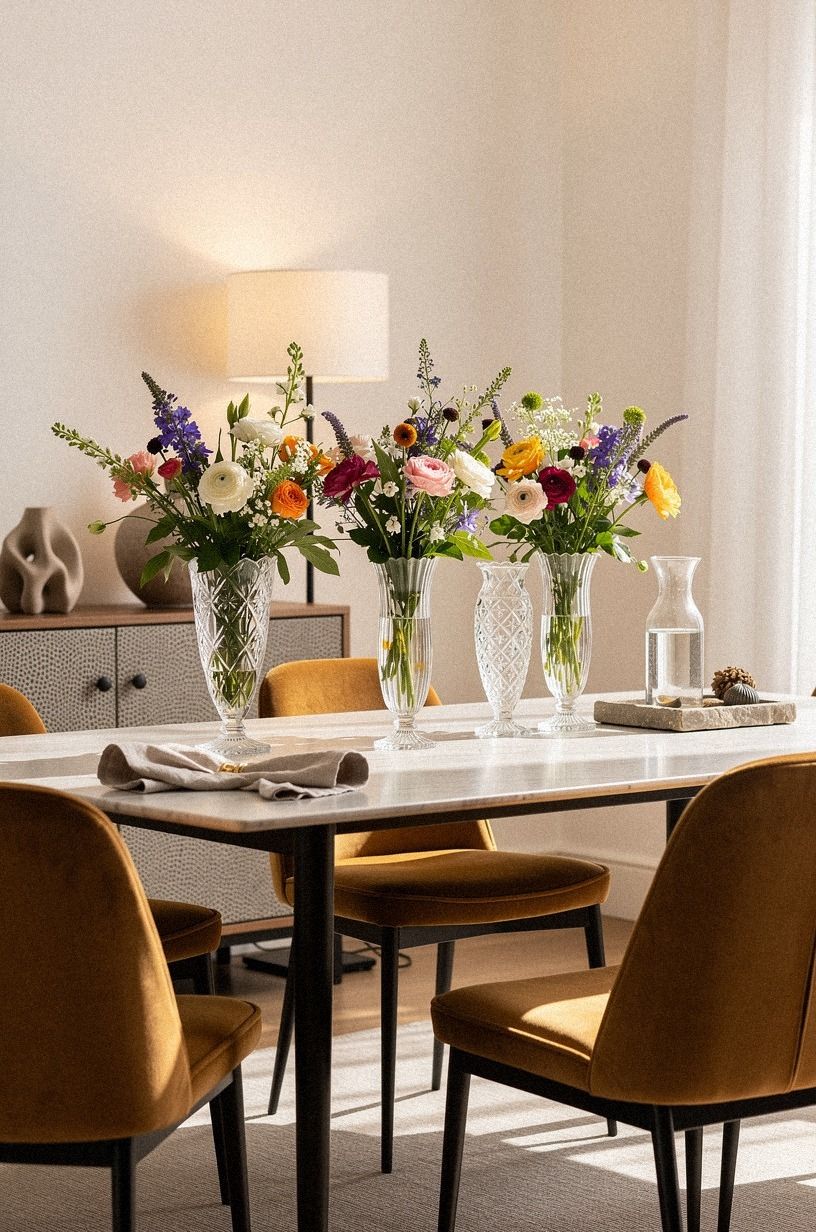
Small crystal bud vases make a table feel relaxed when each one holds only a few stems. Choose garden flowers in warm white, camel, and soft green, then scatter the vases in a loose line rather than grouping them into one mound. Cut crystal catches daylight in small flashes, especially when black accents sit nearby.
Your dining room can remain slightly secondary here. The table should lead, while the room supplies context through a dark chair, a camel curtain, or a black-framed mirror.
It’s a gentle arrangement for a narrow table because every vase takes up little space. But don’t fill the vases to the rim.
Three stems often look more considered than twelve.
– Cut-crystal bud vase with a narrow neck – Warm-white ranunculus with layered petals – Camel linen runner with a dry hand – Blackened iron tray for visual weight
Trim stems at different heights so your flowers don’t form a stiff hedge. Your tallest bloom can sit near the center, with shorter pieces fading toward the ends.
You’ll get a more natural rhythm, and guests can still see across the table. For a larger celebration, borrow spacing ideas from Christmas dinner table settings.
A few dried grasses can join the fresh flowers for texture, but keep the mix restrained. Too many shapes will make the vases look accidental rather than collected. Soft green, cream, and one darker accent are enough.
9Mix brass candlesticks at varied heights
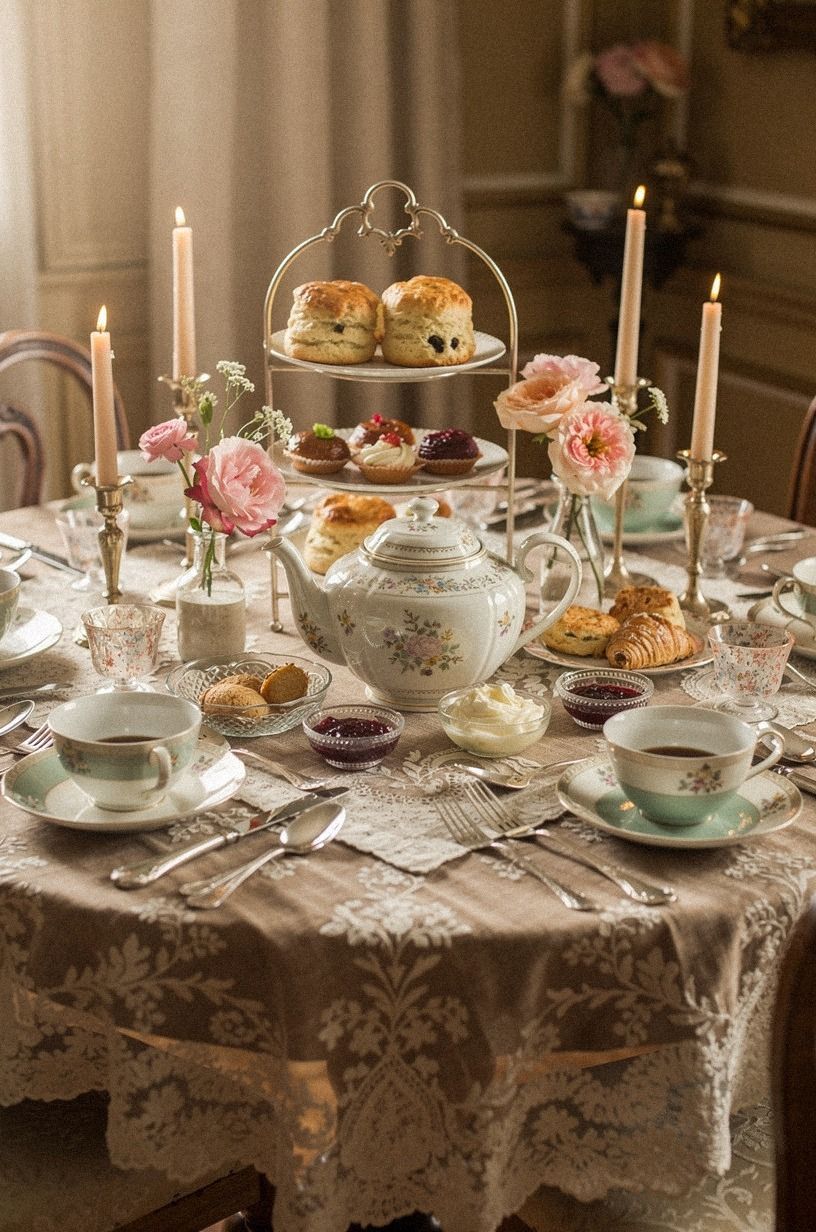
Brass candlesticks look richer when their heights vary by a noticeable amount. Combine a short taper holder, a medium column base, and one taller candlestick, then repeat the grouping at the opposite side if the table is long. Washed Belgian linen softens the midnight blue, copper, and ivory palette without losing its lived-in quality.
Your candlelight should sit below eye level during dinner. Use slim tapers rather than oversized pillars, and keep flames away from loose sleeves, paper cards, and trailing flowers.
It’s the shine that matters here, not the number of candles. And don’t polish every holder until it looks new.
A little uneven patina gives the table its period character.
– Aged brass holder with muted variation – Ivory beeswax taper with a narrow flame – Copper dessert plate with a warm reflection – Midnight-blue linen napkin with a soft fold
Place the tallest holder toward the center and the shortest near the guests. Your arrangement will feel layered without blocking conversation.
If you’re serving tea after sunset, test the candle positions before guests arrive. You’ll notice glare quickly, and a small adjustment can make the whole setting calmer.
Keep a snuffer and matches on a nearby tray rather than hiding them in another room. Practical details can look elegant when gathered in one small container. Safety belongs in the composition too!
10Display petit fours on a mirrored tray
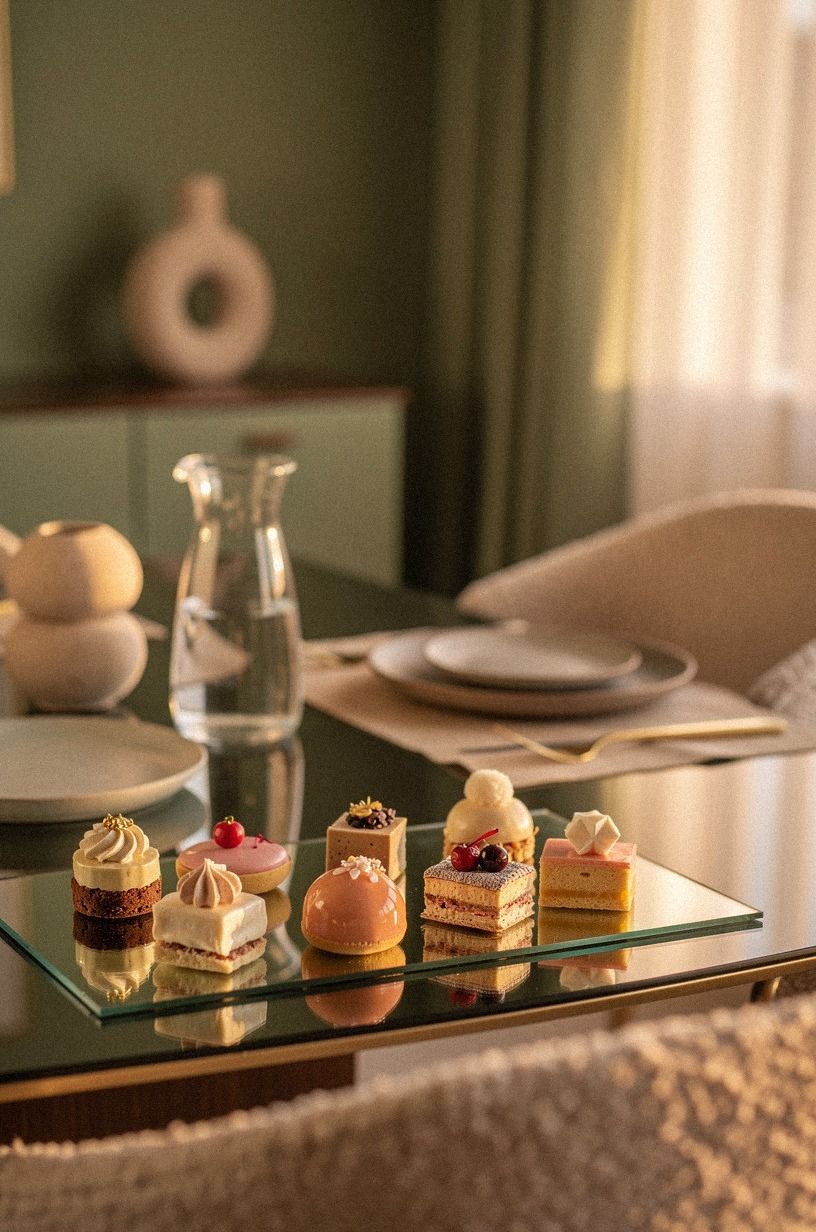
A mirrored tray turns small desserts into part of the table styling. Arrange petit fours in rows, then leave visible space between each piece so the tray reflects light rather than reading as a solid block. Organic bouclé on nearby seating adds a soft sage-green texture against warm cream and natural wood.
Your dining room should appear only as a quiet backdrop in this arrangement. A close view of the tray lets the glaze, crumbs, and pastry edges carry the interest.
It’s a good choice when the room has strong furniture but the table needs a lighter touch. Don’t place the tray directly beneath a harsh ceiling bulb, or every reflection will look sharp.
– Antiqued mirror with a thin brass edge – Sage-green bouclé seat cushion – Warm-cream petit fours with simple icing – Natural wood serving board with rounded corners
Keep a small dessert fork beside the tray rather than placing one on every pastry plate. Guests can serve themselves without crowding the centerpiece.
If the mirror has chipped edges, retire it from food service and use a glass tray instead. The goal is a soft glint, not a safety concern.
For a less formal service, place the tray on a sideboard and leave only two or three pastries on the table. You’ll preserve the visual delicacy while giving guests more room for cups and saucers.
11Style a runner from crocheted doilies
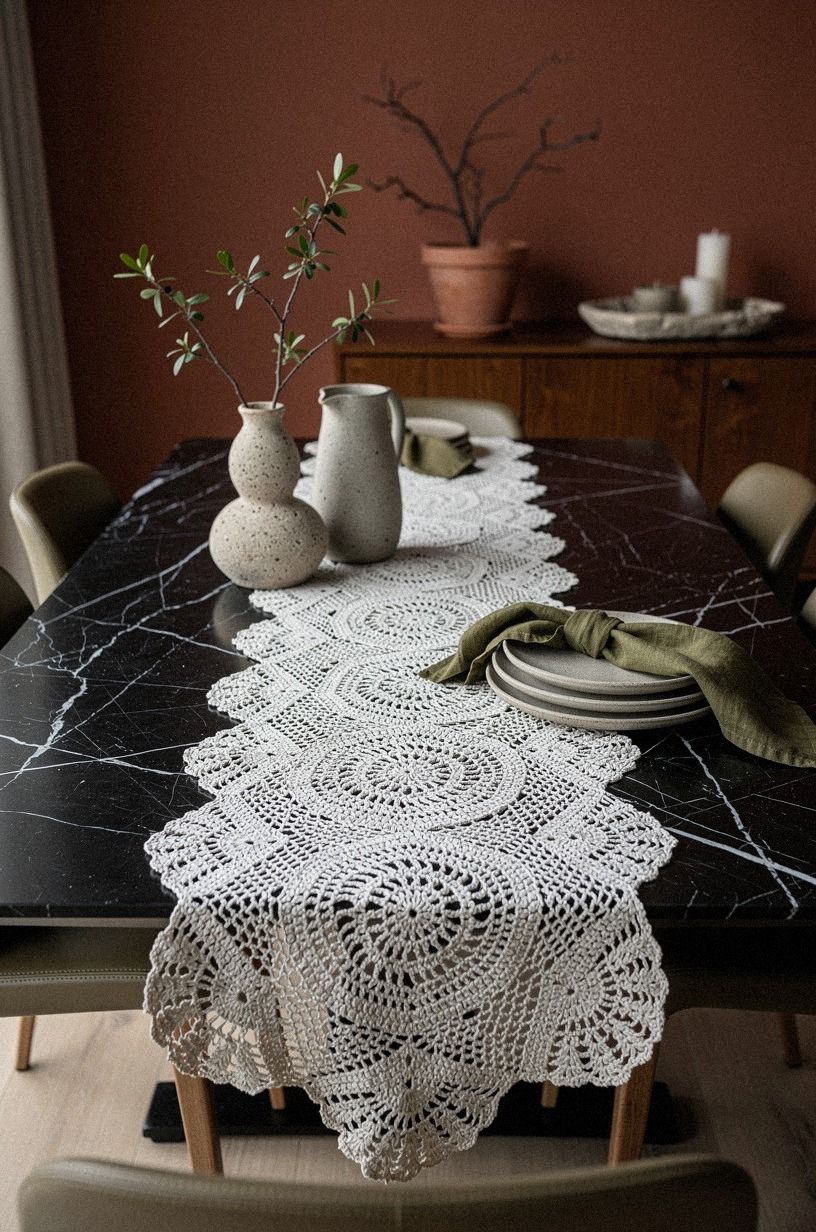
A doily runner works best when the pieces overlap slightly.
12Add pearl-handled spoons beside each saucer
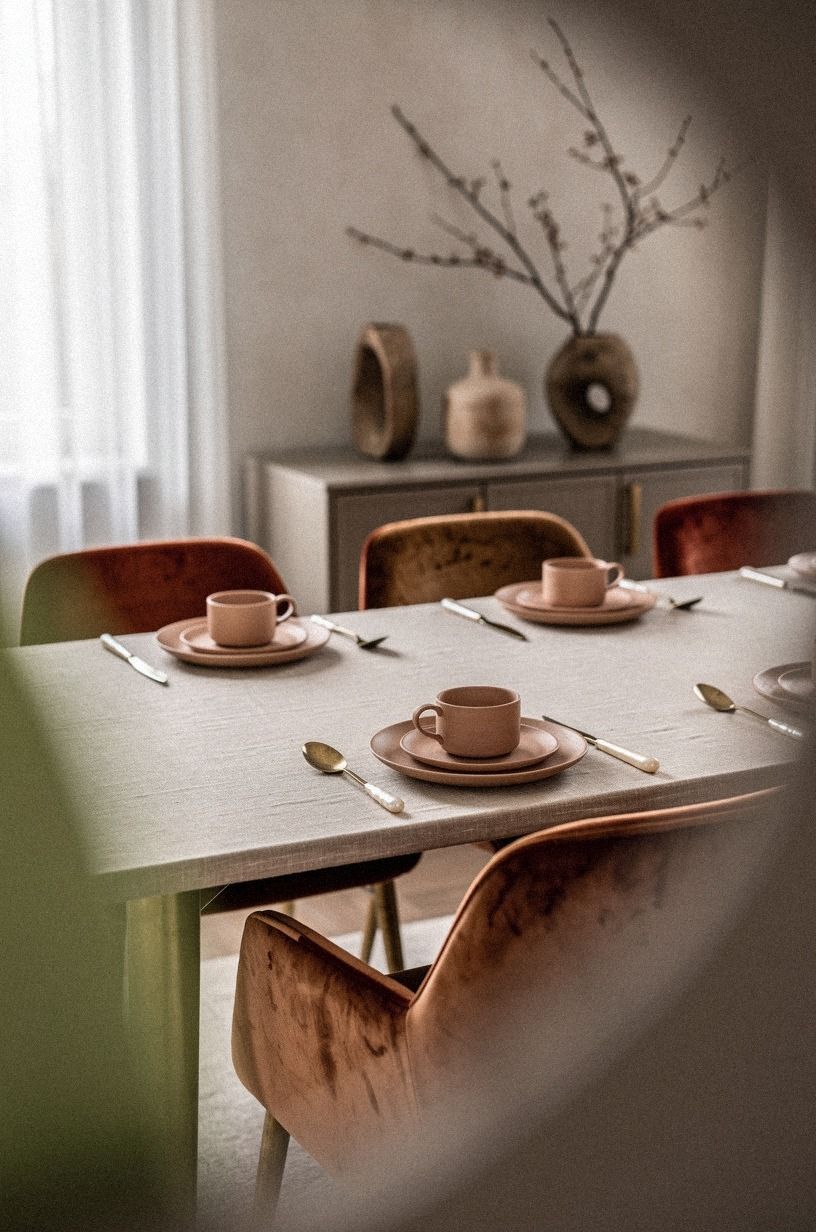
Pearl-handled spoons add a small glimmer beside every saucer without overwhelming the setting. Choose handles with cream, grey, or blush tones, then repeat the color through the napkins or flowers. Deep-pile mohair velvet on a nearby chair gives the clay, linen, and aged brass palette a richer texture.
Your spoon should sit parallel to the saucer, bowl facing inward, with enough room for the guest to lift it easily. It’s a tiny placement detail, but it makes the service feel deliberate.
Don’t place the spoon across the cup, where it can rattle or become awkward during pouring. The quiet position looks more graceful.
– Pearl-resin handle with a softly irregular surface – Aged-brass bowl with a satin finish – Clay ceramic saucer with a hand-painted rim – Deep-pile mohair velvet chair cushion
If your spoons are decorative rather than food-safe, reserve them for display and provide washable teaspoons beside the service pot. You’ll preserve the look without creating a practical problem. A few spoons can also sit in a small cup at the center when the table needs a less formal rhythm.
For a cohesive finish, match the spoon handles to only one other element. Repeating cream through the saucers or flowers will feel polished, while repeating every color can make the table seem overworked.
13Anchor the centerpiece with a vintage tureen
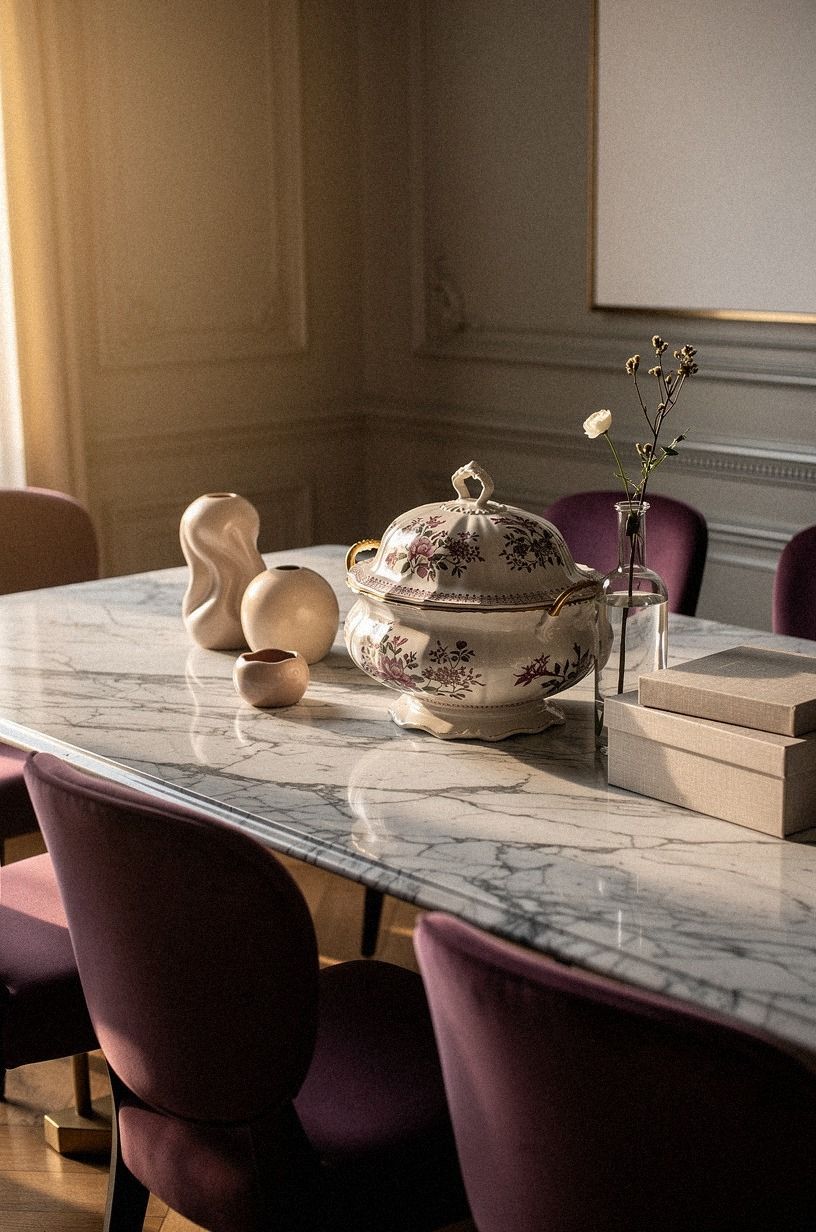
A vintage tureen gives the table a strong center and a useful serving purpose. Choose one with a lid, curved handles, or faded floral decoration, then surround it with low blooms and small dessert plates. Carrara marble with subtle grey veining supports the plum, grey, and rose-gold palette while keeping the centerpiece from feeling visually dense.
Your tureen doesn’t need to hold soup. It can contain napkins, wrapped biscuits, clipped branches, or a small bowl of fruit.
It’s the most flexible object on the table, and that flexibility makes it worth searching for. But don’t fill it with tall stems if guests need to see across the table.
Keep the arrangement below eye level.
– Vintage ceramic tureen with a domed lid – Carrara marble board with soft grey veins – Plum linen napkin with a narrow hem – Rose-gold dessert spoon with a curved handle
The table itself can stay simple because the tureen supplies the period note. If you’re planning a broader dining room refresh, these typical US costs provide useful context:
A solid-oak table commonly falls between $800 and $3,000, while a cane chair may cost $120-$350 each. Your tea table doesn’t require those larger purchases, but knowing the wider ranges helps separate a small styling project from a full dining room renovation.
For additional inspiration around a larger celebration, compare the proportions in these senior table centerpiece ideas. A modest tureen can create the same sense of occasion on a smaller scale.
The Table-Setting Choice That Holds Up
Vintage tea styling works best when the table feels assembled over time rather than purchased in one afternoon. A floral plate beside a plain cup can look more convincing than a complete matching service because small differences give the setting a human scale. You’ll want one repeated thread, such as olive green, aged brass, or faded rose, then enough contrast to keep the scene awake.
The strongest palettes also respect the room around them. Farrow & Ball De Nimes No. 299 can deepen a dining room without swallowing pale china.
Benjamin Moore Hale Navy HC-154 gives white ceramics a crisp edge, while Sherwin-Williams Urbane Bronze SW 7048 suits walnut, brass, and warm linen. Don’t choose paint from the table alone. Look at the wall beside the chairs, the floor undertone, and the light after sunset.
A useful decision rule is to choose one hero object, one soft layer, and one reflective detail. The hero might be a tureen or tiered cake stand.
The soft layer could be linen, crochet, or velvet. The reflective detail might be silver, glass, or brass. That’s enough to make the table feel intentional without forcing every object into the same period.
You can also keep the budget modest by sourcing one category secondhand. Thrifted cups, estate-sale linens, and mismatched candlesticks often carry more character than new reproductions. Your investment can go toward the item that receives the most handling, such as a stable tray or comfortable chair.
A table setting should look inviting, but it should also survive tea, crumbs, and conversation. That is the real measure of success.
When the room already contains strong furniture, choose the simpler setting. When the room feels plain, let the table carry more pattern, texture, and shine. You’ll create balance by responding to the space rather than following a rigid formula.
A Few Things Worth Answering
What is the best vintage tea party table setting for a small dining room?
A low floral place setting with one narrow runner works best because it leaves sightlines open. Choose IKEA KALLAX birch-effect storage nearby for cups and linens, then keep the centerpiece below eye level. You’ll gain a warm, organized table without making the room feel crowded.
Where can you buy vintage tea party table pieces on a budget?
Try IKEA, Wayfair, Target, Facebook Marketplace, and local thrift shops. Secondhand transferware often costs less than a new matching set, and small differences make the table feel collected.
Don’t buy every piece at once. Your best finds may appear one category at a time.
How much does a vintage tea party table makeover cost?
A small refresh usually costs about $100 to $300 when the table and chairs already exist. Thrifted china, borrowed linens, garden stems, and existing candles can lower the total. You’ll spend more on a full dining room update, especially with a new table, pendant, or wallpaper.
Can you create a vintage tea party table on a budget?
Yes, and the strongest low-cost moves are free or inexpensive. Use garden cuttings, fold cloth napkins from existing fabric, and group mismatched cups around one serving pot. Thrifted silver can supply the shine, while a simple cake stand gives the table height without a large purchase.
Is a vintage tea party table setting worth it in a small space?
Yes, because a small table needs fewer objects to feel complete. Keep 24 in of width per guest, use one low centerpiece, and choose narrow bud vases instead of a wide arrangement. You’ll create a more comfortable service area, and the room can remain visually open.
Is a vintage tea party table setting a good idea for a rental?
Yes. Use removable hooks for lightweight art, a freestanding lamp instead of a wired pendant, and a washable runner for color.
Removable felt pads can protect the table and floor while keeping chairs easy to move. Your rental can still feel personal without permanent changes.
Where to Start First
If one choice deserves priority, start with the floral china place setting. It establishes color, scale, and period character before any centerpiece enters the room. Pin these vintage tea table settings for later, then build outward with one textile and one reflective detail.