
Tropical open shower ideas with plants and natural light can make a bathroom feel like a spa when the glass stays clear, the plants stay protected, and the window does real work. I built mine around a cramped 36×36-inch shower footprint, not a luxury suite. It was dusty, awkward, and worth every messy decision!
Here’s what it looked like before
The before photo is the honest starting point. You can see the dated enclosure, the flat overhead light, and the bathroom’s strange relationship with the only window. I’d lived with it long enough to stop noticing the beige tile, which was probably the problem.
I didn’t begin with a mood board. I stood in the doorway with a tape measure, watched the morning light move across the floor, and realized the room didn’t need more decoration.
Your bathroom needs a better path for light, water, and the eye. That became my first rule.
- Open the glass line for a tropical indoor shower with plants
- Paint the ceiling with a soft tropical shower design color
- Build the Three-Height Light Stack
- Anchor the floor with earthy, slip-aware surfaces
- Frame the window for natural light without inviting damage
- Follow the Two-Wood Rule for an organic finish
- Hang plants at the safe edge of the indoor jungle shower
- Swap a bulky cabinet for a stone shower shelf
- Warm the metal with unlacquered brass
- Keep the vanity outside the spray zone
- Layer Turkish cotton instead of adding more decor
- Shape a half wall for privacy and openness
- Let Hague Blue carry the dramatic contrast
- Choose a round mirror to soften the hard lines
- Build a drainage-first wet room
- Mix affordable storage with one refined piece
- Which plants can survive your real light?
- Choose open glass over heavy curtains
1Open the glass line for a tropical indoor shower with plants
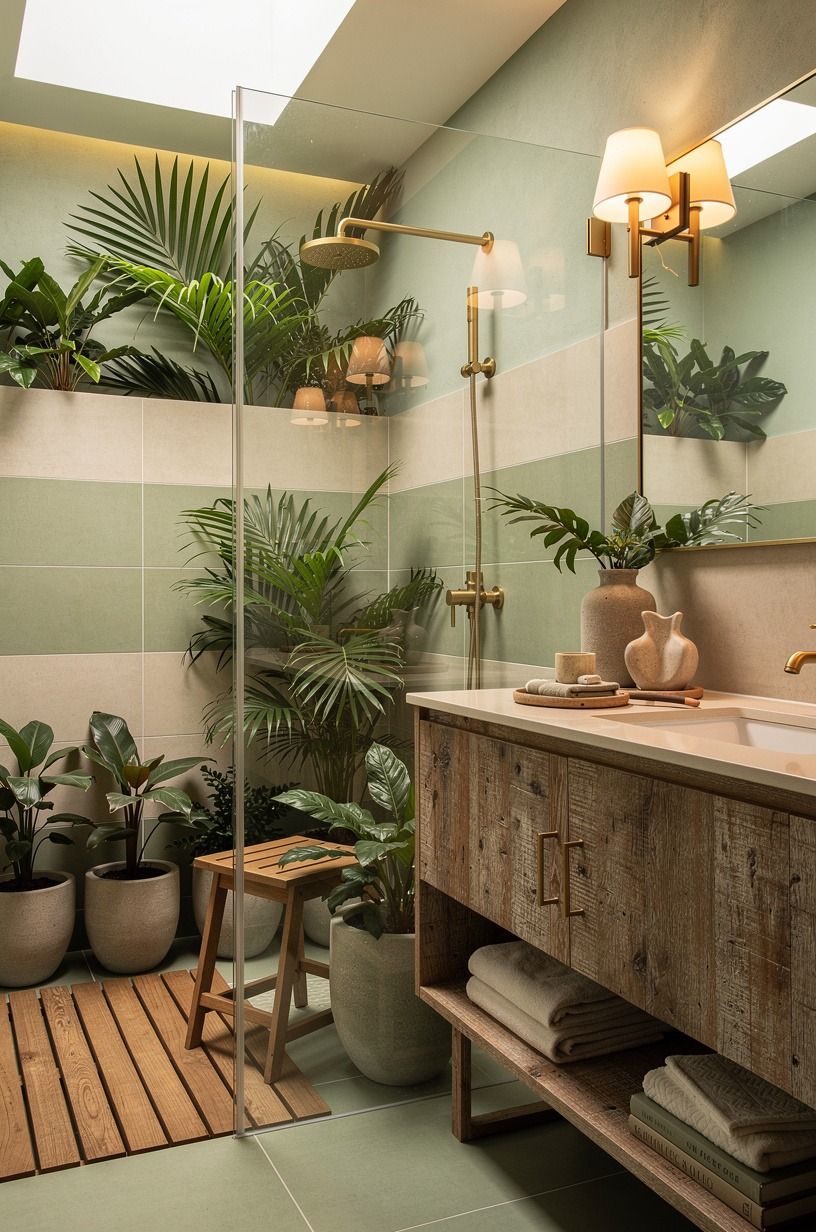
I removed the visual barrier first. A fixed glass panel gave the shower a more airy shape, and the window could finally brighten the whole room instead of stopping at a cloudy door. Your eye travels farther through clear glass, so even a small bathroom feels more inviting.
The practical limit was the shower size. A comfortable shower is at least 36×36 inches, and I kept the opening generous without pretending the room was larger than it was.
I’d skip a heavy framed door here. It adds metal lines right where you want calm, clean sightlines.
The first morning I used it, steam softened the glass and the plants caught the light behind it. That was the moment the plan felt real. For more layouts, compare these wet room ideas for open shower layouts, especially if you’re weighing a full glass panel against a half wall.
2Paint the ceiling with a soft tropical shower design color
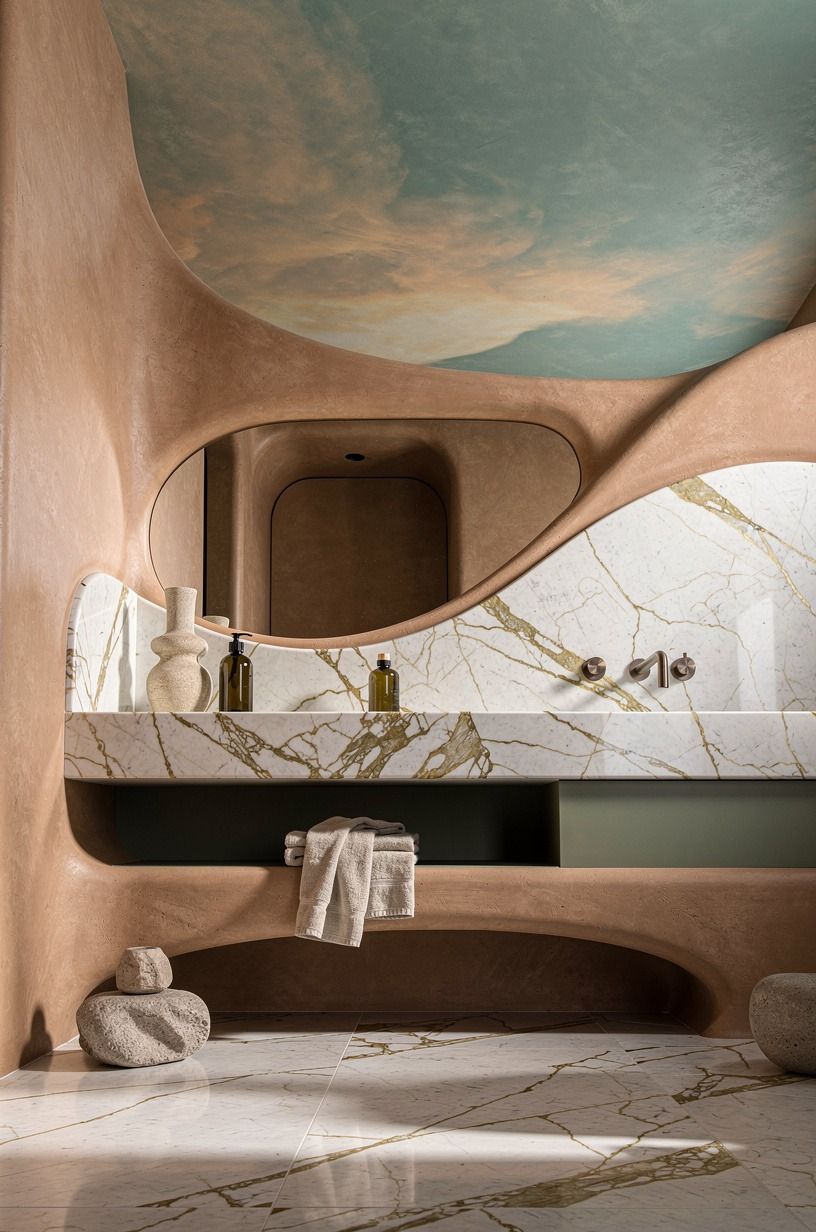
The ceiling was my second decision because it had been ignored for years.
3Build the Three-Height Light Stack
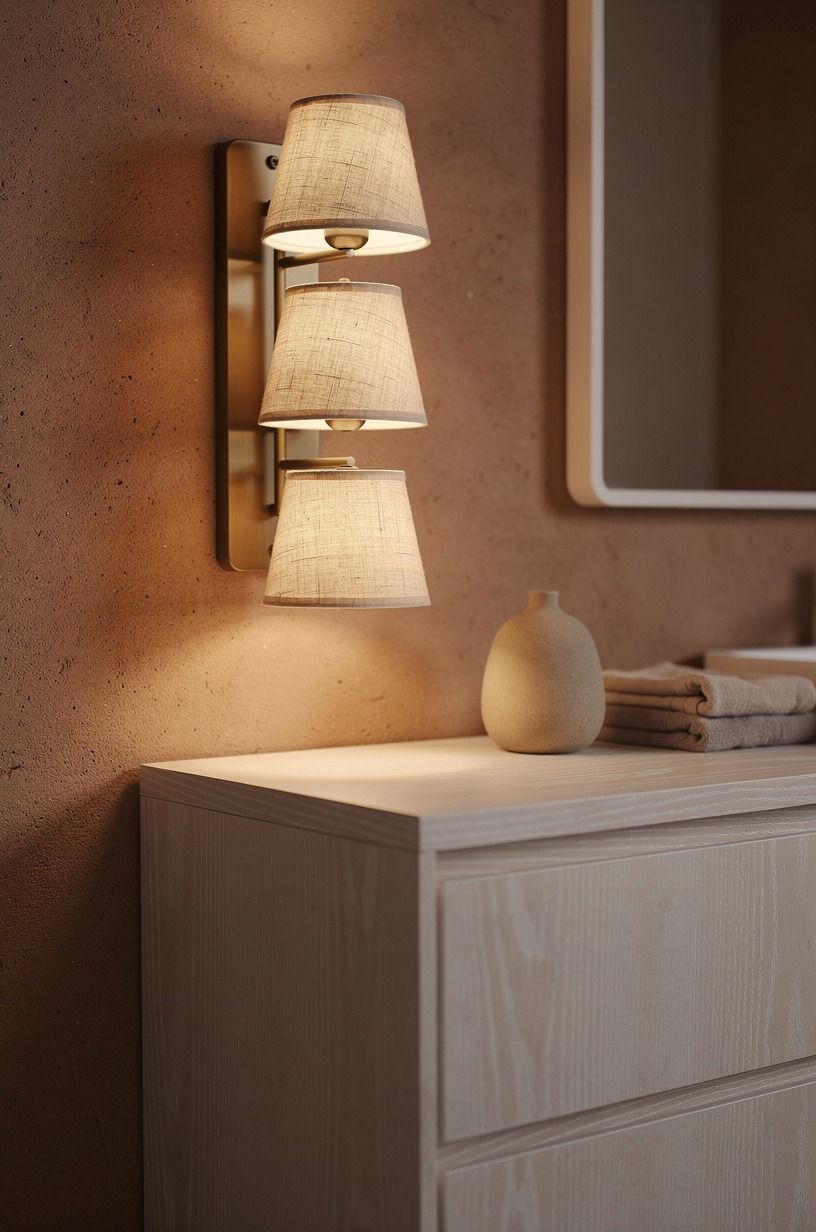
I wanted natural light to lead, but a shower can’t rely on sunshine. My Three-Height Light Stack uses the window, a wall light, and a low glow near the vanity. Each source does a different job, so your face isn’t competing with a single harsh ceiling fixture.
The wall fixture sits near eye level, while the low light reaches under the vanity and catches the floor. I chose warm bulbs because bright blue light made the green leaves look gray. You’ll notice the difference before you can explain it, especially at dawn.
And I learned not to put the brightest fixture directly above the mirror. It throws shadows under your eyes and makes the room feel clinical. If you’re improving more than the bathroom, this guide to using natural light throughout a home helped me think about light as a route, not a decoration.
4Anchor the floor with earthy, slip-aware surfaces
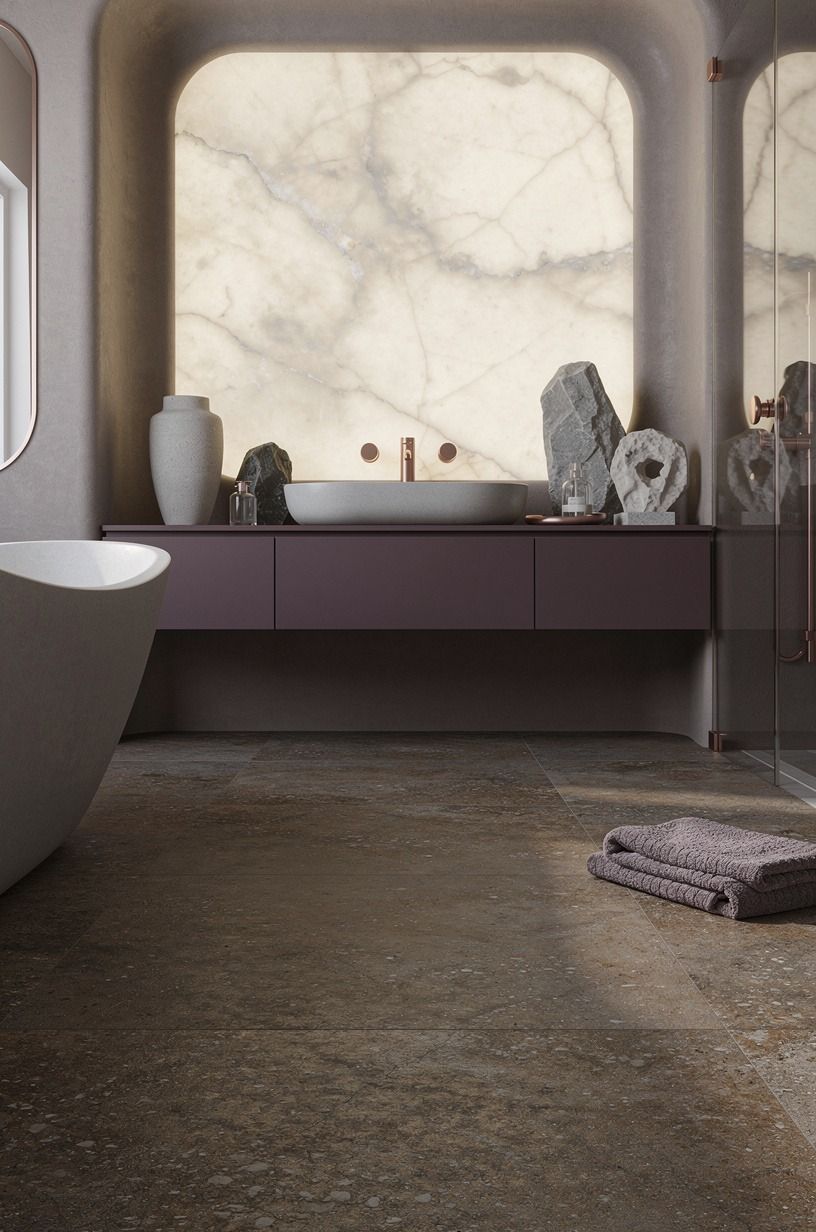
The floor had to feel grounded, not glossy.
5Frame the window for natural light without inviting damage
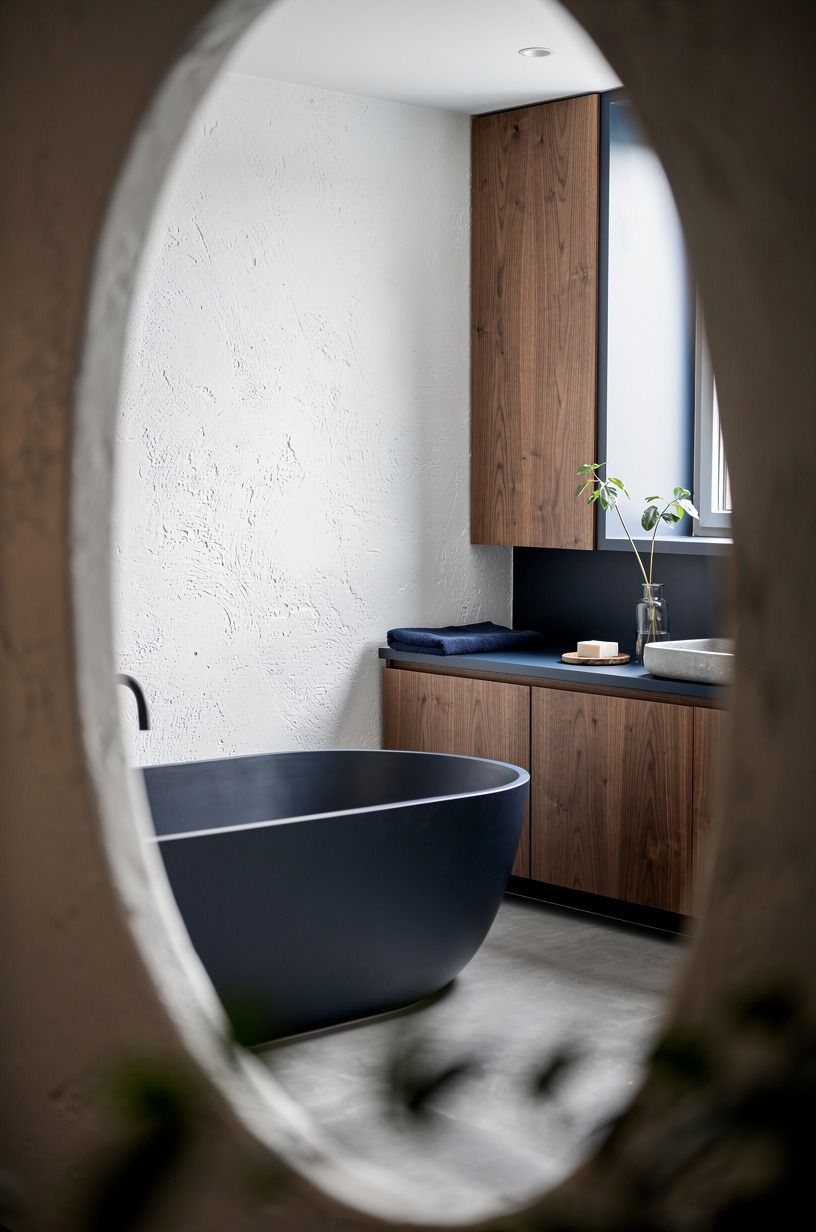
The window became the room’s best feature once I stopped treating it like a problem. I used moisture-resistant trim and kept the sill clear, so light could spill across the shower wall. Your plants get a brighter corner, and you don’t lose the open feeling to a crowded ledge.
I’d avoid fabric curtains near direct spray. They hold humidity and make the room feel smaller.
A simple privacy film or a discreet roller shade gives you control without blocking the whole window. The glass still looks bright, but your morning routine doesn’t become a performance.
But natural light needs a clean surface to travel. I wiped the glass weekly and kept the sill almost empty, with only one small pot in white ceramic. For a more dramatic reference, I liked these stone cave style open shower ideas because they use light against texture so well.
6Follow the Two-Wood Rule for an organic finish
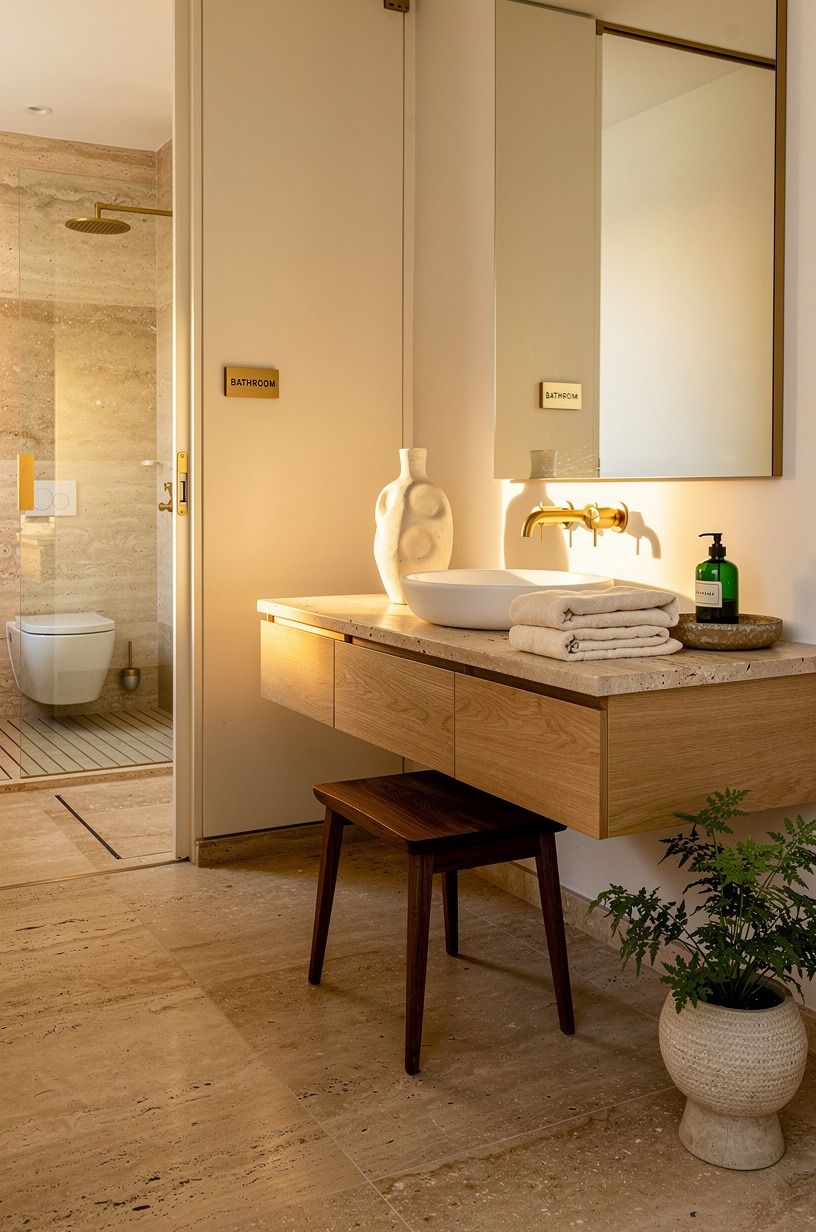
I brought in a little wood, but I didn’t let every finish compete. Warm travertine anchors the room, while emerald, gold, and cream keep the palette from becoming a confusing collection of brown tones.
The travertine has a softly veined surface that catches afternoon light, while the brass details look richer when the room is damp with steam. I sealed the nearby surfaces carefully because bathroom air is not forgiving.
I once used an unsealed stone tray near the sink, and the underside stained before I noticed. That mistake cost me a Saturday.
And I’d rather see one specific stone than five vague finishes. Warm travertine feels intentional, while random accessories can make your tropical shower look like a store display. Keep the larger surface light and let the smaller one carry the deeper color.
7Hang plants at the safe edge of the indoor jungle shower
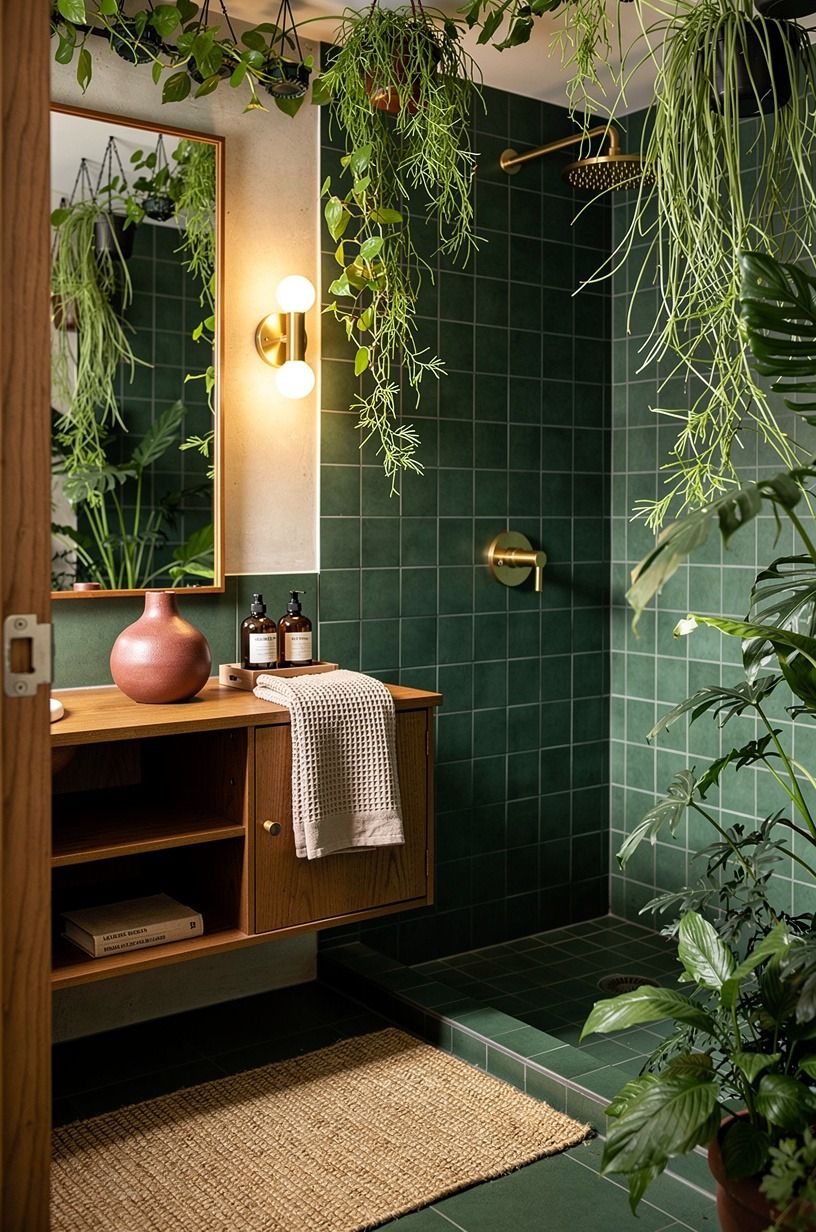
Plants were the emotional reason I built the room, but I didn’t put them directly under the showerhead. I placed a trailing plant near the bright edge where it gets humidity without constant soaking. Your plants need air movement as much as they need moisture.
I chose a broad-leaf variety in a simple woven seagrass basket, then added one smaller plant on the far side of the vanity. The leaves cast a soft shadow on the wall, and the room feels gently alive without looking crowded.
I’d skip a jungle wall in a small bath. It becomes maintenance before it becomes atmosphere.
The trigger was a rainy morning when the leaves trembled from the ventilation fan. That tiny movement made the room feel serene. If you love unusual plant settings, explore this story about a Scottish village protecting thousands of tropical plants, then choose only what your own light can support.
8Swap a bulky cabinet for a stone shower shelf
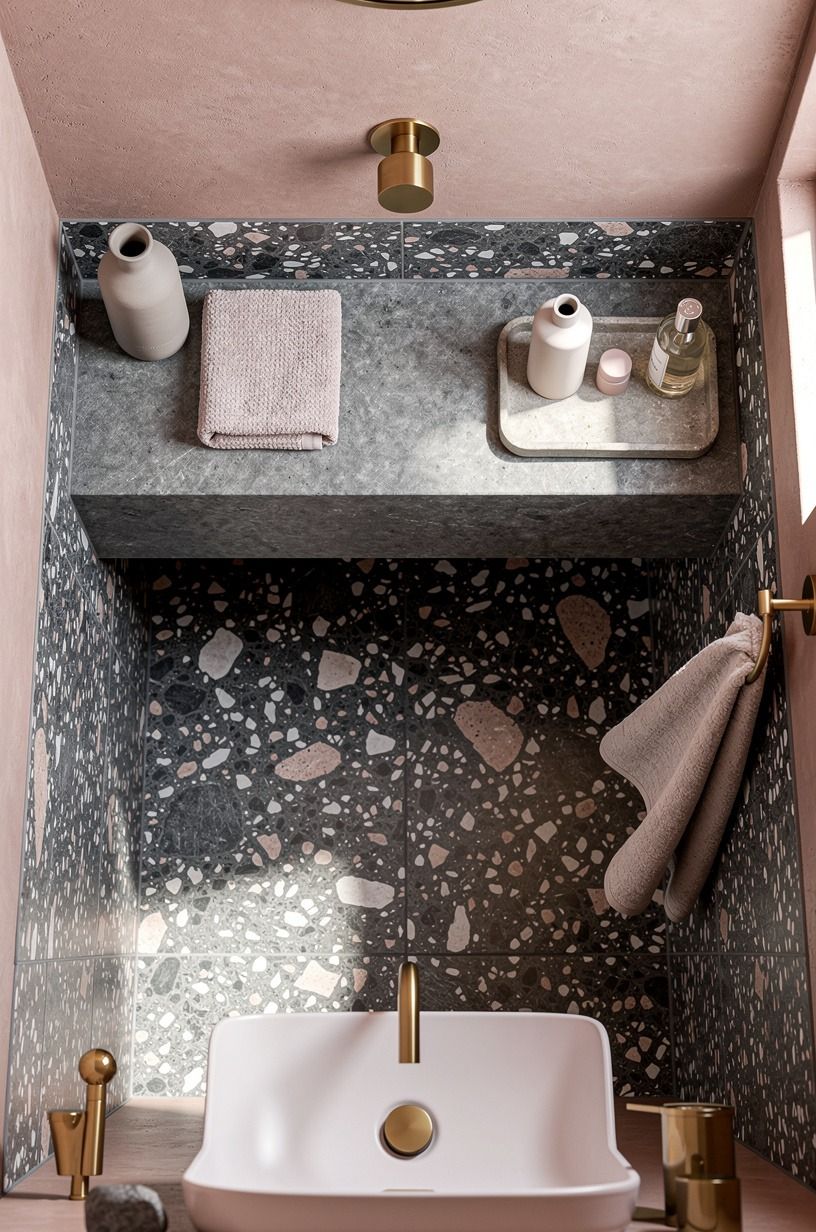
Storage was where the room nearly lost its calm.
9Warm the metal with unlacquered brass
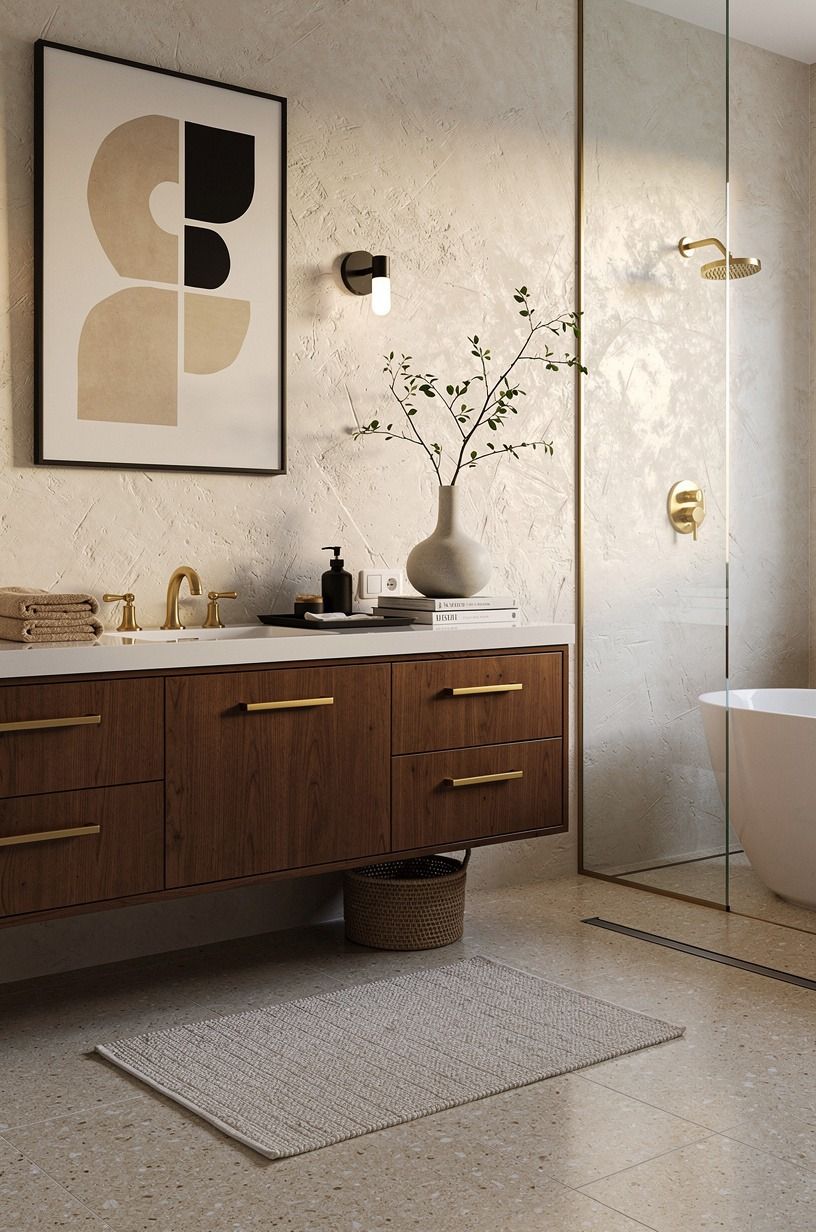
Chrome was the easiest finish to reject. It reflected the ceiling light in sharp little flashes, while unlacquered brass picked up the warm tones in the Venetian plaster and black accents. Your hardware doesn’t need to shout, but it should belong to the room’s temperature.
I used brass for the faucet, shower controls, and one small hook. The typical cost for a brushed brass faucet sits around $120-$450, so I spent the money where your hand touches the finish every day. I didn’t match every screw in the room, and that restraint helped.
But brass changes over time. It develops a softer patina, and I like that more than a finish that stays frozen. If you want a sharper comparison, these white marble open shower ideas show how metal can either warm a room or make it feel too polished.
10Keep the vanity outside the spray zone
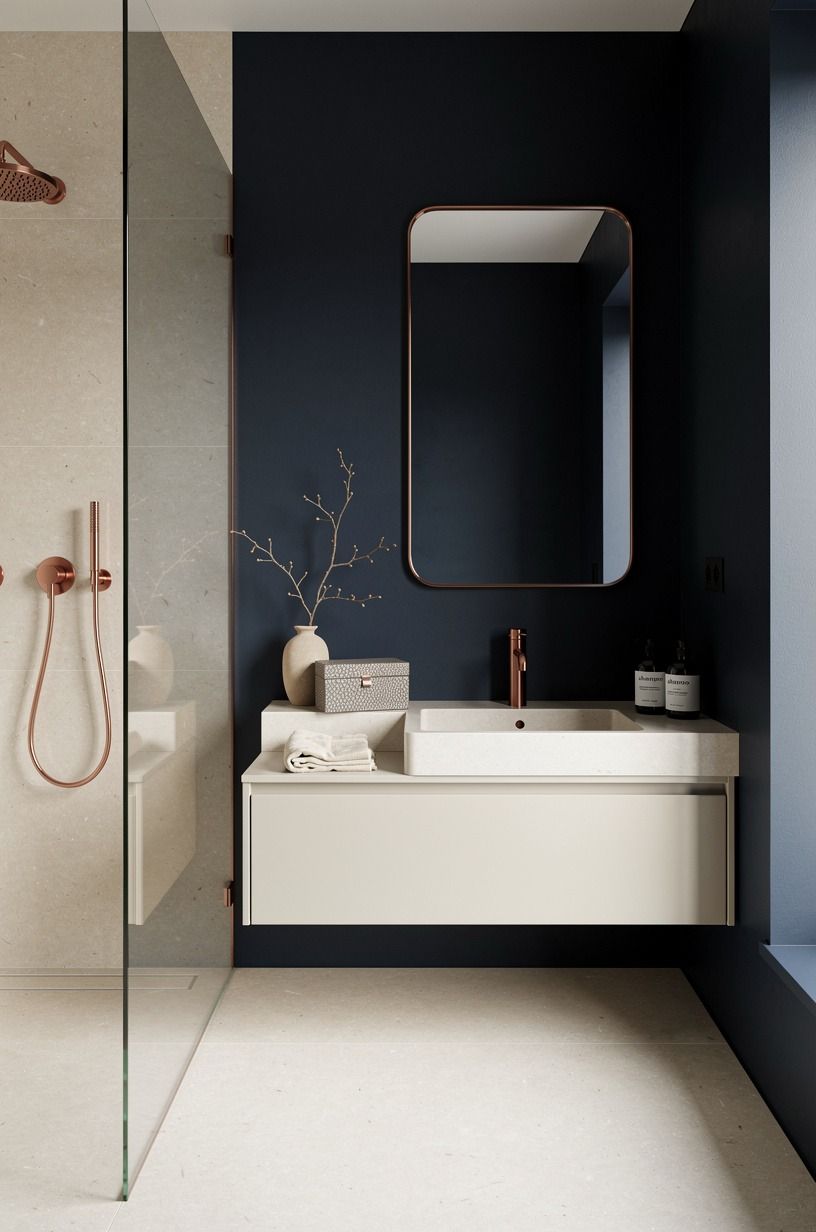
The vanity had to feel connected to the shower without sitting in its splash path. I shifted it toward the dry wall and kept the front clear, which made the room easier to move through. Your bathroom feels more generous when the first step out of the shower isn’t into a cabinet corner.
I chose a compact vanity with a simple basin and a shagreen accent, and left the counter mostly empty. The standard vanity height is 32-36 inches, so I checked the height against my own elbows before ordering. Midnight blue on the wall behind it made the ivory basin look brighter.
I’d skip an oversized double vanity here. It would take the room’s best walking space and make the window feel secondary. The emotional shift happened when I could see leaves, light, and the mirror from the doorway at once.
11Layer Turkish cotton instead of adding more decor
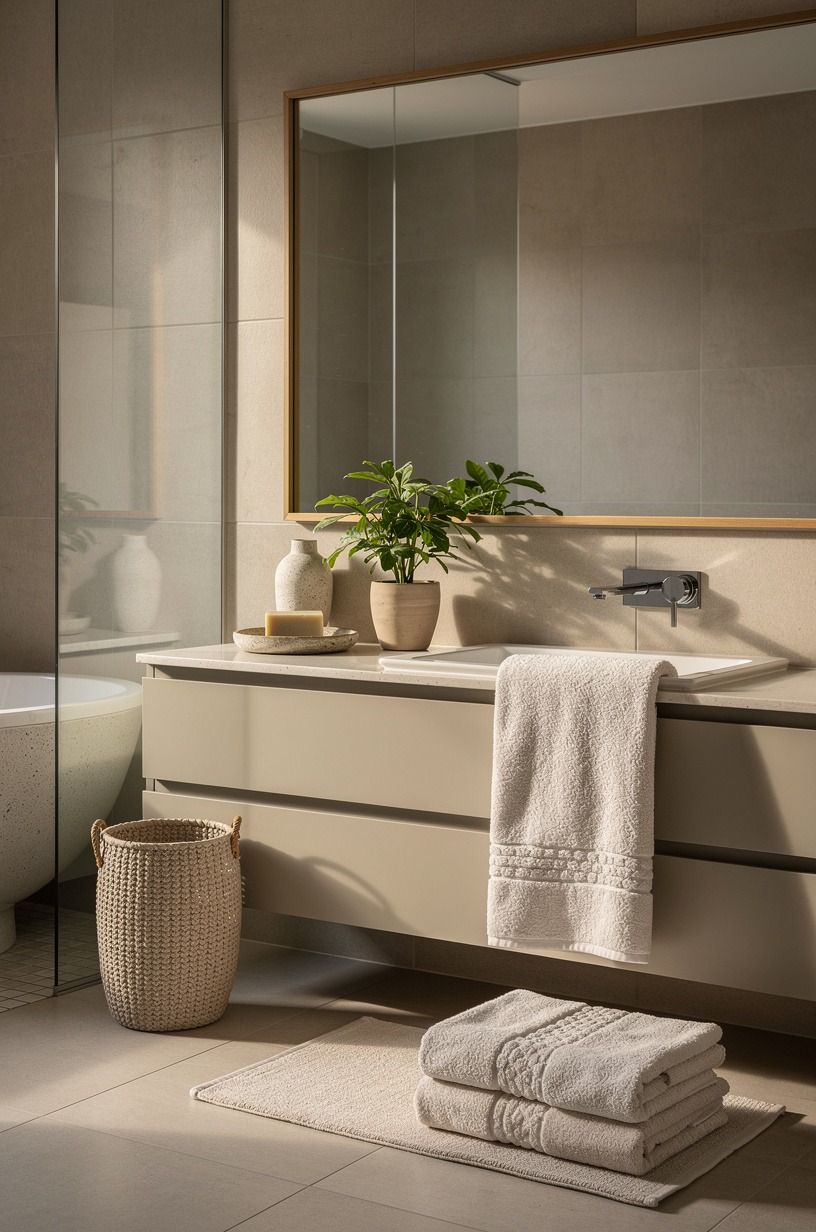
Textiles gave the room its soft landing. I used a washed Belgian linen towel, a small woven bath mat, and one lighter linen hand towel. Your feet and hands notice quality faster than your camera does, especially in a room built from hard surfaces.
I kept the palette quiet, with sage green, warm cream, and natural wood. You don’t need patterned towels to make a tropical shower feel rich. In fact, I’d avoid busy prints when the plants already bring movement and shape.
The first towel dried without that stiff, scratchy feeling I’d accepted for years. That was my moment. A soft textile can make a bathroom feel warm without filling it with objects, and it costs less than another renovation decision.
12Shape a half wall for privacy and openness
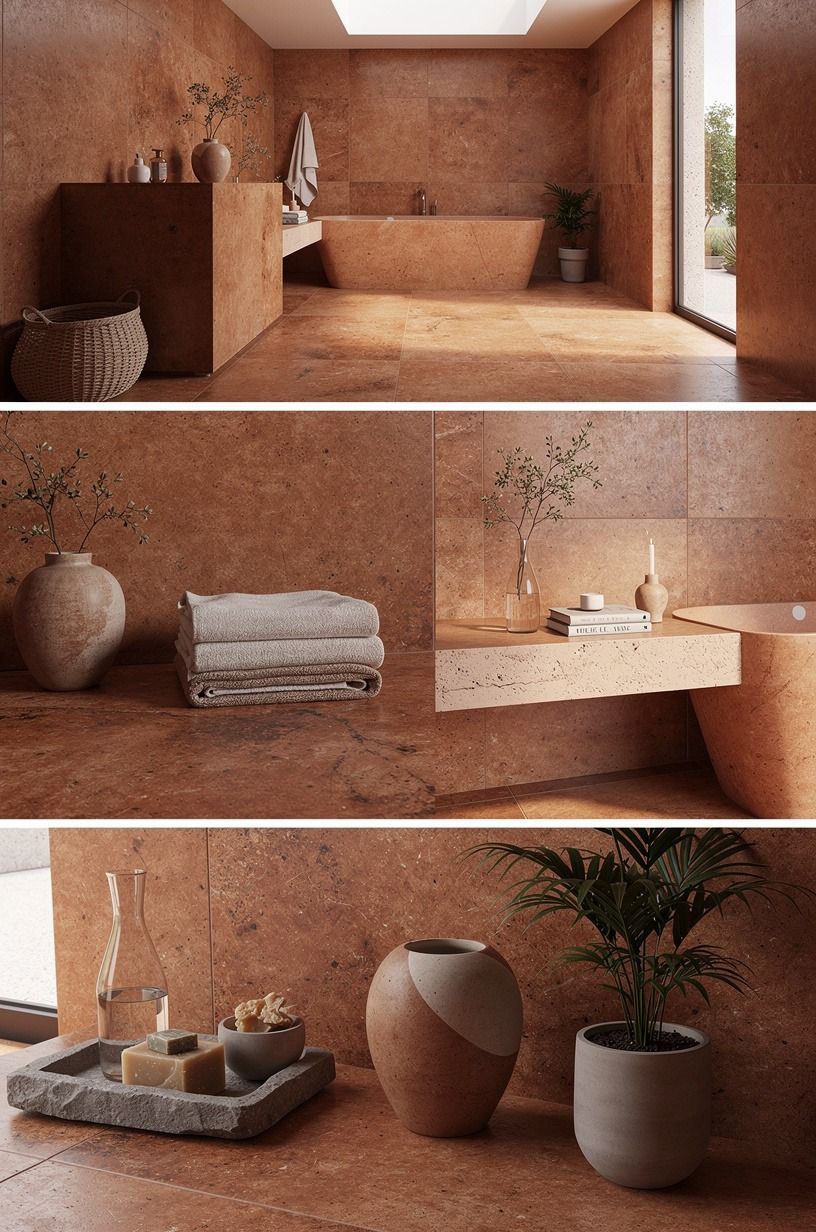
A half wall solved the awkward compromise between full exposure and a closed enclosure. It blocks the direct view from the doorway, but natural light still reaches the shower. Your room keeps its airy quality while the toilet and shower don’t compete visually.
I capped the wall with a pale stone ledge and kept the corners crisp. The top is wide enough for one small plant, though I don’t use it as storage. A wet ledge becomes clutter quickly, and clutter destroys the calm you worked to build.
And a half wall can make a small space feel more architectural. Compare it with this open shower with a half wall layout, then check your toilet clearance. You need at least 21 inches in front of the toilet, so measure before you fall in love with the shape.
13Let Hague Blue carry the dramatic contrast
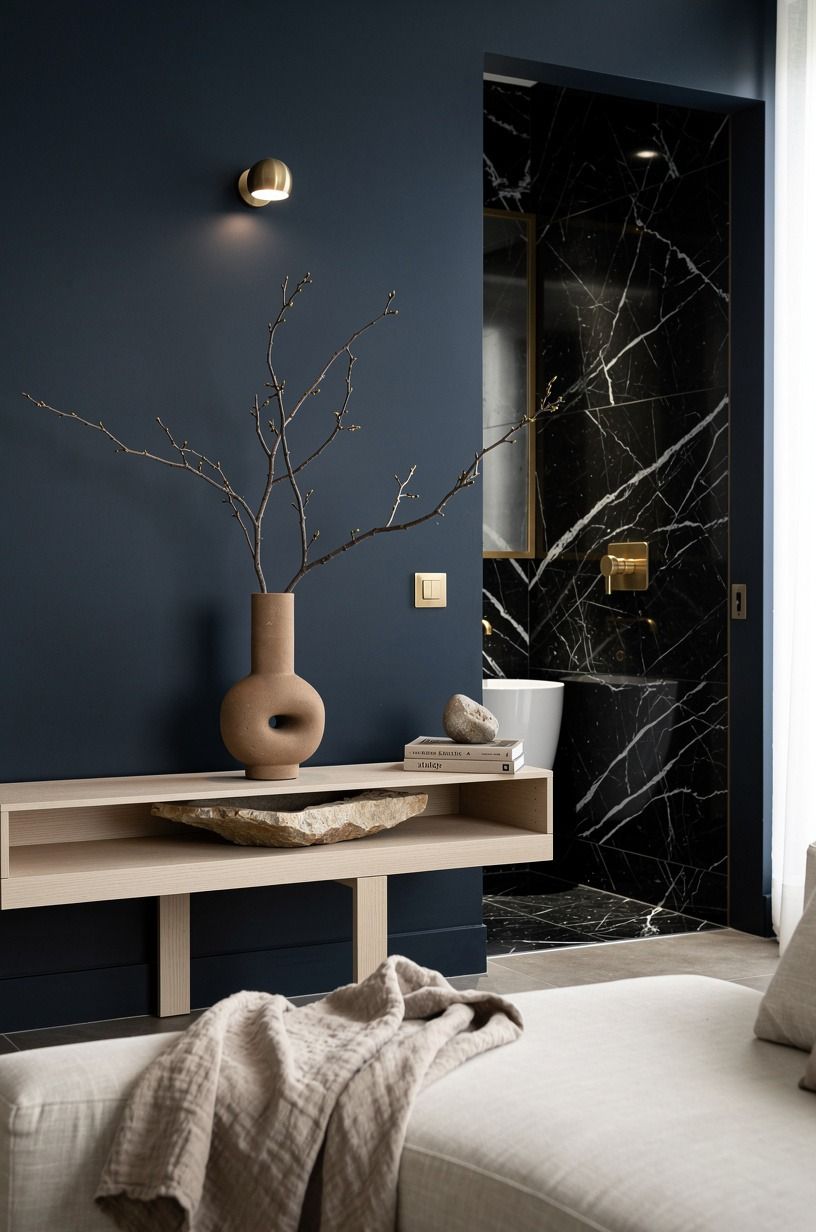
The room needed one deeper color, and I chose clay on the narrow wall behind the mirror. It made the aged brass feel warmer and gave the Nero Marquina black marble with white veins a more sophisticated edge. Your eye needs one place to rest.
I tested it under daylight and warm bulbs because dark paint can shift dramatically. I’d skip putting it on every wall in this bathroom. The shade is rich, but too much would swallow the window and make the room less airy.
The best moment came at night, when the clay wall held the amber light instead of reflecting it. The bathroom felt intimate rather than dark. That’s the kind of contrast I wanted, a little moody, still welcoming.
14Choose a round mirror to soften the hard lines
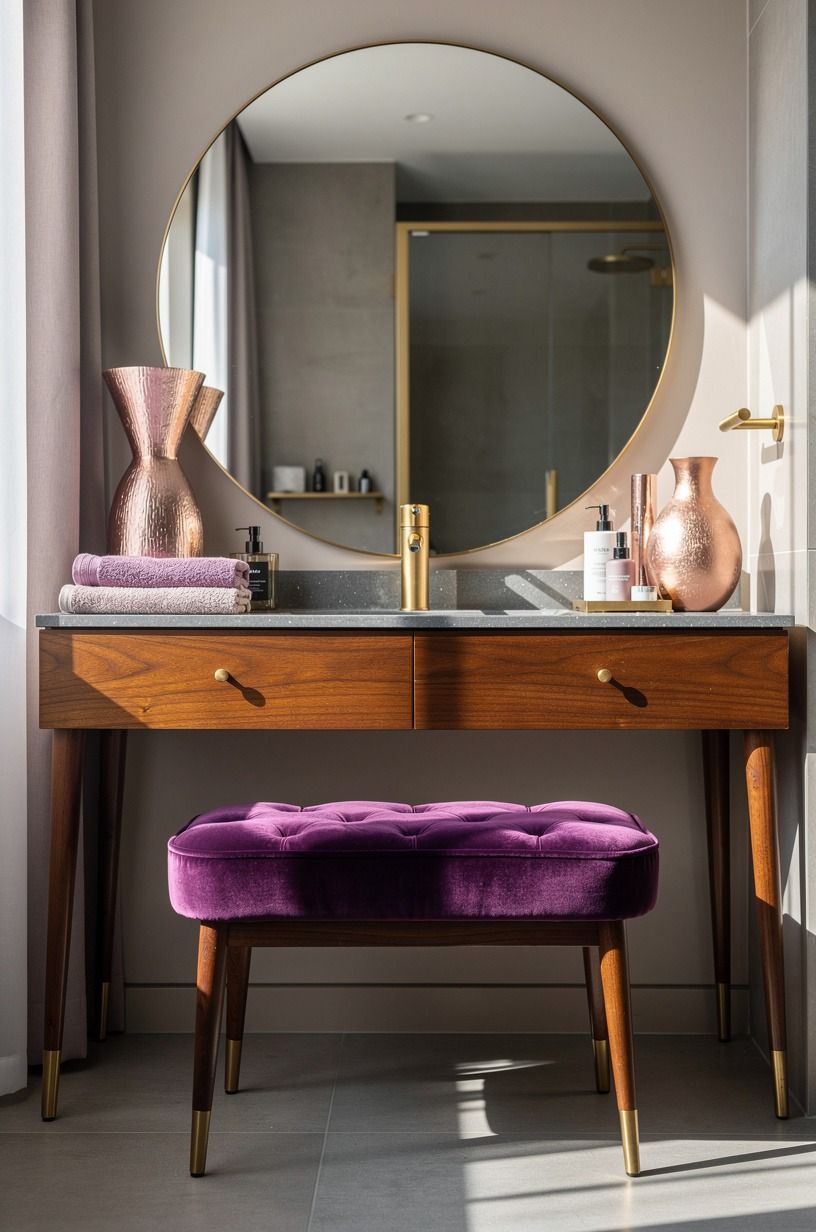
The original mirror was a rectangle with a thick plastic edge. I replaced it with a round mirror in a narrow rose-gold frame, and the room immediately felt gentler. Your shower already has tile joints, glass edges, and cabinet lines, so one curved shape gives the eye a break.
I mounted the mirror slightly above the vanity and left enough wall around it to show the paint. West Elm has round silhouettes I like, but I’d compare them with secondhand finds before spending more. The right shape matters more than a luxury label here.
But I wouldn’t use two mirrors just because the vanity has width. One clear circle looked more refined than a pair of small reflective objects. The morning light now lands on the glass and bounces toward the shower, which was the quiet result I wanted.
15Build a drainage-first wet room
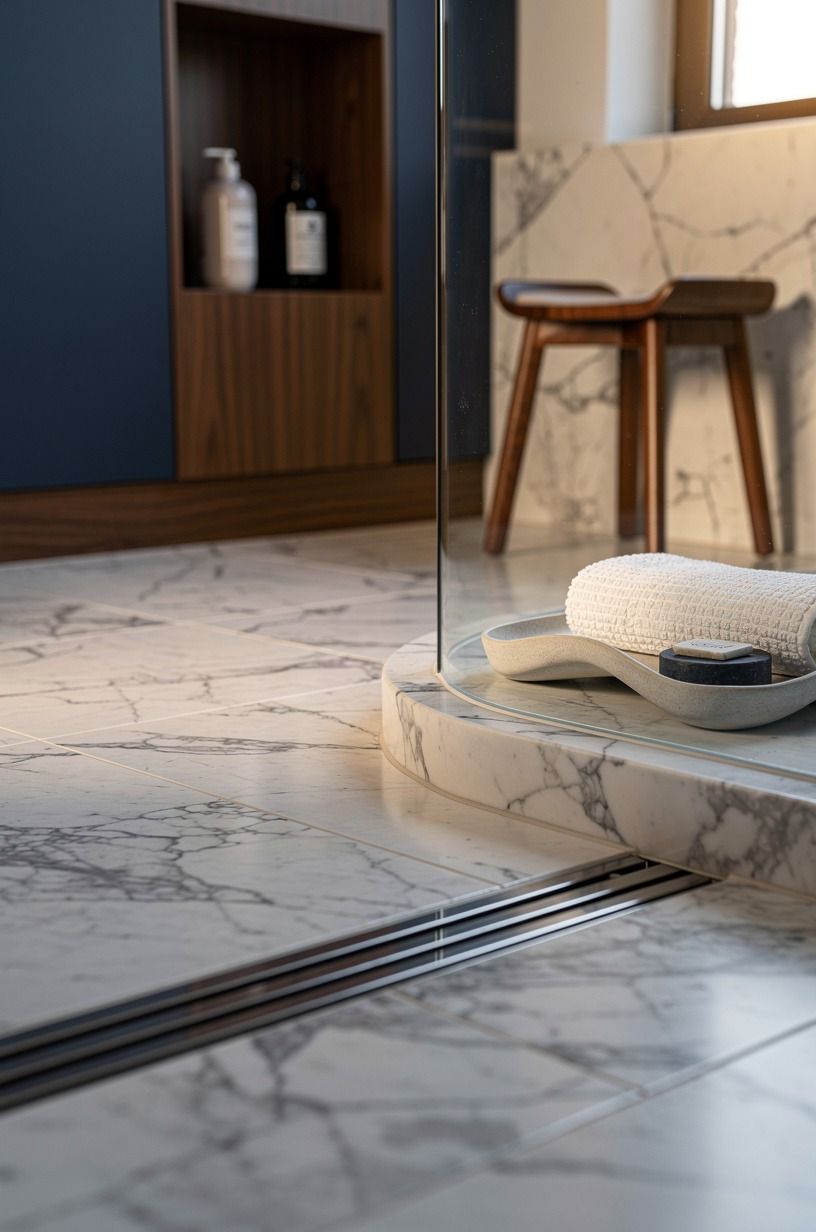
The room only works because water has somewhere sensible to go.
16Mix affordable storage with one refined piece
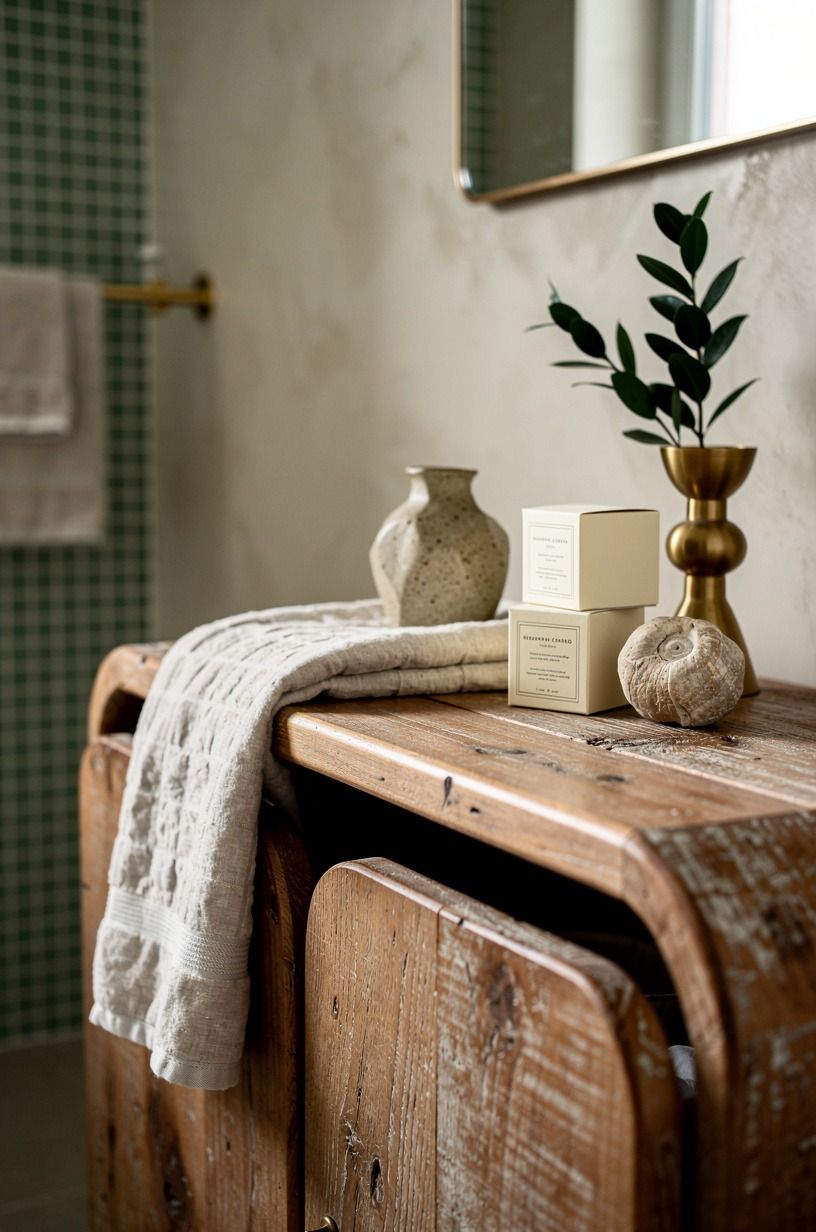
I wanted the room to feel collected, not expensive for the sake of it. I used a reclaimed weathered teak storage unit outside the wet zone for folded towels, then paired it with one better-made stool. Your eye reads the contrast as intentional when the larger shapes stay simple.
The teak storage gives you flexible room for towels without taking over the wall. I used baskets for spare towels and left one cubby open, because completely filled shelves feel heavy. A small purchase can do more than a matching bathroom set if you give it breathing room.
And I didn’t buy everything at once. I watched Facebook Marketplace and local thrift shops for a stool with solid legs, then chose the piece that felt sturdy in my hands. That pause saved money and made the room more personal.
17Which plants can survive your real light?
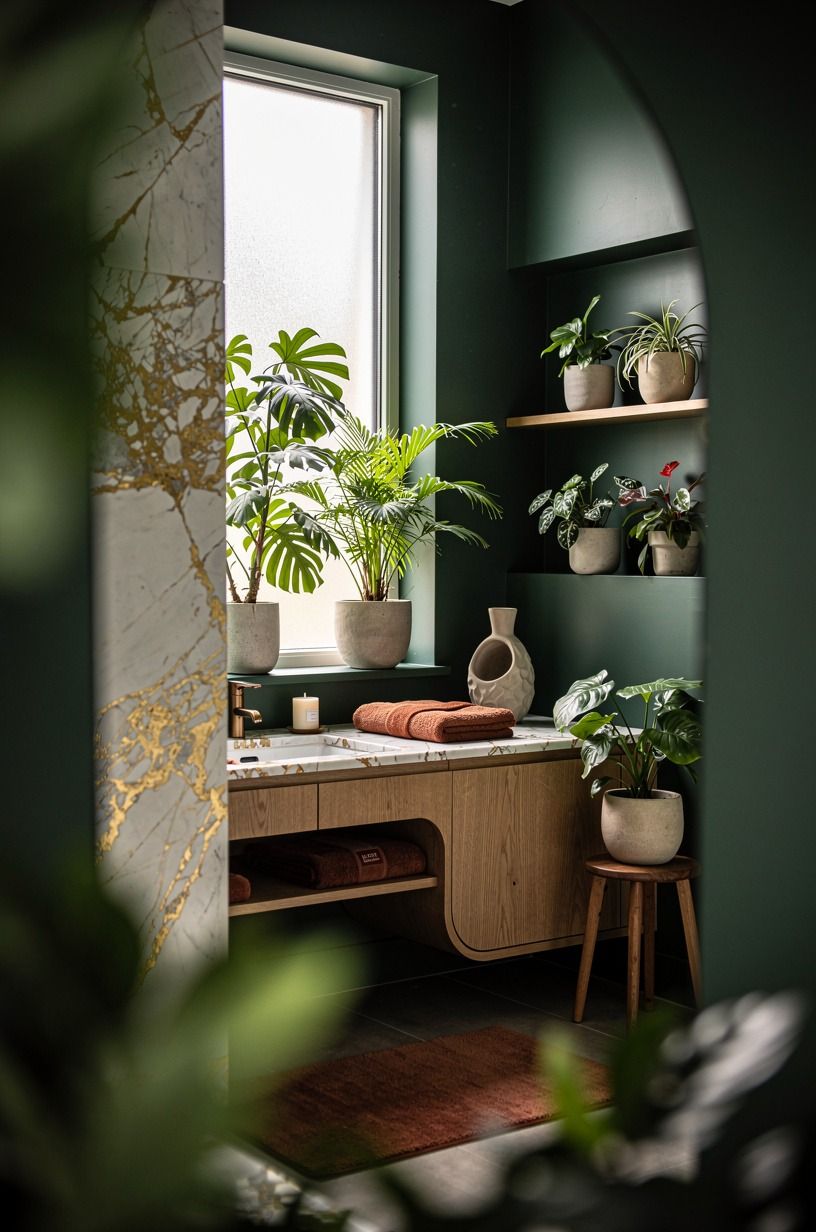
The best tropical indoor shower with plants is the one you can keep alive.
18Choose open glass over heavy curtains
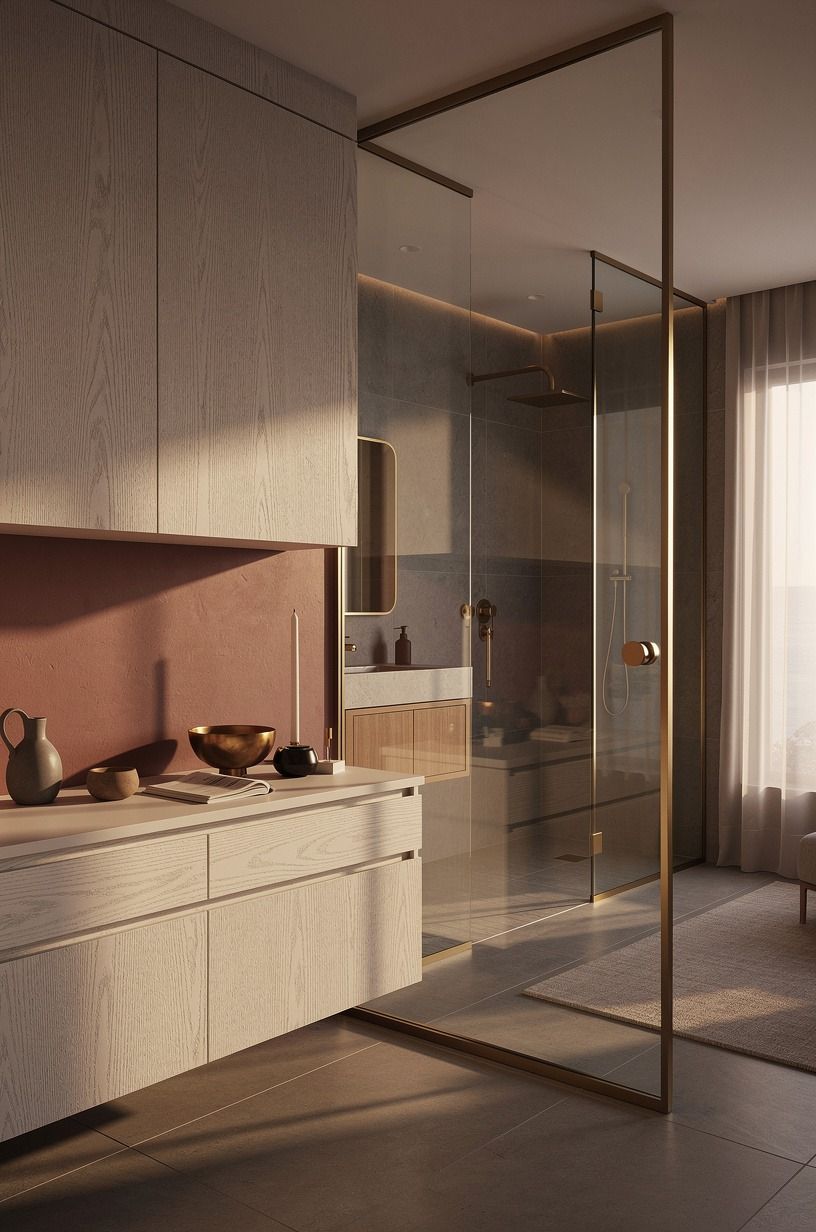
The final design choice was a contrast between openness and privacy. I chose clear glass over a curtain because the morning light was the room’s rarest asset. Your shower feels more connected to the bathroom, and the plants become part of the architecture.
That doesn’t mean you need a full renovation. A fixed panel, a privacy film, or a tension-mounted shade can create a similar feeling in a rental. I’d avoid a dark fabric curtain unless the room has strong ventilation and plenty of daylight.
The first time the sun reached the back wall, I understood why the simpler choice won. The room looked bright, earthy, and serene without a pile of accessories. If you’re comparing more natural shower layouts, these nature shower ideas are a useful place to look for texture.
How much it cost: my $3,000 working budget
I kept the project inside a $3,000 working cap by preserving the plumbing, using paint strategically, and spending on waterproofing, glass, and the surfaces your hands and feet touch. I didn’t chase a luxury finish everywhere. That would have made the room less personal.
The material choices gave me useful guardrails. Zellige tile typically runs $15-$35 per square foot, subway tile $2-$10 per square foot, a marble top $50-$100 per square foot, and a brushed brass faucet $120-$450. I’d put your money into drainage, lighting, and the one surface you’ll touch every day.
The room feels more expensive than the budget because the decisions agree with each other. That’s the part I’d repeat. You don’t need every premium material, but you do need a clear order of importance.
Why I’d build this tropical shower again
I used to think a spa-like bathroom needed more square footage. This project changed my mind.
The room feels spacious because the light has a path, the glass doesn’t interrupt it, and the plants sit where they can be seen without blocking movement. That sounds simple, but it took me several wrong turns to see it.
I’d also build the room around maintenance before styling. A plant that can’t handle your humidity won’t become charming with better pottery.
A shelf that catches water will annoy you every morning. A polished floor will show every mark.
I chose earthy surfaces, soft textiles, and warm metal because they age with the room instead of asking me to keep everything untouched.
The strongest lesson was about restraint. I wanted a dramatic jungle at first, with more leaves, more shelves, and more color.
Then I removed half of it. The remaining plants looked brighter against the clay wall, and the open shower finally felt peaceful instead of busy.
Your bathroom doesn’t need to prove its theme. It needs to make your shoulders drop when you walk in.
Would I change anything? I’d choose the window treatment earlier and test the evening lighting before installing the mirror.
I’d also spend less time comparing decorative trays. Nobody remembers the tray. They remember that the room is bright in the morning, warm at night, and easy to move through.
That’s the standard I’d use for your project.
What People Always Want to Know
What is the best tropical open shower idea for a small bathroom?
A fixed glass panel with one tall plant and a reclaimed weathered teak storage unit works best because it keeps the floor visually open. Choose one strong vertical shape, leave the window clear, and use a round mirror for a more spacious feeling without adding another bulky cabinet.
Where can I buy tropical shower pieces on a budget?
Look at IKEA, Wayfair, and Target first, then check Facebook Marketplace or a thrift shop for stools, mirrors, and baskets. Secondhand wood pieces can add warmth for less, but inspect every surface for swelling before bringing it into your bathroom.
How much does a tropical open shower makeover cost?
A makeover can cost about $200-$1,200 for paint, a mirror, a faucet, and textiles, while a mid-range project runs $3,000-$9,000. Keeping existing plumbing saves the most, and free changes include moving plants, clearing the window, and editing countertop clutter.
Can I create a tropical open shower on a budget?
Yes, and you can start with three low-cost changes: repaint the ceiling, move one plant toward the best window light, and replace harsh bulbs with warmer ones. A brighter layout often changes the room more than another accessory, so measure before buying anything.
Is a tropical open shower worth it in a small space?
Yes, because a small bathroom benefits from uninterrupted sightlines and reflected daylight. Keep the shower at least 36×36 inches, use a shallow shelf, and place the vanity outside the splash zone. Clear circulation matters more than adding another decorative feature.
Is a tropical open shower a good idea for a rental?
Yes, if you use removable changes such as privacy film, a tension rod, peel-and-stick accents, and freestanding plant stands. No-damage improvements can still feel intentional, especially when you keep the window clear and use baskets instead of wall-mounted storage.
Where I’d Start First
If I had to pick one, I’d start with the clear glass panel. It lets your window light reach the whole bathroom, while a curtain keeps dividing the room into dark little zones. Pin the open-shower idea for later, then measure your 36×36-inch footprint before buying anything.