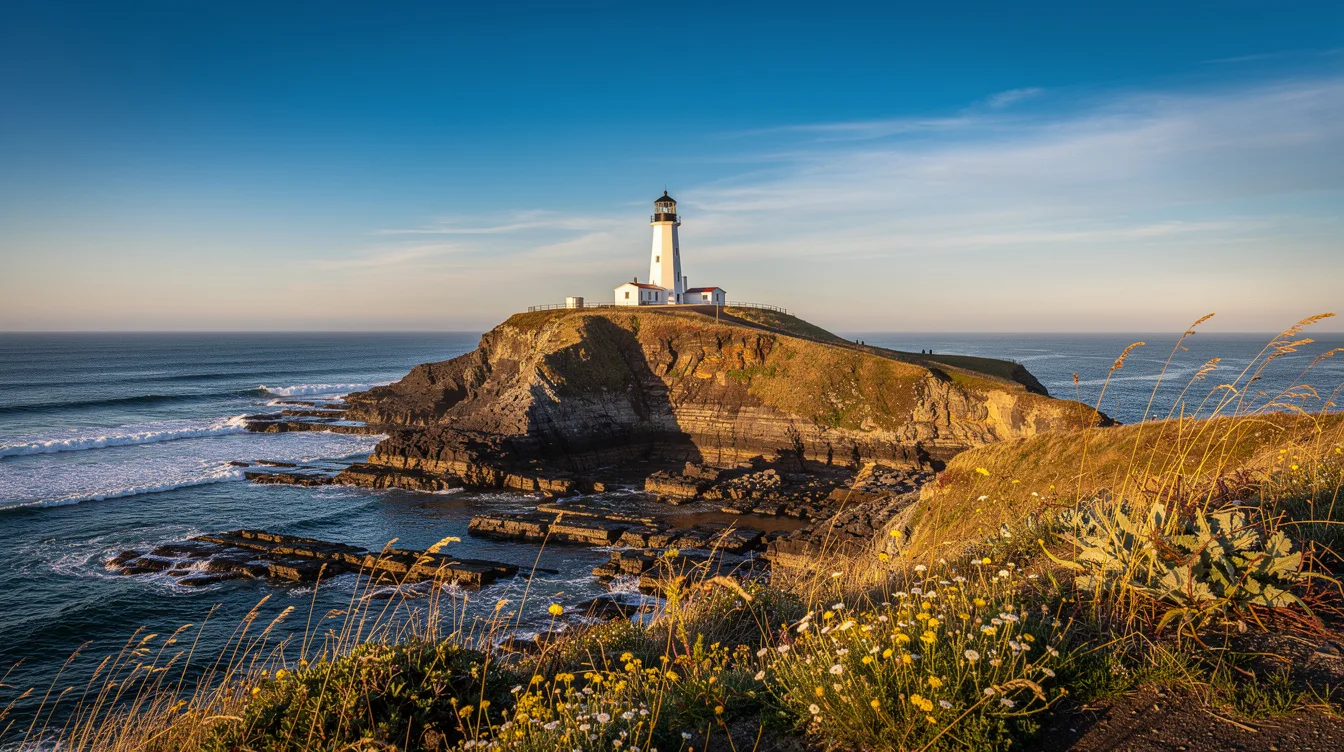
Newport, Oregon gives you a reason to look up. At Yaquina Head, the 93-foot Yaquina Head Lighthouse is Oregon’s tallest active lighthouse, and it answers the title’s promise without any sales pitch.
The tower rises above a coastal headland where wind can change the mood in minutes. You come for the height, but the setting is what makes you linger.
Yaquina Head is the main event
Yaquina Head Outstanding Natural Area combines the lighthouse with tide pools, coastal trails, and frequent wildlife viewing. The headland puts the Pacific directly in front of you, so even a short stop can feel like the whole afternoon.
And you should check tide timing before heading down to the pools. The coast is cool, windy, and changeable even in summer, which makes layers and a waterproof outer shell more useful than beach-town optimism.
But this isn’t a resort coast. That’s the appeal: the air can feel sharp, the water looks restless, and the lighthouse gives the scene a clear focal point.
Can you make Yaquina Head your first stop?
Yes, and you should. Start there before filling your day with town stops, because the lighthouse, trails, and tide pools make the strongest case for Newport in one compact visit.
A working harbor, not a stage set
Historic Bayfront is where Newport feels most lived-in. Commercial fishing boats share the waterfront with seafood spots, galleries, shops, and the sea lion docks, so tourism never fully pushes aside the harbor’s daily work.
You’ll notice the difference in the atmosphere. There’s a practical edge here, with fishing, shipping, seafood processing, and marine research all part of the city’s identity.
And lunch belongs on the bayfront if you want the obvious local move. Dungeness crab and other local seafood fit the setting, though the harbor itself is the reason to slow down.
Yaquina Bay holds the town together. It gives Newport its working-waterfront character, while the Pacific coast beyond it keeps the place from feeling too polished.
The bridge makes US 101 feel worth slowing for
Yaquina Bay Bridge carries U.S. 101 over the bay in an Art Deco style that looks especially good from the bayfront or nearby viewpoints. You don’t need to build a whole day around it, but it gives the town a memorable outline.
Newport is also the western endpoint of U.S. Route 20. Because U.S.
101 runs along the coast, the city works as a natural stop if you’re tracing Oregon’s shoreline by car.
But getting here takes intention. Newport is about 130-145 miles from Portland by road, depending on the route, so treat it as a coastal destination rather than a quick detour.
Is Newport easy to plan around changing weather?
It is, if you keep the day flexible. When wind or rain makes the coast less inviting, the Oregon Coast Aquarium and Hatfield Marine Science Center offer a solid half-day indoors.
Nye Beach softens the edges
Nye Beach brings cafés, surf, sand, and coastal sunsets into a walkable beach neighborhood. It’s lighter on its feet than the bayfront, but it still has the weathered Pacific character that keeps Newport from becoming generic.
And you can end a full day here or at South Beach. The beach walk is simple, while the shifting light and ocean wind do the rest.
South Beach State Park adds broad beach access, trails, camping, and cycling opportunities. That said, Newport’s strongest days mix rather than specialize: lighthouse first, harbor later, then the beach when you’re ready to stop checking the clock.
A small city with room for weather
Newport had 10,256 residents in 2020, which helps explain its scale. It has enough choices for a day, but it doesn’t ask you to race between attractions or pretend the coast is always sunny.
And that honesty is part of the pleasure. You may get sun at Nye Beach, then cold wind at Yaquina Head, then the harbor’s salt-and-seafood smell by late afternoon.
By the time you leave the bayfront, fishing boats are still at work beneath the bridge, and the 93-foot tower is somewhere beyond the town, facing the weather.