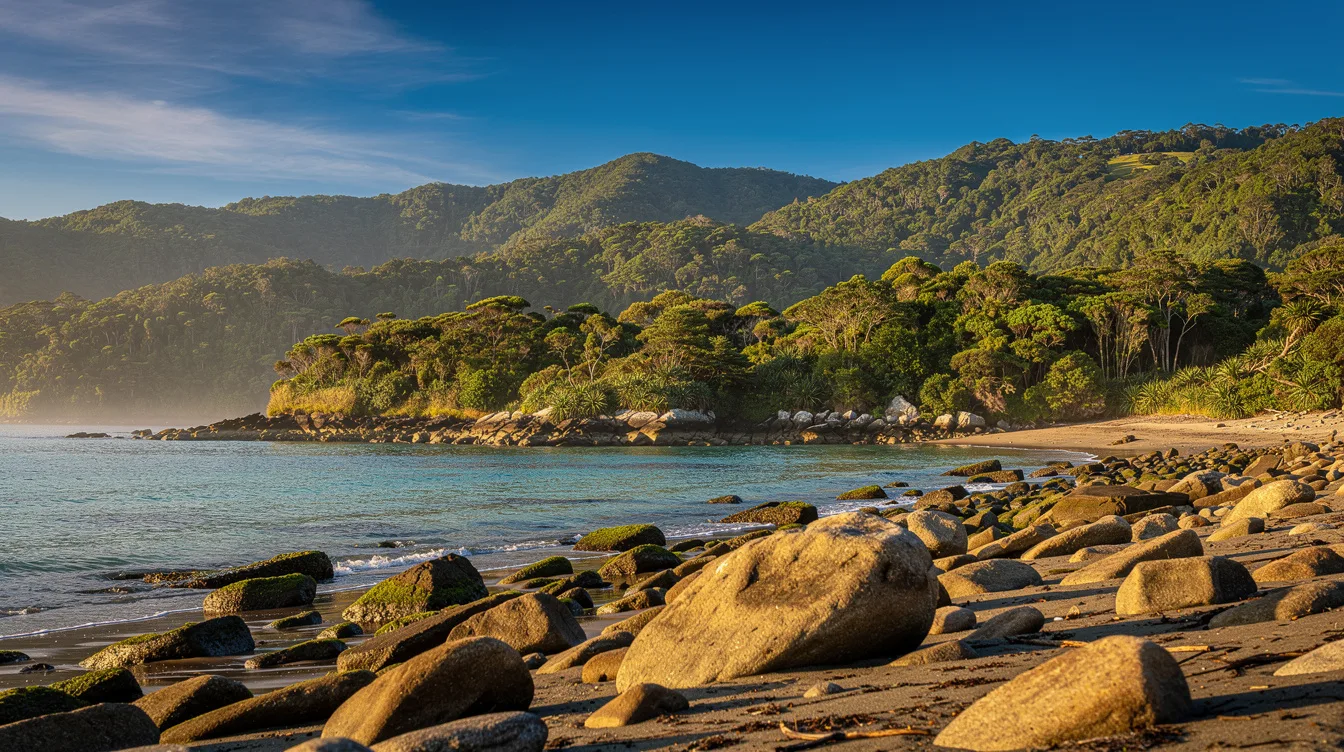
Stewart Island / Rakiura is New Zealand’s southernmost inhabited island, and about 85 percent of its territory forms Rakiura National Park. That figure changes the trip immediately. You’re not arriving at a resort island with nature around the edges.
You’re arriving somewhere where the forest, wetlands, beaches, and birdlife set the pace.
And that’s the appeal. The island sits about 18.6 miles southwest of Bluff, beyond Foveaux Strait, yet it feels far removed from mainland routines. Come in the austral summer, but reserve your transport, accommodation, and DOC huts well ahead.
Why 85 percent protected changes the trip
And the park isn’t a distant attraction you visit for an afternoon. It covers close to 85 percent of the island, leaving the settlement around Halfmoon Bay, some roads, and selected private or Māori-owned land outside its boundaries.
But the island isn’t empty wilderness. Oban is the only real town, with places to stay, restaurants, supplies, equipment rentals, and a Department of Conservation visitor center. That small center matters because weather can change quickly, and plans here need room to move.
And you’ll notice the difference once you leave Oban. The roads thin out, the forest closes in, and the sound of rain on a jacket can become the loudest thing around. My opinion is simple: Stewart Island works best when you stop trying to fill every hour.
Crossing from Bluff takes only one hour, sometimes longer in spirit
And the usual route is the ferry from Bluff to Oban, a crossing of about one hour. The boat travels across Foveaux Strait, where conditions can turn rough enough to unsettle passengers who normally handle boats well.
But you have another option. Flights from Invercargill take about 20 minutes, and they make sense if you’re sensitive to seasickness or working with a tight itinerary. There’s no road or rail connection, so the crossing or flight is part of the island’s character.
And if you’re making the journey from Invercargill or Queenstown in a single day, you can do it. You shouldn’t, in my view, unless Ulva Island and a short coastal walk are enough for you. Two or three nights give the weather a chance to cooperate.
The 19.9-mile Rakiura Track rewards a slower plan
And the 19.9-mile Rakiura Track is the clearest way to experience the park without committing to a remote expedition. The Great Walk usually takes 3 days and 2 nights, with DOC huts or campsites along the route.
But this isn’t a polished walking path with guaranteed sunshine. Wind and rain are part of the deal, even during summer, so bring warm layers, a serious waterproof jacket, and shoes suited to wet ground. The trail begins at Lee Bay, about 3.1 miles from Oban.
And you can make the walk your main reason for coming. The forest has a damp, earthy smell after rain, while the coast opens into a quieter world of beaches and exposed water. The compromise is clear: the route is accessible by Great Walk standards, but the weather still gets the final say.
Kiwi nights and Ulva Island fill the shorter stays
And Stewart Island is one of New Zealand’s better places to look for the Stewart Island brown kiwi, or tokoeka, in its natural habitat. A guided night outing gives you better chances while limiting disturbance, which is a good reason to leave the search to local operators.
But you don’t need a multi-day trek to see the island’s wildlife. Ulva Island is a predator-free sanctuary reached by water taxi from the Oban area, with gentle walking through older forest and strong chances for native birds during daylight.
And after dark, the island earns its Māori name, Rakiura, often translated as “glowing skies.” It’s recognized as an International Dark Sky Sanctuary, so clear nights may bring stars, astrophotography, or an aurora australis.
But don’t build the entire trip around seeing one. Clouds and rain are common, and the same weather that hides the stars can make the forest smell of wet leaves and salt. That’s the honest bargain here: remote, but reachable; protected, but never predictable.
By the time the last boat or flight has carried visitors away, Oban grows quiet around Halfmoon Bay. The park begins just beyond town, and rain taps the roofs while the dark settles over Foveaux Strait.