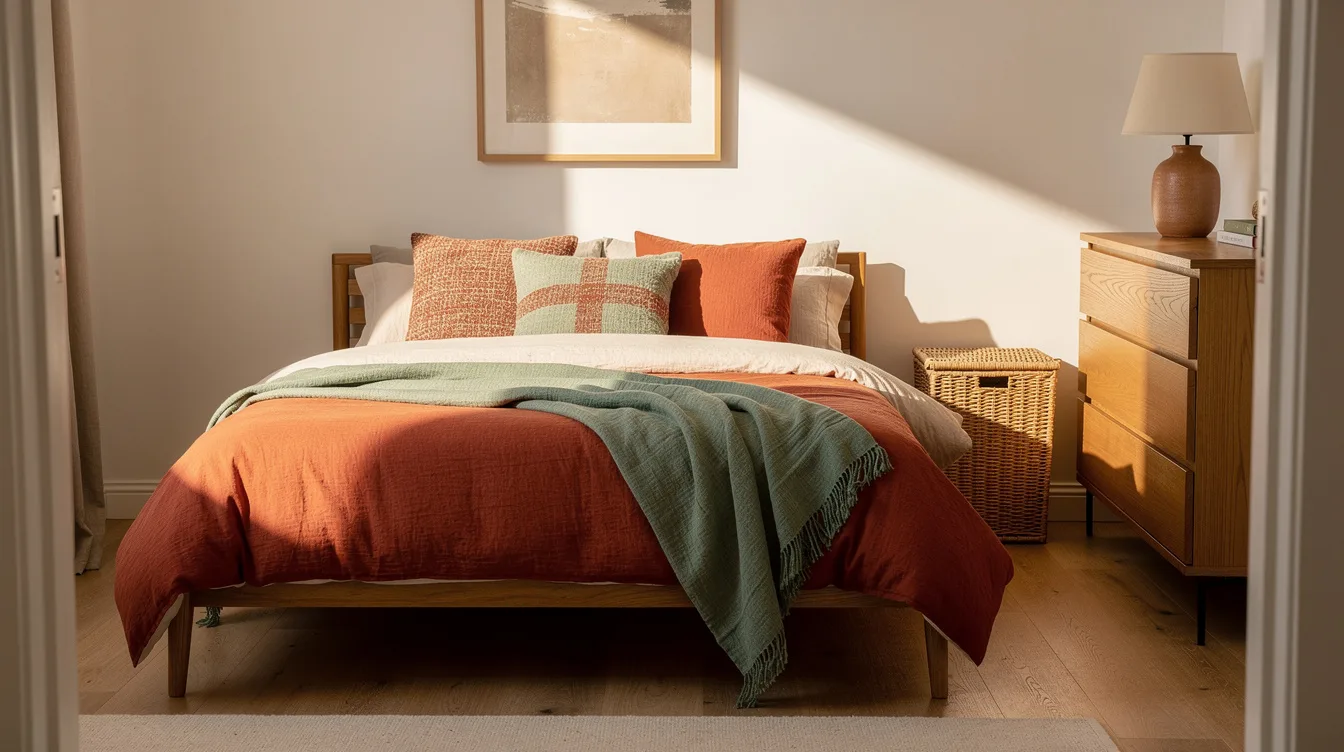
My bedroom had a 20-inch gap beside the dresser, yet a round floor basket still made the room feel crowded. The better answer was a slim lidded hamper that used height instead of spreading across the floor.
For rooms without laundry closets, the right container depends on one honest measurement: how much clear space remains after the bed, dresser, and door swing are accounted for.
These are the compact options I would consider first, from a narrow vertical basket to a bag that hangs behind the door.
Measure the Dead Space Before Shopping
In my last small bedroom, I measured the gap beside the dresser before buying anything. A space-saving hamper works best when its front stays reachable and its lid can open without hitting the wall.
Look for about 7.9 to 10.4 inches of width, roughly 18 inches of depth, and around 23.5 to 24 inches of height. That footprint can fit between a bed and a wall, beside a dresser, or behind a partly open door.
Leave about 2 inches of clearance above the lid so you can lift it comfortably. I also prefer a removable liner, since carrying a full load through a small apartment is easier when the bag comes out first.
Build Upward With a Narrow Lidded Hamper
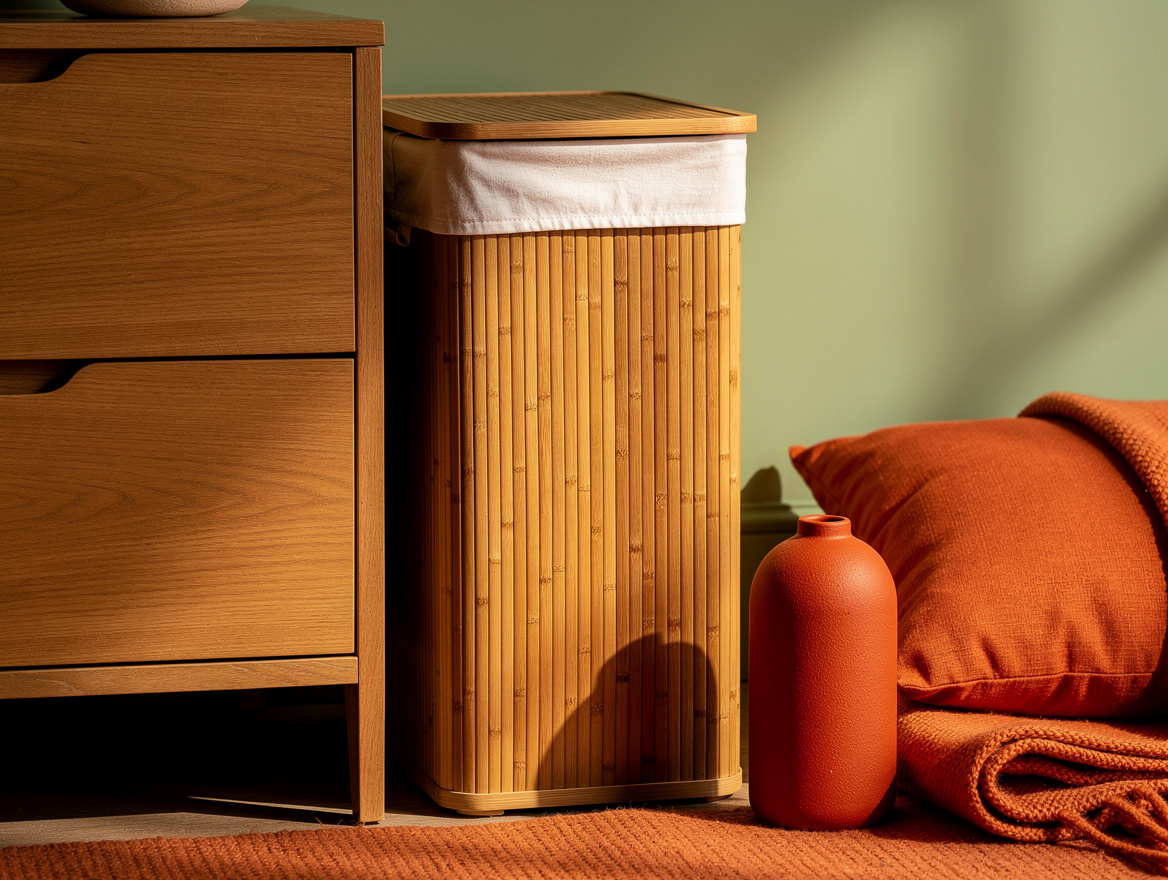
A tall, narrow hamper makes the most of forgotten wall space. A typical 55-liter, or about 14.5-gallon, model can hold a useful weekly rotation without taking over the floor.
At roughly $30 to $45, a bamboo hamper with a fabric liner is my favorite visible option because the warm frame reads more like bedroom furniture than laundry equipment. The lid also keeps socks, towels, and workout clothes out of sight.
Choose a rectangular shape instead of a round basket. About 7.9 inches of width is dramatically easier to place beside a dresser than a standard basket that can take up 15 to 20 inches of floor space.
Roll the Load Toward the Washer
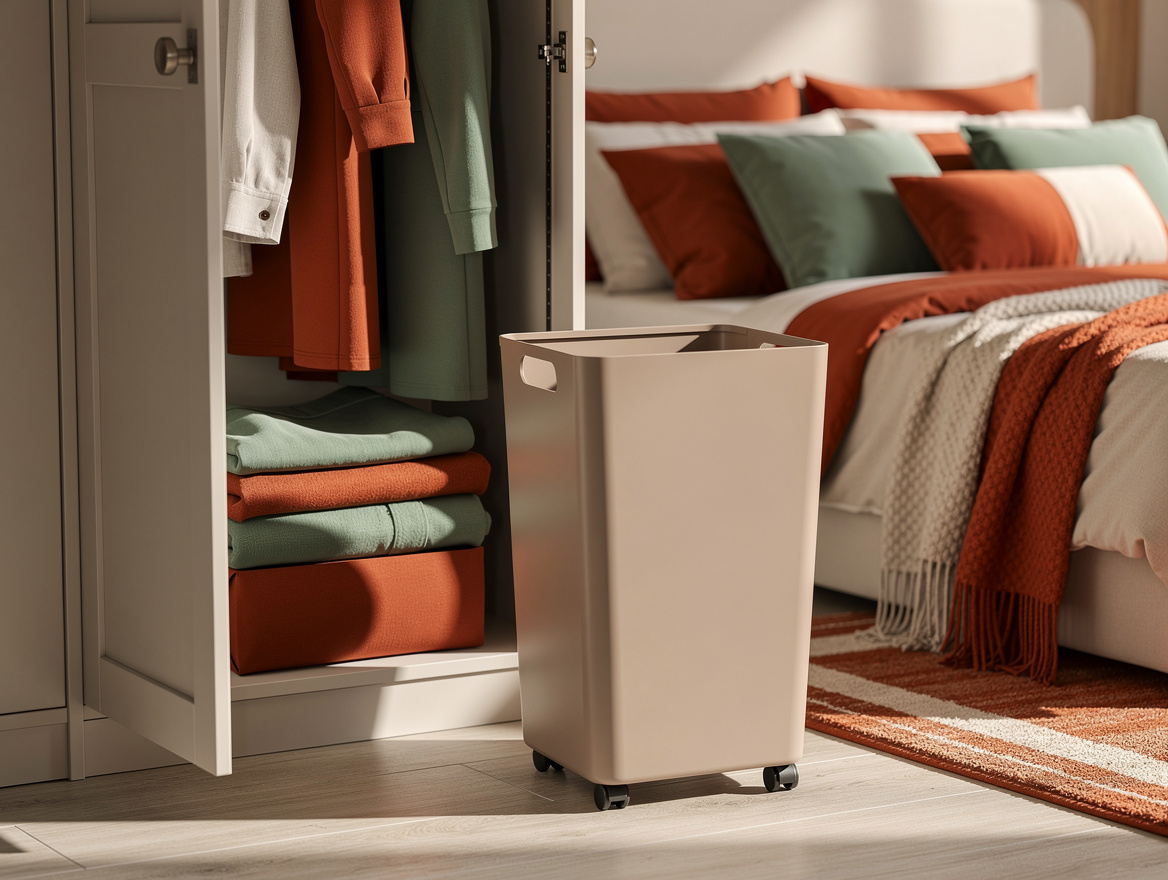
If the washing machine is far from the bedroom, wheels earn their floor space. A slim rolling model can fit near an open wardrobe, beside a door, or in an awkward corner that would otherwise stay empty.
Look for roughly 7.9 inches of width, about 15 to 18 inches of depth, and around 23 to 27 inches of height. A canvas body in the roughly 600D range is a sensible choice because it feels sturdier than thin mesh when the hamper is pulled across the room.
Typical prices run about $30 to $60, depending on the frame and casters. I would spend more on smooth swivel wheels before paying extra for decorative trim, especially in a bedroom without a laundry closet.
Fold the Empty Hamper Away
A folding hamper is the practical answer for a guest room, dorm, or temporary rental. When open, the common footprint is about 16 by 16 inches with roughly 25 inches of height; when empty, it can collapse to about 1.5 inches thick.
At around $8 to $20, a polyester mesh model with a spring-steel frame is the budget choice I recommend for light daily loads. It can slide under the bed, stand behind a door, or disappear into a closet between wash days.
Keep the capacity modest and empty it often. A folding basket that stays overloaded becomes floppy, difficult to carry, and far less useful than its low price suggests.
Hang the Bag Behind the Door
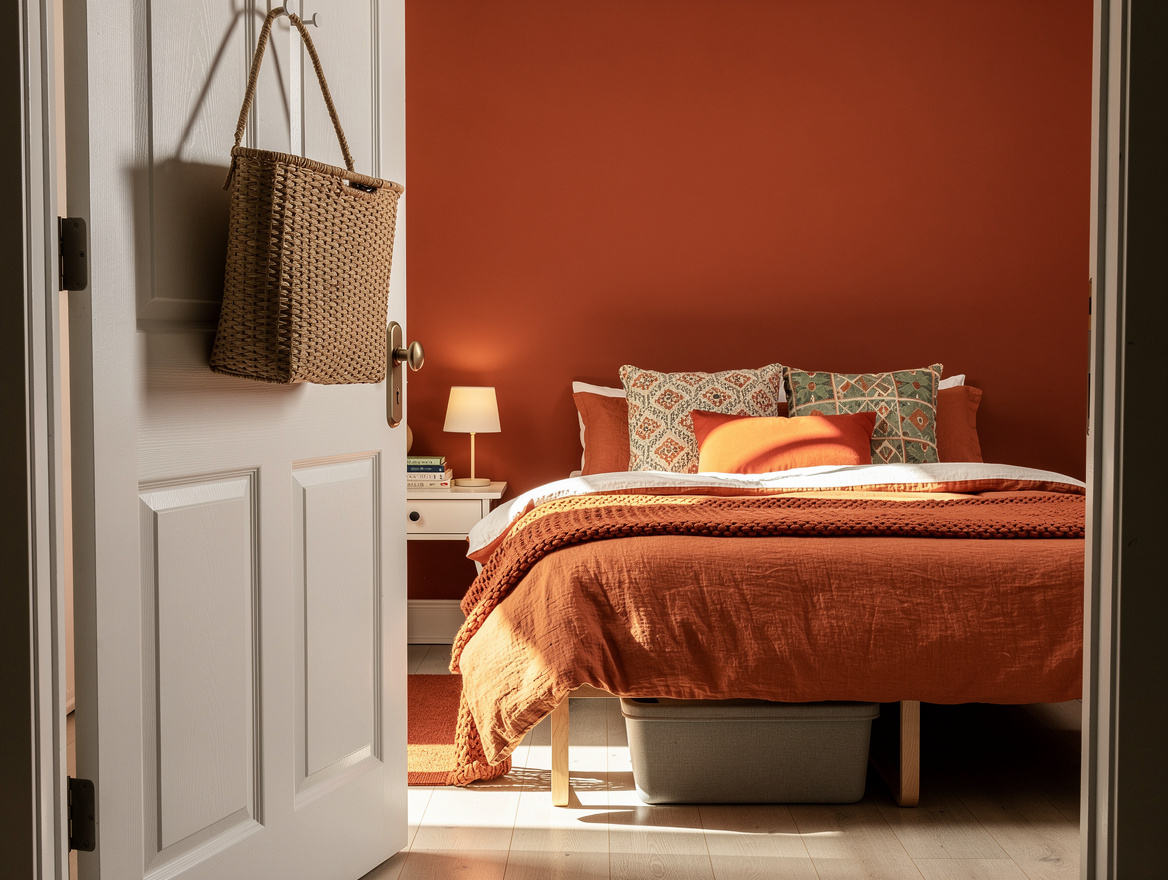
When floor space is almost nonexistent, move laundry onto the door. A hanging bag uses the door’s width instead of the room’s floor, which makes it especially helpful in a studio bedroom or a narrow shared space.
An IKEA JÄLL or PURRPINGLA-style textile bag can hold about 11 to 16 gallons and usually costs roughly $6 to $30, depending on the construction. Use strong metal hooks and keep the load light enough that the door still closes cleanly.
For a dedicated over-door hamper, expect about $15 to $35. I prefer a neutral fabric or soft gray polyester because a loud print makes the storage feel temporary, while a quiet color recedes behind the door.
Slide Small Loads Under the Bed
An under-bed hamper is useful when the bed has at least about 7 to 9 inches of clearance. It keeps laundry completely out of view, though you need a simple pull tab or handle so the container does not become buried.
Choose a plastic lidded bin with a washable cotton or canvas bag inside. Typical dimensions are about 30 to 36 inches long, 16 to 18 inches deep, and 6 to 8 inches high, with prices around $20 to $60.
This setup works best for seasonal clothing or a small daily rotation rather than every towel in the home. I would use two low bins only when each one remains easy to slide out, since a packed container becomes awkward to lift from the floor.
Match the Hamper to the Room’s Visibility
A hamper sitting in plain sight needs a finish that belongs in the bedroom. A white plastic body suits a clean, simple room, while woven-looking panels work better beside wood furniture and soft bedding.
Target, Walmart, Amazon, Wayfair, and IKEA all make it easy to compare narrow profiles, but filter by width before color or pattern. A typical decorative closed hamper costs about $50 to $75, and that premium makes sense only when the container occupies a visible corner.
Check the opening, not just the outside measurement. A narrow hamper with a small top opening can waste space because bulky sweaters catch at the rim instead of dropping inside.
Start with the narrowest usable gap, then choose a lidded vertical hamper if the front will stay accessible. If even that space is gone, move the laundry behind the door before surrendering another square foot of bedroom floor.
Mia Carter writes about small-space living and budget home makeovers. She has restyled three rentals and tests most ideas in her own 45 sqm flat.