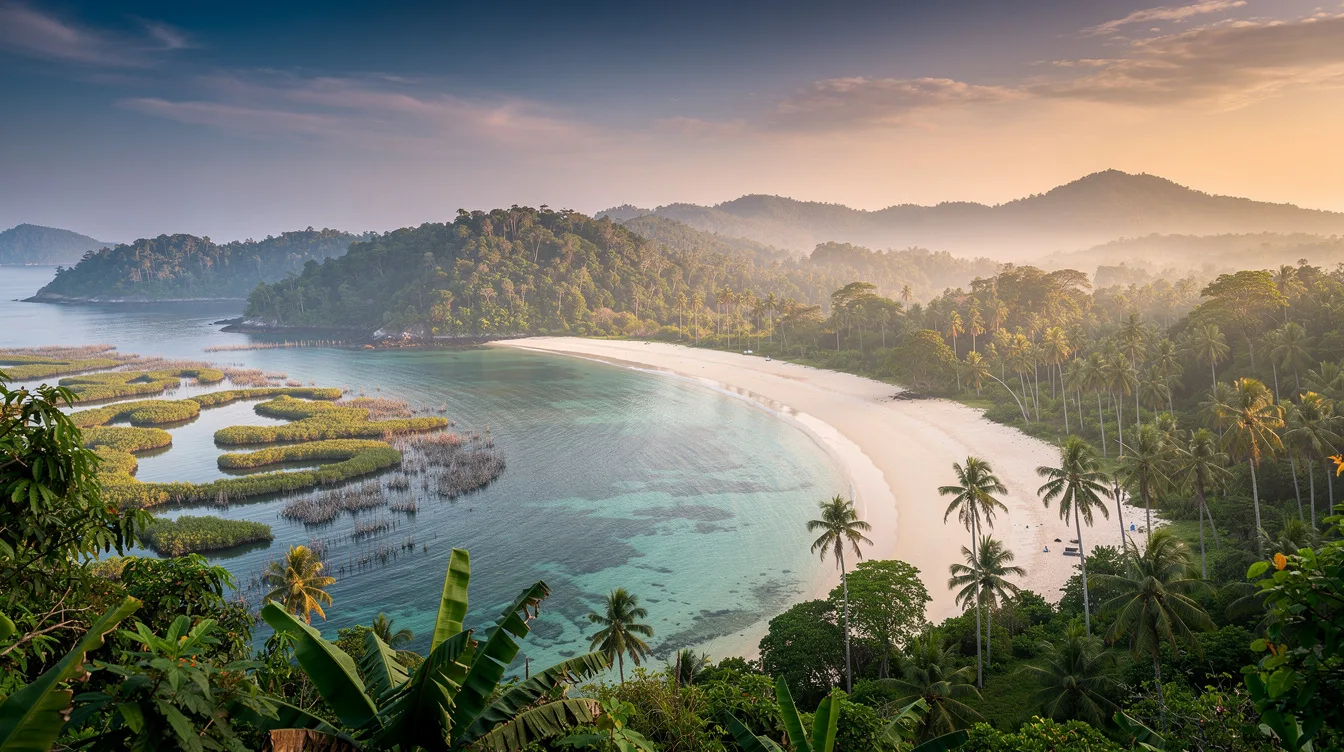
Koh Kood is Thailand’s fourth-largest island, yet it has stayed relatively undeveloped. That’s the tension that makes it worth the trip: you get palm-fringed bays, jungle, waterfalls, and fishing villages without Thailand’s heavily built-up island feel. It’s in Trat Province on the Gulf of Thailand, close to Cambodia, but feels far removed from Bangkok’s pace.
Thailand’s fourth-largest island keeps a low profile
And the island’s size doesn’t translate into a busy circuit. But most visitors choose slow resort stays and uncrowded beaches, while activity areas remain on the west coast. You’ll find bays such as Klong Chao, Bang Bao, Ao Tapao, and Ao Phrao.
That quiet has a price. The island is spread out, and roads can be uneven. If you want days that end with the sound of water, I’d choose Thailand’s eastern Gulf coast over Phuket or Samui.
It’s quieter, but it isn’t friction-free. You won’t find nightlife after dark, so plan around your resort. That limitation is part of the appeal.
Soft sand gets you there, but the jungle keeps you longer
And the coast is easy to understand: soft sand and calm sea in the dry season. Bays framed by palms give the beach its easy rhythm.
But you can fill a day with swimming, kayaking, snorkeling, or paddleboarding. My opinion is simple: Koh Kood is better for lingering than collecting photos.
Inland, Khlong Chao Waterfall pulls you from the salt toward wet forest. The smell changes, and the ground feels cooler under the trees. A short outing followed by a swim fits the island better.
Can you swim there?
And yes, you can swim and snorkel there. But you’ll have more room to breathe than on Koh Chang, while services are thinner. Plan for a beach day, not a fully serviced waterfront.
60-90-minute crossing keeps the island at arm’s length
And there’s no airport on Koh Kood. But the route is manageable: fly from Bangkok to Trat in about 50-60 minutes, then transfer to Laem Sok Pier for the boat. I like that the crossing sets the day’s tempo.
The road option takes about 5-6 hours from Bangkok to Laem Sok. It’s more economical if you have time, but you’ll need to coordinate with the last boat. A missed connection can disrupt the whole arrival.
Can you get there without flying?
And yes, you can go by bus or private road transfer, then continue by boat. But a combined bus-and-ferry ticket can reduce the logistics. Check the timetable before leaving Bangkok, especially in low season.
Keep flexibility for sea conditions, because crossing times vary by operator and destination pier. The trip is simple, but it doesn’t reward a tight schedule.
November to April is the window I’d pick
And November-February is the safest bet for beach conditions, with the wider dry season extending through April. But March and April can feel hotter, so you’ll want a slower schedule. I’d choose this window for clearer seas and easier swimming.
May-October brings monsoon weather, and services can be reduced while crossings become less predictable. You can still come with a flexible plan, but low-season transport needs checking. Fewer visitors may mean more quiet, yet the trade-off is real.
Peak season deserves advance booking for boats and accommodation, especially if you’re connecting from Bangkok. Check hotel transfer arrangements before boarding. For a wider route, pair the island with Koh Mak if schedules and sea conditions cooperate.
Ao Yai shows why resorts aren’t the whole story
And Ao Yai, a stilted fishing-village area, gives the island a different texture from its resort coast. But that contrast matters because the resort stay never tells the whole story.
Koh Kood works best when beach time shares space with local character. You’ll hear a quieter rhythm there, and I prefer that pause to another hotel afternoon.
This isn’t the island for nightlife or extensive diving infrastructure. It suits you if recovery is the point after a busy Thai itinerary. Services are spare, but the stay feels easier when you stop asking it to be something else.
Take cash from the Trat mainland before boarding, because the island has no banks or ATMs. Tourism guidance recommends withdrawing enough before the boat leaves. Check with your hotel too, since local services can change.
Bring strong DEET-based repellent for mosquitoes. You shouldn’t count on spontaneous transport after dark, so arrange resort transfers if you don’t ride confidently. The roads can be quiet but uneven.
But the payoff is a slower stay. By the time the ferry engine thins into the distance, the bay is quiet again.