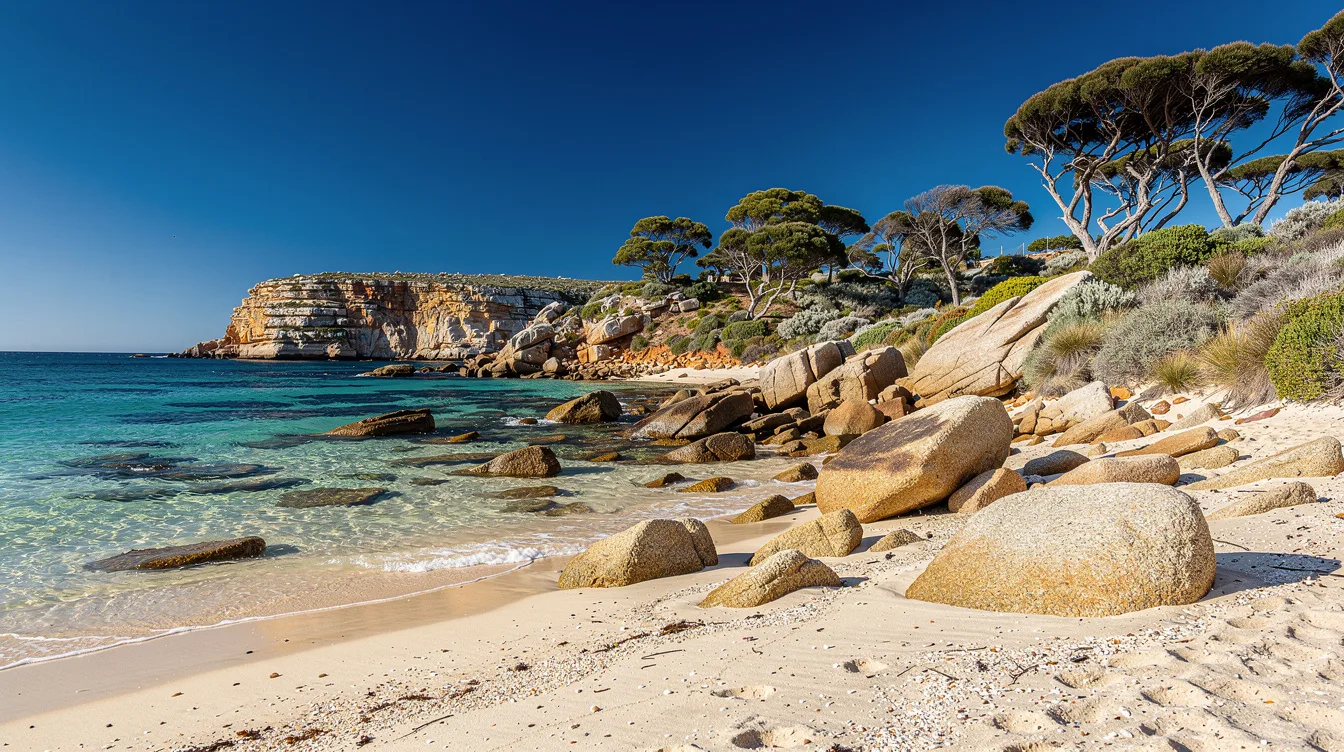
Kangaroo Island broke from mainland Australia about 10,000 years ago, when rising sea levels cut it off after the last glacial period. That separation is still the point of the trip. You can feel the mainland fall away in the wind, the wide roads, and the long pauses between settlements.
It sits 69.6 miles southwest of Adelaide, yet its nearest point is only 8.4 miles from the Fleurieu Peninsula. Remote, but not difficult to reach. The island is Australia’s third largest, and its 90.1-mile length means you should treat it as a road trip, not a quick day out.
10,000 years apart, with room to roam
The island’s size changes the rhythm of a visit. You’ll spend more time behind the wheel than you might expect, so two nights is the bare minimum and three or four feels far less rushed. But that slower pace is why Kangaroo Island works so well when you want wildlife and coast without a packed itinerary.
Bring a car on the ferry from Cape Jervis, or fly from Adelaide to Kingscote and arrange transport there. The drive to Cape Jervis takes about 1.5 hours, then the ferry crossing takes around 45 minutes. Public transport is very limited, and there is no city-style taxi network to rescue an improvised plan.
And don’t leave fuel, groceries, or dinner decisions until late. Services are spread out, mobile coverage can become patchy beyond the main settlements, and wildlife on roads is a real hazard after sunset. Download offline maps before you go, then aim to be off the road before the light turns blue.
Seal Bay is the island’s sharpest wildlife encounter
Seal Bay Conservation Park is where you can see Australian sea lions on the beach, either from a boardwalk or on guided access. The sight is more intimate than theatrical: pale sand, low surf, and heavy bodies shifting near the waterline. You should book ahead during busy periods.
Winter has a particular pull. From late May through August, sea lion pups are a seasonal highlight, and June through August brings a quieter, greener island. But the weather is cooler and often windier than Adelaide, especially along the south and west coasts, so pack for the coast rather than the city.
Conditions can change quickly. In late August 2026, authorities paused beach tours at Seal Bay as a precaution after suspected H5 bird flu in a fur seal near the island. Check Parks SA and local operator notices shortly before visiting, because this is exactly the kind of place where nature sets the schedule.
At the west end, stone meets the Southern Ocean
Flinders Chase National Park gives the island its harder edge. Go west for Remarkable Rocks, then Admirals Arch, where a coastal rock arch frames the ocean. The light later in the day is often more flattering, and the wind gives every stop a little urgency.
But don’t try to squeeze the west end into a rushed final afternoon. The island is long, drive times can take longer than visitors expect, and the return trip after dark adds wildlife risk. You’ll enjoy the coast more when you leave enough room to stop, listen, and turn back early.
Beyond the cliffs, Little Sahara changes the texture completely. These inland coastal dunes are for walking, sandboarding, or a guided buggy outing. Sand gets into your shoes fast, and that is part of the appeal.
It’s a playful detour, though less suited to anyone who wants a purely low-effort day.
There is older history under Emu Bay
The island’s deepest story is not visible from the road. The Emu Bay Shale contains fossil deposits dating to about 517 million years ago, long before the channel between the island and mainland filled with water. That contrast gives Kangaroo Island unusual range: young separation above ground, ancient marine remains below it.
One fossil detail is wonderfully excessive. A specimen of Balcoracania holds the known trilobite record with 103 thoracic segments. You don’t need to be a fossil specialist to appreciate the scale of that number.
It makes the island’s weathered coast feel like one thin chapter in a very long book.
When should you go?
March through May is a mild all-round period, though it is generally the busiest. December through February is best for beach weather, but heat, wind, and fire conditions deserve attention. Spring brings mild touring weather, wildflowers, and active birdlife, while winter trades swimming comfort for a quieter road trip.
For beach time, try Vivonne Bay, Stokes Bay, Emu Bay, or Pennington Bay, but respect powerful and cold conditions outside summer. For food, make room for farm gates, honey, seafood, spirits, and small cellar doors. By the time the ferry pulls away from Penneshaw, salt sits on the railings and the island already feels farther off than the map suggests.