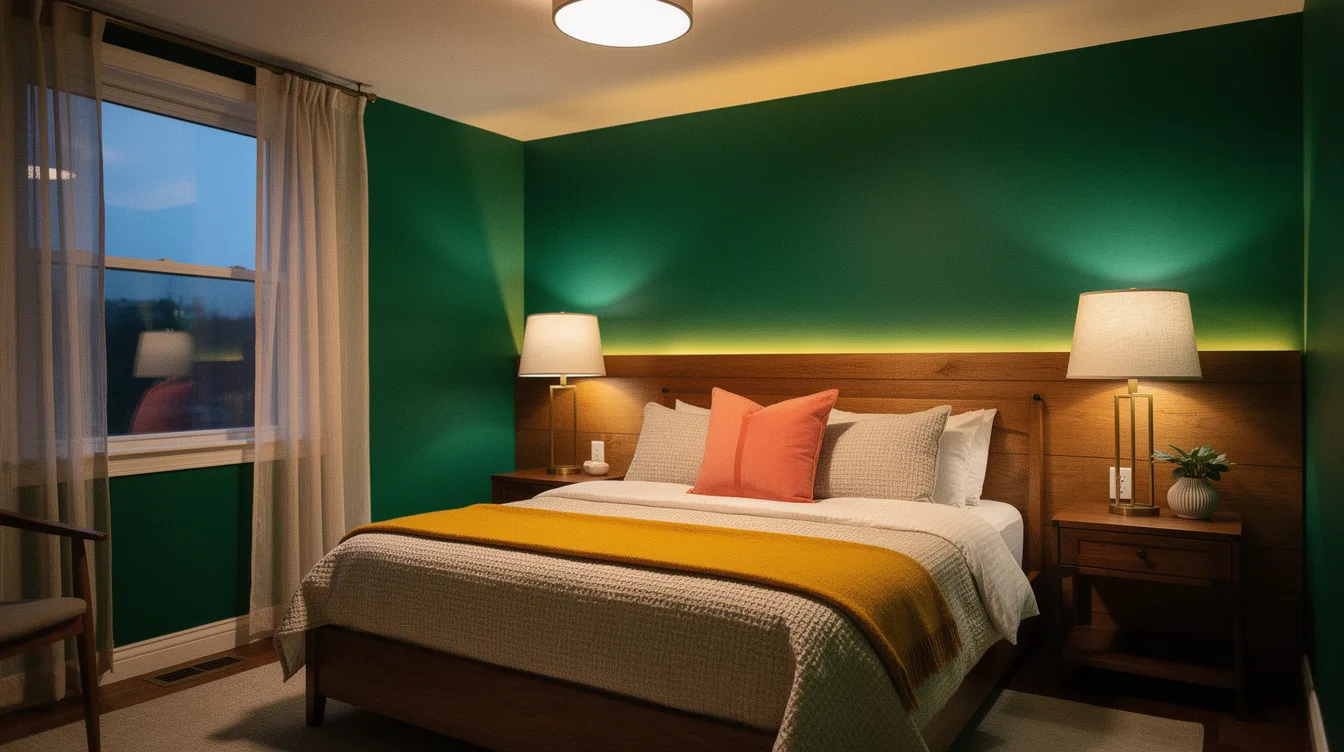
I learned this the hard way in a bedroom with a roughly 54-inch-wide bed: one bright ceiling light made the center visible while every wall seemed to retreat. A smaller bedroom needs light that reaches its edges without turning every surface into a spotlight.
The answer is usually better distribution, with an independently dimmable ambient source, reading light, and a low glow for nighttime.
Break Up the Single Overhead Spotlight
A lone ceiling fixture creates a bright island over the bed and lets the corners disappear, which visually pulls the walls inward. Keep it for ambient light, but give the perimeter a second source.
Add a pair of bedside lamps for reading, then use an indirect floor or wall light to catch the longest wall. That soft wall wash makes the room read wider after dark.
A plug-in wall sconce from Home Depot or Lowe’s is often more useful than adding another decorative tabletop lamp. The ceiling light should support the room, not do every job alone.
Keep the Ceiling Plane Clear
An oversized pendant light takes over the sightline and can make a low ceiling feel uncomfortably close. In a small bedroom, dramatic scale is rarely worth the visual crowding.
For ceilings under roughly 8 feet, choose a flush or semi-flush ceiling light about 12 to 18 inches across and roughly 6 to 10 inches deep. It leaves more open ceiling visible, which is exactly what a compact room needs.
With ceilings around 8 to 9 feet, a shallow semi-flush fixture roughly 14 to 20 inches wide can work well. Save a hanging pendant for higher ceilings and keep its lower edge roughly 7 feet above the floor outside the bed zone.
Swap Dark Shades for Light-Throwing Materials
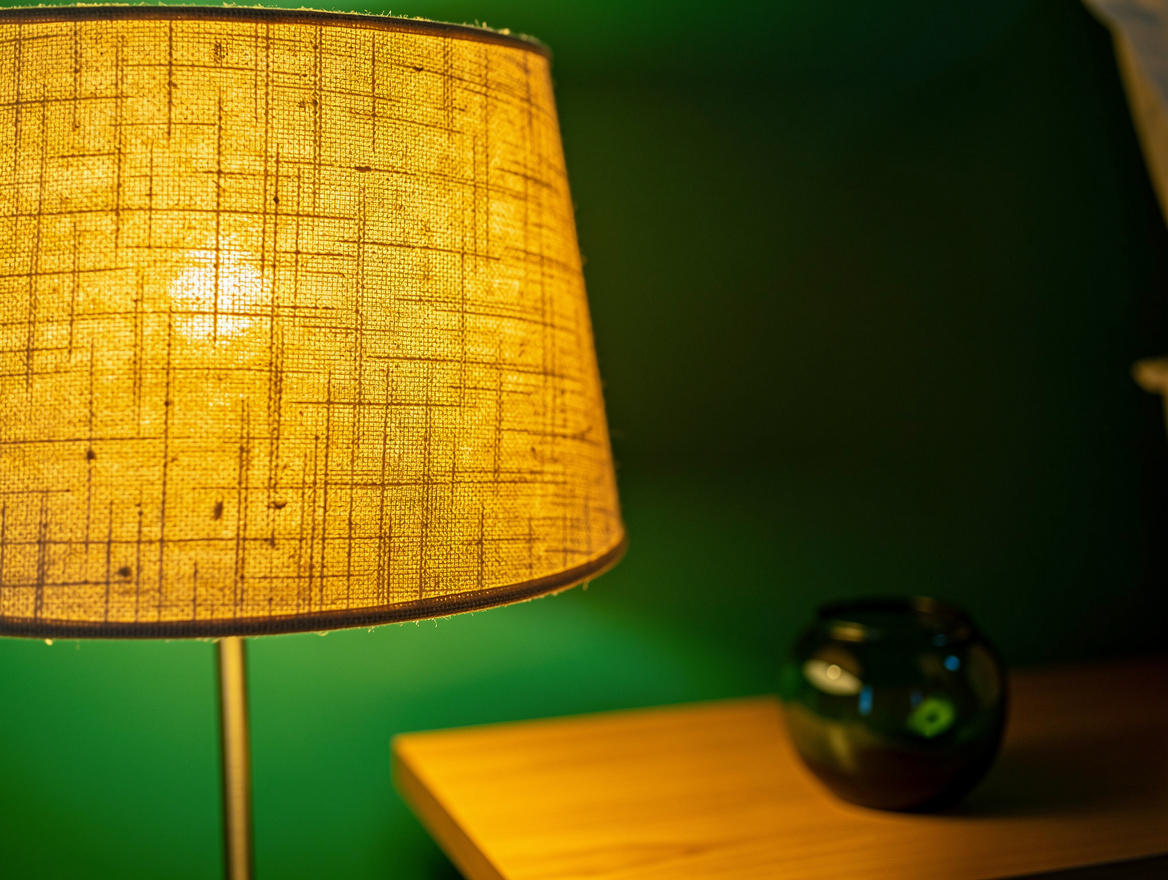
A black, narrow lampshade sends a hard pool of light onto the nightstand while the wall above it goes blank. That contrast creates a low horizon line and makes the ceiling feel lower.
Choose a linen shade, parchment shade, or opal glass globe that lets light travel toward the wall and ceiling. Ribbed glass also gives a bedroom some texture without blocking the glow.
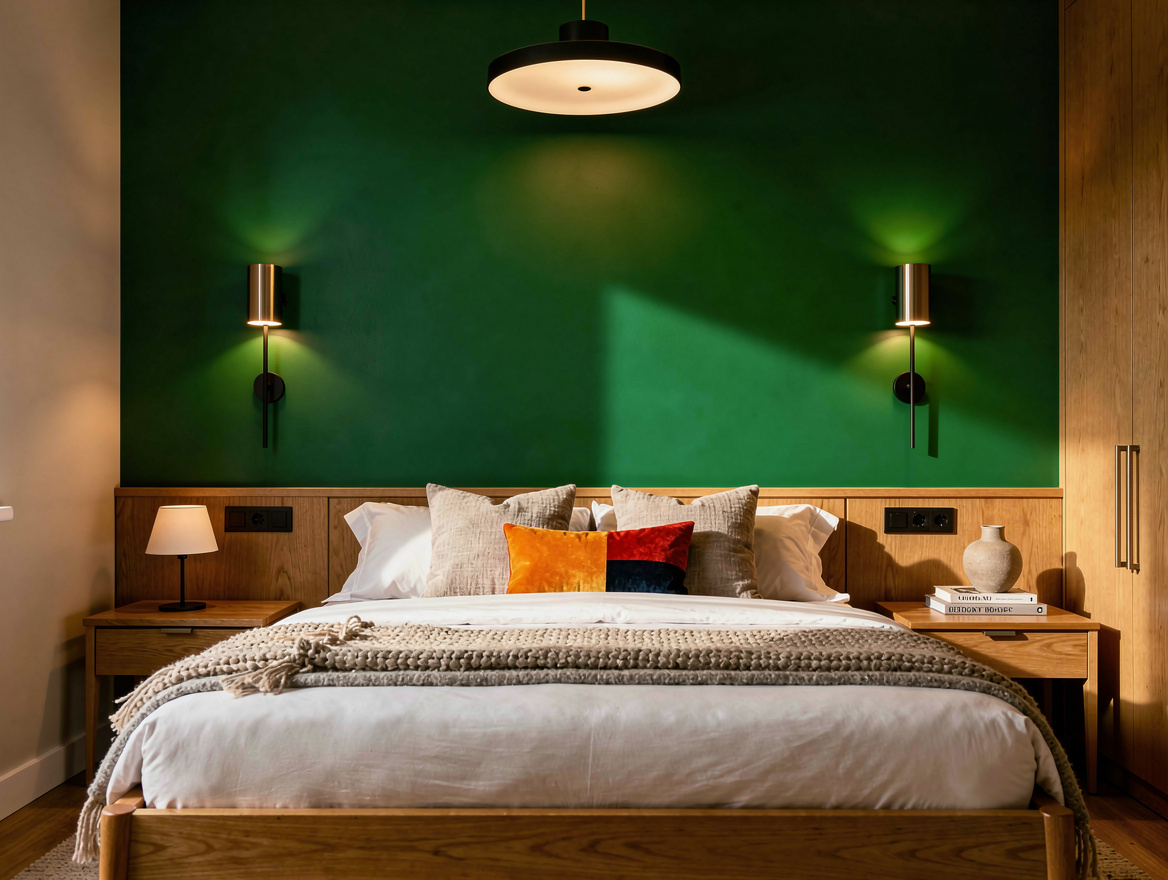
An upward-and-downward wall sconce is especially effective beside a headboard because it reveals more of the vertical plane. I would skip opaque dark shades unless the room already has strong ceiling lighting.
Warm Up the Bulbs Before Adding More Fixtures
Cool LED bulbs in the 4000K to 6500K range can make a bedroom feel clinical and expose every blank stretch of wall. The room may be technically brighter, but it rarely feels larger or more restful.
Make 2700K the default for soft white bulbs. It gives bedding, wood, and painted walls a gentler edge while preserving the depth that makes a bedroom feel hotel-like.
If you prefer a crisper look, 3000K LED bulbs can suit a boutique-hotel mood. Keep the color temperature consistent within the room, because mixed warm and cool bulbs make even a tidy space look accidental.
Remove Glare at Bed Height
An exposed high-output bulb at eye level forces attention onto the fixture, especially when you are sitting up in bed. Glare makes a room feel harsher and more enclosed than it is.
Use a frosted glass globe, a shaded reading lamp, or a bulb positioned outside normal seated and lying sightlines. The light should land on a page or wall, not in your eyes.
Visible LED strip lights cause a similar problem when their dots are exposed along a headboard or wardrobe. Hide the strip in an aluminum channel with a diffuser, behind the headboard, under the bed rail, or atop a wardrobe return.
Put Each Layer on Its Own Dimmer
Lighting every surface to the same brightness turns a bedroom into a flat box. A little falloff is useful because it lets the room keep depth while drawing attention to a curtain wall, headboard, or artwork.
Place the ambient ceiling light, bedside lights, and low accent light on separate dimmers or smart scenes. A dimmable smart bulb from Walmart, Target, or Amazon can be an easy starting point when rewiring is not practical.
Large table lamps also make narrow nightstands look cramped, particularly when the tables are under roughly 18 to 20 inches wide. Wall sconces free that surface for a book, water glass, and the visual breathing room a small bedroom needs.
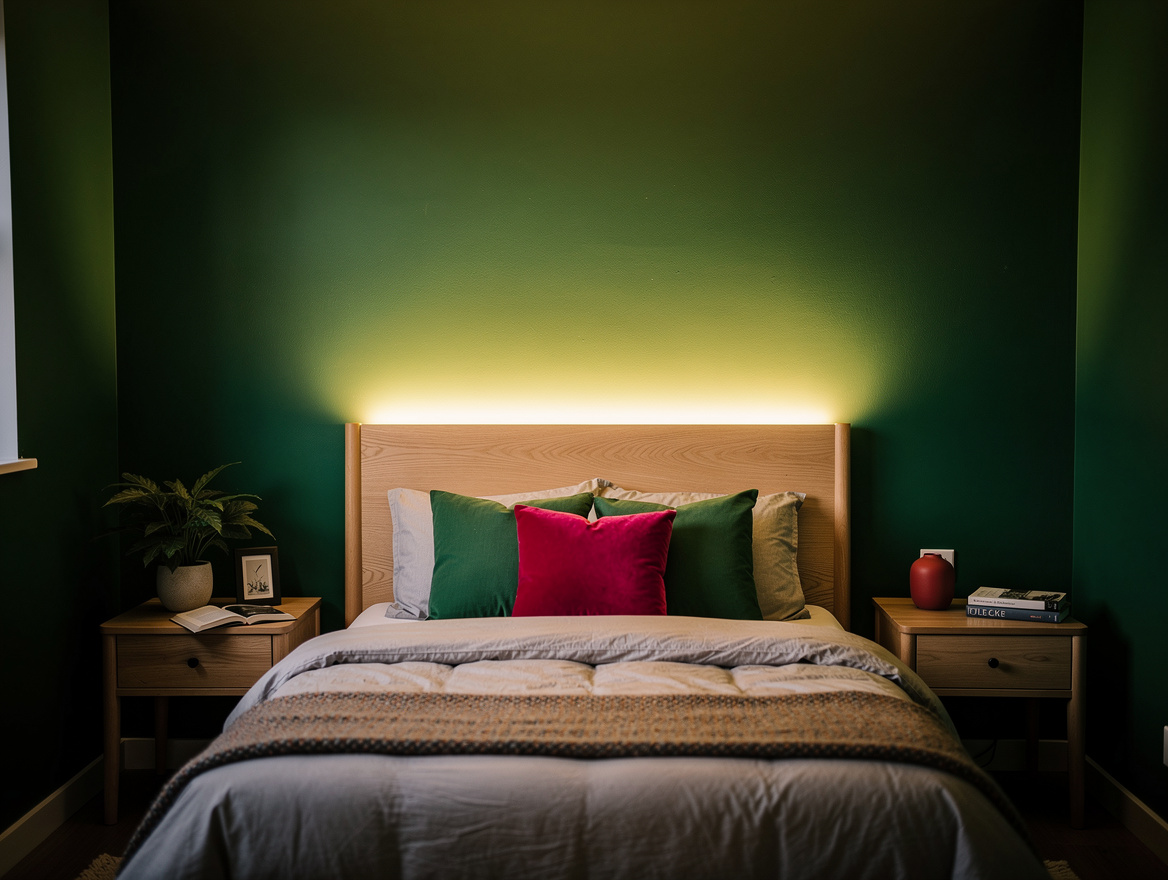
Start with the ceiling plane: replace the most intrusive overhead fixture before buying more lamps. Once the upper walls receive a soft glow, the bedroom will feel less boxed in at every brightness level.
Mia Carter writes about small-space living and budget home makeovers. She has restyled three rentals and tests most ideas in her own 45 sqm flat.