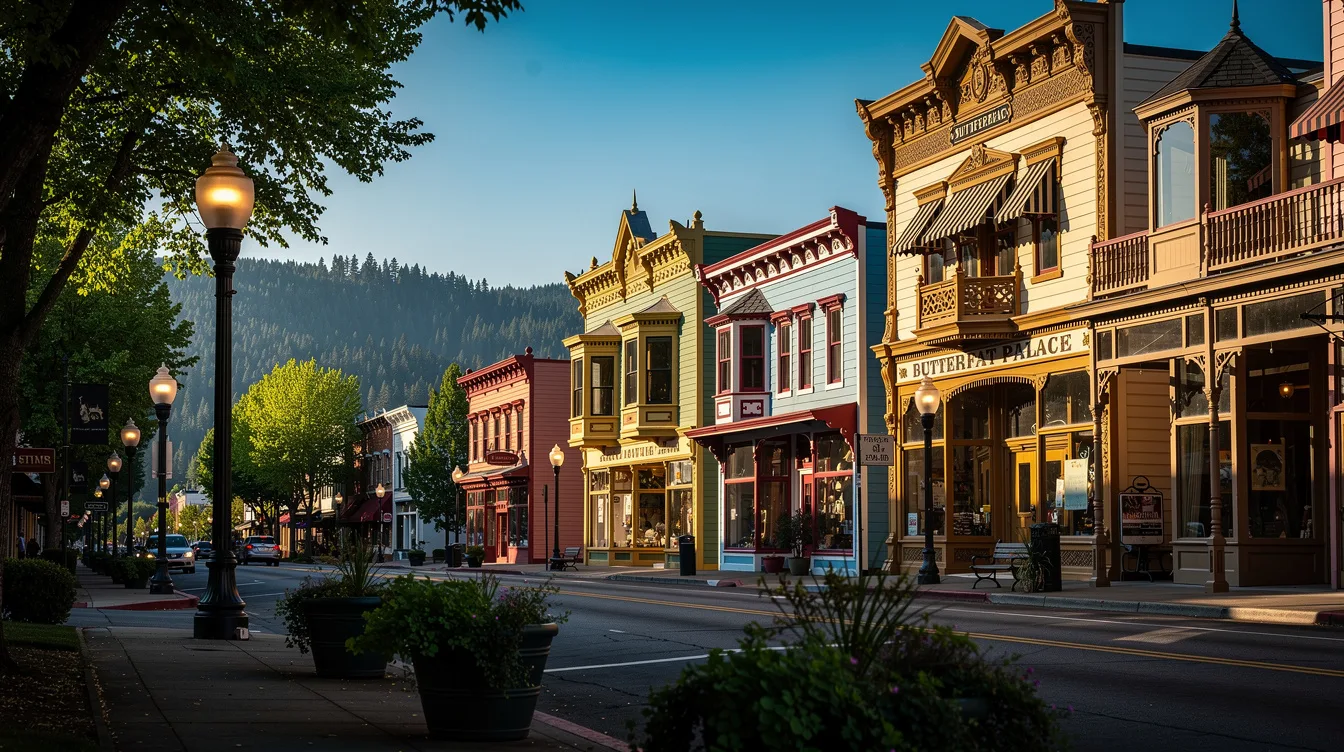
Ferndale was founded in 1872, and its downtown still looks shaped by the money that arrived with the dairy trade. The ornate Victorian storefronts and homes are called Butterfat Palaces, a nickname that gives this small Northern California town more character than polish.
With roughly 1,400 to 1,500 residents, Ferndale feels deliberately small. But it isn’t a museum set. You can walk Main Street, browse independent shops, stop at a café, and still sense that the town’s historic look is part of daily life.
Butterfat Palaces make Main Street worth the detour
The promise is right there on Historic Main Street: Victorian-era buildings with decorative facades, old-fashioned proportions, and the occasional flourish that dairy wealth could afford. The Butterfat Palaces are not a single landmark. They’re the visual language of downtown.
And that’s why Ferndale works better on foot than from a car window. You’ll notice the details slowly, from shopfront trim to historic inns, while the street stays compact enough that there’s no pressure to plan a full day.
The town can feel quiet, especially beside California’s better-known coastal stops. That’s the appeal. It has galleries and cafés, but it doesn’t ask you to rush from attraction to attraction.
The dairy past still explains the town
The “Butterfat” nickname comes from the historic dairy industry, which generated the wealth behind Ferndale’s elaborate Victorian buildings. That connection matters because it explains why a rural town in Humboldt County has such an unusually decorative downtown.
At the Ferndale Museum, local history, dairy-era heritage, and Victorian artifacts give the streetscape more context. If you’re drawn to historic towns, this is the useful stop before you begin noticing the architecture with sharper eyes.
But don’t expect a grand urban historic district. Ferndale’s scale is its strength. The buildings feel close enough to examine, and the town’s small population keeps the experience personal rather than performative.
A hilltop view, then spruce forest
The Ferndale Cemetery sits above town, with views over Ferndale, the Eel River valley, and toward the coast. It’s a contemplative stop, not a high-energy one, and that makes it a good counterpoint to downtown’s decorative facades.
And if you need trees after all that architecture, Russ Park offers roughly 100 acres of trails through Sitka spruce forest. The shift is immediate: town streets give way to darker trunks, softer ground, and the hush of a coastal grove.
You should still come prepared for a rural setting. Ferndale is near redwood country and the Lost Coast, but it isn’t built around big-city convenience. Its atmosphere is remote, though access from US-101 is straightforward.
Five miles separate town from Centerville Beach
Centerville Beach lies about 5 miles west of Ferndale, broad and relatively uncrowded. Because the beach is so close, you can spend the morning among Victorian storefronts and finish with wind, open sand, and a wide Pacific horizon.
From US-101, take the Fernbridge/Ferndale exit, cross historic Fernbridge, then drive about five miles through the Eel River Valley to downtown. Eureka is the nearest larger city, so Ferndale fits naturally into a Northern California route.
Is Ferndale a good base for the Lost Coast?
Yes, Ferndale is a practical base for the Lost Coast and nearby redwood areas. Humboldt Redwoods State Park, Redwood National and State Parks, and Lost Coast Headlands National Monument are all part of the wider region, though the town itself remains the quieter overnight-style stop.
That said, don’t come expecting a packed itinerary. Come because you want an old downtown with a real economic backstory, a beach nearby, and enough open country to make the drive feel like part of the point.
By the time fog settles over the pastureland and Main Street goes quiet, the Butterfat Palaces look less like a theme and more like Ferndale’s everyday skyline.