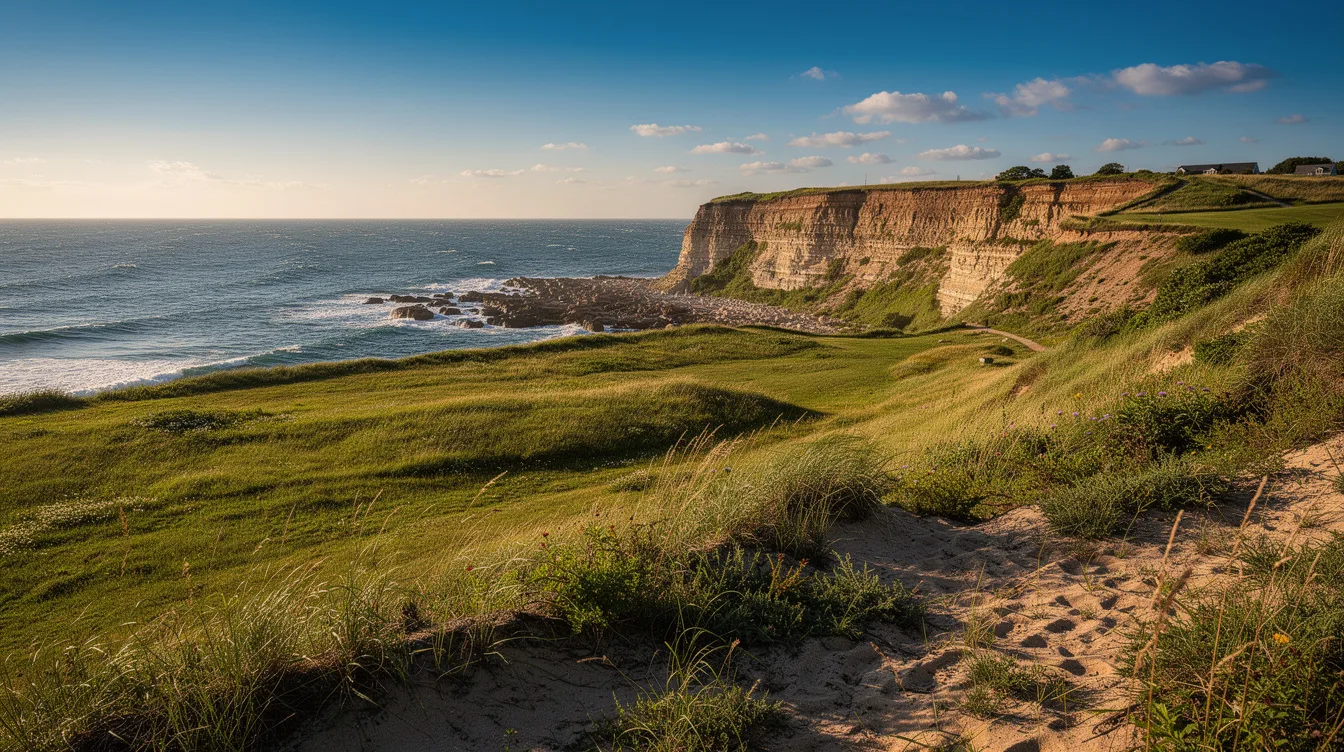
Block Island keeps about 40% of its land protected from development, which is why this Rhode Island summer favorite still has room to breathe. It feels close enough for a ferry day trip and far enough to reset your sense of scale.
And that protected ground is the point, not a footnote. The Nature Conservancy counts the island among 12 “Last Great Places” in the Western Hemisphere, a designation that explains why so much of the shoreline still feels defined by wind, grass, and open sky.
Forty percent protected changes the whole island
Block Island is small, about 10 square miles, yet it resists the crowded feeling that can overtake New England beach towns in summer. Protected land breaks up the built-up stretches, so a bike ride can move quickly from Old Harbor storefronts to quieter roads and exposed coastal views.
But don’t expect a wilderness trip. Old Harbor has Victorian hotels, restaurants, and small shops, and that contrast gives the island its character: lively in season, but never reduced to a single boardwalk strip.
You can spend a morning on the beach, then head toward Mohegan Bluffs when you want drama rather than another umbrella-lined shore. The cliffs make the coast feel larger than the island’s size suggests, while the salt air and steady wind keep the scene honest.
And if you’re choosing between a rushed visit and staying over, take one or two nights. That extra time lets you combine beaches, hiking, and sunset without turning every hour into a ferry-clock calculation.
North Light rewards a slower route
At the northern tip, North Light dates to 1867. It’s one of the island’s two historic lighthouses, along with Southeast Light, and it gives a practical reason to get beyond Old Harbor rather than circling the same few blocks.
The northwestern tip remains an undeveloped natural area and a resting stop for birds on the Atlantic flyway. You may come for the lighthouse, but the open ground is what stays with you: low vegetation, a broad horizon, and the sound of water beyond it.
But the island isn’t only for walkers. Bicycling, sailing, fishing, surfing, and hiking all fit here because the distances are manageable. A car isn’t essential, especially if you’re staying near Old Harbor, though taxis, bicycles, and mopeds make the farther beaches easier to reach.
That said, don’t confuse small with effortless. The bluffs and isolated stretches ask for some planning, and the most useful choice may be simple: rent a bike if you want the day to feel expansive rather than confined to the harbor.
Can you visit without bringing a car?
Yes. The year-round ferry from Point Judith/Galilee is the most practical vehicle connection, but you can leave the car behind. Old Harbor works well on foot, and local transportation can take you toward the beaches and cliffside stops when your legs are done for the day.
And seasonal ferry service also connects Block Island with Newport, New London, and Montauk. A regional flight from Westerly reaches Block Island State Airport in about 12-15 minutes, which is useful if you value time over the ferry’s slower arrival.
The ferry approach has its own appeal. The island appears as a low line over the Atlantic, then the harbor tightens into hotels and boats. You arrive with the smell of diesel and salt in the air, which is a much better transition than stepping out of a parking garage.
Summer brings energy, September brings space
From Memorial Day to Labor Day, Block Island is at its most animated. That’s when summer visitors come for beaches and harbor dinners, so reserve ferry space and lodging early if those are your travel dates.
But September and autumn suit travelers who prefer fewer people. The trade-off is real: some tourist services may be reduced. In return, you get a calmer island, with more room to linger at the coast instead of moving with the summer crowd.
Because so much land remains protected, Block Island doesn’t need a packed itinerary to justify the crossing. Take the ferry, walk Old Harbor, ride toward the bluffs, and leave time for North Light. By the time the boat turns back toward the mainland, the island is already shrinking into a strip of green and gray water.