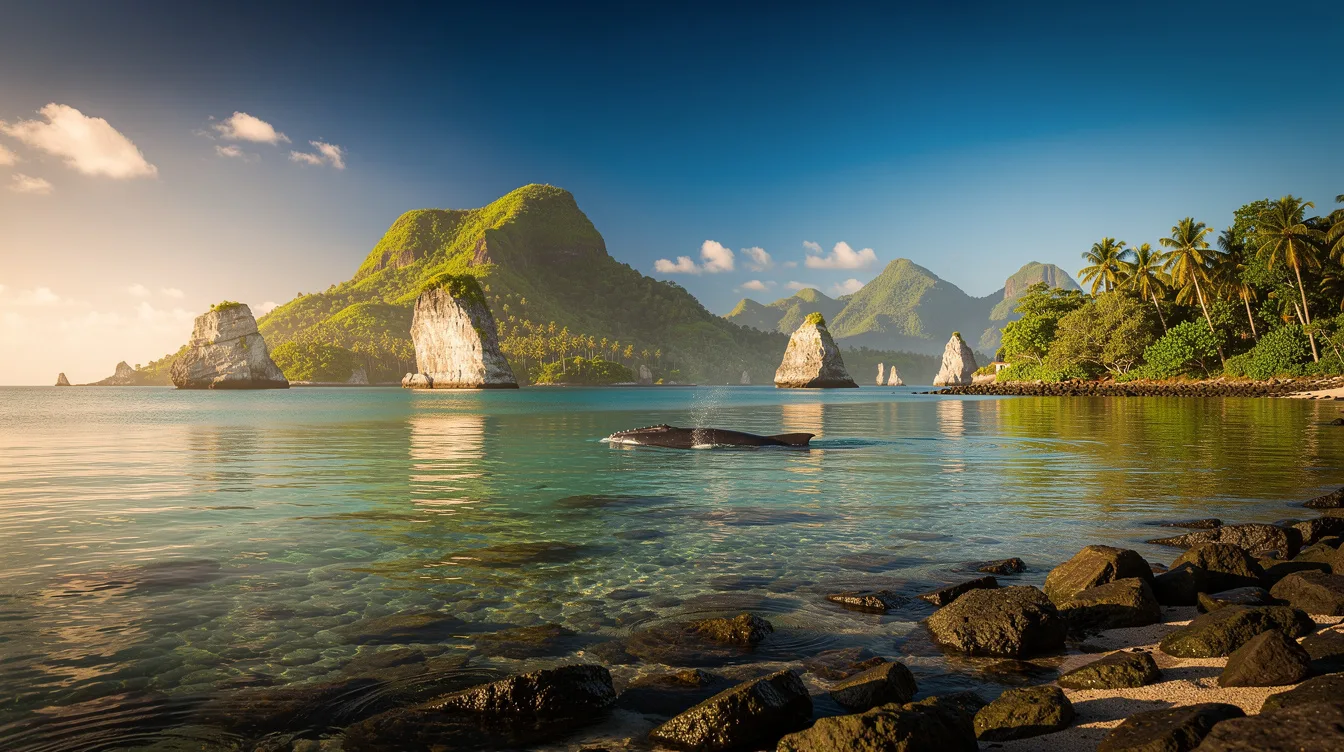
Vavaʻu is a Pacific archipelago where the sea sets the schedule. From July to October, humpback whales arrive to breed and give birth, and licensed operators lead regulated observation and swimming excursions.
And the setting feels made for slow travel: 40 islands, sheltered channels, coral reefs, and sea caves. You won’t come for nightlife or giant resorts. You’ll come to spend the day on the water, then hear the harbor settle after dark.
Forty islands turn every boat trip into the main event
The archipelago creates a maze of bays, islets, and protected waterways. The group stretches about 13 miles from east to west and 15.5 miles from north to south, so distances feel manageable once you’re aboard.
And the water is the reason to keep moving. The Ava Pulepulekai channel reaches 6.8 miles inland from Neiafu, giving sailors calm passages and giving visitors easy access to secluded coves. You can explore by boat, kayak, sailboat, or private excursion.
But don’t expect every outing to feel effortless. Wind and weather can change the plan, and remote islands have fewer backup options than a developed beach destination. That limitation is part of the appeal, provided you leave room in your schedule.
Neiafu gives the archipelago a useful starting point
Neiafu sits beside the Port of Refuge and works as Vavaʻu’s practical base. Hotels, restaurants, supermarkets, dive clubs, and boat operators cluster around the town, which means you can arrange a day on the water without sacrificing every evening to logistics.
And the town is where you should begin if you want flexibility. From there, you can look toward the channels, hear boat engines across the harbor, and organize whale trips, diving, or a cave excursion. You’ll have more independence than at an isolated lodge.
Can you fly there without staying on Tongatapu?
Yes, the usual route runs through Fuaʻamotu International Airport on Tongatapu. Vavaʻu lies about 155.3 miles north of Tongatapu, where Tonga’s capital, Nukuʻalofa, is located.
But build in at least one spare night on Tongatapu if international and domestic flights aren’t on the same ticket. That extra night may feel inconvenient on paper. It feels much better than missing a boat trip after a tight connection.
Whale season runs from July to October
July to October is the defining window for humpback whales in Vavaʻu. They come into these waters for breeding and calving, so a whale excursion becomes more than a sightseeing cruise. It becomes the trip’s central appointment.
And you must book through licensed operators, because both whale watching and swimming are regulated. Choose the operator before committing to a nonrefundable hotel, since daily capacity is limited and weather can postpone a departure.
But whale season is also the busiest period for demand. August or September offers the strongest overall balance of whales, boating, snorkeling, and diving, while May through October generally brings the better conditions for marine activities.
Two sea caves show different sides of Vavaʻu
Swallows’ Cave is accessible by boat and is often paired with snorkeling. The setting is immediate and physical: dark rock, reflected water, and the low sound of an engine entering the cavern.
And Mariner’s Cave asks more of you. Reaching its inner chamber requires a short swim underwater, so you should be genuinely comfortable in open water before adding it to the day.
But you don’t need to choose caves over reefs. Vavaʻu also has coral gardens, walls, wrecks, and strong marine life, making a mixed boat day more satisfying than repeating one activity. Bring your own quality mask, water shoes, and reef-friendly sun protection.
Leave four to six nights for the weather
Four to six nights gives Vavaʻu enough breathing room. Use one day for Neiafu and Mount Talau, which rises to 669 feet, then reserve another for whales, diving, or a postponed departure.
And save a full day for island hopping, sailing, or kayaking toward an isolated beach. You’ll enjoy the archipelago more if the itinerary has open space instead of a new crossing every morning.
But November through April is wetter, with possible storms and regional cyclone risk. By late afternoon, the best plan may be no plan at all: salt on your skin, a quiet harbor below, and the last boat easing back toward Neiafu.