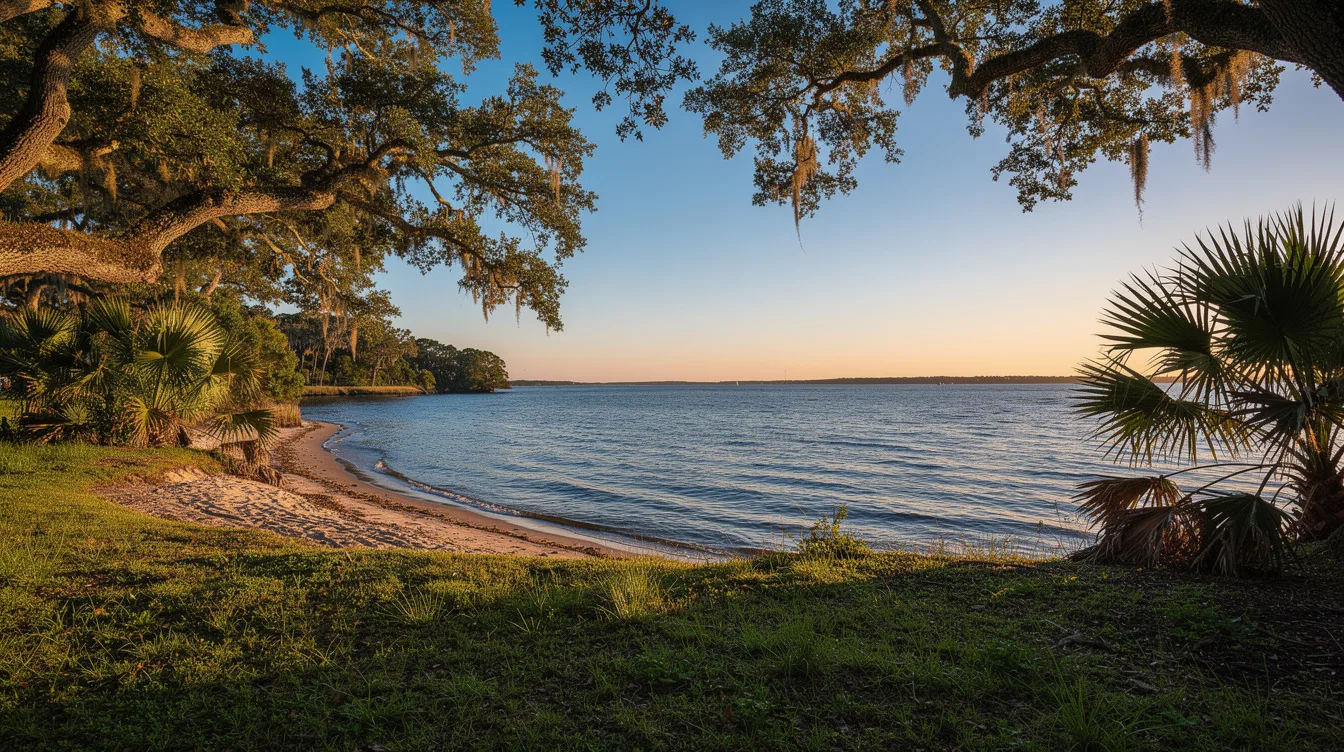
Ocean Springs occupies the 1699 site of Fort Maurepas, the first permanent French outpost in French Louisiana. That fact gives this small Mississippi Gulf Coast town more weight than its easygoing streets suggest. And because it sits on Biloxi Bay, just east of Biloxi, history arrives with salt air.
Fort Maurepas began here in April 1699 as France tried to protect its colonial claims from Spanish encroachment. The original fort is gone, and a wooden replica was destroyed by Hurricane Katrina. But Fort Maurepas Park keeps the founding story close to the waterfront.
Start where French Louisiana began in 1699
The town’s central claim is direct: this was the foothold from which French Louisiana began. You won’t find a grand stone citadel. Instead, Fort Maurepas Park asks you to look past the modern shoreline and picture a far earlier coast.
That restraint suits Ocean Springs. It’s historical, but never museum-stiff. And the town’s compact downtown makes it easy to move from the fort’s story to galleries, cafes, and streets shaded by live oaks without turning the visit into an assignment.
Follow Washington Avenue and let the pace slow down. Shop windows, art spaces, restaurants, and bars sit beneath heavy oak branches. You can walk it comfortably, which matters after the broad roads and casino scale across the bay.
Biloxi is about 2 miles away, yet Ocean Springs feels like a different decision. Stay here if you want access to Biloxi without sleeping in a casino hotel. It’s lively enough for dinner, but more residential once the evening settles.
The bridge tells the coast’s harder story
At Front Beach, the view opens across Biloxi Bay toward the bridge. The water and skyline can look calm, especially near sunset. But this is also a shore shaped by storms, and Ocean Springs doesn’t hide that fact.
Hurricane Katrina’s 28-foot storm surge destroyed the Biloxi Bay Bridge in 2005. It also damaged shoreline buildings and swept away the wooden Fort Maurepas replica. The calm bay is real, but so is the coast’s exposure.
The replacement bridge has a main span rising 95 feet and carries six lanes. You see infrastructure, not romance, but that’s precisely why it works as part of the place. It connects Ocean Springs to Biloxi while reminding you what rebuilding required.
And Front Beach is better treated as a bayfront walk than a tropical beach day. The Gulf Coast setting is pleasant, though the water and sand aren’t Florida or Caribbean material. Bring that expectation, and the shoreline feels honest rather than disappointing.
Art and bayous give the town its daily rhythm
Ocean Springs has the reputation of an arts community for a reason. The Walter Anderson Museum of Art anchors that identity, while downtown galleries and studios keep the creative side visible beyond one stop. You can make culture the point of your visit here.
But art isn’t the only counterweight to the bay. The Davis Bayou area of Gulf Islands National Seashore brings wetlands, trails, birdwatching, and kayaking into the same town. The national seashore’s headquarters is in Ocean Springs, so nature isn’t an afterthought.
The air changes near the bayous. Oak shade gives way to quieter water and marshy edges, with birds cutting across the open sky. If you’ve spent the morning on Washington Avenue, this is where the town starts to feel less polished and more coastal.
More than 100 restaurants gives you plenty of options, especially for Gulf seafood and independent dining rooms. That said, a one- to three-night stay is the right scale. Ocean Springs rewards lingering over a meal and a walk, not racing through a checklist.
Go in spring or fall, then leave room to wander
Spring and fall are the smartest seasons because temperatures are generally mild to warm. Summer is hot and humid, with frequent afternoon or evening thunderstorms. You can still visit, but plan outdoor time early and keep a dry indoor stop in reserve.
The town has 18,429 residents according to the 2020 Census, so it retains a local scale despite its tourism pull. And that smaller size is the appeal. You can cover downtown, the waterfront, and a nature stop without spending the day in traffic.
Drive over from Biloxi, walk beneath the live oaks, then pause at the bay where French Louisiana’s first permanent outpost once stood. By the time the light softens over Biloxi Bay, the bridge carries cars home and the water goes quiet.