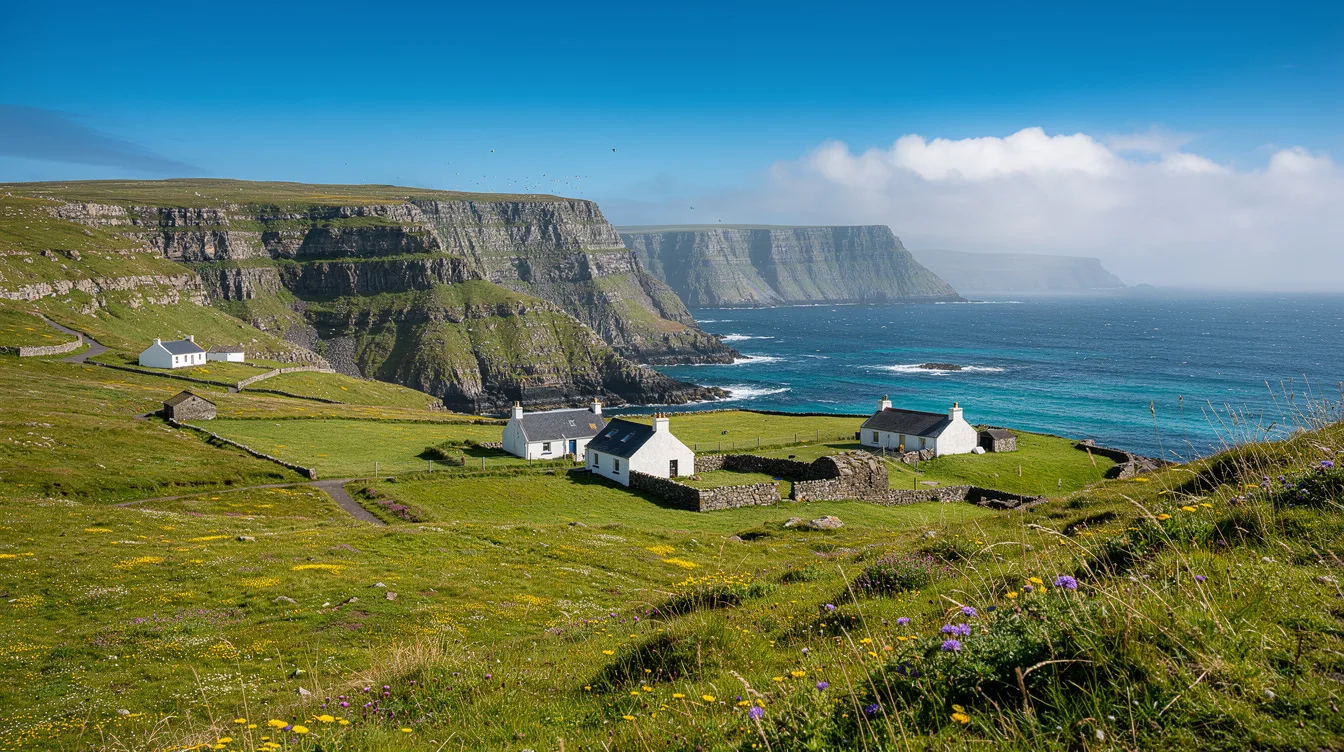
Fair Isle has just 44 permanent residents, and that small number changes the feel of every arrival. Britain’s most isolated inhabited island sits between Shetland and Orkney, where the sea decides more than any itinerary ever will.
You don’t come here to fill a schedule. You come because the crossing is part of the deal, and because a place this small can still stop more than 350 bird species in their tracks.
Forty-four residents, and a migration route with real pull
More than 350 bird species have been recorded on Fair Isle. The island lies on a major migration route, so spring and autumn bring birders watching the sky with a level of patience that feels entirely appropriate here.
And 27 species made their first British appearance on this island. That’s the central surprise: a community of 44 lives amid an international bird corridor, where an ordinary walk can turn into a serious sighting.
The Fair Isle Bird Observatory reopened in 2025 after a 2019 fire. It is the main place to stay, which means you should book lodging before transport. Capacity is genuinely limited, not a marketing line.
The island is tiny, but the weather makes it feel bigger
Fair Isle is about 3 miles long and 1.5 miles wide. Most residents live in crofts on the southern half, while the north becomes rocky moorland, exposed and far less domestic.
But this isn’t a casual stroll if wind or rain arrives. You’ll want waterproof layers and shoes that can handle wet ground, because the island’s appeal comes with little interest in keeping visitors comfortable.
Ward Hill reaches 712 feet, the island’s high point. The scale can feel disproportionate to the map. Salt air, sheep, and the hard sound of wind do the rest.
Getting to Fair Isle means accepting the delay
The sea route runs from Grutness on Mainland Shetland to North Haven. The 2-hour-30-minute crossing carries only 12 passengers, and cars do not go aboard. That limitation keeps the island quiet, but it also removes any illusion of flexibility.
You can also fly from Tingwall near Lerwick. The small flight takes about 25 minutes, though fog and wind can interrupt it. Build extra days into a wider Scotland trip, because Fair Isle won’t bend around a fixed onward booking.
It lies about 23.6 miles from Sumburgh Head, roughly midway between Shetland’s Mainland and North Ronaldsay in Orkney. That sounds close on paper. Out on the water, it feels like an edge of the map.
What you’ll find after you arrive
There is a shop and post office, Stackhoull Stores. There is no pub and no conventional restaurant, although the Bird Observatory generally offers food and a bar or lounge by arrangement.
And that’s why Fair Isle works best for travelers who like their evenings quiet. You can walk, watch the light settle over the crofts, then return to the observatory rather than chase a dinner reservation.
The island has belonged to the National Trust for Scotland since 1954. Its life mixes crofting, conservation, tourism, and knitting, including the patterned wool style that carries Fair Isle’s name far beyond these shores.
Choose the season for what you actually want
Spring and autumn are the right calls if migration is your reason for coming. Summer shifts attention to flowers, breeding seabirds, and cliffs. You can visit year-round, but each season asks for a different kind of attention.
But don’t treat the island as a quick stop between bigger Scottish destinations. The weather can delay sea and air travel, and the lack of cars means you’ll move at walking pace once you’re here.
For my money, that is the point. By the time the boat reaches North Haven, the noise drops away, and the wind is already moving over the grass.