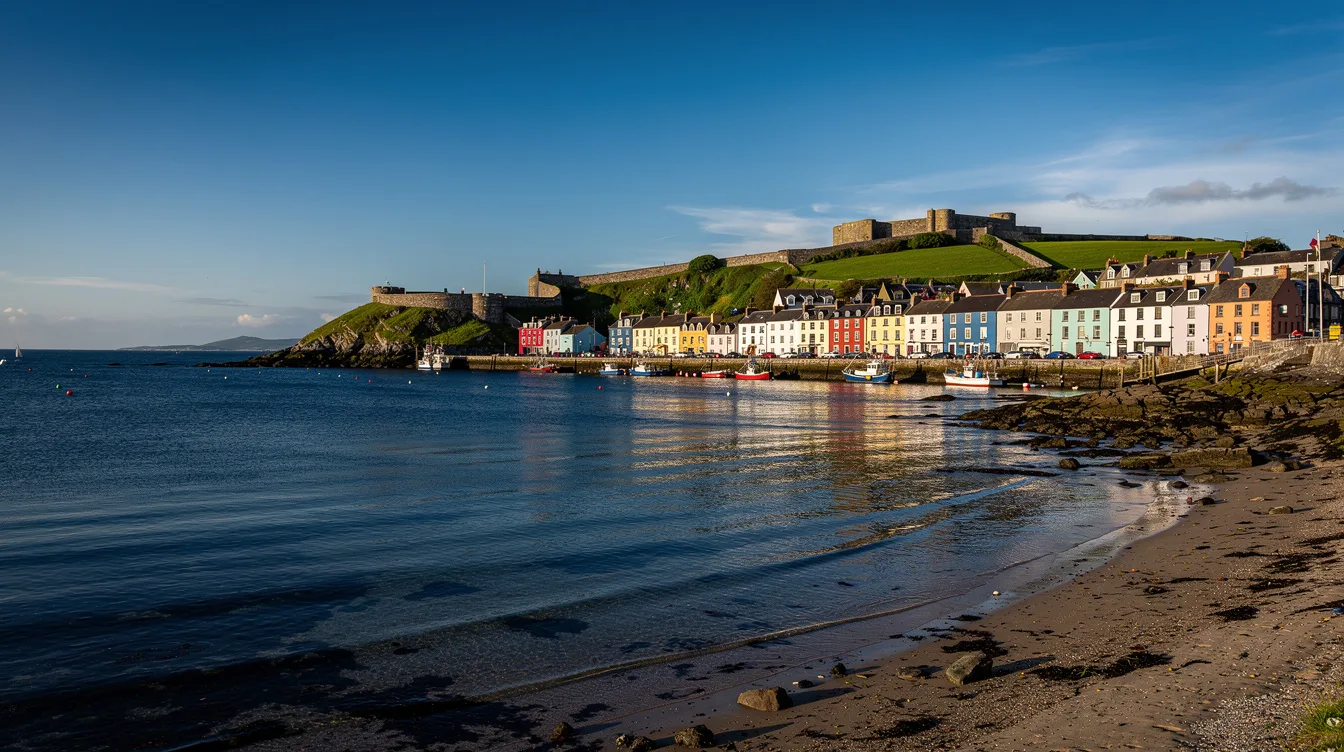
Kinsale became a battleground in 1601 when a Spanish military expedition landed in this Irish harbor. That fact changes the way you see the town. The painted facades and marina feel easygoing now, but the water once drew armies toward County Cork.
You’ll find Kinsale at the mouth of the River Bandon, about 15.5 miles south of Cork City. It’s a compact port with narrow streets, independent shops, cafes, and pubs. Chic, but still lived-in enough to reward an unhurried weekend.
1601 turned a harbor into a battlefield
The Spanish expedition arrived in Kinsale during the Nine Years’ War, intending to join Irish rebel forces and attack England through Ireland. The resulting Battle of Kinsale came at the war’s end, and English forces defeated the Irish and Spanish alliance.
And you don’t need a battlefield plaque at every corner to feel the town’s strategic logic. The harbor cuts inland, so vessels could find shelter while the surrounding headlands controlled the approach. Salt hangs in the air, and the water keeps pulling your eye outward.
For historical context, stop at Desmond Castle, home to Kinsale Museum. It’s a small visit, not an all-afternoon commitment, but it gives the old streets more weight before you wander Market Street and the quays.
Two forts still hold the harbor in view
Charles Fort, built in 1677 at nearby Summercove, is the clearest reminder that Kinsale’s military importance didn’t end with the battle. Its star-shaped form faces the harbor entrance, where French or Spanish landings were once a real concern.
But Charles Fort isn’t just for military-history devotees. The scale is striking, and the views over the bay make you understand why defenses went here. Plan 1.5 to two hours, then check current opening hours before committing, especially outside peak season.
Can you walk to Charles Fort?
Yes. The Scilly Walk links Kinsale and Summercove, and it’s often paired with a fort visit. You’ll want decent shoes and a weather-aware attitude.
Coastal walks are better when the light is clear, but Irish weather doesn’t negotiate.
Across the water, James Fort is quieter and more exposed. It has a rougher feel than Charles Fort, which is precisely its appeal. In wartime, a chain could be stretched between the forts across the harbor mouth to obstruct incoming ships.
The town earns its reputation after the history lesson
Kinsale is known for seafood restaurants, bistros, and more ambitious dining rooms. That concentration makes dinner part of the trip rather than a logistical afterthought. And because tables fill quickly in season and on weekends, reserve before you arrive.
Order chowder or seafood near the harbor, then let the evening loosen up in a pub if music is on. The town is small enough to cover on foot, so you can have a proper dinner without turning the night into transport planning.
St Multose Church dates to 1190, another useful counterweight to the bright shopfronts nearby. Kinsale can look almost too cheerful in the afternoon sun. Then an old church wall or a fort rampart brings the long timeline back into focus.
When should you go to Kinsale?
Visit from May through September for longer days and the best chance of cooperative weather. It’s also the busiest and pricier period. Late spring and September are the smarter compromise if you want coastal walks and fewer people in the streets.
And give it two nights if you can. One day covers the center and Charles Fort, but two nights leave room for a slow harbor lunch, a walk, and dinner without checking your watch. Kinsale works best when you stop treating it as a quick stop from Cork.
Do you need a car?
No, not once you’re in town. Bus Éireann’s 226 connects Kinsale with Cork City, Cork station, and Cork Airport in roughly an hour. A car or taxi becomes useful for Old Head of Kinsale, where cliffs and open sea make a worthwhile extension.
Kinsale can also mark the start or finish of the Wild Atlantic Way. Yet the town’s best moments stay small: harbor ropes tapping against masts, a yellow or blue facade catching damp afternoon light, and the fort walls still watching the entrance.