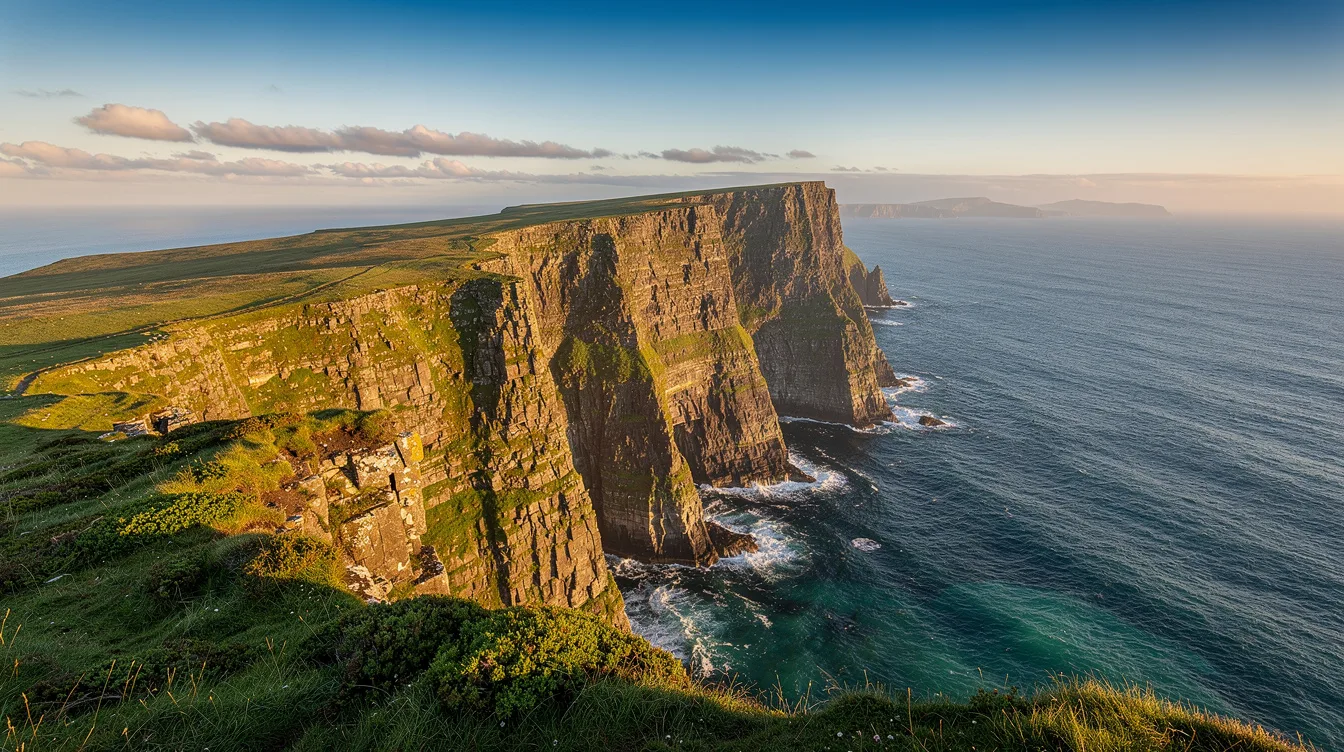
Achill Island rises from Ireland’s Atlantic edge with a fact that changes how you see it: Croaghaun’s sea cliffs reach about 2257 feet, the highest in Ireland. That height doesn’t arrive with a grand entrance. You cross a bridge near Achill Sound, follow roads west, and watch the island grow wilder by the mile.
But Achill is more than a cliff viewpoint. The island pairs high coastal ground with beaches, bogs, lakes, and Irish heritage sites, so you can build a full day around one long drive. And because you can reach it by car, this feels remote without becoming difficult.
I’d give it 2-3 nights if hiking matters.
Croaghaun makes the island feel much bigger
Croaghaun is the reason to come when you want scale rather than polished sightseeing. Its cliffs rise about 2257 feet above the Atlantic, and the open exposure makes the walk feel serious. You’ll want proper mountain judgment here, because this is not a casual stroll from the beach.
But the reward is a view over a coast that seems to keep unfolding. Wind, fog, and rain can arrive at any time, even from late spring through early autumn. And when the weather clears, I think Croaghaun gives Achill its strongest argument.
The Wild Atlantic Way feels especially wild here.
Keem Bay is the beautiful compromise
Keem Bay is Achill’s signature stop, with pale sand, clear water, and steep green slopes closing around the shore. Go early in summer, because the bay draws the island’s attention. You can enjoy the view quickly, but I’d stay long enough to hear the water working against the sand.
And the bay is easy to pair with Keel, Dooagh, and the western road. But you shouldn’t expect a resort day with endless facilities. Keel makes the better base for cafés, lodging, and watersports, while Keem feels like the payoff at the end of the drive.
Keem Bay is where the island earns its reputation.
Slievemore adds history beneath the mountain
Achill’s deserted village below Slievemore changes the mood completely. Stone ruins sit beneath the mountain, connected with historic seasonal settlement. You can walk among them with the Atlantic weather moving across the slopes, and the silence makes the site more affecting than a crowded museum.
But the island’s history isn’t arranged for easy consumption. The Achill Mission at Dugort, Kildownet Castle, and heritage sites around Bunnacurry require some route planning. And if you’re interested in the island beyond its views, I’d combine Slievemore with the northern coast.
1887 also matters here, since Achill has been linked to the mainland by bridge since then.
Can you see Achill in one day?
Yes, but a full day will feel brisk. Cross at Achill Sound, continue toward Bunnacurry or Dugort, then drive via Slievemore, Keel, Dooagh, and Keem Bay. You’ll cover the major western sights, though every stop competes with the next stretch of coast.
And the island has roughly 79.5 miles of coastline, which explains why quick visits can feel incomplete. But you can make the route work if you start early and accept fewer walks. I’d save the Atlantic Drive and Minaun Heights for clear evening weather, when the bays and offshore islands open up below the road.
Can you visit without a car?
Yes, but a car gives you far more freedom. Bus Éireann route 450 links Achill with Westport, Newport, and the wider Mayo network. You can also use the Great Western Greenway, whose Achill-Westport route covers about 27 miles for cycling or walking, depending on your section.
And Keel is the practical base if you want facilities and beach access. But Dooagh suits a quieter west-coast stay, while Dugort places you closer to Slievemore and heritage sites. County Mayo rewards travelers who leave room for weather changes.
Go when the days are long, not when the forecast is perfect
Late spring through early autumn generally gives you the best conditions for beaches, hiking, and long drives. Still, Achill keeps its Atlantic temperament. Fog can erase the cliffs, rain can darken the roads, and wind can turn a simple viewpoint into a bracing stop.
But that uncertainty is part of the island’s appeal. You come for Ireland’s highest sea cliffs and stay because the weather keeps changing the view. And by evening, with the last light fading over Keem Bay, the wind is usually the only sound left.