The ferry from Fromentine docks at Port-Joinville after 70 minutes on open Atlantic water, and the smell that hits you first is diesel and salt and yesterday’s catch. The crowd that crossed with you spreads along the quay, finds a café, orders coffee, and stays close to the harbor. This is not a criticism. It’s a pattern, and it’s why the other side of this island is almost always empty.
Île d’Yeu is roughly 11 miles long and 4 miles wide. Visitor cars are banned. The bicycle rental shop on Rue du Marché is three minutes from the dock, and most people walk past it without stopping.
The car ban is real, and it reorganizes everything
Ferries carry vehicles for residents and authorized commercial purposes. For visitors, the island runs on foot traffic and bicycles, and that single fact determines everything about who sees what. Port-Joinville, where the island’s roughly 4,900 permanent residents concentrate most of the services, is compact enough to walk in twenty minutes.
But the Côte Sauvage, the Vieux Château on the northwest tip, the open heath above the cliffs: those are 4 to 5 miles from the harbor. On foot in July heat, with a last ferry to catch, most visitors calculate it isn’t worth the effort. That calculation is exactly why the western coast stays quiet by early afternoon.
Because access infrastructure shapes everything on French Atlantic islands, the absence of a bridge here isn’t incidental. It’s the whole logic of the place.
Port-Joinville to the Côte Sauvage: what the ride costs you
The eastern half of the island is where everyone stays. The harbor water is flat because the island mass blocks the prevailing westerly wind, and the beaches near Port-Joinville are calm enough for swimming through most of the summer. Local fishing crews who have worked this harbor for decades will tell you the morning market is worth arriving early for.
The D38 cuts west toward Saint-Sauveur. Île d’Yeu tops out around 100 feet at its highest point, so the elevation gain is modest, but the landscape changes within 2 miles of the port. The hedgerows drop. The road opens to granite heath. And then the wind arrives, not gradually but all at once, like a door opening.
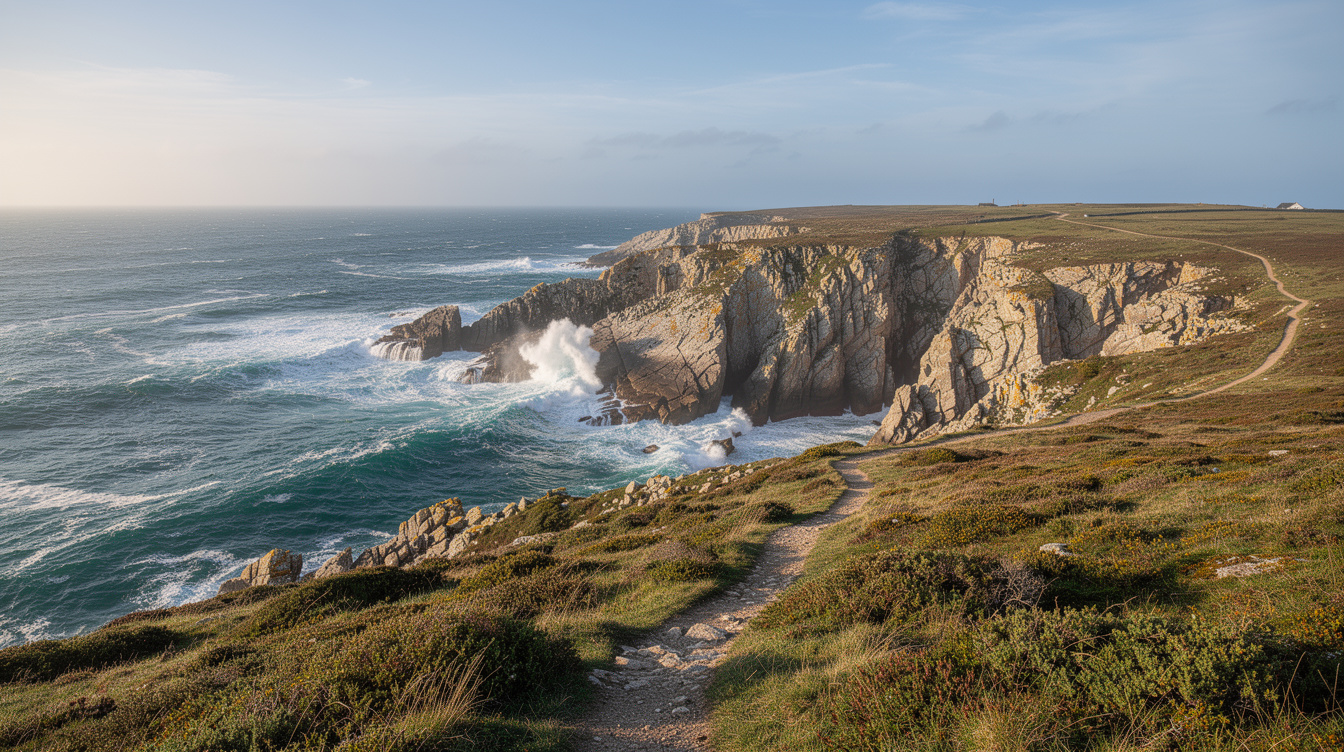
By the time you reach the coastal path above the Côte Sauvage, the temperature is noticeably cooler than the harbor. The schist and granite cliffs average 30 to 50 feet here, and the Atlantic swell hits them directly with nothing of consequence between this coast and open ocean.
The Côte Sauvage works differently than the photographs suggest
The Vieux Château, a medieval fortress ruin on a rocky promontory at the island’s northwest, is accessible along the coastal GR80 trail from Saint-Sauveur. The path takes roughly 45 minutes and is uneven in places. There’s no café here, no rental chair, nothing that requires payment. On a moderate Atlantic day the spray from Pointe du But reaches the path above the rocks.
And the sound carries. A boat captain who has crossed these waters for years once described the western coast as a different island entirely. That’s accurate. The contrast between the two sides isn’t seasonal; it’s geological and permanent.
Geography that creates calm on one side while the other stays exposed is a pattern that repeats across the Mediterranean too, but on Île d’Yeu you can bicycle between both versions in under 30 minutes.
When to go, and what the island isn’t
August is a different island. Accommodation across the island’s small stock of hotels and rentals books out months ahead, and the ferry runs fuller crossings. June and early September offer the same coastline with fewer people and bicycle shops that still have inventory. The Atlantic water reaches about 64°F in June, cold enough that local guides suggest a shorty wetsuit for anything longer than a quick swim.
The island has no resort infrastructure, and that’s the feature. But it also means there’s no fallback if you haven’t planned. Coastal places where development restrictions keep the shoreline intact require a little more planning and reward it considerably.
Your questions about Île d’Yeu answered
How do you get to Île d’Yeu, and can you bring a car?
Ferries depart from Fromentine (roughly 50 miles south of Nantes) and from Saint-Gilles-Croix-de-Vie. The Fromentine crossing takes approximately 70 minutes; summer service runs multiple crossings daily. Visitor vehicles are not permitted. The parallel with other French coastlines where the access barrier filters the crowd is exact: the bicycle rental shops in Port-Joinville charge roughly $11 to $16 per day, with electric bicycles available for the crosswind return from the western coast.
When is the best time to visit Île d’Yeu?
June and early September hit the right balance. The Côte Sauvage path is fully passable, the island’s small restaurant scene runs full hours, and the August reservation pressure hasn’t arrived. It’s touristy in August, and almost yours in June.
How much does a day trip to Île d’Yeu cost?
A return ferry ticket from Fromentine runs approximately $38 to $50 per adult depending on season and booking window. Add $11 to $16 for bicycle rental. A portside lunch of grilled sardines and local Vendée wine costs roughly $22 to $32 per person. Budget $75 to $100 per adult for a comfortable day including transport, bicycle, and a proper meal.
By 5pm the harbor café is filling again with people who came over on the morning ferry. Their bicycles are still parked outside the rental shop, uncollected. Four miles west, the light on the Côte Sauvage has gone copper and the Atlantic is doing what it does whether anyone watches or not.