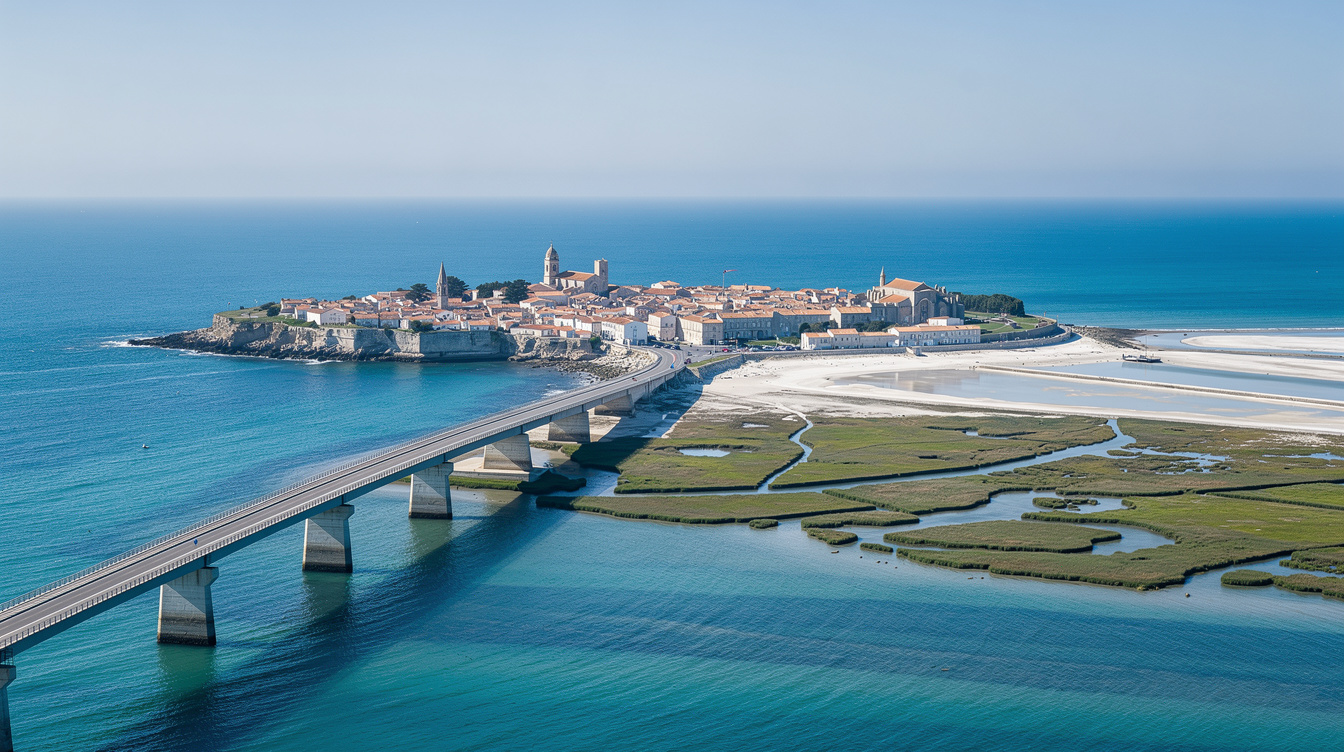
The toll plaza at the eastern end of the Pont de l’Île de Ré tells you what month it is before you’ve crossed a single mile. In late September, you pay roughly $10 and the road ahead is open. In August, you pay around $18 and join a queue that’s already been moving for forty minutes. The bridge opened in 1988 and removed the natural visitor ceiling the old ferry imposed. The toll is the only friction left, and it’s not enough.
What the bridge toll is actually telling you
The toll operates on a tiered model: approximately $10 off-season, rising to around $18 in July and August peak. The westbound crossing, leaving the island, is always free. That asymmetry is deliberate, and it matters. Because the bridge replaced the ferry, there’s no daily departure limit anymore, and the result is an 18,000-person island absorbing an estimated 200,000 summer visitors across 19 miles of Atlantic limestone.
Cross in the second week of June and the road through Saint-Martin-de-Ré moves. Cross on August 10th and it doesn’t. A boat captain who’s worked these waters for decades will tell you the bridge was the best and worst thing that happened to this island, sometimes in the same sentence. And the toll, intentionally or not, functions as a crowd barometer: the more you’re paying to cross, the more people paid before you.
The island splits in two and most visitors only see one half
The island runs roughly 19 miles northwest to southeast, and the character shifts decisively past the midpoint at La Couarde-sur-Mer. The southern corridor, from La Flotte to Saint-Martin-de-Ré, is the version in every magazine. The northern marshes are the version that rewards the detour.
Saint-Martin-de-Ré anchors the southern end: Vauban fortifications listed by UNESCO in 2008, a harbor lined with boats, restaurants running full by noon in July. The harbor smells of salt water and boat fuel and fried fish by noon, and that’s not a criticism. But the parking situation in August requires a plan that most rental car companies won’t mention.
Push northwest past La Couarde and the island narrows. Ars-en-Ré sits where the road runs between salt marshes on both sides, its black-and-white church spire historically used as a navigation marker by sailors entering the Fier d’Ars. The principle is the same as any French coastal destination that rewards deliberate detour over convenience: the farther you go, the more the Atlantic takes over from the crowds. And Les Portes-en-Ré, at the northwestern tip, is the end of the island in every sense.
The bike paths and why the month you ride them changes everything
Île de Ré has over 68 miles of marked cycling paths running through salt marsh corridors, dune edges, and pine forest. The island’s highest point barely clears 60 feet above sea level, so the network is genuinely flat, which makes it accessible for most fitness levels. Bike rental runs $13-20 per day at most village shops.
But in July and August, the shared paths into Saint-Martin carry enough volume that a 25-minute ride from Le Bois-Plage becomes a slow-moving social event. It’s not dangerous. It’s just not what the photographs suggest. The micro-season argument applies here as cleanly as anywhere on the Mediterranean: the infrastructure only delivers what it promises outside the peak window. The September rider gets flat salt air, empty paths, and the smell of the marais at morning. No queue, no negotiation.
September on Île de Ré is a different island entirely
The toll drops, the restaurants stay open but not full, and the oyster bars at the harbor in La Flotte are running the season’s last strong stock at around $13 a dozen. The hollyhocks lining the village walls are past their peak, but the walls are still warm. Île de Ré’s coastal zoning laws kept the beach corridor from becoming a resort strip, which means the September light hits whitewashed stone rather than hotel facades.
The Atlantic runs around 64-66°F at the surface in September. Cold enough to feel like the ocean, not cold enough to get out immediately. Local guides who work the salt marshes year-round tend to agree that late May through mid-June and September are the only months the island’s actual character is accessible without the mechanics of high season working against you.
Your questions about Île de Ré answered
How do you get to Île de Ré from the US?
Fly into Paris CDG, then take the TGV from Paris Montparnasse to La Rochelle in roughly 3 hours. La Rochelle sits about 15 miles east of the bridge. Rent a car there, or take a bus across. The model is similar to other European island destinations connected by road: the bridge gives you independence, but it also means you share that independence with everyone else who drove the same route.
When is the best time to visit Île de Ré?
Late May through mid-June, and September. Air temperatures run 68-75°F, the Atlantic is swimmable by mid-June, and the crowd mechanics aren’t working against you. Avoid the last two weeks of July and all of August unless you book months ahead and accept the high season as part of the trip.
How much does Île de Ré cost?
Expect $95-160 per night for a gîte or B&B in shoulder season. July-August rates for comparable rooms typically run $190-320 or more. Bike rental is $13-20 per day. A full oyster lunch with wine at a harbor restaurant in La Flotte runs $27-37 per person. The bridge toll is $18 peak, $10 off-season, and free heading back to the mainland.
At 7pm on a Tuesday in late September, the harbor at Ars-en-Ré holds six boats and one person coiling rope. The salt marsh behind the village catches the last flat light. Somewhere behind you, the bridge toll booth is processing three cars. The island is doing exactly what it does when nobody is watching.