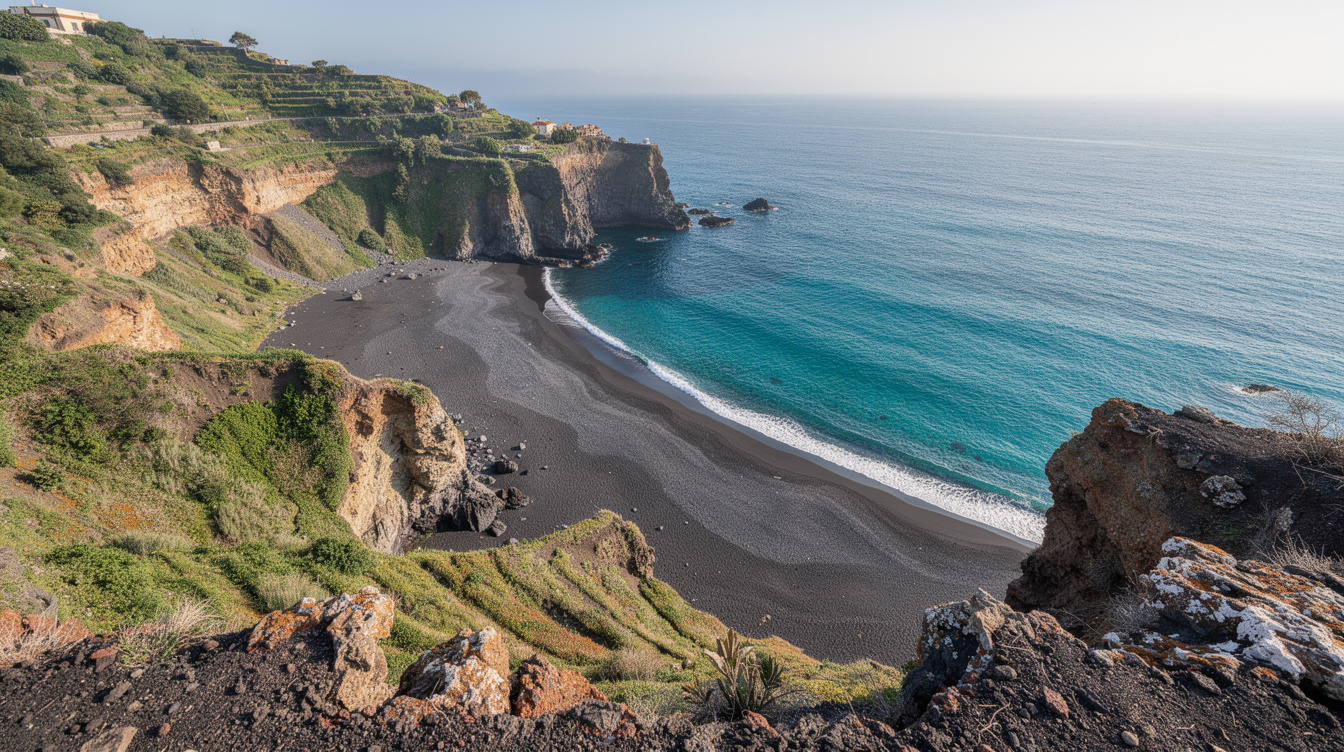
At dawn on Spiaggia dei Maronti, the air is still cool enough to raise goosebumps. But the sand is warm under your feet before the sun has cleared the ridge above Barano. That heat isn’t coming from the sky. It’s coming up through the ground, from fumaroles that have vented volcanic gas through this beach since the island rose from the Tyrrhenian Sea roughly 150,000 years ago. Ischia doesn’t sit near a volcano. It is one. And that distinction runs every decision you make here.
The ferry from Pozzuoli costs $13 and lands you somewhere Capri crowds don’t know
Two crossings connect Ischia to the mainland. The hydrofoil from Naples Beverello takes 35-40 minutes and costs roughly $22 each way with operators like SNAV and Alilauro. But the car ferry from Pozzuoli, about 1 hour crossing with Caremar or Medmar, runs closer to $13-14 per person. Because Pozzuoli sits inside the Phlegrean Fields volcanic zone, you’re already in the geological story before you board.
The difference in atmosphere is immediate. Hydrofoil passengers rush straight to thermal parks. The Pozzuoli ferry crowd is Italian families, residents with groceries, travelers in no particular hurry. The deck smells of salt and diesel, and Monte Epomeo’s 2,589-foot mass fills the horizon the entire crossing. That’s the shape of everything that matters on this island.
Because a single mountain mass can control an entire coastal microclimate, Epomeo divides Ischia into two genuinely different places. Most visitors never realize it.
The north coast and the south coast are not the same island
Lacco Ameno and the volcanic sand
The northern coast’s beaches run dark gray-black. Volcanic sand at Spiaggia di San Montano (near Lacco Ameno) is fine-grained and warm underfoot by 9am because dark sand retains solar heat faster than pale silica. Offshore, the Fungo, a 33-foot mushroom-shaped tuff rock, sits just beyond the waterline. Thermal hotels cluster along this northern flank because underground springs are most accessible here.
Sant’Angelo and why the south gets more sun in June
Monte Epomeo’s bulk sits to the north and northeast, which means Sant’Angelo, on the southwestern coast, collects more consistent afternoon sun in May and June than Lacco Ameno does. It’s a pedestrian-only village on a narrow isthmus, white and pastel buildings packed tight above the water. And the 15-minute water taxi from Sant’Angelo’s dock to Maronti beach runs about $5 each way, which is where the fumaroles push heat up through the sand itself.
What 90°F thermal water actually feels like at 7am
Poseidon Thermal Gardens, on the western coast near Forio, runs 22 pools on volcanic spring water. Temperatures range from around 59°F in the sea-cooled lower pools to roughly 104°F higher up. Day entry in June costs approximately $34-39. A guide who has worked the pools for years will tell you the smell, mildly sulfurous in the first few minutes, disappears entirely once you’re in the water.
But the honest trade-off is real. Ischia has over 100 thermal hotels, more than anywhere else in Italy, and the best ones require a 3-night minimum in high season at $180-380 per night with thermal access included. On volcanic islands where geology is the draw, the infrastructure around it fills fast. Booking in May for June is essential. Walk-in availability in July is close to zero.
September is what June promises, and June still delivers
August on Ischia is crowded. The island’s roughly 65,000 residents absorb close to 5 million visitors a year, and the pressure concentrates on the northern coast in July and August. It’s touristy then, and almost yours in June. The second and third weeks of June, after Italian school terms end but before the full summer wave, are the window where the thermal parks are open, the sea surface has reached around 75°F, and Sant’Angelo’s streets are walkable at noon.
September repeats that quality with cooler air, slightly lower prices, and Biancolella, the local volcanic-soil white wine, in its harvest-season form. A bottle of D’Ambra Biancolella at a Forio trattoria runs $16-22. And a plate of grilled totani at a waterfront spot costs less than you’d pay for a coffee in Capri’s harbor.
Italian islands in peak season require planning, and Ischia is no different. The difference is what you get when you plan correctly.
Your questions about Ischia answered
How do you get to Ischia from Naples?
Hydrofoil from Molo Beverello: 35-40 minutes, roughly $22 each way, no cars. Car ferry from Pozzuoli (30 minutes by metro from Naples central): about 1 hour, $13-14 per person. Ferries run approximately 6am to midnight in summer with Caremar, Medmar, and SNAV. The crossing itself is part of the experience, not just logistics.
When is the best time to visit Ischia?
The second half of June and all of September. Thermal parks run mid-April through October, beaches are fully swimmable, and the island hasn’t hit its August compression. Sea temperature in June sits around 73°F-75°F; by September it’s closer to 77°F-79°F with noticeably thinner crowds.
How much does a day on Ischia cost?
Ferry round-trip: $26-44 depending on route. Thermal park entry: $34-39. Lunch at a mid-range trattoria in Forio with wine: $22-30 per person. Water taxi to Maronti: $5 each way. A realistic day budget without a hotel runs $90-120 per person.
At 6pm on Maronti, the shadow of the Barano ridge crosses the sand from east to west. The water is still 74°F. The fumarole at the eastern end keeps venting, quiet and steady, the same way it did at dawn.