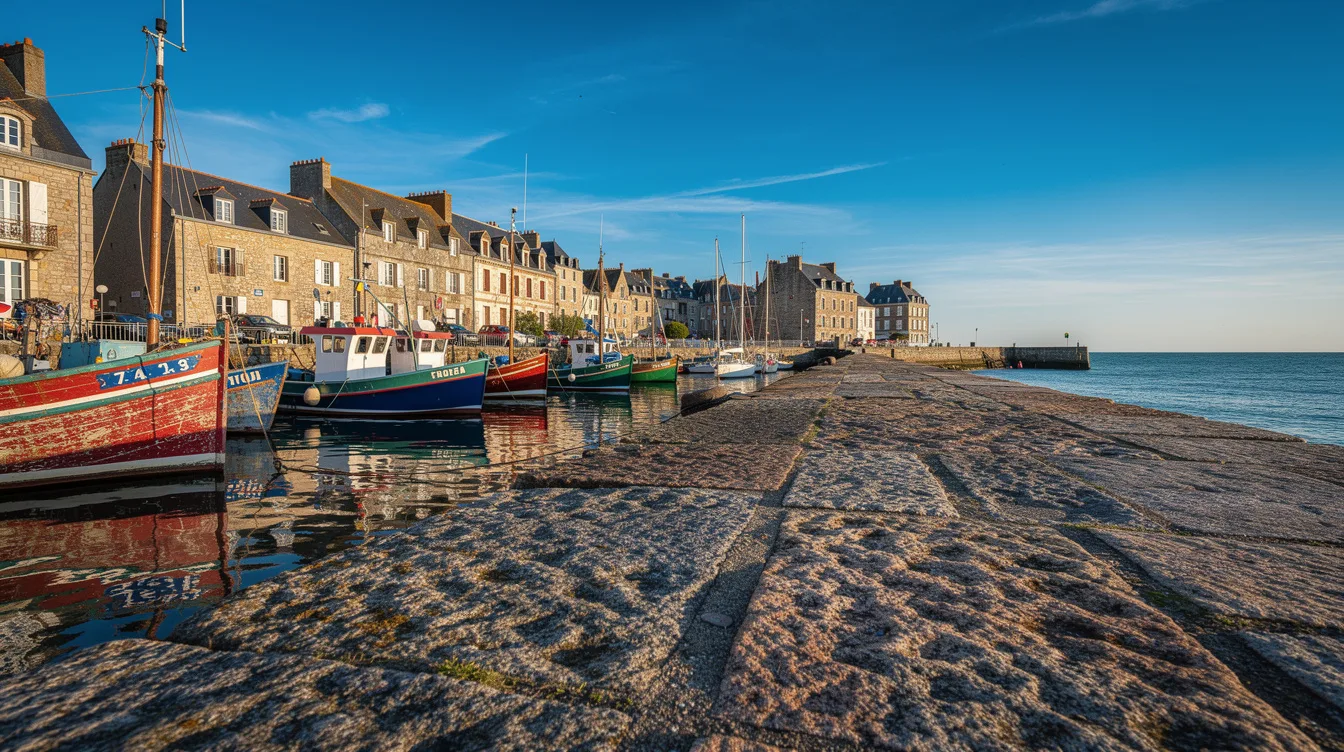
Barfleur is a small fishing harbor on Normandy’s Cotentin Peninsula, but its calm waterfront carries a violent chapter of English history. In 1120, the White Ship sank offshore while carrying England’s heir, triggering a major dynastic crisis across the Anglo-Norman world.
And that history gives the village a sharper edge than its gray granite houses and fishing boats first suggest. The harbor is the kind of place that makes you cancel an afternoon, especially when light catches the water and the quays fall quiet.
A 1120 wreck still shapes the harbor
But Barfleur mattered long before the wreck. During the Middle Ages, it was one of the chief ports for crossings to England and a regular departure point for Norman dukes and English kings.
And local tradition connects the harbor with 1066, when the ship later used for the Norman conquest of England was said to have been built here. You won’t find a grand royal setting today, which is part of the appeal.
I think the contrast makes the place work. You can stand beside working boats and old houses while imagining a port that once carried the ambitions of a kingdom across the Channel.
Why Cherbourg feels close, but Barfleur feels remote
Barfleur sits at the northeastern end of the Cotentin. That makes it easy to add to a coastal day, yet the village still feels removed from city routines.
And the approach rewards a slow arrival. The harbor, quays, and narrow streets appear in pieces, with fishing boats close to houses built from gray granite. For a useful base nearby, you can pair the village with Cherbourg-en-Cotentin.
But don’t come expecting a resort town. If you want nightlife or a broad family beach directly outside your door, you’ll find Barfleur limited. I prefer it precisely because the evening stays marine, quiet, and a little raw.
What to see before the tide turns
And you can cover the main village sights on foot. Walk the harbor promenade, explore the central lanes, then visit the church overlooking the sea from a marine cemetery.
The Museum-Workshop of Barfleur adds local context, while the port market gives the village its most useful burst of activity. It runs on Saturdays year-round, with another market on Tuesday mornings from April through September.
Can you eat Barfleur’s famous mussels?
Yes, if they’re available that day. The village is known for wild Barfleur mussels, and restaurants around the harbor are the logical place to ask for them.
And seasonality matters because fishing conditions change. You should ask before ordering, then settle near the water with a plate of seafood and the smell of salt moving through the streets. My opinion is simple: this is the meal Barfleur does best.
May to September gives you the fullest day
May to September is the easiest period for harbor walks, terraces, markets, and coastal outings. The village is calmer outside those months, which suits travelers who want a harder, quieter marine atmosphere.
But the coast around Barfleur deserves time beyond the center. About 3.1 miles away, the 233-foot lighthouse at Cape Barfleur gives the area its clearest landmark and a reason to continue toward Gatteville-le-Phare.
And you can extend the day toward Saint-Vaast-la-Hougue, about 12.4 miles away, or return to the harbor for a final walk. Barfleur is a heritage and food stop, not a beach holiday. By dusk, the granite walls hold the last light while the boats knock softly against the quay.