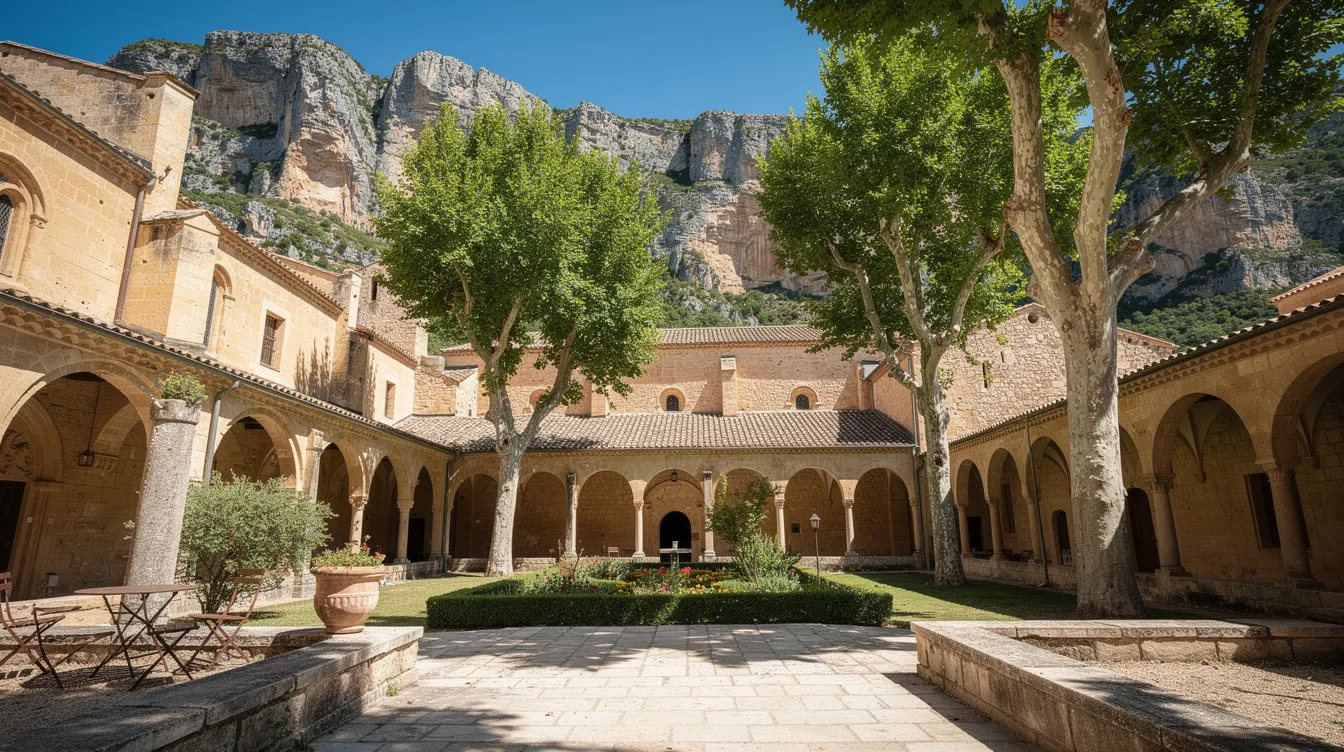
Saint-Guilhem-le-Désert is the kind of French village that makes a day trip feel like a small expedition. Its abbey dates to 804, but part of its original cloister was dismantled during the French Revolution, sold, and eventually transferred to The Cloisters museum in New York.
That history gives the visit an unexpected twist. You walk through the Romanesque Abbey of Gellone in southern France, then learn that some of its carved stonework now sits across the Atlantic. The village is beautiful, but the divided cloister is what makes it memorable.
An 804 abbey with a New York connection
And the abbey remains the clear reason to come. The church and cloister form the historic center of Saint-Guilhem-le-Désert, which developed around the religious complex and became an important medieval pilgrimage stop.
The present church dates mainly from the 11th and 12th centuries, with later additions. Inside, the stone feels cool and hushed, while the narrow streets outside bring the softer noise of footsteps, café tables, and the river valley.
But don’t expect to see the entire cloister in one place. A large section was dismantled during the Revolution and exported to the United States. The local museum, housed in the former refectory, holds sculptures from the cloister and helps explain what was lost, moved, and preserved.
And you can spend 1 hour 30 minutes to 2 hours exploring the abbey and museum. That’s enough time to look closely without turning the visit into a rushed checklist.
Why the village rewards an early arrival
Saint-Guilhem-le-Désert sits in the Hérault, about 24.9 miles northwest of Montpellier, where the narrow Gellone valley meets the Hérault gorges. The setting feels remote, but the drive from Montpellier takes roughly 40 to 60 minutes, depending on traffic and your starting point.
And the old center is best before the day gets busy. Start before 10 a. M., because the narrow lanes and parking areas fill quickly in high season.
The Grand Chemin du Val de Gellone leads you through medieval passages, stone houses, small workshops, and the central square with its broad plane tree.
But the village isn’t a secret, and summer crowds can change the mood quickly. Visit from April through June or in September and October, when the heat and pressure of peak season usually ease.
You can linger over lunch or bring a picnic. I prefer the slower option, because the village’s best moments come between the formal sights, when sunlight reaches the stone walls and the square settles into an ordinary afternoon.
From the abbey to the Hérault River
And the cultural visit works best when you leave time for the water. A short trip brings you to the Pont du Diable, where you can walk beside the Hérault, swim from the managed beach, or choose a water activity when conditions allow.
The river is the natural counterpoint to the abbey’s quiet interior. Stone, shade, and carved columns give way to open air and the sound of moving water. You get a fuller day because the gorge adds space after the close streets of the village.
Can you hike beyond the village?
Yes, if you’re comfortable with uneven paths and some climbing. The trails toward the Cirque de l’Infernet and the ruins of the Château du Géant provide views over the valley, but sturdy shoes are essential.
And you should be honest about your energy. The village itself is easy to explore at a gentle pace, while the higher routes demand more effort and offer less convenience. I would choose one walking area after the abbey, not try to force every viewpoint into one day.
Can you visit without planning every detail?
Mostly, but check transport before you leave. Seasonal shuttles have operated between Saint-Guilhem-le-Désert, the Pont du Diable, the Clamouse cave, and Saint-Jean-de-Fos, though schedules can change.
Beyond the shuttle, the practical rule is simple: arrive early, wear proper shoes, and keep the afternoon flexible. By evening, the stone lanes cool down, and the last light rests quietly on the abbey walls.