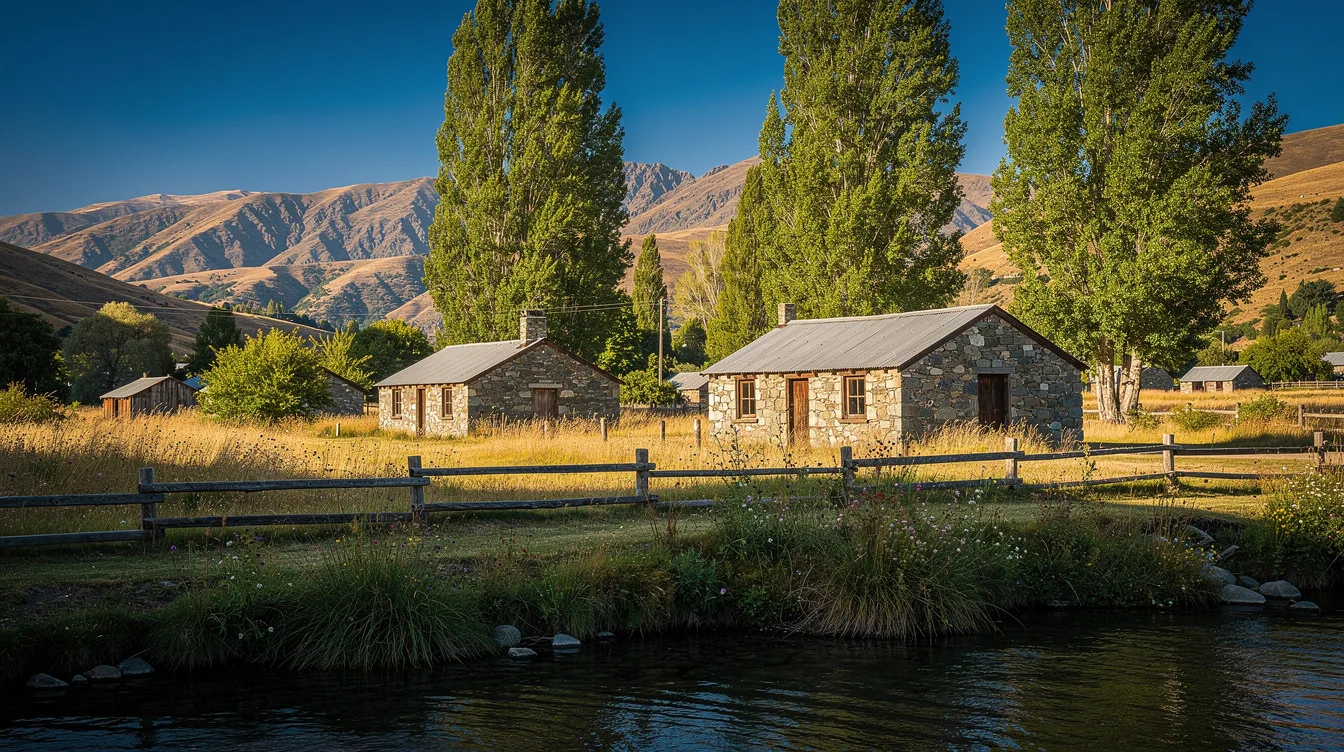
Arrowtown is only 12.1 miles east of Queenstown, yet it feels built for a slower afternoon. Gold was found in the Arrow River in 1862, and the town later rose past 7,000 people during the rush.
But the reason to come isn’t simply old storefronts. Beside the river, the preserved Chinese Settlement keeps restored miners’ homes in view, making the gold-rush story feel less polished and far more human.
A gold-rush town with the hard parts still visible
The Chinese miners who arrived in the 1870s were forced to live in huts along Bush Creek. Today, the settlement includes restored houses and Ah Lum’s store, so you can see how close survival and extraction once sat.
And that contrast gives Arrowtown more weight than a quick heritage-photo stop. The river moves nearby, the cottages sit low to the ground, and the setting asks you to linger with an uncomfortable part of Otago’s history.
You can pair the settlement with the Lakes District Museum, which covers local gold mining and early settlers. It’s a useful stop before wandering, because the town’s tidy appearance can otherwise make its rougher beginnings easy to miss.
Buckingham Street still earns the walk
Buckingham Street is the center of the visit. Seven surviving houses along the street have largely unaltered exteriors, and they were built in the 1870s for gold miners.
But this isn’t a frozen film set. Cafés, galleries, boutiques, restaurants, and old cottages share the street, so you can get coffee among the history without feeling trapped in a museum corridor.
The preserved buildings work because they’re compact and close together. You’ll hear cups on café tables and footsteps on the sidewalk, then look up at a modest miner’s cottage that has outlasted the boom around it.
Can you see the town in half a day?
Yes, if you focus on the river, the Chinese Settlement, and Buckingham Street. A full day is better if you want the museum, an easy walk or cycle route, and dinner or a drink after the daytime visitors leave.
And you don’t need to make the town a complicated detour. Arrowtown is reached from Queenstown via Arrow Junction, Arthurs Point, or Lake Hayes, while the Orbus Blue #2 route also connects from Queenstown.
Check the current bus timetable before you go. If you’re driving, the short distance makes Arrowtown an easy change of pace from Queenstown’s busier rhythm.
The Arrow River keeps the day from feeling too staged
The Arrow River runs beside town, giving the old buildings some breathing room. Take the easy river walk or cycle route when you want water, mountain views, and historic bridges instead of another shop window.
But don’t expect wilderness solitude right beside the center. This is a well-known stop, especially when the weather is kind, though the river still gives Arrowtown a quieter, more grounded feel than Queenstown.
You can also use Arrowtown as a base for golf. Arrowtown Golf Course, The Hills, and Millbrook Resort are nearby, which makes the town a good fit for travelers who want an active afternoon without abandoning the historic core.
April turns the streets gold again
April and May are the months that make Arrowtown especially tempting. Planted oaks, sycamores, rowans, and elms shift into gold, orange, and red, adding a seasonal glow to streets already shaped by the gold-rush era.
And the annual Arrowtown Autumn Festival is typically held in April. It brings more energy to town, which is fun if you want activity, but less ideal if your goal is a hushed walk between the cottages.
Accommodation is comparatively limited, so Arrowtown works particularly well as a day trip from Queenstown. That trade-off is part of its appeal: you get the history and the river without needing to turn the visit into a logistical project.
Stay late enough for the quieter version
Arrowtown’s best hours may come after the daytime circuit has thinned. The cafés and restaurants keep Buckingham Street useful, while the old façades start to feel less like attractions and more like part of a lived-in town.
By the time the light softens along the Arrow River, the restored miners’ homes are still there, small and plain against the evening air.