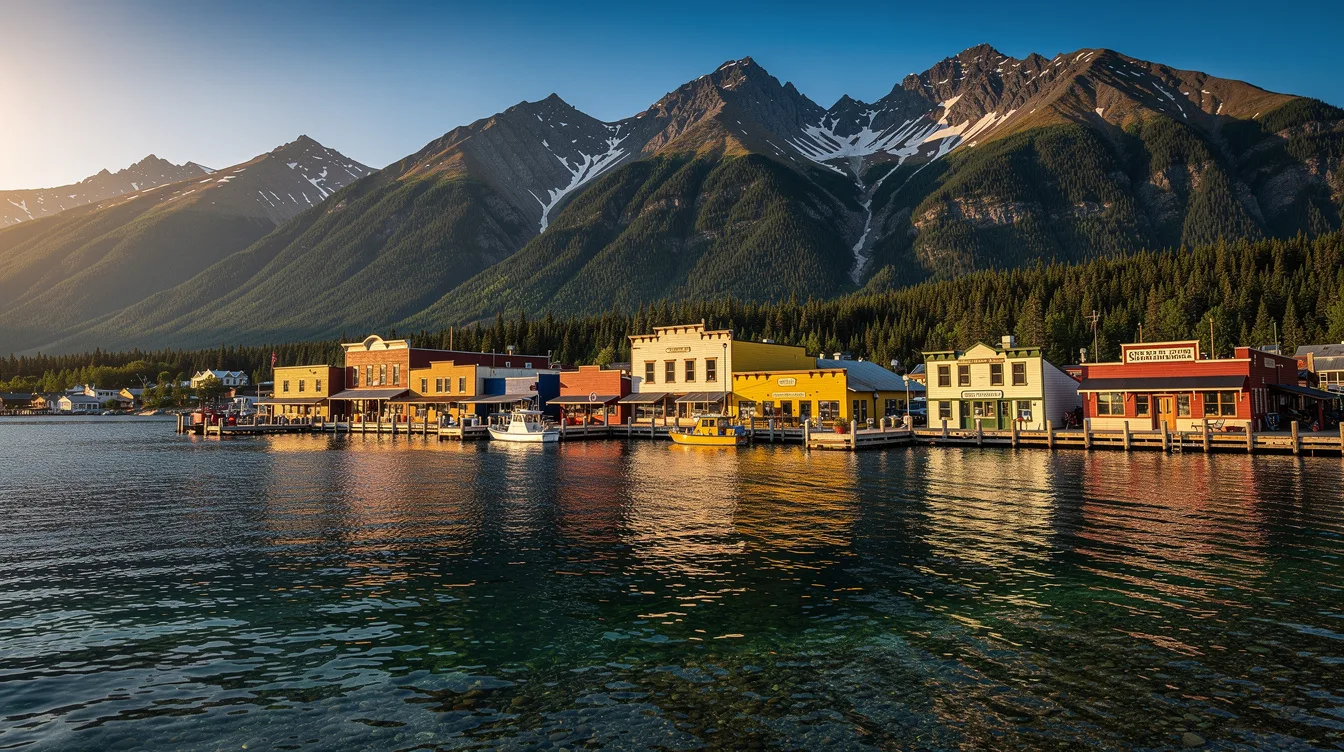
Skagway was Alaska’s largest city in June 1898, when the Klondike gold rush pushed its population to between 8,000 and 10,000 people. That’s the fact worth holding onto as you walk Broadway today, past false-front buildings and wooden sidewalks in a town with about 1,100 year-round residents.
It grew fast because prospectors needed a saltwater door to the Yukon. More than 40,000 people passed through Skagway and nearby Dyea between 1897 and 1898, heading north with supplies and nerve. The rush is gone.
The compact streets still feel built for people expecting a harder road tomorrow.
In 1898, Skagway was the way into the Klondike
The gold fields were in Canada’s Yukon, but Skagway was the gateway. Prospectors arrived by ship, then climbed toward White Pass or went to nearby Dyea for the Chilkoot Trail. Canada required each traveler crossing north over White Pass to carry one ton of supplies, so the journey demanded far more than optimism.
And the town profited because exhausted travelers needed food, lodging, transport, and gear. Stores, saloons, and offices filled muddy streets within weeks. By June 1898, this temporary-looking port had surpassed every other Alaska settlement in population.
But the boom had a dark edge. Skagway was lawless during the rush, with swindlers targeting newcomers who were already under pressure to reach the Yukon. The preserved town isn’t a polished theme set.
Its story includes fraud, hard choices, and an astonishing volume of human ambition.
Broadway still makes the gold-rush scale visible
Today, Broadway is the place to start. Its restored buildings and false-front facades sit inside the Klondike Gold Rush National Historical Park, which preserves the town’s role in the rush. You can cover the central blocks on foot, then notice how quickly the built-up strip gives way to steep mountain walls.
That contrast is Skagway’s best feature. It can feel crowded when cruise ships are in port, and it is plainly tourist-focused then. But step out early, before the busiest hours, and the wooden sidewalks and quiet harbor air make more sense.
And you don’t need to pretend the crowds aren’t there. Summer brings more than a million visitors and more than 400 cruise-ship calls. Staying overnight changes the rhythm because the town empties after day visitors return to their ships.
The White Pass train is worth reserving early
The White Pass & Yukon Route Railway is Skagway’s signature ride for a reason. It climbs toward White Pass through gorges, waterfalls, bridges, and alpine views, following a route shaped by the same gold-rush traffic that made the town explode.
But book ahead if you’re visiting in summer. The railway operates through the summer months, and popular departures fill quickly when ships are docked. You’ll want layers and a rain jacket too, because Southeast Alaska weather can turn quickly even on a bright morning.
The train is tourist trade now, not mining infrastructure. That doesn’t weaken the experience. It sharpens it, because you can see the terrain that made the route such a formidable threshold without hauling a ton of provisions behind you.
Can you get beyond the cruise-ship streets?
Yes. Reid Falls, about 300 feet high, is a short outing near town when you want moving water and less pavement. The Klondike Highway also leads toward White Pass, the Canadian border, and the Yukon, one of the rare road connections from the Inside Passage to the continental interior.
For a quieter historical turn, head toward Dyea and the Chilkoot Trail. Dyea was Skagway’s competing port during the rush, but its shallow harbor lost out as larger ships arrived. Nature has reclaimed much of it, which gives the old rivalry a very different feeling.
Getting there is part of the point
Skagway sits at the end of Lynn Canal in Alaska’s panhandle, about 80 miles by air from Juneau. You can arrive by cruise ship, Alaska Marine Highway ferry, flight from Juneau, or by road through the Klondike Highway and Canada.
And summer is the clearest time to go because the railway runs and cruise itineraries stop here. It’s also the busiest season, so plan around the traffic rather than fighting it. Go early, reserve the train, and keep a dry layer close.
By the time the last ship leaves, the false fronts catch the soft harbor light, and Skagway feels less like a stopover than the town that once sent thousands north.