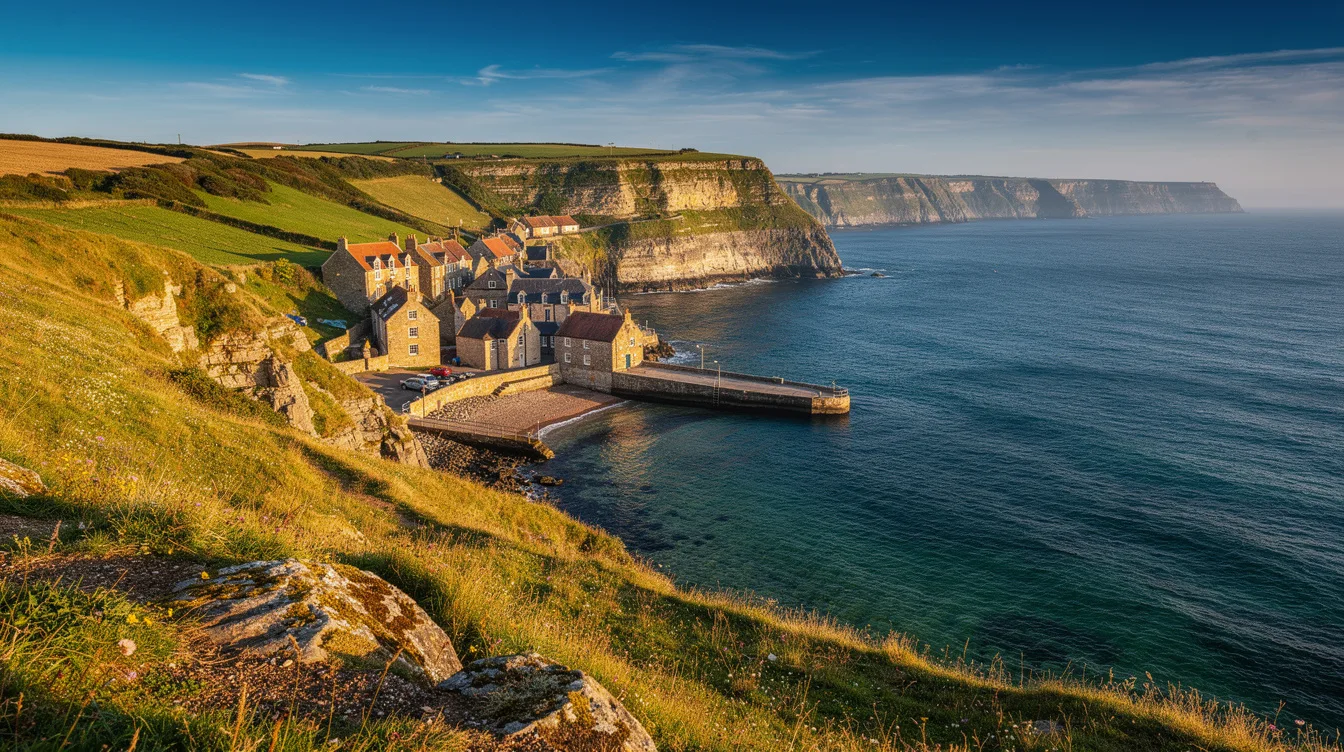
Robin Hood’s Bay is the Yorkshire village where 18 horses hauled a lifeboat through deep snow to save a ship’s crew. On January 18, 1881, 200 men cleared 7 feet of snow so Whitby’s lifeboat could travel 6 miles to the stranded Visiter.
The road took two hours, and the rescue wasn’t simple once the carriage reached the village. Men demolished garden walls and uprooted bushes to reach the sea, then launched the boat through narrow bends for a second rescue attempt.
And that’s still the best reason to visit this corner of the Yorkshire coast. The village feels shaped by weather, steep ground, and the practical demands of people who lived from the water.
Why the 1881 rescue still matters
The lifeboat story gives Robin Hood’s Bay its proper scale. This isn’t only a photogenic collection of cottages above the sea, but a place where snow once stopped ordinary movement and a whole community had to clear a route.
And you can still understand the problem as you walk downhill. The old village drops sharply toward the beach through tight lanes, with cottages packed close together and bends that make the route feel narrower than expected.
My opinion is simple: read the rescue plaque before exploring the village. It changes the way you see every wall, corner, and steep stretch of stone underfoot.
But the story also has a hard edge. The road was so difficult that the rescuers had to alter it as they went, which makes the two-hour journey feel less like local folklore and more like an astonishing piece of work.
Steep lanes lead to a beach shaped by tides
Robin Hood’s Bay sits in the North York Moors National Park, about 6.2 miles south of Whitby and 14.9 miles north of Scarborough. Its old port setting is compact, but the descent to the water demands attention.
And you should take the hill slowly, especially on the return. The slope is announced at around 1:3, and the narrow streets can make a short walk feel far longer than the distance suggests.
At low tide, the beach exposes rocky platforms where you can look for fossils and ammonites. The rocks are most productive on the north side of the bay, especially after winter storms.
But the shoreline isn’t forgiving if you ignore the clock. Water can reach the sea wall and cut off your return, so check tide times before walking beyond the village.
Boggle Hole rewards careful timing
Boggle Hole lies about 0.9 miles south of the village. You can reach it along the beach only when the tide allows, or follow the Cleveland Way when the coastal route is safer.
And you should treat the beach route as a tide window, not a casual extension of your stroll. The cove is close enough to tempt you, but the water can turn a pleasant walk into a problem on the way back.
I think this is where Robin Hood’s Bay feels most convincing. The cove, cliffs, and exposed rock give you a stronger sense of the coast than the village’s cafes and shops can provide.
But don’t approach the foot of the cliffs while searching for fossils. Wear shoes with a firm grip, keep your route conservative, and leave yourself enough time to climb back through the village.
What you can do in one day
Start at Bank Top, where you should leave the car before descending into the old village. There is no public parking in the lower streets, and the lanes are extremely narrow.
And you can spend the first hour simply wandering the ginnels. The route passes cottages, independent shops, cafes, and pubs before reaching the beach by the cobbled slipway at Wayfoot.
From there, visit the Robin Hood’s Bay Museum or the Old Coastguard Station for local stories about fishing, smuggling, the shoreline, and geology. You can also join the Cleveland Way or follow the Cinder Track by foot or bicycle.
But the village is less suitable if you want an easy, flat seaside day. The climb back is real, and the best walks here reward patience more than speed.
When to visit and how to arrive
April through September is the most practical season for the beach, fossils, and longer days. Weekdays outside school holidays are usually calmer, while the village remains worth visiting beyond summer if you can accept wind, rain, and steeper walking.
And you can drive in from the A171 between Whitby and Scarborough. If you’re arriving by train, Whitby is the nearest station, followed by a bus or taxi.
The village is smaller and quieter than Whitby, with more of a former smuggling port’s mood than a busy resort’s energy. That contrast is its appeal, but visitors seeking level access or constant seaside activity may find it limiting.
By late afternoon, the tide has usually begun covering the rocky platforms, and the lanes fill with the sound of footsteps climbing home. Above the bay, the old cottages catch the last light while the sea closes over the stones.