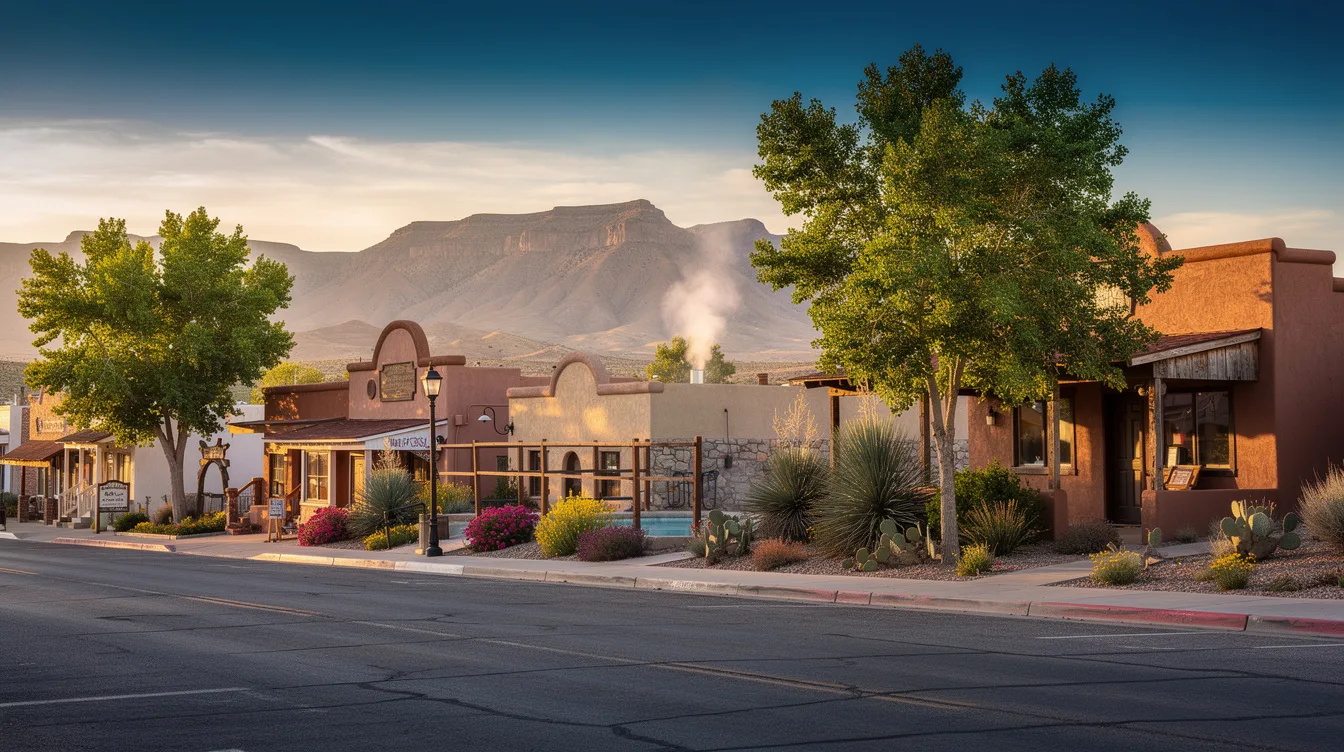
Truth or Consequences, New Mexico, changed its name for a radio show in 1950, and the story is stranger than most roadside signs can convey. The town was Hot Springs until residents voted on March 31, 1950 to take the name of NBC’s Truth or Consequences.
It happened for the show’s 10th anniversary. The radio host proposed that a town rename itself after the program, and Hot Springs accepted. You can still feel the joke in the name, but the hot water gives the place its staying power.
A radio stunt became the town’s official name
Before the vote, Hot Springs was known for geothermal mineral springs and the old ritual of “taking the waters.” But the special election made the new name official, turning a spa town into one of America’s most memorable map labels.
And the title was not a temporary publicity trick. The town held annual Truth or Consequences Fiesta celebrations for decades, often with the show’s host returning as a guest. That history gives the name some weight, even when it still makes first-time visitors laugh.
The original show mixed trivia with comic punishments. Contestants had only moments to answer before facing a stunt, so the town’s choice carried the same playful nerve. Hot Springs may have sounded calmer, but it would not make you slow down at the exit sign.
The Rio Grande keeps the setting grounded
Truth or Consequences sits in Sierra County along the Rio Grande, about 150 miles south of Albuquerque and 75 miles north of Las Cruces on Interstate 25. That location makes it a sensible pause on a New Mexico drive, especially if you want water instead of another gas-station coffee.
But this is not a polished resort strip. It is a small city of about 6,000 residents, and its modest scale is part of the appeal. You come for a soak, a slow walk, and the odd pleasure of saying the town’s full name aloud.
The city stands at roughly 4,300 feet, where dry air and broad light shape the day. The region gets little annual rain, so the sky often feels enormous. And the Rio Grande adds a useful counterpoint to all that open desert.
Why the springs still matter more than the name
The name gets the headlines, but the mineral springs are why travelers linger. Hotels, motels, bathhouses, and spa businesses draw on natural geothermal water, with options that can include massage, mud wraps, and reiki alongside a straightforward soak.
That makes year-round visits practical. The area has four relatively mild seasons and plenty of sunshine, so you are not planning a single narrow window. But availability and the feel of each property vary, which is worth considering before you build a whole trip around one bathhouse.
The water is the town’s most convincing argument. Steam rising from a soak while the air stays dry has a way of resetting a road-trip afternoon. You do not need much more than time, a towel, and an appetite afterward.
Can you make this more than a spa stop?
Yes. Truth or Consequences sits downstream from Elephant Butte Dam and lake, and that opens the trip to boating, fishing, camping, and Rio Grande recreation. The town attracts snowbirds and outdoor travelers because the water changes the rhythm of an otherwise dry setting.
And that contrast works in its favor. You can spend part of the day near the lake, then return to town for a bathhouse soak. It is lively in its own quiet way, but it never asks you to rush.
A small town with an unusually durable punch line
Locals commonly shorten the name to T or C, which is practical when the full version will not fit neatly on every sign. Still, use the whole name at least once while you are there. It is part of the fun, and it explains why the town remains memorable.
There are limits to the fantasy. This is a small spa city, not a giant resort complex, and its appeal depends on your willingness to enjoy a slower pace. But that is exactly what the springs encourage.
By evening, the desert light fades around the Rio Grande, and the town with the improbable name settles back into the warm-water routine that existed long before the radio show.