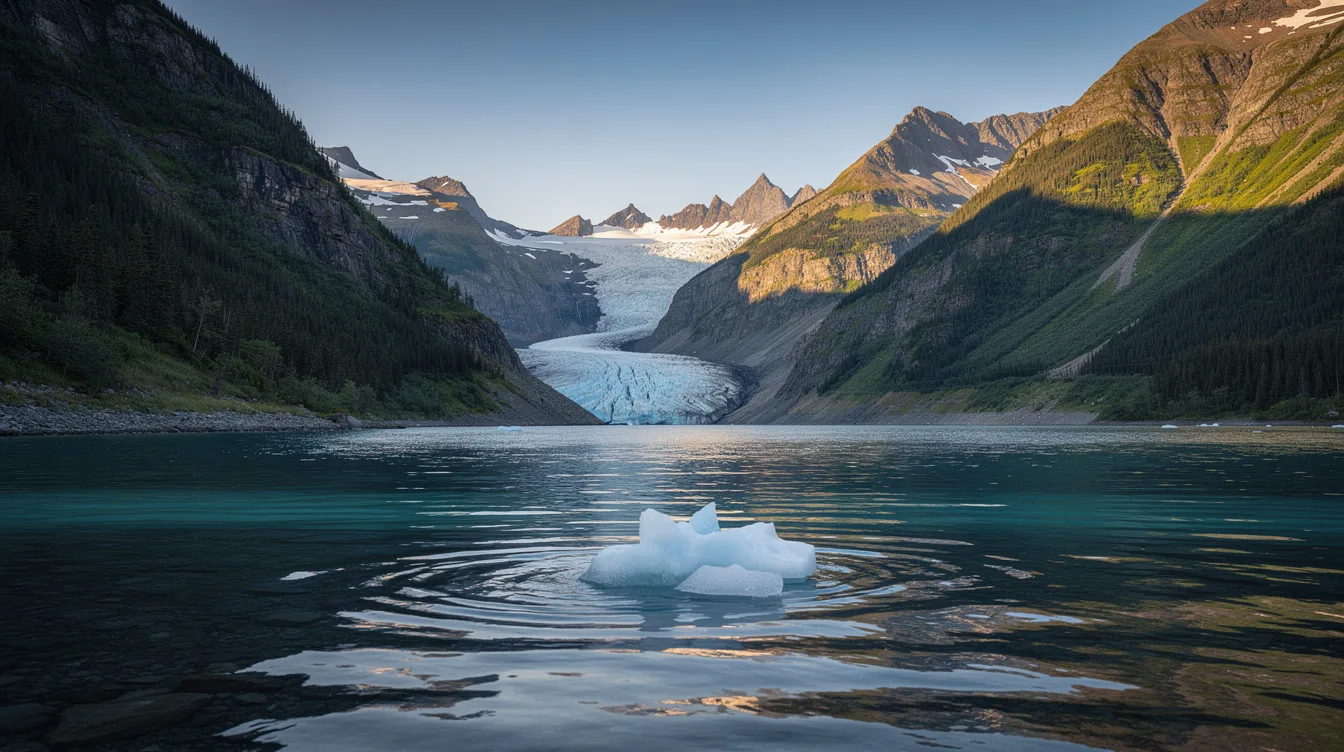
Seward lost about 90% of the town to the 1964 Good Friday earthquake and tsunami. Yet the port at the end of Resurrection Bay remains Alaska’s practical doorway to Kenai Fjords National Park, where tidewater glaciers meet salt water.
That contrast gives Seward its pull. You arrive for the boats, but the town’s history keeps the place from feeling like a simple cruise-stop backdrop.
1964 still shapes the harbor
The earthquake brought fires and a tsunami that tore through Seward, destroying roughly 90% of it. But this is not a town frozen in remembrance. Fishing boats, excursion vessels, and summer visitors now fill a port that stays free of ice.
It is a small year-round community of about 2,600 to 2,800 residents, so downtown can feel busy without feeling anonymous. In summer, the population rises sharply, and you’ll hear suitcase wheels on the sidewalks beside the clatter of harbor gear.
And that scale is part of the appeal. Seward has shops and restaurants, but it doesn’t ask you to spend your whole trip indoors or on a schedule built around town attractions.
Kenai Fjords is the real reason to come
Kenai Fjords National Park begins where Seward’s harbor traffic thins out. A boat cruise is the central experience because the park’s tidewater glaciers and fjords are best understood from the water, not from a parking lot.
You may also see whales, sea lions, sea otters, and seabirds on the route. But wildlife is never a guaranteed performance, which is why the glacier-and-fjord setting should be your main reason for booking the boat.
The water changes the pace quickly. Beyond Resurrection Bay, the boat engine hums beneath steep shorelines, and cold air can carry the sharp smell of salt through an open deck.
Tidewater glaciers are what make this trip different from a standard scenic cruise. They reach the sea, so the encounter has real scale even when you’re viewing them from offshore.
Can you see a glacier without taking a boat?
Yes. Exit Glacier is one of the park’s most accessible areas, and hiking there gives you a land-based counterpoint to a day on the fjords. But the boat is still worth the splurge if the title of tidewater glacier is what brought you here.
Build in breathing room. The research notes recommend two or three nights, which makes sense because one day can go to the cruise and another to Exit Glacier or the Alaska SeaLife Center.
The 127-mile approach is part of the trip
Seward sits about 127 miles south of Anchorage, a drive of roughly 2 hours and 30 minutes on the Seward Highway. It is long enough that you should treat the route as travel time, not an afterthought between airport pickup and dinner.
And you have another seasonal option: the Alaska Railroad’s Coastal Classic runs in summer. Some cruise itineraries also reach Seward, though arriving by road or train gives you more control over how long you stay.
The town lies on the Kenai Peninsula at the head of Resurrection Bay. That position explains the rhythm here, because the bay is both a working harbor and the launch point for the national park.
May through August gives you the most daylight
May to August is the easiest window for a first visit, when marine excursions are operating fully. Summer temperatures generally reach 59-68°F, and days can stretch to 19 hours of light.
That extra daylight makes a late harbor walk feel surprisingly unhurried. But it does not mean you can pack only a fleece and sunglasses, since Seward’s maritime climate stays wet and changeable even in summer.
Bring warm layers, rain protection, and waterproof shoes. You’ll be more comfortable on a windy boat deck, and you won’t have to skip a walk just because the weather turns damp.
The Alaska SeaLife Center is a worthwhile indoor stop when rain settles in, with marine-ecosystem exhibits and rehabilitation work tied to Alaska waters. Still, don’t let it replace time outside if conditions are workable.
Seward is touristy in its peak months, but the destination remains direct about why people come. By the time the last boats return to Resurrection Bay, the harbor smells of wet rope and salt again.