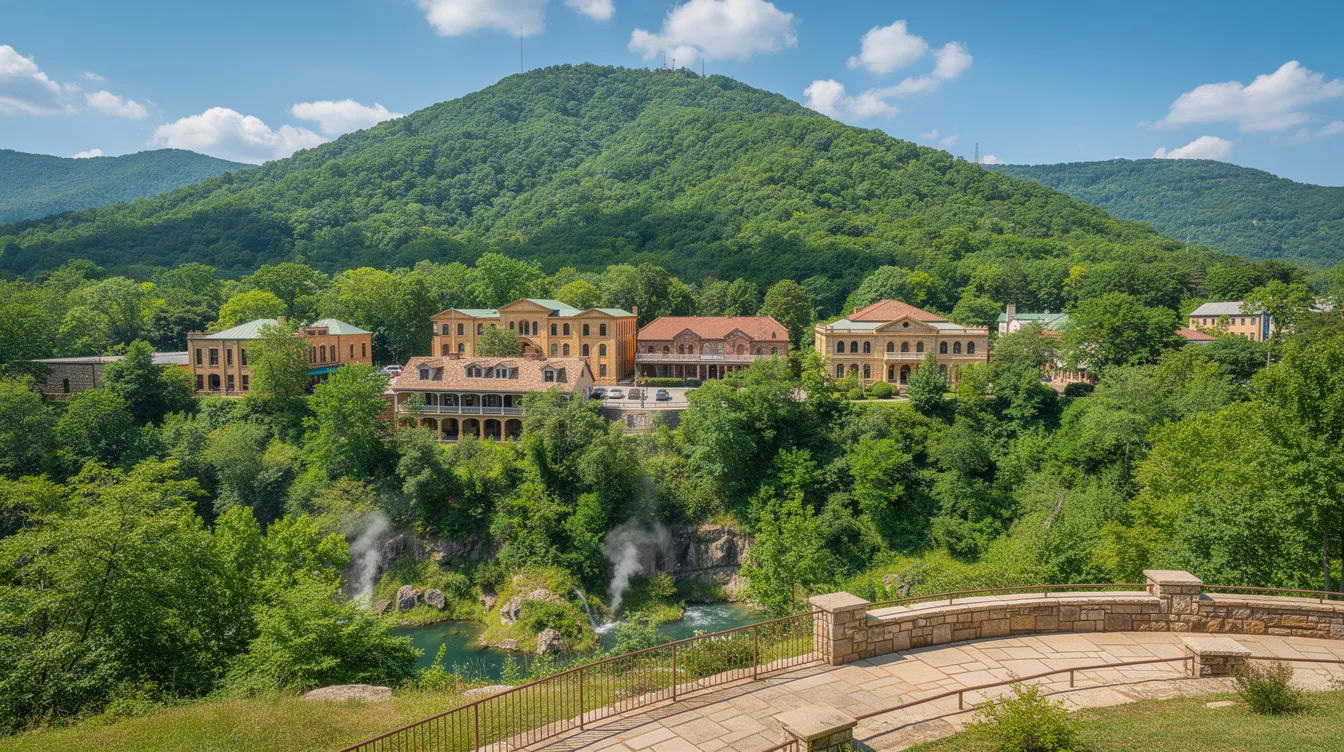
Hot Springs is the rare American town where a national park begins near the storefronts. Its defining fact is simple: 47 thermal springs rise within Hot Springs National Park, and the water emerges at an average of 143°F. That heat changes the pace of a visit.
You don’t come here to hunt for an outdoor soaking hole. The water is far too hot for casual swimming, so the experience happens inside regulated historic bathhouses. It’s more civilized than wild, but that’s exactly why a slow afternoon works so well here.
Bathhouse Row makes the park feel close
Bathhouse Row gives Hot Springs its unusual rhythm. Historic bathhouses sit along Central Avenue, while wooded slopes and park trails wait nearby. You can move from a warm soak to a downtown walk without turning the day into a logistical project.
And that closeness is the town’s real advantage. This isn’t a remote national park built around long drives and packed coolers. It’s a compact spa town with a forested edge, so you can make room for rest without feeling stuck indoors.
Quapaw Baths & Spa and Buckstaff Bathhouse are the clear choices for a thermal-water experience. Book ahead if a bath or spa service matters to you. The park is free to enter, but baths, tours, and other attractions cost extra.
Can you swim in the springs?
No. The spring water emerges at roughly 143°F, so outdoor dipping isn’t the point here. But the controlled bathhouse setting turns that limitation into a benefit, especially when you want warmth, quiet, and no need to plan a full expedition.
1921 made this a national park, not just a resort town
Hot Springs National Park was redesignated as a national park in 1921. Its federal roots go back even further, to the Hot Springs Reservation of 1832. That history gives the town a different feel from a modern wellness getaway, though it can still be touristy around its central attractions.
But the park doesn’t wall itself off from town. Central Avenue carries you through the old resort district, with galleries and museums nearby. The Gangster Museum of America and the Mid-America Science Museum give you alternatives when another soak sounds a little too sedentary.
For my money, the best approach is not to cram every attraction into one weekend. Pick a bathhouse, walk the avenue, then leave space for a trail or a lake. Hot Springs rewards a loose plan more than a checklist.
26 miles of trails keep the spa day from getting sleepy
The park has approximately 26 miles of trails, plus mountain viewpoints and a tower overlooking the Ouachita Mountains. You can pair a short walk with a bathhouse visit, which is easier on the body than treating the park like a full-day hiking destination.
And the contrast is appealing. One hour, you’re in a historic downtown setting. Later, you’re on wooded slopes with the town below.
The trails add breathing room, though anyone seeking the scale of a far-flung wilderness park may find the setting more urban than expected.
If you prefer water over uphill walking, Lake Hamilton, Lake Ouachita, and Lake Catherine offer boating, fishing, paddling, and waterfront time. Those lakes broaden the trip, but they also make it worth deciding what kind of weekend you actually want before you arrive.
Spring and fall suit the town’s slower side
Spring and autumn are the strongest seasons for combining thermal baths, hiking, and downtown wandering. Cooler air makes the bathhouse warmth feel earned, and a walk along Central Avenue is more pleasant when you’re not rushing back to air conditioning.
But Hot Springs is open year-round, and individual attractions can have seasonal or variable hours. Check the places you care about before building a tight schedule. Oaklawn Racing Casino Resort may appeal during thoroughbred-racing season, while others may prefer gardens, galleries, or a long lakeside afternoon.
A manageable Arkansas escape from Little Rock
Hot Springs is about 50-55 miles southwest of Little Rock, so it works for a short road trip without making arrival day feel wasted. That access matters. You can leave the city, settle into a bathhouse rhythm, and still have time for a trail before dinner.
It’s lively, but not a wilderness retreat. It’s historic, but not frozen in place. By the time you step back onto Central Avenue after a bath, the air feels cooler against your skin, and the wooded hills are still waiting at the end of the block.